
Most American women find that cluttered closets can disrupt even the most intentional self care routines. With luxury robe belts often lost in crowded drawers or tangled around hangers, it becomes difficult to enjoy your favorite loungewear in style. A creative and organized solution adds elegance to your space while making every morning smoother. Discover how to transform robe belt storage so your collection stays as beautiful and functional as you deserve.
Table of Contents
- Step 1: Assess Current Robe Belt Storage Needs
- Step 2: Choose Suitable Storage Solutions For Robe Belts
- Step 3: Install And Arrange Robe Belt Organizers Strategically
- Step 4: Test Accessibility And Adjust For Daily Use
- Step 5: Maintain Cleanliness And Visual Appeal Regularly
Quick Summary
| Main Insight | Explanation |
|---|---|
| 1. Inventory Your Robe Belts | Assess all robe belts to understand storage needs and organize them effectively. |
| 2. Choose Optimal Storage Solutions | Select storage options like hooks or dividers to protect and organize belts based on material and usage. |
| 3. Strategically Arrange Organizers | Position storage in high-traffic areas for easy access, and group belts by color or texture for efficiency. |
| 4. Test and Adjust for Use | Actively use the system for a week, noting any accessibility issues and making adjustments as needed. |
| 5. Maintain Cleanliness Regularly | Establish a monthly routine to clean and check the condition of belts and storage areas to ensure ongoing organization. |
Step 1: Assess Current Robe Belt Storage Needs
Organizing your robe belt collection starts with a thorough understanding of your current storage situation. Think of this as a personal strategic assessment of home organization needs that will help you create a tailored solution for your space.
Begin by taking a comprehensive inventory of your robe belts. Pull out every single belt from drawers, closets, hangers, and hidden corners. Lay them out on a flat surface and sort them by criteria like material (silk, cotton, terry cloth), color, frequency of use, and condition. This visual mapping helps you understand exactly what you have and what storage approach will work best. Pay special attention to belts that are getting tangled, wrinkled, or damaged due to improper storage.
Consider your specific spatial constraints and lifestyle. Are your belts primarily stored in a bedroom closet? A bathroom? Do you need quick access in the morning or are these more decorative pieces? Effective assessment frameworks suggest examining not just the items themselves but how they integrate with your daily routine and available space.
Pro tip: Take photos of your current belt storage setup before you start reorganizing to track your progress and remember what worked or didn’t work in your original arrangement.
Step 2: Choose Suitable Storage Solutions for Robe Belts
Now that you have inventoried your robe belts, it is time to select storage solutions that protect and organize your collection. Five S workplace organization principles provide an excellent framework for creating an efficient storage system that maximizes accessibility and minimizes clutter.

Consider multiple storage options tailored to your specific needs and space constraints. Hanging solutions work wonderfully for silk or delicate belts keep them wrinkle free and visible. Install hooks inside closet doors or on wall mounted racks with individual clips to prevent tangling. For more compact storage, consider drawer dividers or specialized belt organizers that keep each item neatly separated. Fabric lined boxes with compartments can protect more delicate materials while keeping them dust free.
When selecting storage containers, prioritize breathable materials that prevent moisture buildup and potential fabric damage. Healthcare laundry quality guidelines recommend storage solutions that maintain textile integrity through proper ventilation and protection. Look for solutions with soft interior linings, adjustable compartments, and materials that do not trap humidity.
Pro tip: Color code or label your storage containers to create an intuitive organization system that makes finding your favorite robe belt quick and effortless.
Here’s a summary of storage solution types and their benefits for robe belts:
| Storage Type | Best For | Benefits |
|---|---|---|
| Hanging solutions | Silk, delicate belts | Prevents wrinkles, easy view |
| Drawer dividers | Multiple belts | Saves space, organizes types |
| Box compartments | Cotton, terry cloth | Protects fabric, reduces dust |
| Wall racks/hooks | Quick access areas | Fast retrieval, no tangling |
Step 3: Install and Arrange Robe Belt Organizers Strategically
Arranging your robe belt organizers is more than just finding storage space. Strategic placement determines overall organization effectiveness and transforms how you interact with your accessories daily.
Start by identifying high traffic areas in your closet or dressing space where you can install organizers for maximum convenience. Wall mounted racks work perfectly near your clothing area, allowing quick access while keeping belts visible and wrinkle free. Consider installing hooks at varying heights to accommodate different belt lengths and create visual interest. Drawer dividers and specialized belt hangers can help separate delicate silk belts from more sturdy cotton options, preventing tangling and potential damage.
Prioritize accessibility when setting up your storage system. Thoughtful arrangement reduces time spent searching and streamlines your morning routine. Group similar colored or textured belts together, and consider using clear labels or color coded tags to make identification instant. Ensure your chosen storage location has adequate lighting and is free from direct sunlight to prevent fabric fading.
Pro tip: Rotate your belt display seasonally to keep your storage system feeling fresh and intentional.
Step 4: Test Accessibility and Adjust for Daily Use
Creating an organized robe belt storage system is just the beginning. Systematic accessibility testing ensures your setup truly works for your daily routine, transforming theoretical organization into practical functionality.
Spend a week actively using your new storage system and pay close attention to how smoothly you can retrieve and replace belts. Notice any moments of friction where reaching for a belt feels awkward or time consuming. Are some hooks too high? Do drawer dividers make certain belts difficult to access? Take mental notes or even keep a quick journal documenting these small interaction challenges. Sometimes the most elegant storage solutions reveal their limitations only through consistent use.
Combination of manual observation and user feedback will help you refine your system. Consider asking family members or roommates for their perspective on the storage arrangement. They might notice usability issues you have overlooked. Be prepared to make incremental adjustments like repositioning hooks, adding additional dividers, or changing the grouping strategy of your belts to optimize accessibility and convenience.
Pro tip: Set a quarterly review reminder on your phone to reassess and refresh your robe belt storage system.
This table highlights common robe belt storage issues and adjustment tips:
| Issue | Example Cause | Adjustment Tip |
|---|---|---|
| Difficulty accessing belts | Hooks too high | Lower hooks, rearrange locations |
| Belts get wrinkled | Overcrowded storage | Use more dividers, hang separately |
| Damage from humidity | Poor ventilation | Use breathable materials |
| Time spent searching | Unclear grouping | Color code, clear labeling |
Step 5: Maintain Cleanliness and Visual Appeal Regularly
Keeping your robe belt storage system pristine requires consistent attention and care. Regular cleaning ensures organizational sustainability and prevents gradual deterioration of your carefully designed storage solution.
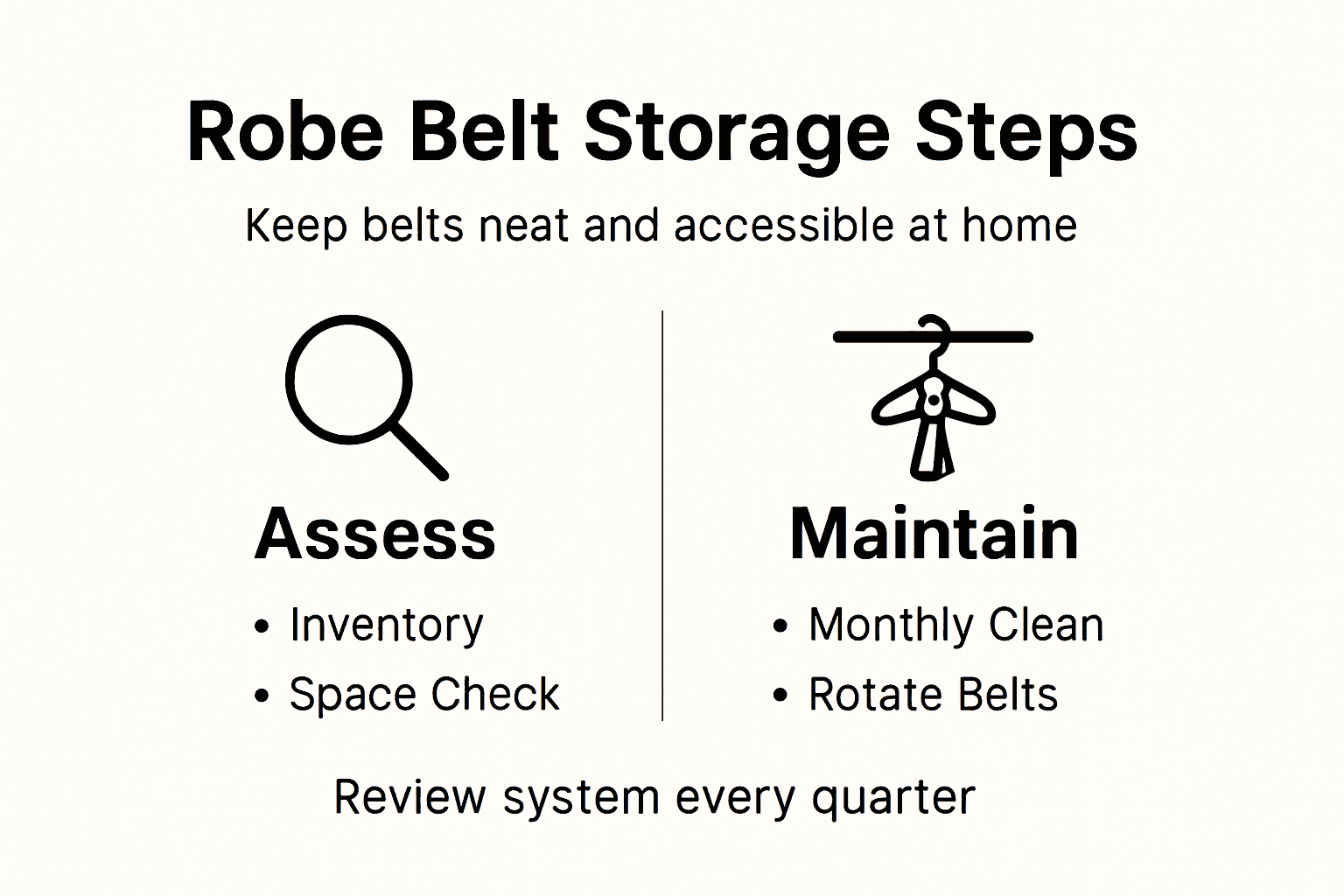
Develop a monthly maintenance routine that goes beyond simple dust removal. Start by emptying each storage container or rack completely. Gently vacuum or wipe down surfaces with a soft microfiber cloth to remove dust and prevent fabric discoloration. Pay special attention to hooks and dividers where lint and debris can accumulate. For fabric storage containers, consider washing or spot cleaning them to maintain their appearance and prevent musty odors.
Your storage area should reflect the same care you give your robe belts. Cleanliness standards support attractive and functional spaces that inspire continued organization. Rotate your belts periodically to prevent creasing and ensure even exposure. Inspect each belt for signs of wear or damage during your cleaning process. This not only keeps your storage system looking great but also helps you identify when a belt might need special care or replacement.
Pro tip: Use a lavender sachet or cedar block in your storage area to keep your robe belts smelling fresh and deter potential moths.
Elevate Your Robe Belt Storage With Premium Comfort
Struggling with tangled and wrinkled robe belts can make starting your day frustrating. This article highlights the importance of strategic assessment and thoughtful organization to keep your belts protected and accessible. By choosing the right storage solutions and maintaining a clean, breathable environment, you can preserve the quality and look of your favorite robe belts.
Enhance your robe belt experience by pairing perfect storage with our exclusive collection of robes designed for comfort and style. Explore The BEST Men Robes to find plush and durable options that complement your organized space.

Discover how our premium robes add sophistication to your daily routine while our guidance on belt storage ensures your accessories stay in pristine condition. Visit Lotus Linen now and transform your bath and loungewear with elegance and ease.
Frequently Asked Questions
How can I assess my current robe belt storage needs?
Start by taking inventory of all your robe belts, sorting them by material, color, and usage. Lay them out to visually map your collection and identify which belts need better storage solutions.
What are the best storage solutions for robe belts?
Consider solutions like hanging racks for silk belts, drawer dividers for compact space, and fabric-lined boxes for dust protection. Choose breathable materials to prevent moisture damage, and create a system that is organized and accessible.
How should I strategically arrange my robe belts?
Identify high-traffic areas in your closet for optimal belt access. Install hooks or racks at various heights, and group similar belts together for a neat and easily reachable setup.
How can I test the accessibility of my robe belt storage system?
Spend a week using your new storage arrangement, taking notes on any difficulties you encounter. Adjust the placement of hooks or dividers based on your experience to ensure easy access and improved functionality.
What maintenance should I perform to keep my robe belt storage system clean?
Establish a monthly cleaning routine that includes emptying storage containers and wiping down surfaces. Inspect each belt for wear during cleaning, and consider rotating your belts to prevent creasing.
How can I enhance the visual appeal of my robe belt storage?
Rotate your robe belts seasonally and use color coding or clear labeling for a visually appealing display. Adding decorative containers or hooks can also elevate the look of your storage while keeping it organized.

