
Choosing child-friendly bath products can feel surprisingly complex for American parents who value both style and safety. With studies showing that over 60 percent of parents worry about hidden chemicals in everyday fabrics, the path to luxury and comfort is about more than picking a soft towel or cute toy. This guide uncovers the truths and misconceptions behind popular bath materials so you can confidently create a beautiful, healthy, and safe space for your family.
Table of Contents
- Defining Child-Friendly Bath Materials And Misconceptions
- Common Fabric Types And Their Key Benefits
- Safety Standards And Hypoallergenic Certifications
- Comparing Plush, Waffle, And Organic Options
- Essential Care, Maintenance, And Common Mistakes
Key Takeaways
| Point | Details |
|---|---|
| Child-friendly materials prioritize safety | Select bath products that avoid toxic ingredients such as phthalates and BPA and are certified non-toxic and hypoallergenic. |
| Understand fabric types for bath textiles | Choose materials like Organic Cotton, Waffle Weave, and Plush Terry Cloth based on their comfort, absorbency, and drying qualities. |
| Focus on certifications for safety | Verify the safety of bath materials by looking for certifications like OEKO-TEX and GOTS, ensuring no harmful chemicals are present. |
| Proper care extends lifespan | Use gentle detergents, avoid fabric softeners, and ensure thorough drying to maintain the quality and safety of bath materials. |
Defining Child-Friendly Bath Materials and Misconceptions
Understanding what constitutes child-friendly bath materials goes far beyond choosing colorful products. Modern parents recognize that safety involves careful material selection, chemical composition awareness, and potential long-term health implications. Navigating child-safe bath products requires understanding key characteristics that protect children’s sensitive skin and overall wellness.
Child-friendly bath materials fundamentally differ from standard consumer products by prioritizing non-toxic, hypoallergenic ingredients. These materials typically avoid synthetic chemicals like phthalates, parabens, and BPA that can potentially disrupt hormonal development. Eco-friendly bath toys often represent excellent examples of such materials, constructed from natural substances such as organic wood, natural rubber, and biodegradable components that minimize health risks.
Common misconceptions surrounding child-friendly bath materials include believing that all products labeled “natural” or “organic” automatically guarantee safety. Parents must look beyond marketing terminology and examine specific ingredient lists, understanding that regulatory standards can vary significantly. Key indicators of truly child-friendly materials include:
- Absence of synthetic fragrances
- Non-toxic material certifications
- Hypoallergenic composition
- Third-party safety testing documentation
- Transparent ingredient disclosure
Pro tip: When selecting bath materials for children, always request detailed ingredient information and prioritize products with clear, comprehensive safety documentation from reputable manufacturers.
Common Fabric Types and Their Key Benefits
Parents seeking the perfect bath materials for children must understand the nuanced characteristics of different fabric types. Eco-friendly bath textile options range from plush cotton to specialized organic weaves, each offering unique protective qualities for sensitive young skin. Understanding these materials goes beyond aesthetic preferences, focusing on safety, comfort, and long-term health considerations.
Organic Cotton stands out as a premier choice for child-friendly bath textiles. This natural fabric provides exceptional softness, superior absorbency, and minimal risk of skin irritation. Unlike synthetic alternatives, organic cotton eliminates exposure to harmful pesticides and chemical treatments. Its breathable nature allows for quick moisture wicking, which is crucial for maintaining comfortable body temperature during and after bath time.
Waffle weave and plush terry cloth represent two additional fabric types prized by health-conscious parents. Child-friendly bath textile materials demonstrate distinct advantages in different scenarios:
-
Waffle Weave:
- Rapid drying capabilities
- Lightweight and breathable
- Enhanced texture for improved absorption
- Ideal for warmer environments
-
Plush Terry Cloth:
- Maximum softness and comfort
- High absorbency
- Excellent for post-bath wrapping
- Provides warmth and gentle skin contact
Pro tip: When selecting bath fabrics for children, always prioritize materials that are certified organic, chemical-free, and specifically designed for sensitive skin.
Here’s a quick-reference table outlining differences between major bath textile types for children:
| Fabric Type | Primary Benefit | Typical Drawback | Best Use Scenario |
|---|---|---|---|
| Organic Cotton | Gentle on skin | May shrink if overheated | Everyday bath towels |
| Waffle Weave | Dries quickly | Less plush feel | Warm climates, quick drying |
| Plush Terry Cloth | Superior softness | Slower drying | Post-bath wrapping |
Safety Standards and Hypoallergenic Certifications
Understanding safety standards for children’s bath materials requires deep knowledge of complex regulatory frameworks and potential health risks. Child-safe bath product guidelines demonstrate the critical importance of rigorous testing and certification processes designed to protect vulnerable young consumers from harmful chemical exposures.
Hypoallergenic certifications represent a crucial safeguard for parents seeking materials that minimize potential allergic reactions. Safety standards for bath materials typically involve comprehensive testing protocols that evaluate potential skin irritants, chemical compositions, and long-term health implications. Key organizations responsible for these standards include:
- U.S. Consumer Product Safety Commission
- OEKO-TEX Standard 100
- Global Organic Textile Standard (GOTS)
- STANDARD 100 Certification
These certification processes involve multiple layers of scrutiny, examining everything from raw material sourcing to final product composition. Manufacturers must demonstrate that their products contain no harmful chemicals such as phthalates, BPA, formaldehyde, and other potential toxins known to cause skin irritation or long-term health concerns. Parents should look for clear certification labels and be prepared to research the specific standards each certification represents.
Pro tip: Always request detailed certification documentation and verify the specific testing standards used when selecting bath materials for children.
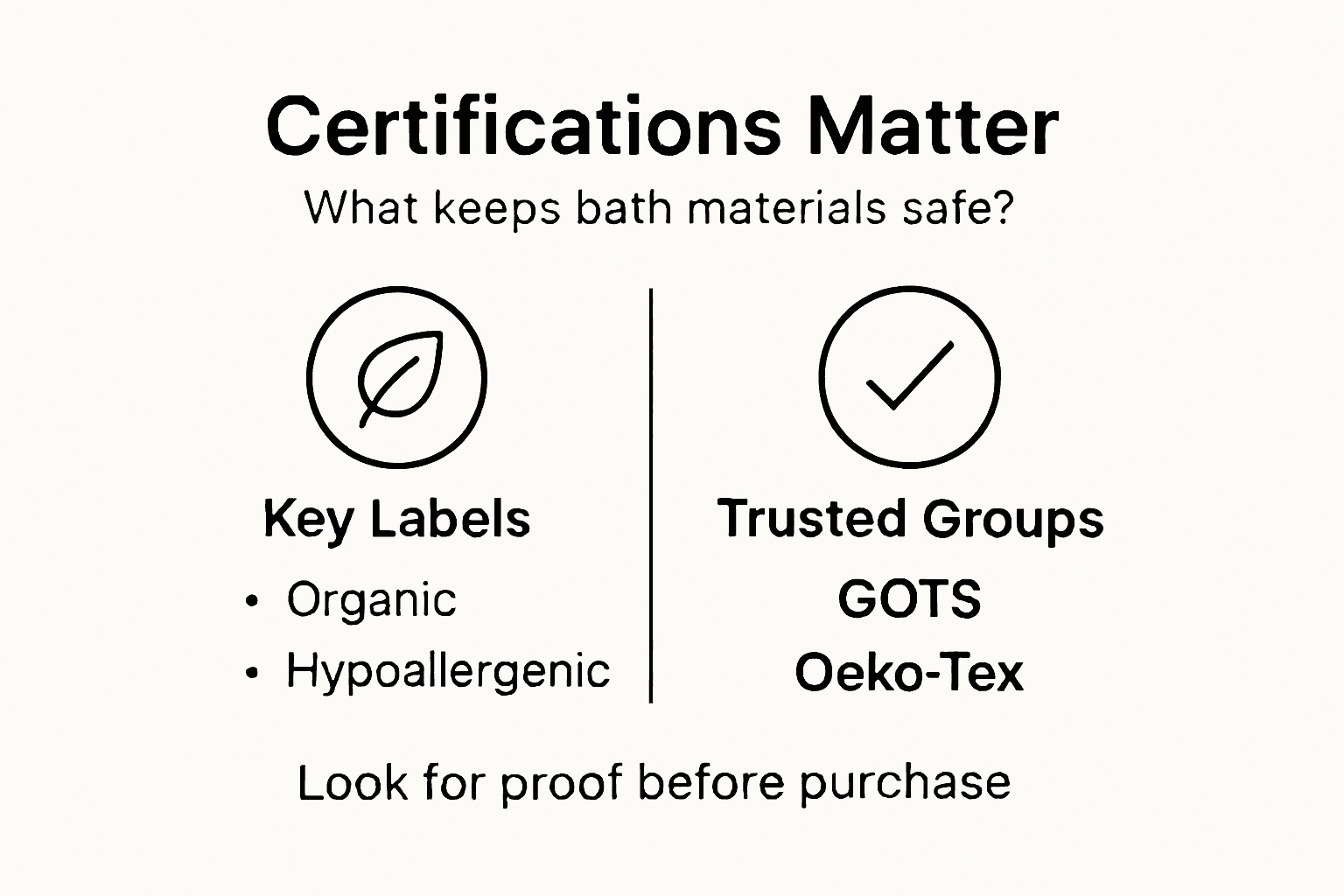
To help parents navigate certifications, review this table on child bath material safety standards:
| Certification | Coverage Area | Trusted Organization | What It Ensures |
|---|---|---|---|
| OEKO-TEX Standard 100 | Textiles, fabrics | OEKO-TEX Association | No harmful substances present |
| Global Organic Textile Standard (GOTS) | Organic fabrics | GOTS Consortium | Strict organic sourcing |
| U.S. Consumer Product Safety | Consumer goods | U.S. CPSC | Federal safety compliance |
| STANDARD 100 | Global textiles | OEKO-TEX Association | Comprehensive chemical screening |
Comparing Plush, Waffle, and Organic Options
Parents navigating child-friendly bath materials face a nuanced decision when selecting between plush, waffle, and organic fabric options. Eco-friendly bath material choices require careful consideration of each fabric’s unique properties, balancing comfort, functionality, and safety for children’s delicate skin.
Plush Fabrics represent the pinnacle of softness and warmth, offering exceptional comfort for children. These luxuriously thick materials provide maximum tactile gentleness, making them ideal for post-bath wrapping and creating a cozy sensory experience. However, child-friendly bath textile characteristics reveal that plush fabrics tend to retain moisture longer, which can increase drying time and potentially create environments conducive to bacterial growth.
Fabric Comparison Breakdown:
Plush Fabrics:
- Maximum softness and comfort
- Slower moisture absorption
- Higher warmth retention
- Best for sensitive skin
Waffle Weave:
- Rapid drying capabilities
- Enhanced breathability
- Lightweight texture
- Quick moisture wicking
Organic Fabrics:
- Chemical-free composition
- Hypoallergenic properties
- Reduced skin irritation risks
- Environmentally sustainable
The optimal choice depends on individual family needs, balancing factors like skin sensitivity, climate, and personal preferences. Waffle weave excels in humid environments due to its quick-drying nature, while organic fabrics provide the most comprehensive protection against potential chemical exposures.
Pro tip: Consider purchasing bath materials that combine multiple fabric types to maximize comfort, absorption, and safety for your child.
Essential Care, Maintenance, and Common Mistakes
Maintaining child-friendly bath materials requires strategic approaches that protect both fabric integrity and children’s health. Child-safe bath product guidelines emphasize the critical importance of understanding proper care techniques to prevent degradation and potential skin irritations.
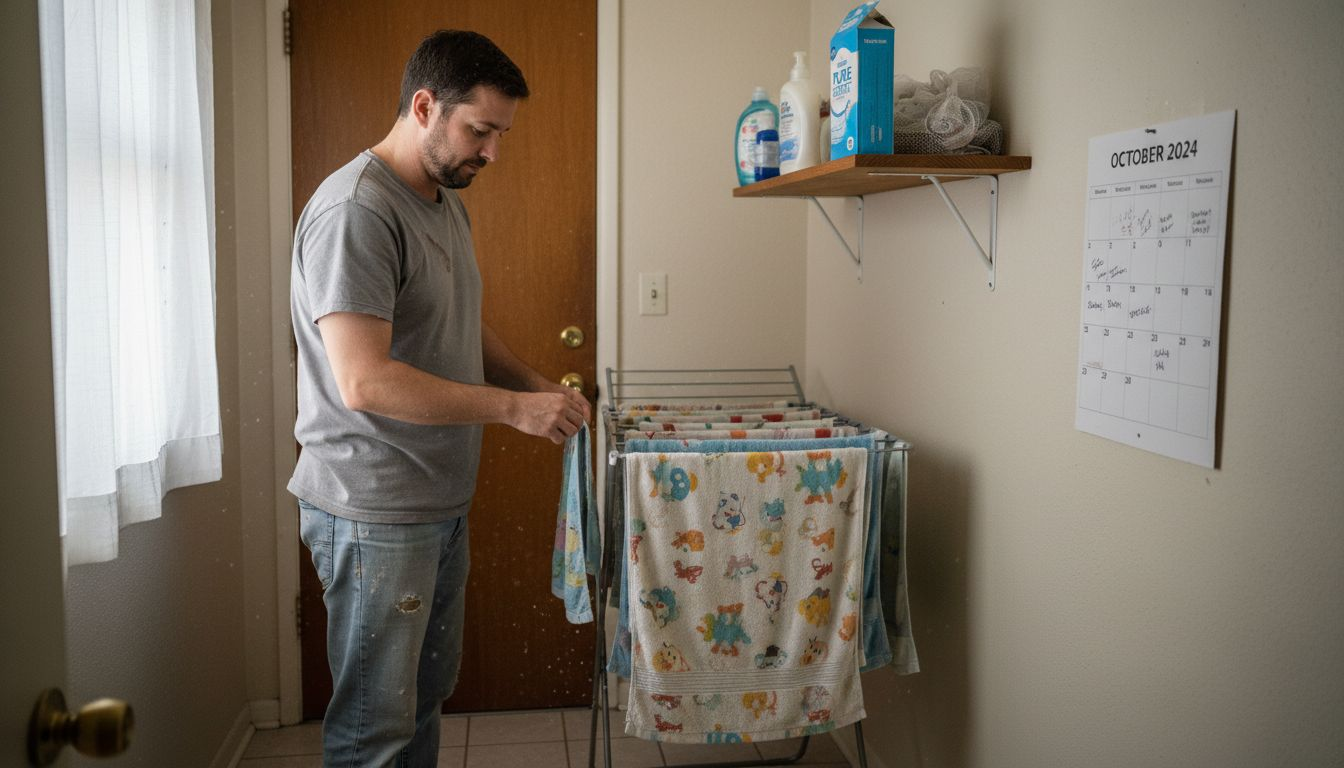
Caring for specialized bath textiles involves more than standard laundry practices. Bath material maintenance strategies reveal several critical considerations parents must address to preserve fabric quality and safety:
Common Care Mistakes to Avoid:
- Using harsh chemical detergents
- Applying fabric softeners
- Drying materials incorrectly
- Storing damp bath items
- Neglecting regular inspection
Essential Maintenance Techniques:
- Wash in gentle, hypoallergenic detergents
- Use cold or lukewarm water
- Avoid direct high-heat drying
- Thoroughly air dry between uses
- Inspect for wear and potential damage
Parents should recognize that different fabric types require nuanced care approaches. Organic materials might need more delicate handling, while waffle weave fabrics demand thorough drying to prevent mildew. Understanding these specific requirements helps extend the lifespan and maintain the protective qualities of child-friendly bath materials.
Pro tip: Create a dedicated drying area with good air circulation to ensure bath materials dry completely between uses, preventing bacterial growth and maintaining fabric integrity.
Choose Safe and Stylish Bath Materials for Your Child Today
Ensuring your child’s bath time is both safe and comfortable means prioritizing non-toxic, hypoallergenic fabrics that protect delicate skin from irritants and harmful chemicals. This article highlights the importance of selecting bath textiles carefully to avoid synthetic fragrances and harmful substances while still enjoying plush softness and quick-drying properties. At Lotus Linen, we understand these concerns and blend safety with elegance in every product.
Discover our Scallop Piping Towel Set | Lotus Linen crafted with premium cotton fabrics that offer gentle touch and superior absorbency, perfect for sensitive skin.

Protect your child with bath materials that pass rigorous safety standards without sacrificing luxury. Visit Lotus Linen now and explore our collections featuring plush and waffle weaves that cater to every family’s needs. Pair your towels with our comfortable Spa Slippers for Lightweight to complete a nurturing home spa experience. Upgrade your child’s bath routine today for peace of mind and lasting comfort.
Frequently Asked Questions
What are the key characteristics of child-friendly bath materials?
Child-friendly bath materials prioritize non-toxic, hypoallergenic ingredients and avoid synthetic chemicals such as phthalates, parabens, and BPA. Parents should look for products free of synthetic fragrances, with non-toxic material certifications and third-party safety testing documentation.
How can I differentiate between truly organic and merely labeled natural bath products?
To ensure a product is genuinely organic, examine the ingredient list thoroughly rather than relying solely on marketing claims. Look for certifications like GOTS or OEKO-TEX that confirm strict safety and sourcing standards.
What benefits do different fabric types offer for children’s bath materials?
Organic cotton is soft and absorbent, while waffle weave dries quickly, making it ideal for warm environments. Plush terry cloth offers maximum comfort and warmth, perfect for post-bath wrapping, but retains moisture longer.
What are some common mistakes parents make when caring for child-friendly bath textiles?
Common mistakes include using harsh detergents, applying fabric softeners, drying materials incorrectly, storing damp items, and neglecting inspections for wear. Parents should wash with gentle, hypoallergenic detergents and ensure items are thoroughly air-dried between uses.
Recommended
- How to Choose Bath Towels: Selecting the Perfect Luxe Towels – Lotus Linen
- How to Choose a Perfect Robe Fit for Growing Kids – Lotus Linen
- Effective Robe Sizing for Toddlers: A Step-by-Step Guide – Lotus Linen
- Complete Guide to Kids Bath Towel Safety – Lotus Linen
- Best Sponge and Cleaning Solution for Stainless Steel Sinks in Tampa, FL - Home Therapist Cooling, Heating, and Plumbing

