
If you have ever wondered why some cotton towels feel noticeably softer and more open than others of the same weight, the answer is often in the yarn — specifically, how much it is twisted. Zero-twist cotton is the construction behind that soft, airy hand, and it is the yarn we chose for our towels. Here is what it actually is, how it is spun, and why it feels the way it does.
What zero-twist cotton is
To turn loose cotton fibers into thread, they are spun together with a twist. That twist adds strength, and conventional towel yarn is twisted fairly tightly. The trade-off is that a tight twist compresses the fibers and closes up the terry loops, which can make the surface feel firmer and less pillowy.
Zero-twist (sometimes called low-twist) yarn is spun with little to no twist. The cotton fibers are held together with minimal twisting, so the yarn stays fuller and softer and the loops it forms stand more open. It is not a coating or a finish — it is the structure of the yarn itself, which is why the character stays with the towel rather than washing away.
How it is spun
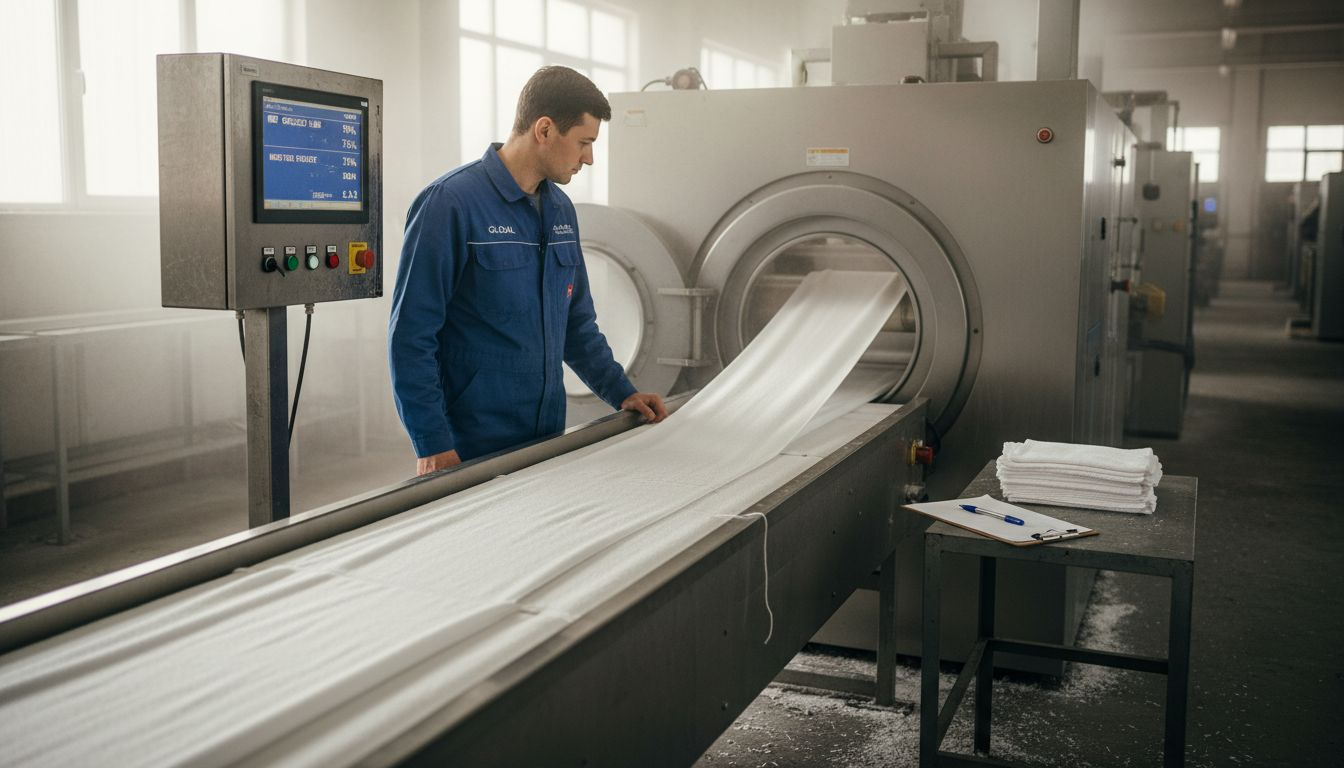
Because a nearly untwisted strand of cotton has little strength on its own, zero-twist yarn is made by spinning the cotton with a temporary supporting element that holds it together during weaving. Once the towel is woven and washed, that support is removed and what remains is soft, bulky, barely-twisted cotton forming the pile. The result is a loop that opens up fully instead of being wound tight. Building a good zero-twist towel takes care and consistent construction, which is why we treat the yarn and its specifications as something to verify across production rather than take for granted.
Why it feels the way it does
- Soft, open hand. With the fibers barely twisted, the pile is plusher and gentler against skin from the first touch.
- Lots of loop surface. Open, untwisted loops expose more cotton surface, which is what a towel uses to lift water off your skin.
- Light and airy for its softness. Zero-twist gives a lofty, cushioned feel without needing to pile on extra weight to get there.
Our scallop-piping bath towels pair 100% zero-twist cotton with a 620 GSM weight — enough body to feel substantial while the yarn keeps the hand soft and open. Note that this article is about the yarn; how much the pile is packed and how heavy the towel is are separate questions. For the density side, see what makes a towel plush and our towel thickness comparison guide.
Common questions
What does zero-twist mean on a towel?
It describes the yarn: the cotton is spun with little or no twist, so the fibers stay full and the terry loops sit open. That construction is what gives the towel its soft, airy feel.
Is zero-twist cotton better than regular cotton?
It's not a different fiber — it's still cotton, spun differently. Zero-twist trades a little of the raw strength that tight twisting adds for a noticeably softer, more open hand, so quality construction matters to keep it durable. Many people prefer the feel for everyday bath towels.
Does zero-twist cotton stay soft after washing?
Yes, because the softness comes from the yarn's structure, not a finish. Wash warm, skip fabric softener, and avoid over-drying on high heat and the open, soft feel holds up over time.


