
TL;DR:
- Proper linen storage in breathable bags prevents moisture buildup and reduces musty odors over time.
- Consistent gentle washing, partial drying, and mindful rotation extend linen freshness and lifespan significantly.
- Adopting spa-inspired habits like strict inspection and segregation ensures long-lasting, hotel-quality linens at home.
There is something deeply disappointing about pulling back a bed with stale-smelling sheets or handing a guest a towel that hints at mildew. You invested in quality linens for a reason, and musty, flat, or rough fabric undermines every bit of that investment. Whether you run a spa where freshness is non-negotiable or you are a parent who simply wants your family to sink into truly clean, soft bedding every night, the difference between linens that stay fresh for years and ones that deteriorate in months comes down to a handful of deliberate habits. This guide walks you through exactly those habits, backed by evidence and tested in both high-end hospitality and everyday home settings.
Table of Contents
- Gathering your freshness essentials
- Step-by-step fresh linen routine
- Professional and spa-level linen management
- Mistakes that sabotage freshness (and how to fix them)
- A fresh take: What most guides miss about linen longevity
- Elevate your linen care: Discover comfort-worthy upgrades
- Frequently asked questions
Key Takeaways
| Point | Details |
|---|---|
| Weekly wash routine | Wash sheets and towels at least weekly to maintain true freshness and reduce allergens. |
| Breathable storage wins | Store linens in cotton bags or pillowcases for airflow and less musty odor. |
| Gentle heat and rotation | Use gentle drying cycles, avoid high heat, and rotate linens for texture longevity. |
| Inspections boost lifespan | Regular checks and immediate stain removal keep linens looking and feeling new. |
| Avoid plastic bins | Sealed plastic bins trap moisture and can damage luxury textile fibers over time. |
Gathering your freshness essentials
Once you know the stakes for freshness, preparation is the difference between routine linen changes and linens that feel fresh-out-of-the-box every time.
Most people focus on buying quality linens but overlook how they store and supply them day to day. The items you keep on hand, and the containers you choose, silently shape whether your linens stay crisp or turn stale between uses.
The storage problem nobody talks about: Sealed plastic bins are popular because they look tidy and protect against bugs. But plastic traps moisture and limits airflow. That trapped humidity, even in small amounts, creates the perfect environment for mildew and musty odors to build inside folded fabric. The linen storage hack that actually works is using pillowcases or breathable fabric bags for seasonal sets instead of sealed plastic, which measurably reduces musty odors and fabric deterioration.
For ongoing luxury linen maintenance, check out these luxury linen maintenance tips that cover everything from fiber selection to long-term storage strategy.
What to keep on hand
- Breathable cotton pillowcases or muslin bags for seasonal linen storage
- Mild, pH-balanced detergent formulated for natural fibers (not generic heavy-duty formulas)
- White vinegar as a natural fabric softener and odor neutralizer
- Wool dryer balls to reduce drying time and soften without chemical residue
- Cedar blocks or sachets for drawers and closets to deter pests naturally
Why detergent choice matters more than most people realize: Standard detergents often contain optical brighteners and heavy surfactants that build up on natural fiber linens over repeated washes. That buildup traps odor and eventually makes fabric feel stiff or look dull. For luxury cotton, linen, or bamboo fabrics, look for formulas labeled specifically for delicate or natural fibers. Many luxury home cleaning experts recommend using half the suggested detergent dose for fine fabrics to avoid residue buildup entirely.
| Storage method | Breathability | Freshness outcome | Best for |
|---|---|---|---|
| Sealed plastic bin | None | Musty over time | Short-term protection only |
| Breathable cotton bag | High | Consistently fresh | Seasonal and everyday sets |
| Open linen shelf | Very high | Fresh if low humidity | Frequently used linens |
| Vacuum storage bag | None | High odor risk | Emergency space-saving only |
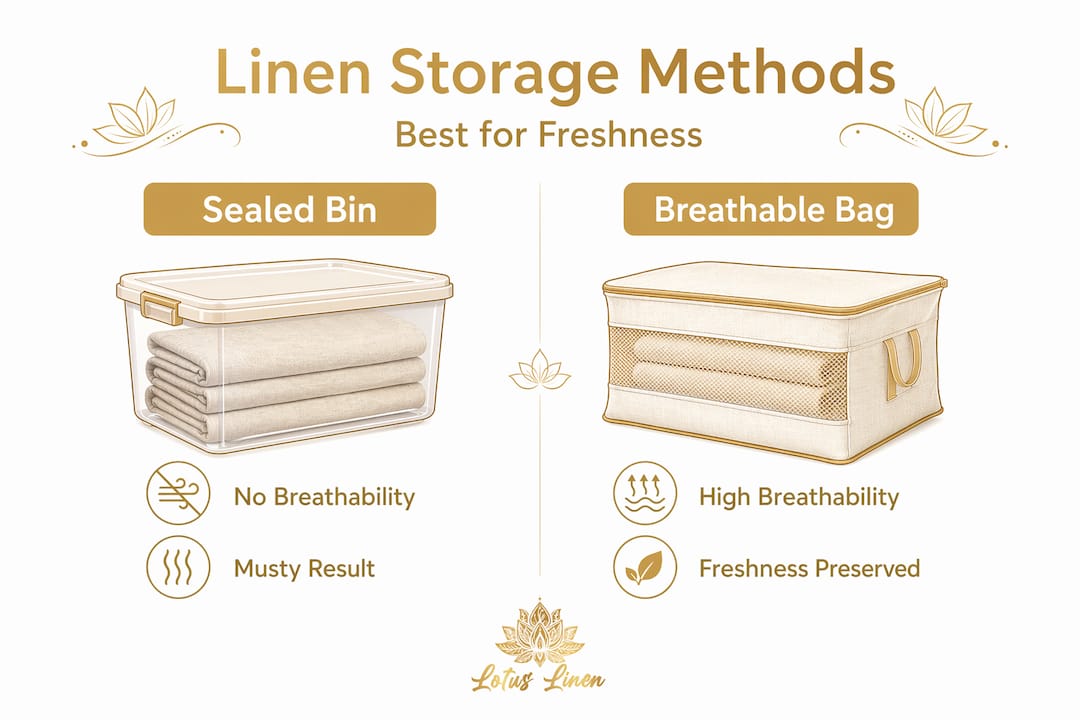
Pro Tip: Label your breathable storage bags by season (summer, winter, guest) so you rotate sets regularly rather than pulling the same set out repeatedly while others sit compressed and forgotten.
Step-by-step fresh linen routine
With the right supplies in hand, it is time to lock in a simple yet powerful routine anyone can master.
Consistency beats intensity every time. Washing your linens rarely with intense hot cycles does more damage than washing them gently on a regular schedule. The routine below applies whether you are maintaining a single guest bedroom or an entire spa linen inventory.
The routine, step by step
-
Strip the bed and allow mattress to breathe. Before loading the wash, let your mattress air out for at least 20 to 30 minutes. Moisture from overnight sleep needs somewhere to go, and trapping it immediately under fresh sheets sets up the next round of odor.
-
Pre-treat any stains with cold water. Heat sets stains permanently into fiber. Always address spots with cold water and a small amount of mild liquid soap before washing.
-
Wash in warm water on a gentle cycle. Medical and professional guidance consistently emphasizes washing sheets weekly to reduce allergens, including dust mites, and to prevent odor-causing moisture buildup. Warm (not hot) water cleans effectively without stressing natural fibers.
-
Add half a cup of white vinegar to the rinse cycle. Vinegar neutralizes detergent residue and odor compounds without leaving a scent of its own once dry. It also naturally softens fabric.
-
Remove from the dryer while slightly damp. This is one of the most overlooked steps. Over-drying damages fibers and locks in stiffness and wrinkles. Pulling sheets out while they still have about 10 to 15 percent moisture left allows them to finish air-drying in a way that preserves texture and reduces creasing dramatically.
-
Do not make the bed immediately. Let fresh sheets air out on the bed for 15 to 20 minutes before tucking in. This small pause lets residual moisture evaporate so you are not sealing dampness between layers.
-
Fold and store correctly. Refer to your breathable storage setup from the previous section. Never fold linens while still warm from the dryer; let them cool first to prevent moisture trapping inside the fold.
“Washing frequency and drying method are not just housekeeping preferences, they are fiber health decisions. Every shortcut you take with heat or timing shortens the life of your linens and allows odor compounds to build over time.” — Lotus Linen care philosophy
For guidance on how often to launder different linen types, our laundering frequency best practices page covers robes, towels, and bedding with tailored schedules. And if your towels are already developing a musty smell, our guide to preventing towel odor will walk you through a reset routine.
Pro Tip: For towels especially, hang them fully open after every use. A bunched or folded damp towel develops mildew within hours. A towel hung flat in good airflow stays fresh for two to three uses before washing.
For households managing dust mite control, consistent weekly washing is one of the most effective strategies available.
Professional and spa-level linen management
Routine care works for most homes, but those aiming for next-level or commercial freshness can borrow from spa playbooks.
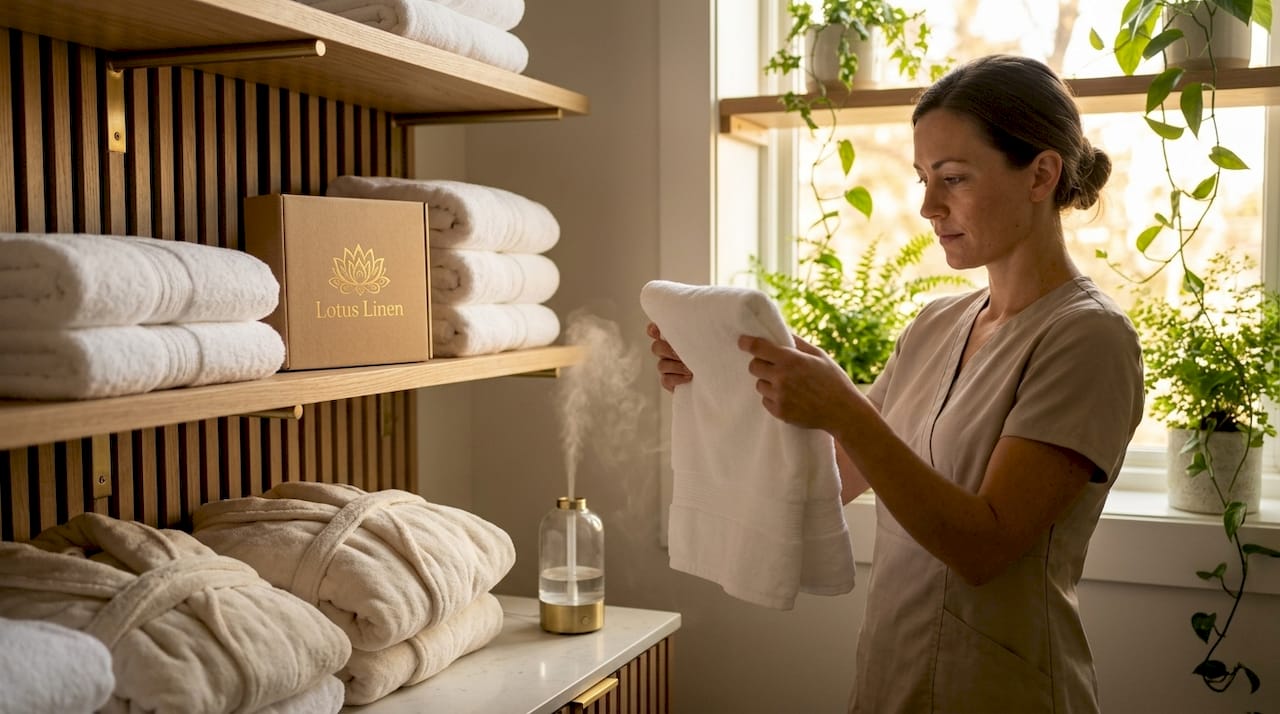
Spas and hospitality businesses cannot afford a single guest encounter with a musty towel or a rough robe. Their linen management systems are built around prevention, not reaction, and the core principles scale down beautifully for home use.
According to spa linen replacement protocols, professional settings use daily visual inspections, immediate removal of any compromised linens, strict segregation of clean versus potentially contaminated items, and documented lifecycle tracking to maintain consistent freshness standards across hundreds of pieces at once.
What spas do differently
- Visual inspection before every use. Staff check for odor, staining, or texture changes before a linen touches a client. At home, this takes about three seconds: unfold and sniff before making the bed or handing over a towel.
- Strict rotation protocols. All linens in a set rotate evenly. No single piece gets used more than others because uneven use degrades individual items faster and creates inconsistency.
- Segregated storage for clean and dirty. Clean linens never share a basket, shelf, or cart with used ones. This sounds obvious but is frequently ignored in busy family households.
- Documented replacement cycles. Spa linens are replaced based on use count, not just appearance. A towel that has been through 80 wash cycles behaves differently than a new one, regardless of how it looks.
| Care element | Spa approach | Upgraded home approach |
|---|---|---|
| Inspection | Daily, before every client | Quick check before use or storage |
| Rotation | Strict, documented | Label sets and rotate monthly |
| Segregation | Always strict | Separate hampers for clean and dirty |
| Replacement timing | Use-count based | Replace after visible texture decline |
| Laundering frequency | After every single use | Weekly minimum, or after heavy use |
Families with multiple children or frequent guests benefit most from adopting the segregation and rotation practices. A simple color-coded system (different colored tags for different family members’ towels, for example) can make rotation systematic without requiring spreadsheets. For deeper bath linen hygiene strategies, our bath linen hygiene guide covers the full picture.
Mistakes that sabotage freshness (and how to fix them)
Even thoughtful routines can falter. Let us break down why some freshness efforts miss the mark, and how a few tweaks bring linens back to life.
The most frustrating freshness failures are the ones caused by care habits that feel logical but actually work against fiber health.
The most common mistakes
-
Using sealed plastic storage. Already covered in section one, but worth reinforcing: plastic containers are the number one enemy of stored linens, especially in climates with any humidity variation.
-
Skipping rotation. When you always reach for the same set, those linens accumulate more wear, wash cycles, and odor exposure than the rest of your collection. Rotating evenly distributes that burden and keeps every set fresher longer.
-
Washing on hot cycles. The instinct to use hot water for a “deeper clean” is understandable but wrong for luxury fibers. Heat breaks down natural fiber structure faster, shrinks fabric, and locks in any detergent residue already present in the weave.
-
Using too much detergent. More soap does not mean cleaner linens. Excess detergent that does not fully rinse out becomes a residue layer that holds onto odor molecules and stiffens fabric with repeated washing.
-
Over-drying. Leaving linens in a hot dryer until they are bone dry is one of the fastest ways to destroy softness and introduce that cardboard stiffness that makes luxury linens feel ordinary.
“Linen’s natural fiber can be preserved best by avoiding aggressive heat and detergent choices, and by choosing gentler drying cycles; otherwise the fabric may become brittle or shrink sooner than expected.” — Martha Stewart home care guidance
For towels specifically, maintaining towel softness requires its own set of approaches, including skipping fabric softener sheets that coat fibers and reduce absorbency over time. And for robes, our robe care for longevity guide outlines how to preserve pile depth and structural integrity wash after wash.
Effective house dust control in the rooms where you store linens also reduces the amount of particulate that settles into folded fabric, which contributes to that flat, slightly musty smell that develops in rarely opened linen closets.
A fresh take: What most guides miss about linen longevity
Most linen care guides lead with scent. Use lavender sachets. Add essential oils to the dryer. Spritz pillowcases with linen spray. These suggestions are not harmful, but they are cosmetic fixes layered over a structural problem. They make linens smell better temporarily without addressing why they stop smelling fresh in the first place.
Real linen longevity is a moisture management problem and a fiber health problem. Scent is only a symptom. When linens develop persistent odor, it is almost always because moisture got trapped somewhere in the storage or drying process and allowed microbial activity to build up inside the fiber. No amount of lavender reverses that at the root level.
What years of working with high-end home and spa linens has taught us is this: the habits that protect freshness are quiet ones. It is the 20-minute wait before making the bed. It is the half-dose of detergent. It is the breathable bag instead of the plastic bin. None of these feel dramatic, but together they are the reason some households have linens that feel hotel-fresh five years after purchase while others replace them every 18 months in frustration.
There is also a mindset shift worth making: think of your linens as textiles with a finite number of useful wash cycles, and your job is to extract the most comfort from every one of those cycles by minimizing unnecessary stress. High heat, excess chemical, and poor airflow all spend those cycles faster than they need to be spent.
Pairing that mindset with consistent practice outperforms any single product or shortcut on the market. If you want to understand the deeper case for investing in quality from the start, our guide on why luxury bath linens matter makes the argument clearly, including the long-term economics of quality over replacement cost.
Elevate your linen care: Discover comfort-worthy upgrades
Knowing how to care for luxury linens properly is most rewarding when the linens themselves are worth protecting. At Lotus Linen, we design robes, towels, and spa accessories specifically to respond well to the kind of gentle, consistent care routines this article describes.
Our plush and waffle-weave fabrics are built to stay soft, absorb efficiently, and maintain their texture across hundreds of proper wash cycles. Whether you are outfitting a spa treatment room, building a family linen collection that lasts, or simply upgrading your own daily comfort, you will find options that reward good care habits. Explore our men’s luxury robes, browse the women’s luxury robes collection, or discover our luxury bath towels designed for spa-grade softness and longevity. When you pair quality materials with the right care routine, freshness stops being a goal and becomes the natural result.
Frequently asked questions
How often should I wash luxury bed linens for optimal freshness?
Washing luxury bed linens at least once a week maintains freshness and significantly reduces allergen buildup, including dust mites, that accumulates from nightly use.
Is it better to store extra linens in sealed bins or breathable bags?
Breathable cotton bags or pillowcases are far better for freshness than sealed plastic bins, which trap humidity and accelerate musty odors and fabric deterioration over time.
What temperature should I use to wash and dry linens?
Warm water on a gentle cycle is ideal for washing, and low or gentle drying cycles protect fiber integrity best. Removing linens while slightly damp and allowing them to finish air-drying prevents stiffness and structural damage from high heat.
How do I keep towels from getting musty between washes?
Hang towels fully open after every use so they dry completely, and avoid sealed storage that traps residual moisture. Occasional sun-drying is one of the most effective natural freshness resets available.

