
Every guest expects a spa experience defined by luxury, comfort, and spotless surroundings, yet behind the scenes, maintaining that standard relies on more than just fresh scents and soothing music. For Spa owners and Boutique Hotel managers across the United States, crafting a reliable linen replacement policy is central to delivering consistent guest comfort and upholding an outstanding brand image. This guide uncovers what a thoughtful linen replacement policy should include, drawing on proven protocols to help you safeguard hygiene while reinforcing a reputation guests will remember.
Table of Contents
- Spa Linen Replacement Policy Defined
- Linen Types And Replacement Schedules
- Maintenance, Hygiene, And Inspection Protocols
- Legal, Safety, And Industry Standards
- Cost Control And Inventory Management
- Sustainability And Brand Image Integration
Key Takeaways
| Point | Details |
|---|---|
| Spa Linen Management | Establish a systematic approach focusing on hygiene, guest comfort, and operational efficiency within spa environments. |
| Replacement Protocols | Implement specific replacement schedules based on linen type, usage frequency, and contamination risk to maintain optimal hygiene. |
| Tracking Systems | Utilize advanced tracking technologies to ensure effective linen management, reduce errors, and enhance inventory accuracy. |
| Sustainability Practices | Incorporate sustainable materials and practices in linen management to enhance brand image and appeal to eco-conscious consumers. |
Spa Linen Replacement Policy Defined
A spa linen replacement policy establishes systematic guidelines for managing and refreshing towels, robes, and other textile materials to maintain optimal hygiene and guest comfort. Unlike standard laundry procedures, these policies focus specifically on the unique requirements of spa and wellness environments where textile quality directly impacts customer experience.
Effective spa linen replacement policies typically address several critical components:
- Frequency of replacement for different linen types
- Contamination protocols for potentially soiled items
- Inspection standards for textile condition
- Cleaning and sanitization procedures
The primary objective of such a policy is to prevent potential health risks through rigorous textile management. Spas must implement comprehensive guidelines that ensure every guest encounters fresh, clean, and pristine linens during their wellness experience.
Spa managers need to develop replacement strategies that balance several key considerations:
- Maintaining absolute hygiene standards
- Controlling operational costs
- Preserving textile quality and appearance
- Meeting guest expectations for cleanliness
Implementing a robust replacement policy requires detailed tracking mechanisms, staff training, and consistent execution. Regular audits and quality checks help ensure that replacement protocols remain effective and adaptable to changing health standards.
Pro tip: Create a color-coded tracking system for linen rotation to streamline replacement processes and minimize human error.
Linen Types and Replacement Schedules
Spa environments utilize multiple linen types that require distinct replacement strategies tailored to their specific use and wear characteristics. Textile management protocols emphasize the importance of understanding each fabric’s unique properties and potential contamination risks.
The primary linen categories in spa settings include:
- Terry cloth towels: Highly absorbent, used for drying and body contact
- Microfiber robes: Lightweight, quick-drying materials for guest comfort
- Cotton waffle weave robes: Luxurious, breathable spa wear
- Disposable treatment linens: Single-use items for massage and treatment areas
Replacement schedules vary based on several critical factors:
- Frequency of use
- Direct skin contact intensity
- Visible wear or damage
- Potential contamination exposure
Most professional spas implement a systematic approach to linen rotation that balances hygiene requirements with operational efficiency. This typically involves categorizing linens into different replacement tiers, with high-contact items receiving more frequent refreshment compared to decorative or less-used textiles.
Hygiene considerations play a paramount role in determining replacement timing. Items exposed to direct skin contact, bodily fluids, or treatment substances require more aggressive replacement protocols to maintain optimal guest safety and comfort.
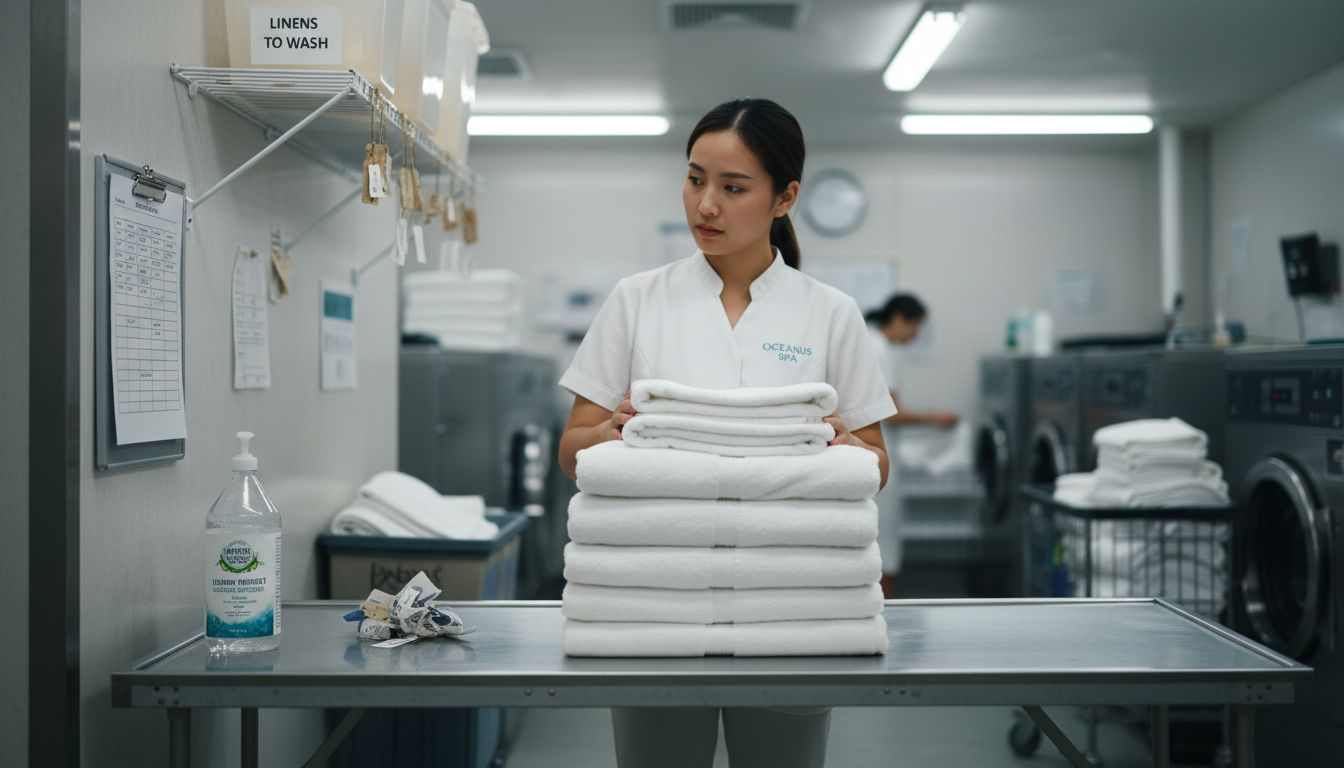
Pro tip: Develop a color-coded linen tracking system that correlates specific fabrics with their recommended replacement intervals to streamline management processes.
Here’s a summary comparing the handling of key spa linen types:
| Linen Type | Handling Challenge | Optimal Replacement Frequency |
|---|---|---|
| Terry cloth towels | High absorption, stains | After each guest or single treatment |
| Microfiber robes | Fast drying, odor retention | Daily or after each use |
| Cotton waffle robes | Linting, wear over time | Every 2-3 uses or weekly |
| Disposable treatment | Single-use, waste management | After every treatment session |
Maintenance, Hygiene, and Inspection Protocols
Spa linen maintenance represents a critical intersection of guest comfort, safety, and operational excellence. Comprehensive sanitation protocols demand meticulous attention to detail and systematic approaches to textile management.
Key maintenance and hygiene protocols include:
- Daily visual inspection of all linens for stains, tears, or wear
- Immediate removal of compromised textiles from circulation
- Consistent laundering at high temperatures to eliminate potential pathogens
- Segregation of clean and potentially contaminated linens
- Regular staff training on handling and inspection procedures
Inspection processes should be structured around several critical evaluation criteria:
- Textile structural integrity
- Fabric cleanliness and stain assessment
- Potential microbial contamination risks
- Compliance with health and safety standards
Successful spa environments implement rigorous tracking and documentation systems that record each linen’s lifecycle, from initial acquisition through multiple cleaning cycles to eventual replacement. This approach ensures consistent quality and minimizes potential health risks associated with textile reuse.
Most professional spas utilize advanced protocols that go beyond basic cleaning, incorporating specialized laundering techniques and regular quality control assessments to maintain the highest standards of guest safety and comfort.
Pro tip: Implement a digital tracking system that logs each linen’s wash cycle, inspection dates, and replacement history to streamline maintenance processes.
The table below summarizes how advanced tracking systems improve spa linen management:
| Tracking Technology | Business Impact |
|---|---|
| Barcode scanning | Reduces manual errors |
| RFID tagging | Enables real-time inventory accuracy |
| Digital logs | Tracks usage and compliance history |
| Automated alerts | Flags overdue replacement or shortages |
Legal, Safety, and Industry Standards
Spa linen management involves navigating a complex landscape of regulatory requirements and industry best practices. Evidence-based operating procedures serve as the critical foundation for maintaining legal compliance and guest safety.
Key legal and safety standards encompass several critical areas:
- Compliance with local health department regulations
- Adherence to CDC infection control guidelines
- Implementation of National Association of Institutional Linen Management protocols
- Documentation of cleaning and replacement procedures
- Maintaining transparent quality control records
Spas must address multiple regulatory dimensions:
- Hygiene standards for textile handling
- Storage and transportation protocols
- Infection prevention mechanisms
- Worker safety requirements
Successful spa environments develop comprehensive risk management frameworks that anticipate potential legal challenges and proactively address safety concerns. This approach involves continuous staff training, rigorous documentation, and systematic quality assurance processes.
Professional standards extend beyond mere compliance, demanding a holistic approach to guest protection that integrates medical-grade sanitation principles with hospitality industry best practices. Continuous education and adaptive protocols are essential for maintaining the highest levels of safety and legal conformity.
Pro tip: Consult with a legal expert specializing in hospitality regulations annually to ensure your spa’s linen management protocols remain current and compliant.
Cost Control and Inventory Management
Effective spa linen management requires a delicate balance between maintaining high-quality guest experiences and controlling operational expenses. Real-time inventory analytics have emerged as a crucial strategy for optimizing textile resources and minimizing unnecessary spending.
Key strategies for cost-effective linen management include:
- Implementing digital tracking systems
- Conducting regular inventory audits
- Establishing precise replacement thresholds
- Negotiating strategic vendor contracts
- Developing multi-tiered linen quality classifications
Spa managers must focus on several critical cost control dimensions:
- Predictive inventory planning
- Textile lifecycle management
- Waste reduction techniques
- Quality-cost optimization
Successful inventory management goes beyond simple counting. It requires a sophisticated approach that analyzes usage patterns, anticipates seasonal variations, and creates flexible procurement strategies that adapt to changing operational demands.
Technological innovations are transforming traditional inventory approaches, enabling spa managers to make data-driven decisions that simultaneously enhance guest satisfaction and control expenses. Sophisticated tracking systems provide granular insights into linen utilization, helping businesses make precise financial and operational choices.
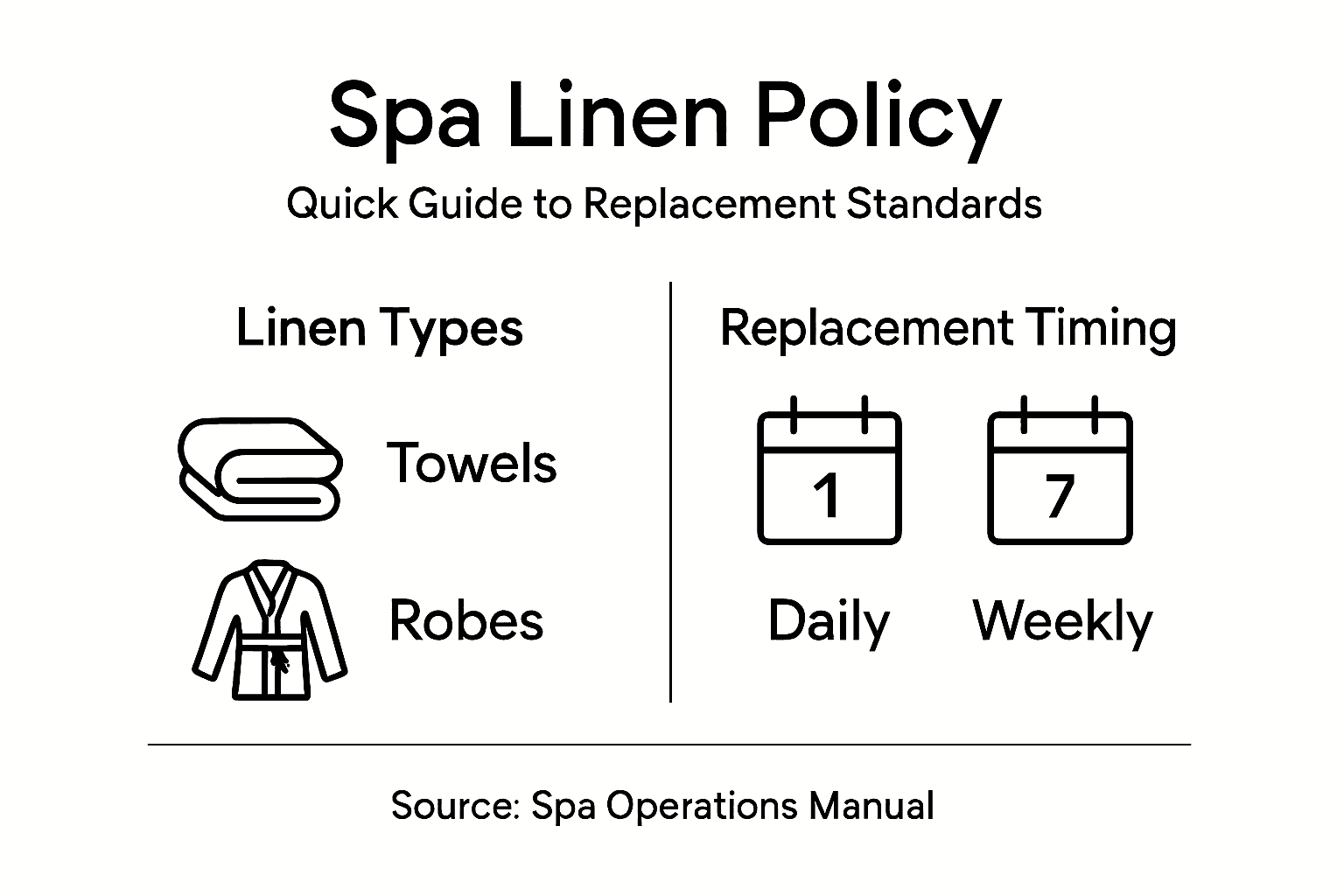
Pro tip: Develop a quarterly review process that compares linen usage metrics against operational budgets to identify potential cost-saving opportunities.
Sustainability and Brand Image Integration
Spa environments are increasingly recognizing sustainability as a critical component of brand positioning and guest attraction. Sustainable industry practices have evolved from optional initiatives to essential strategic imperatives that directly impact customer perception and loyalty.
Key sustainability strategies for spa linen management include:
- Adopting organic and recycled textile materials
- Implementing water-efficient laundering processes
- Reducing chemical usage in textile cleaning
- Extending linen lifecycle through careful maintenance
- Partnering with environmentally responsible vendors
Spas can demonstrate commitment to sustainability through multiple approaches:
- Transparent environmental reporting
- Eco-friendly textile sourcing
- Energy-efficient laundering techniques
- Waste reduction programs
Beyond environmental benefits, sustainable practices serve as powerful marketing tools that communicate a spa’s values to increasingly eco-conscious consumers. Modern guests actively seek brands that demonstrate genuine commitment to environmental stewardship and responsible business practices.
Technological innovations and industry collaborations are creating new opportunities for spas to integrate sustainability into core operational strategies, transforming ecological responsibility from a peripheral concern to a central brand differentiator.
Pro tip: Develop a comprehensive sustainability scorecard that tracks and communicates your spa’s environmental initiatives to potential guests and stakeholders.
Elevate Your Spa Experience with Premium Linen Solutions
Managing a spa linen replacement policy that truly prioritizes guest comfort and hygiene can be challenging. Key concerns such as maintaining impeccable cleanliness standards, controlling operational costs, and preserving textile quality require trustworthy linen that supports your efforts. At Lotus Linen, we understand these demands and offer luxurious options built to withstand frequent use while delivering exceptional softness and aesthetic elegance.
Discover the difference with our Scallop Piping Towels | Luxury Cotton Bath Sets and customizable robes designed for all-day comfort and durability. Each piece undergoes rigorous quality control to meet strict hygiene protocols and elevate your guests’ wellness experience. Incorporating our products into your facility supports your spa’s linen management goals by enhancing guest satisfaction and simplifying replacement schedules.

Upgrade your spa linen collection today at https://shoplotuslinen.com and experience how premium textiles can transform comfort, safety, and brand image. Visit our main site for versatile options that align perfectly with your spa’s replacement policy and sustainability initiatives.
Frequently Asked Questions
What is a spa linen replacement policy?
A spa linen replacement policy outlines the guidelines for managing and replacing towels, robes, and other textile materials in a spa environment to ensure hygiene and guest comfort.
How often should spa linens be replaced?
Replacement frequency depends on the type of linen and usage. High-contact items like terry cloth towels may require replacement after each guest, while cotton waffle weave robes might be refreshed every 2-3 uses or weekly.
What are the hygiene standards for handling spa linens?
Hygiene standards involve daily inspections for stains and damage, immediate removal of compromised linens, laundering at high temperatures, and keeping clean and soiled items segregated to prevent contamination.
How do spas control linen management costs?
Spas manage linen costs by implementing digital tracking systems, conducting regular inventory audits, establishing replacement thresholds, and utilizing multi-tiered quality classifications to optimize resource usage.
Recommended
- Humidity and Linens: Impact on Guest Comfort – Lotus Linen
- Choosing Robes for Guests: Create Comfort and Style – Lotus Linen
- 7 Sustainable Bath Linen Options for Eco-Conscious Living – Lotus Linen
- 8 Best robe versus dressing gown – Expert Comparison 2025 – Lotus Linen
- Ręczniki do SPA - ręczniki bawełniane czy te z recyklingu?

