
TL;DR:
- Creating a calming home spa involves simple adjustments like lighting, scent, and sound layering.
- Consistent weekly routines with personalization lead to lasting stress and mood benefits.
- Small spaces can be transformed using portable spa items and natural design elements.
Modern life has a way of following you through the front door. Work stress, screen fatigue, and a packed schedule can make your home feel more like a waiting room than a sanctuary. The good news is that you don’t need a hotel budget or a dedicated room to change that. Research shows that spa-inspired spaces can deliver mood and stress benefits that last for months. This guide walks you through every practical step, from assessing your space to building rituals that actually stick, so you can enjoy genuine relaxation without leaving home.
Table of Contents
- Assess your space and intentions
- Set the scene: Lighting, scent, and sound
- Step-by-step home spa rituals
- Troubleshooting and avoiding common mistakes
- Expert perspective: What truly matters for a home spa experience
- Elevate your home spa with premium comforts
- Frequently asked questions
Key Takeaways
| Point | Details |
|---|---|
| Customize for your space | Even small or busy households can enjoy a home spa with portable items and sensory-friendly choices. |
| Layer sensory experiences | Combine soft lighting, gentle scents, and calming sounds for true spa ambiance without overstimulation. |
| Consistency builds results | Frequent short rituals bring more relaxation and well-being benefits than rare spa days. |
| Avoid common mistakes | Too much scent, clutter, or rushing can destroy your relaxation zone—keep it simple and personal. |
| Upgrade with quality comforts | Investing in plush towels and robes elevates the spa feel and rewards your commitment to self-care. |
Assess your space and intentions
Before you light a candle or order a single product, take five minutes to look at your space honestly. The goal here is not perfection. It’s alignment between what you have and what you need.
Start with a quick checklist:
- Size and layout: Can you fit a chair, a small table, or a folding mat comfortably?
- Privacy: Will you be interrupted? Can you close a door or hang a curtain?
- Lighting: Is there a dimmer switch, or can you add a lamp or LED candles?
- Distractions: Are there visible clutter, screens, or noise sources nearby?
- Shared use: Does the space double as a family bathroom or home office?
Next, clarify your personal goals. Are you trying to reduce anxiety, improve your skin, sleep better, or simply build a weekly self-care habit? Your answer shapes everything from the products you choose to the length of your session.
Small spaces can absolutely work with portable spa items like folding tables, LED candles, a Bluetooth speaker, and a small plant. A corner of your bedroom can become a ritual zone in minutes. For those with sensory sensitivities or neurodiverse needs, low-stimulation setups with soft lighting and a single gentle scent are often more effective than elaborate arrangements.
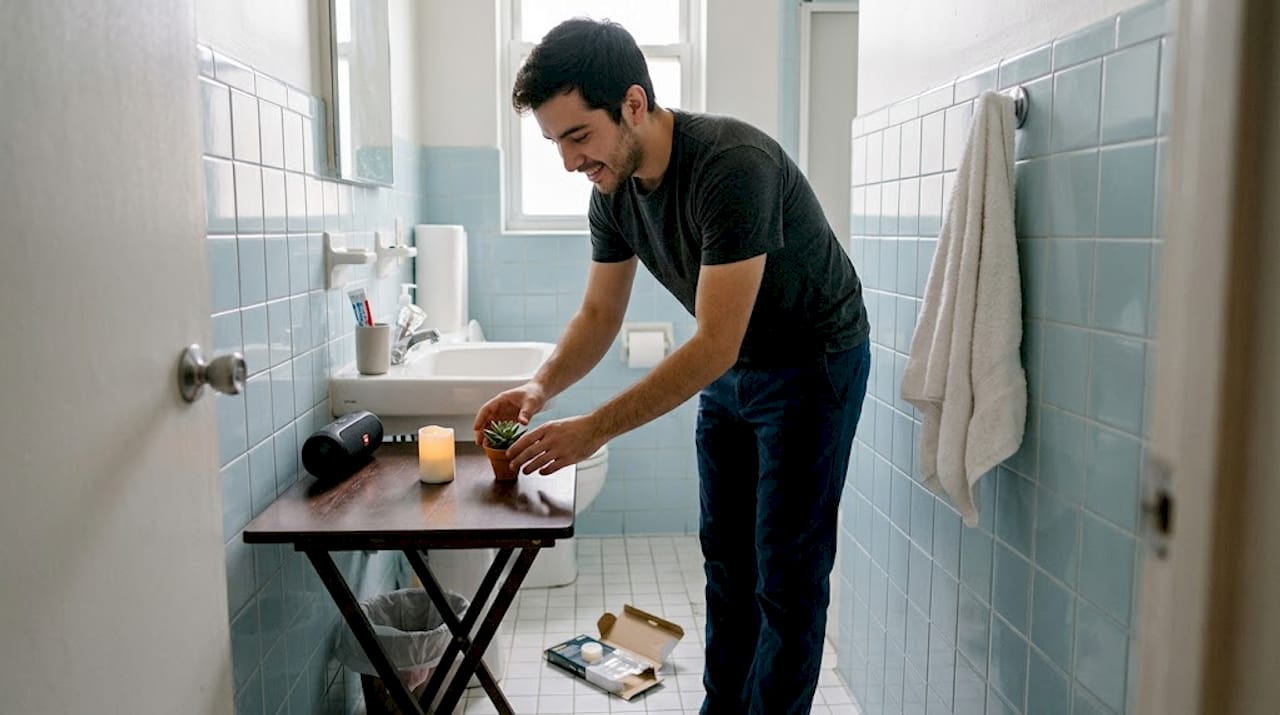
Biophilic design elements (think plants, natural textures, and soft water sounds) can reduce stress by 22%, and the mood benefits can persist for up to six months. Even a small Tabletop Zen Garden Set on a bathroom shelf adds a grounding visual anchor.
| Space type | Key requirement | Best portable fix |
|---|---|---|
| Small bathroom | Privacy, dim lighting | LED candles, diffuser |
| Shared bedroom | Noise control | White noise speaker, eye mask |
| Living room corner | Visual separation | Room divider, floor lamp |
| Studio apartment | Multi-use flexibility | Folding table, storage basket |
Pro Tip: If you or someone in your household has sensory sensitivities, skip layered scents and opt for a single mild fragrance like chamomile or unscented steam. Pair it with soft, warm lighting rather than flickering candles to keep stimulation low and comfort high. You can find more ideas in our guide to DIY home spa treatments.
Set the scene: Lighting, scent, and sound
Once you know your space and goals, it’s time to build the sensory environment that signals to your brain: this is rest time. The most effective spa atmospheres work on at least three senses at once, but the key is layering thoughtfully, not piling on.
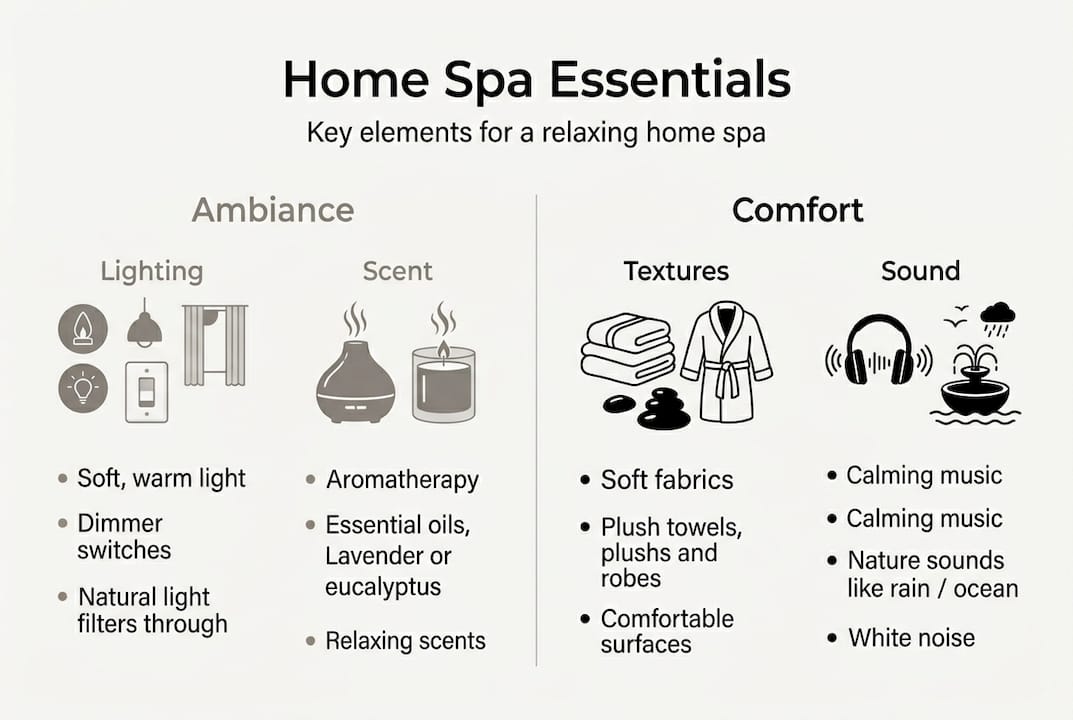
Lighting is your first lever. Overhead fluorescent or bright white light is the enemy of relaxation. Use a dimmable bulb, a soft floor lamp, or a cluster of LED candles to bring the light level down. Layering ambient and task lighting is the standard approach in professional spa design, and it works just as well at home.
Scent comes second. Choose one anchor fragrance and stick with it. Lavender, eucalyptus, and sandalwood are popular for good reason: they have well-documented calming effects. Over-scenting in small spaces is one of the most common mistakes, and it can actually trigger headaches rather than relaxation. A reed diffuser or a single stick of quality incense scents is usually enough for a standard bathroom or bedroom.
Sound rounds out the experience. Nature soundscapes (rain, forest, ocean) work well for most people. Soft instrumental music or binaural beats are solid alternatives. Keep the volume low enough that you could hold a conversation without raising your voice.
Here’s a quick list of dos and don’ts:
- Do use a dimmer or warm-toned bulbs (2700K or lower)
- Do pick one scent and let it breathe for 10 minutes before your session starts
- Do test your soundscape before you begin so you’re not fiddling with your phone mid-ritual
- Don’t burn multiple candles or incense sticks at the same time in a small room
- Don’t use harsh overhead lighting even if you dim it slightly
- Don’t play music with lyrics if you’re trying to fully switch off
Caution: In bathrooms smaller than 50 square feet, a single tea light or diffuser is enough. Burning multiple scent sources in a confined, humid space can become overwhelming fast and may irritate airways.
Pro Tip: Beeswax candles burn cleaner than paraffin and release a subtle, natural honey scent that adds gentle warmth without overpowering the room. They’re a smart upgrade if you want ambiance without synthetic fragrance. For more ideas on creating a calming environment, explore our bathroom relaxation tips and our full guide to personalizing spa experiences.
Step-by-step home spa rituals
A home spa session doesn’t need to last three hours to be effective. What matters is structure. A clear sequence helps your nervous system shift gears, which is the whole point.
Here’s a flexible ritual you can adapt to 30 minutes or a full evening:
- Prepare your space (5 minutes): Tidy the area, set your lighting and scent, put your phone on silent or in another room. Hide clocks if you can.
- Warm bath or steam (15-20 minutes): Fill your tub with warm water between 70 and 72°F (about 20 to 22°C) and add bath salts or a few drops of essential oil. Warm baths with salts followed by a facial sequence are the backbone of most effective home spa routines. No tub? A foot soak or a steamy shower with a eucalyptus bundle works just as well.
- Facial sequence (10 minutes): Cleanse, then steam your face for 3 to 6 minutes using a bowl of hot water and a towel. Follow with a gua sha or gentle lymphatic massage using your fingertips.
- Self-massage (10 minutes): Use a body oil or lotion on your arms, legs, and feet. Work from the extremities toward the heart for light lymphatic support.
- Relaxation and wind-down (10-15 minutes): Lie down with a warm towel over your eyes, or sit quietly with herbal tea. Avoid screens.
- Journaling (5 minutes, optional): Write three things you noticed or felt during the session. This anchors the experience and helps you track progress over time.
Heat therapy and repeated balneotherapy (warm water treatments) improve skin hydration, lower stress hormones, reduce blood pressure, and boost short-term mood. The research is clear: consistency matters more than duration.
| Ritual step | Recommended tools | Estimated time |
|---|---|---|
| Prepare space | Candles, diffuser, speaker | 5 min |
| Bath or steam | Salts, essential oil, towel | 15-20 min |
| Facial sequence | Cleanser, gua sha, warm towel | 10 min |
| Self-massage | Body oil, lotion | 10 min |
| Relaxation | Eye mask, herbal tea | 10-15 min |
| Journaling | Notebook, pen | 5 min |
Pro Tip: Weekly sessions beat monthly elaborate ones every time. Treat it like a standing appointment with yourself. For more inspiration, see our guide to in-room bath rituals and our list of bath accessory essentials. You can also explore affordable spa upgrades that make a real difference without a big spend.
Troubleshooting and avoiding common mistakes
Even with the best intentions, home spa sessions can fall flat. Here are the most common pitfalls and how to fix them.
Common mistakes to avoid:
- Keeping your phone nearby (even face down, notifications break the spell)
- Cluttering your space with too many products before you’ve tried them
- Rushing through the ritual because you booked it too close to bedtime or another commitment
- Burning multiple scent sources at once in a small room
- Spending heavily on gadgets before establishing a basic routine
Urgency kills relaxation. The environment has to feel unrushed, and personalization matters far more than the brand or price of what you use. A $5 bath salt used consistently beats a $200 device used twice.
“Start with what you already have. A warm bath, a quiet room, and a single candle are enough to begin. Add tools gradually as your routine solidifies.”
Safety reminders: Keep bath water below 104°F (40°C) to avoid overheating. Don’t use electrical devices near water. Patch test new skincare products before applying them during a full session. DIY home spa routines carry real risks if heat or gadgets are overused, so balance your home practice with occasional professional guidance when needed.
Track your progress using simple benchmarks: sleep quality, stress levels on a 1 to 10 scale, and skin condition. Research suggests that meaningful improvements show up over weeks and months, not after a single session. Our bath time relaxation tips offer more practical guidance for building a consistent routine.
Pro Tip: If you’re unsure whether a new treatment or tool is right for you, book a single professional session first. Use it as a reference point, then replicate the elements that worked best in your home setup.
Expert perspective: What truly matters for a home spa experience
Here’s something most spa content won’t tell you: the goal isn’t to recreate a five-star hotel bathroom. That framing sets you up to feel like your home version is always second-best. It isn’t.
The real purpose of a home spa ritual is habit formation, not luxury performance. Personalization and frequency are consistently more effective than gadgets or premium products alone. Real, measurable improvements in sleep and stress scores show up over weeks and months of consistent practice, not after a single elaborate session.
We’ve seen people invest in infrared saunas and red light panels and still feel burned out, because the environment around those tools was chaotic and the sessions were irregular. Contrast that with someone who spends 30 quiet minutes every Sunday with a warm bath, a single candle, and a good playlist. The second person almost always reports better results.
The contrarian truth is this: accessible, repeated rituals beat occasional prestige experiences. Start small, track how you feel, and adjust based on your own data, not trends. Explore our spa personalization tips to build a routine that actually fits your life.
Elevate your home spa with premium comforts
You’ve built the ritual. Now the finishing touches make it feel truly special. Wrapping up in a soft, well-made robe after a bath session is one of those small upgrades that changes everything about how the experience feels.

At Lotus Linen, we design robes, towels, and spa accessories specifically for moments like this. Our luxury waffle robes are lightweight, breathable, and absorbent, perfect for post-bath wind-down. Pair them with our scallop bath towels for a complete spa-at-home feel. Every piece is made with comfort and aesthetic elegance in mind, so your home ritual feels as intentional as the space you’ve created around it.
Frequently asked questions
What are the best scents for a home spa ambiance?
The best scents are light, natural fragrances like lavender or eucalyptus. Avoid strong or clashing combinations, especially in small spaces, since over-scenting in enclosed settings can quickly become overwhelming.
How often should I do home spa rituals for the best results?
Weekly short rituals are more effective for building habits and lasting benefits than rare, elaborate sessions. Research consistently shows that frequency over intensity drives sustained self-care improvements.
What can I do if I have a very small bathroom or no bath?
Use portable spa items like folding tables, LED candles, and room diffusers to transform any corner into a relaxation zone. Small spaces work well with the right portable setup.
Are home spa rituals safe for everyone?
Most routines are safe, but always avoid scalding water and overuse of heat devices. Tailor the intensity for age or sensory needs, and follow basic heat safety precautions throughout every session.
What is the biggest benefit of a home spa versus a professional spa?
A home spa offers private, frequent, and cost-effective self-care, while professional spas provide advanced techniques and tools for occasional deeper resets. A hybrid approach combining both tends to deliver the best long-term results.
Recommended
- 7 In-Room Bath Rituals for a Luxurious Spa Experience – Lotus Linen
- Bath Time Relaxation Tips: Complete Guide for 2025 – Lotus Linen
- How to Arrange Bath Linens for a Stylish Family Spa – Lotus Linen
- Personalizing Spa Experiences: Complete Expert Guide – Lotus Linen
- Transform Your Bathroom into a Luxurious Spa Oasis

