
TL;DR:
- Towel shrinkage is mostly caused by heat. Wash warm or cold, dose detergent conservatively, skip fabric softener, let the washer spin out excess water, and dry on low heat. Residue-related stiffness can be reversed with a vinegar strip wash, but heat damage from high-temperature drying is permanent.
Towel shrinkage is the reduction in fiber length that happens when cotton is exposed to high heat during washing and drying. If your bath towels feel shorter, stiffer, or less absorbent after a few months, heat and detergent residue are almost certainly the cause. Manage heat consistently across both the wash and the dry cycle and your towels stay soft and full-sized for years, including plush, zero-twist towels like ours that especially reward gentle care.
Why heat and residue are the real culprits
Cotton fibers absorb and release moisture constantly. Under high heat, they contract and lock into a shorter position, and that contraction is what you see as shrinkage. It is largely irreversible once it sets. Two forces drive it:
- Heat from washing and drying. Hot wash cycles and high dryer heat accelerate fiber contraction and size loss. Most visible shrinkage happens in the first one or two washes, but repeated high heat keeps degrading fiber length and softness over time.
- Residue from detergent and fabric softener. Softener coats fibers with a water-repellent film that reduces absorbency and causes stiffness. That coating also traps hard-water minerals, which add stress to individual fibers and make them more vulnerable to heat.
The first wash causes the most dramatic shrinkage because the fibers are relaxed from manufacturing and contract sharply the first time they meet heat and water. After that, shrinkage slows, but it never fully stops if you keep using high heat. Understanding this pattern is what separates towels that last two years from towels that last ten.
What are the best washing practices for towels?
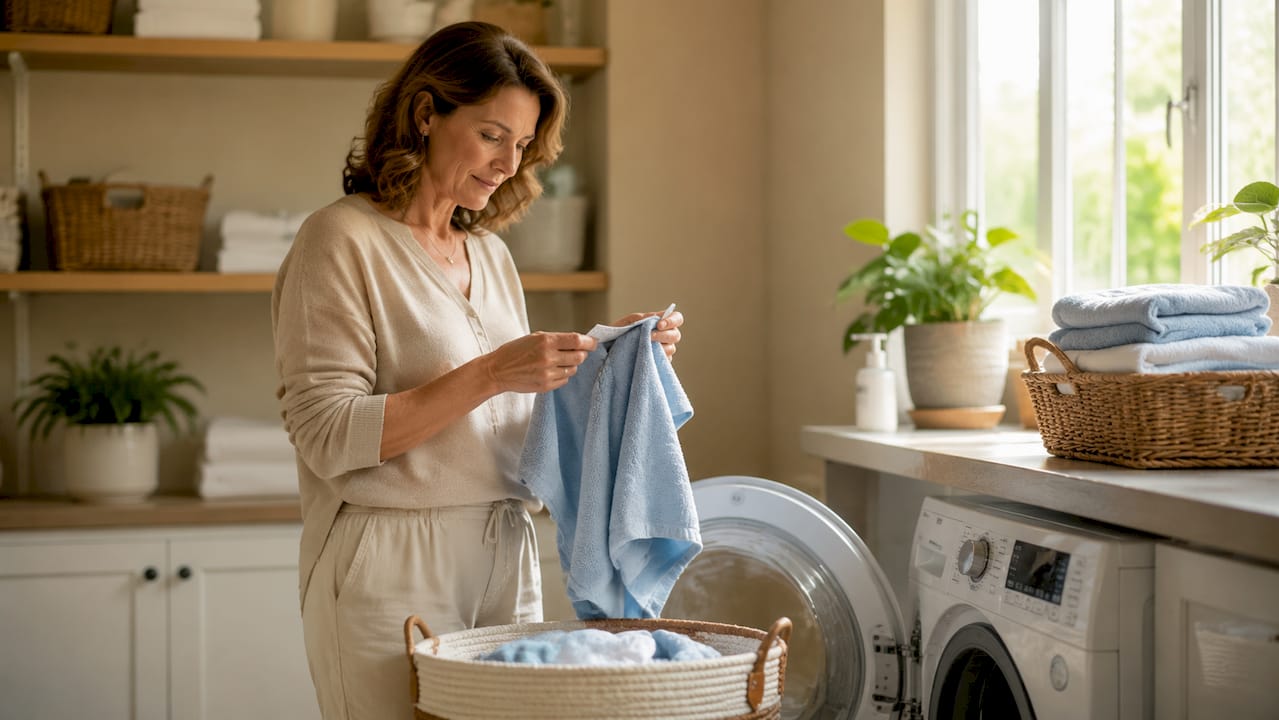
Washing is where most shrinkage damage begins. The right settings protect fiber length and reduce how often you need to wash.
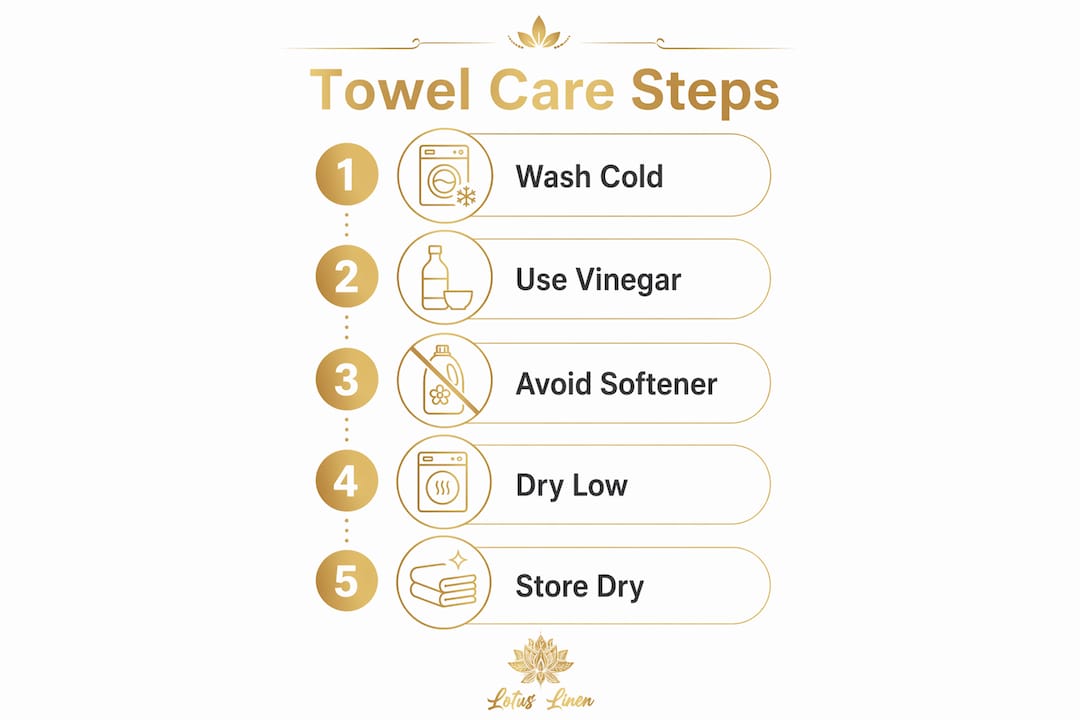
- Set the water to warm, not hot. Warm water (around 40°C / 105°F) cleans cotton effectively without triggering the rapid fiber contraction that hot water causes. Cold water works well for lightly used towels and causes the least shrinkage of any setting. Always check the care label first.
- Use a gentle liquid detergent, dosed conservatively. Liquid detergents dissolve more completely than powders, leaving less residue. A half-dose is often plenty for a standard towel load, and less residue means less long-term fiber stress.
- Skip the fabric softener. Add half a cup of white distilled vinegar to the rinse cycle instead. It dissolves mineral and detergent buildup, restores softness, and leaves no residue.
- Wash towels separately from clothing. Zippers and buttons create friction that damages cotton loops. Washing towels alone also lets you set the temperature and cycle for fiber preservation.
- Let the washer spin out excess water. A normal-to-high spin removes excess water so towels go into the dryer already partly dry, which means far less dryer heat and time. Let the machine do this, don't aggressively wring or twist plush cotton, which stresses the loops.
- Choose a gentle or normal cycle and don't overload. Lower agitation and a load with room to move reduce mechanical stress on the loops.
Pro Tip: Vinegar in the rinse cycle does double duty: it softens towels naturally and strips the buildup that traps heat and reduces absorbency. Your towels will feel noticeably softer within two or three washes.
Which drying methods prevent towel shrinkage?
Drying is where the most permanent shrinkage happens. High dryer heat causes brittleness and size loss that no amount of washing can reverse. The fix is straightforward: make low heat your default and treat high heat as a rare exception.
- Use low or medium heat as standard. Low heat preserves fiber length and softness across hundreds of cycles. Medium is acceptable for thicker towels that need more drying time.
- Remove towels while slightly damp. Over-drying is a leading cause of ongoing shrinkage. Pull towels out while they still hold a little moisture and hang them to finish air-drying.
- Use wool dryer balls, not dryer sheets. Balls separate towels, improve airflow, and cut drying time without leaving residue. They also fluff the loops naturally.
- Air-dry or line-dry when you can. No heat means no heat shrinkage. Line drying is the single most effective way to prevent further size loss.
- Reserve high heat for occasional sanitizing only. It's fine now and then to remove odors, just don't make it your routine setting.
Pro Tip: If your dryer has a moisture-sensor setting, use it. Sensor drying stops the cycle when the load reaches the right dryness, preventing the over-drying that causes the most shrinkage.
Want to speed up drying without cranking the heat? Our guide on how to dry towels fast covers airflow and timing tricks that dry towels quickly at gentle temperatures.
How do you fix towels already affected by shrinkage or buildup?
Not all stiffness is permanent. If your towels feel stiff, smell musty, or have lost absorbency, residue buildup is often the cause rather than true fiber contraction, and residue is reversible. Heat-caused size loss is not.
- Check for residue first. Stiff towels that repel water instead of absorbing it usually have a softener or detergent coating. A musty smell even after a full cycle is a reliable sign of buildup.
- Run a vinegar strip wash. Wash the towels in hot water with one cup of white distilled vinegar and no detergent, then follow with a second wash using half a cup of baking soda to neutralize any remaining residue.
- Stop using fabric softener for good. It's the single most effective step for preventing residue-related stiffness. Switch to vinegar or dryer balls.
- Recognize over-drying damage. Towels that feel thin and rough even after a strip wash have likely suffered heat damage to the loops, which washing can't reverse.
- Stabilize size after the first wash. First-wash shrinkage is normal. Switch to cold or warm water and low-heat drying right after that first cycle to lock in the size.
| Symptom | Likely Cause | Fix |
|---|---|---|
| Stiff, water-repellent towels | Fabric softener or detergent residue | Vinegar strip wash; stop using softener |
| Musty smell after washing | Residue trapping bacteria | Baking soda wash; improve drying airflow |
| Towel visibly shorter or narrower | Heat shrinkage from high-temp drying | Switch to low heat; size loss is permanent |
| Rough, scratchy texture | Over-drying or fiber breakdown | Lower dryer heat; remove while slightly damp |
| Reduced absorbency | Softener coating or mineral buildup | Strip wash with vinegar |
When towels no longer recover softness or absorbency after a strip wash, replacement is the right call. Cotton has a finite lifespan, and no routine can reverse structural breakdown.
Key takeaways
Avoiding shrinkage comes down to one consistent habit: keep heat low in both the washer and dryer, and never use fabric softener.
| Point | Details |
|---|---|
| Heat is the primary cause | Wash warm or cold and always dry on low heat to prevent fiber contraction. |
| Fabric softener accelerates damage | It coats fibers with residue that reduces absorbency and makes towels more vulnerable to shrinkage. |
| Spin, don't wring | Let the washer spin out excess water so you need less dryer heat; avoid twisting plush cotton. |
| Vinegar reverses residue buildup | A strip wash restores softness when stiffness comes from residue rather than heat damage. |
| Remove towels while slightly damp | Stopping the dryer early prevents the over-drying that causes the most ongoing size loss. |
What I've learned from years of watching towels fail too soon
The same pattern repeats itself: someone invests in a genuinely spa-worthy towel, uses it for a few months, and wonders why it feels like a gym rag. The towel didn't fail, the laundry routine did. The common advice to "just wash on cold" is right but incomplete, because cold water won't save a towel that goes into a high-heat dryer every week. The dryer is where most of the damage happens.
What works is treating your settings like a baseline you set once and protect: low heat in the dryer, warm water in the washer, no fabric softener, half the detergent you think you need. And if a towel already feels stiff or shrunken, try a vinegar strip wash before giving up, the fiber is often fine and the residue is the real problem.
— Oguzhan
Spa-worthy towels deserve a spa-worthy laundry routine

These care habits work best when the towels are built to last. Our scallop piping bath towels and towel sets are woven from 620 GSM zero-twist cotton and can be personalized with in-house monogram embroidery. If you're ready for bath linens that reward proper care with years of softness, explore the full collection at Lotus Linen.
FAQ
Does towel fabric shrink after every wash?
Most towel shrinkage happens during the first one or two washes when cotton fibers contract from their relaxed manufacturing state. After that, shrinkage slows significantly if you use low heat consistently.
What water temperature prevents towel shrinkage?
Warm water around 40°C (105°F) is the recommended setting for routine towel washing. Cold water causes even less shrinkage and works well for lightly used towels.
Can you reverse towel shrinkage at home?
Heat-caused size loss is permanent and cannot be reversed. However, stiffness and reduced absorbency caused by residue buildup can be restored with a white vinegar strip wash followed by a baking soda rinse cycle.
Why do my towels feel stiff after washing?
Stiffness almost always comes from fabric softener residue, excess detergent buildup, or hard water mineral deposits coating the cotton fibers. Stop using fabric softener and run a vinegar strip wash to restore softness.
How often should you wash towels to minimize shrinkage?
Washing towels every 3–5 uses balances hygiene with fiber preservation. Washing too frequently increases heat exposure and mechanical wear, both of which accelerate shrinkage and reduce towel lifespan.

