
TL;DR:
- White towels usually turn dull from residue buildup, excess detergent, fabric softener, and hard-water minerals, not from a lack of bleach. Wash them separately with the right amount of detergent, skip fabric softener, use a white vinegar rinse, and deep clean occasionally. Always follow the care label, and if your towels have colored piping or trim, use gentle, color-safe care instead of whitening agents.
Caring for white towels means washing, drying, and storing them in ways that keep them bright, soft, and absorbent. Most white towels don't turn dingy from a lack of bleach. They turn dingy from residue buildup caused by too much detergent, fabric softener, and hard-water minerals. The fix is simpler than most people expect, and it does not rely on harsh chemicals.
What causes white towels to lose their whiteness and softness?
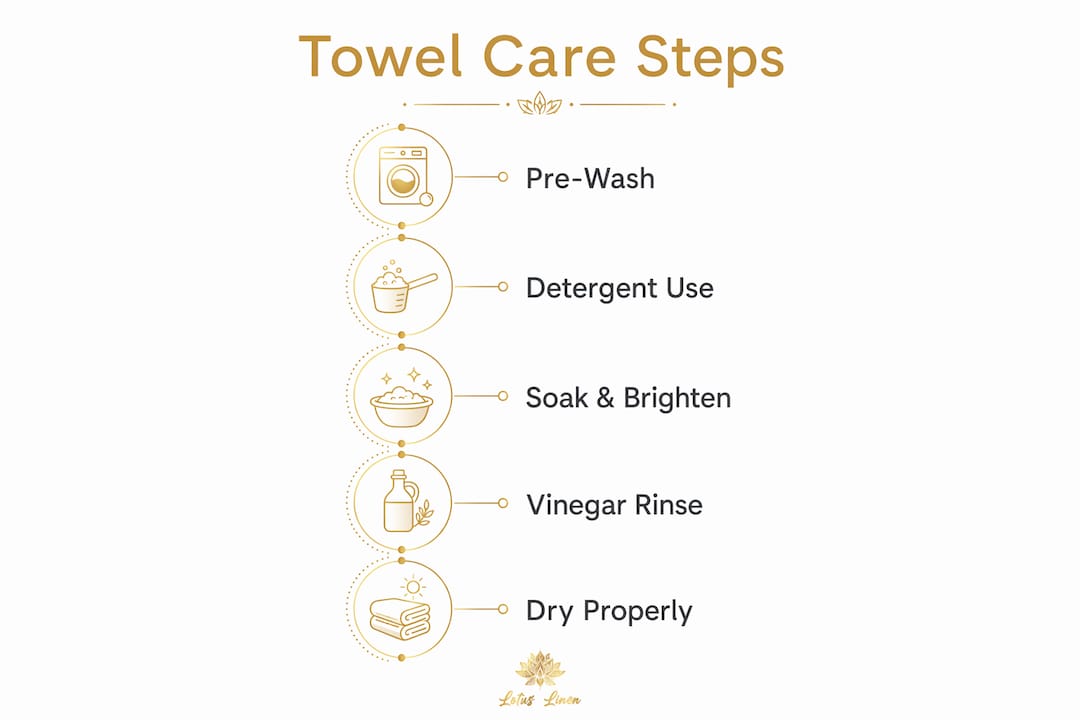
White towel dinginess is almost always a residue and buildup problem, not a cleaning failure. Understanding the causes makes every care decision easier.
- Detergent and fabric softener residue. When you use more detergent than necessary, the excess doesn't fully rinse out. It coats the cotton fibers and traps body oils with each wash. Fabric softener makes this worse, leaving a waxy coating that reduces absorbency and causes a grayish or yellowish cast over time.
- Body oils and hard-water minerals. Every use deposits a thin layer of skin oils and lotions. In hard-water areas, calcium and magnesium build up alongside them, creating a gray film that regular washing can't fully remove.
- Temperature and load size. Washing heavily soiled whites in cold water leaves oils behind, and overloading the machine prevents proper rinsing, so detergent stays in the fabric.
- Chlorine bleach. Despite its reputation, chlorine bleach can weaken cotton fibers and cause yellowing over time rather than restoring brightness.
Pro Tip: If your white towels smell musty even after washing, that's usually detergent buildup, not insufficient cleaning. Run them through a hot cycle with no detergent and a cup of white vinegar to reset the fibers.
How to wash white towels to maintain brightness and softness
A good routine for white towels comes down to separation, the right products, proper dosing, and the right temperature.
Wash whites separately. Washing white towels with colored items risks dye transfer, even from items washed many times before. Washing whites on their own also lets you use warmer water and targeted products without worrying about other fabrics.
Choose a detergent with optical brighteners. These detergents counteract yellowing by absorbing UV light and re-emitting it as visible blue light, which makes whites look brighter. Any quality detergent formulated for whites will do the job.
Use less detergent than the label suggests. This is the most counterintuitive tip in towel care, and it works. Too much detergent leaves residue that makes towels stiff and dull. For a standard load, use about half to three-quarters of the recommended amount.
Skip the fabric softener. It coats the cotton loops and reduces absorbency. Add half a cup of distilled white vinegar to the rinse cycle instead. It removes residue, softens fibers naturally, and brightens without harsh chemicals.
Match water temperature to the task. Warm water cleans effectively for routine washing; hotter water helps dissolve oils for heavily soiled loads. Always check the care label first, as some towels specify a maximum temperature.
Pretreat stains. Apply a paste of oxygen bleach and water directly to stains and let it sit for 15 to 30 minutes before washing. This prevents stains from setting and reduces the need for aggressive treatments later.
Don't overload the machine. Properly sized loads give the machine room to agitate and rinse effectively. Cramming in too many towels is one of the fastest ways to accelerate buildup.
A note on towels with colored piping or trim
An all-white towel gives you more latitude with brighteners and oxygen-based stain treatments, but that latitude has a limit: your first rule is always the care label. And if your towels have colored piping or trim, treat them as colored items, not whites.
Our scallop piping towels, for example, pair a bright white body with a colored scallop piping (Dispenza Blue, Sage, Pink, or White piping). Whitening treatments, including chlorine bleach, oxygen bleach soaks, and lemon-and-sun brightening, can fade or discolor that colored piping. For any towel with colored trim, use a gentle, color-safe detergent, skip the bleach and whitening soaks, and follow the care label. A white vinegar rinse and low-heat drying keep them soft without putting the color at risk. Keeping whites bright is a look, not a measure of cleanliness, a well-cared-for colored or piped towel is just as clean.
What are the best drying methods for keeping towels soft?
Drying is where many people undo good washing habits. The goal is to dry towels thoroughly without overdrying them, which stiffens fibers.
- Tumble dry on medium or low heat. High heat breaks down cotton faster and leaves towels feeling rough. Medium heat dries them fully without the fiber damage.
- Use wool dryer balls. They separate towels in the drum for even airflow and gently fluff the loops, which is what gives towels that soft, lofty feel.
- Shake each towel before loading. A quick shake opens the loops that compress during the spin cycle and improves the final texture.
- Remove towels while slightly damp. Overdrying is the leading cause of stiff, scratchy towels. Pull them out when barely damp and let residual warmth finish the job.
- Air-dry in sunlight when you can. For all-white towels, sunlight is a natural brightener and helps with odor. (Skip direct-sun brightening for towels with colored piping.)
How do you deep clean and whiten yellowed white towels?
Even with a solid routine, all-white towels eventually accumulate embedded oils and minerals that routine washing can't fully address. The most effective reset is an overnight oxygen bleach soak: dissolve oxygen bleach in the hottest water your towels can tolerate, submerge them fully, soak for six to eight hours or overnight, then run a normal wash. (Again, reserve this for towels without colored trim.)
| Method | Best for | Fabric safety | Frequency |
|---|---|---|---|
| Oxygen bleach soak | Yellowing, embedded stains, gray film (all-white towels) | Safe for white cotton; avoid on colored trim | Monthly or as needed |
| White vinegar rinse | Detergent residue, mild softening | Safe for all towels, including piped | Every wash |
| Lemon juice + sunlight | Light brightening, odor removal (all-white towels) | Safe for white cotton; avoid on colored trim | Occasional |
| Chlorine bleach | Not recommended | Can weaken fibers and cause discoloration | Avoid |
Vinegar and baking soda are both useful, but use them in separate cycles: combining them neutralizes both before they can work. Add vinegar to the rinse cycle and use baking soda in a separate wash.
Key takeaways
Caring for white towels is about managing residue, not fighting stains with bleach. The right detergent, the right amount, and gentle deep cleaning are the pillars of lasting brightness, and colored trim always calls for color-safe care.
| Point | Details |
|---|---|
| Skip fabric softener | Replace it with a white vinegar rinse to keep absorbency and prevent waxy buildup. |
| Use less detergent | Half to three-quarters of the recommended dose prevents residue that dulls and stiffens fibers. |
| Protect colored piping | For piped or trimmed towels, use color-safe care and skip bleach and whitening soaks. |
| Dry on medium heat | Use dryer balls and remove towels slightly damp to preserve softness and fiber integrity. |
| Follow the care label | It always takes priority over any general whitening tip. |
What I've learned about caring for towels
The most damaging habit I see is the instinct to add more product when something isn't working, more detergent, more softener, more bleach. Each addition makes the problem worse: the towels get stiffer, duller, and less absorbent. What actually works is the opposite, less detergent, no softener, and a periodic reset with vinegar (and, for all-white towels, oxygen bleach).
Storage matters more than people realize, too. Stacking towels before they're fully dry creates the mildew smell that no amount of washing fully removes. Fold them only when completely dry and store them in a ventilated space. Our scallop piping bath towels hold up beautifully to this kind of consistent, gentle care.
— Oguzhan
Bring spa-worthy care to spa-worthy towels

If you're going to put this much thought into caring for your towels, the towels themselves should be worth the effort. Our scallop piping bath towels and towel sets are woven from soft, zero-twist cotton and available with in-house monogram embroidery, so your linens stay soft, bright, and personal through years of proper care.
FAQ
How often should you wash white towels?
Wash white towels every 3 to 5 uses to prevent oil and residue buildup without over-washing the fibers. Washing too frequently with too much detergent accelerates dinginess faster than regular use does.
Why do white towels turn yellow over time?
Yellowing is most often caused by body oil buildup, hard water mineral deposits, or repeated use of chlorine bleach. An oxygen bleach soak in hot water overnight is the most effective way to reverse this discoloration safely.
Can you use fabric softener on white towels?
Fabric softener is not recommended for white towels. It coats cotton fibers with a waxy residue that reduces absorbency and causes discoloration over time. Use half a cup of distilled white vinegar in the rinse cycle instead.
What is the best way to keep white towels bright without bleach?
The most effective bleach-free method combines a detergent with optical brighteners, a white vinegar rinse, and a monthly oxygen bleach soak. For light brightening, soaking towels in lemon juice and water before air-drying in sunlight also works well.
How do you remove stains from white towels without damaging them?
Apply a paste of oxygen bleach and water directly to the stain and let it sit for 15 to 30 minutes before washing. This method lifts most stains safely without the fiber damage that chlorine bleach causes.

