TL;DR:
- Towels lose softness mainly due to mineral buildup from hard water, detergent residue, and over-drying, which damage fibers and reduce absorbency. Natural methods like vinegar, baking soda, and wool dryer balls effectively restore plushness without harmful chemicals, extending towel life and improving skin comfort. Regularly using these eco-friendly techniques ensures towels remain soft, absorbent, and long-lasting, benefiting both your health and the environment.
There’s nothing quite as disappointing as stepping out of a warm shower and reaching for a towel that feels like sandpaper. You wash it, you dry it, and somehow it comes out stiffer than cardboard. The good news is that you don’t need harsh chemicals or expensive products to fix this. Natural ingredients you already own can restore that plush, hotel-quality softness, and they’re safer for your skin, your towels, and the planet.
Table of Contents
- Why towels lose softness (and why it matters)
- Natural tools and ingredients for softer towels
- Step-by-step: How to soften towels naturally
- Troubleshooting and keeping towels soft naturally
- A fresh perspective: Why natural towel care is worth the effort
- Bring home luxury: Discover naturally soft towels and robes
- Frequently asked questions
Key Takeaways
| Point | Details |
|---|---|
| Natural methods work | You can restore towel softness safely using simple products like vinegar and baking soda. |
| Avoid chemical softeners | Fabric softeners damage fibers and make towels less absorbent over time. |
| Routine care matters | Consistent cleaning and drying habits keep towels softer for longer. |
| Eco-friendly is effective | Natural towel care techniques are gentle on fabrics and the environment. |
Why towels lose softness (and why it matters)
Softness doesn’t just disappear randomly. There are specific reasons your towels go from fluffy to frustrating, and understanding them makes the solution a lot more obvious.
Hard water is the number one culprit. Hard water contains high levels of minerals like calcium and magnesium. Every wash cycle deposits a thin layer of these minerals into your towel fibers, and over time, that buildup stiffens the fabric. If you live in an area with hard water, your towels are fighting this battle after every single load.
Detergent residue makes things worse. Most people use too much laundry detergent, especially with high-efficiency machines. When excess detergent doesn’t fully rinse out, it gets trapped in the fibers and creates a stiff, waxy coating. The towel looks clean, but it’s carrying a chemical load that hardens with each wash.
Over-drying also damages the fibers. Running towels through an overly hot dryer cycle repeatedly breaks down the cotton loops that create softness. Those loops are what give a towel its texture. Once they’re damaged or matted, no amount of washing will fully bring them back.
Here’s the thing about conventional fabric softeners: they seem like the obvious fix, but they actually make things worse long term. Chemical fabric softeners reduce absorbency and cause buildup that clogs the very fibers meant to dry you off. A towel coated in softener chemicals may feel silky in the store, but it will stop absorbing water effectively within a few washes.
Benefits of switching to natural softening methods:
- Preserves the absorbency of cotton fibers
- Eliminates chemical residue that can irritate sensitive skin
- Extends the overall life of your towels
- Better for the environment through reduced chemical runoff
- Safer for households with kids, pets, or allergies
“The best towel care routine is one that supports the fiber, not one that masks the problem with chemicals.” Prioritizing chemical-free towel care is one of the smartest decisions you can make for your home linen.
Choosing eco-friendly bath towels designed for durability also plays a big role. Quality towels made with thoughtful construction will respond better to natural care methods and stay soft longer than cheaper alternatives.
Now that you know what’s at stake, let’s look at what you’ll need to restore softness naturally.
Natural tools and ingredients for softer towels
The good news is that you probably have most of what you need right now. Natural softening doesn’t require a shopping trip to a specialty store.
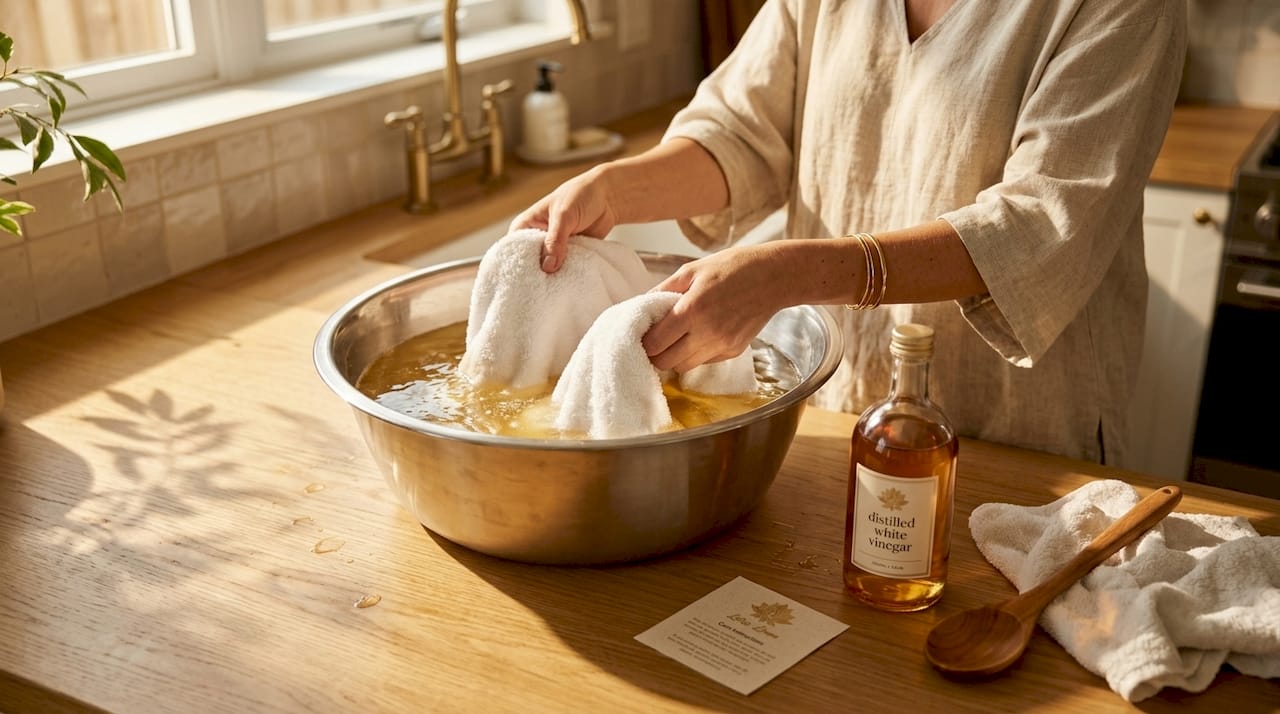
White distilled vinegar is your most powerful tool. It’s mildly acidic, which means it cuts through mineral deposits and detergent residue without harming cotton fibers. A half cup added to the rinse cycle works like a reset button for your towels. It also neutralizes odors, which is a bonus if your towels have that damp, musty smell.
Baking soda works differently but just as effectively. It’s alkaline, which helps break down acidic residue and opens up the fibers so they can breathe again. Using it in the wash cycle before a vinegar rinse creates a two-stage cleaning action that tackles residue from both directions.

Wool dryer balls are a game-changer for the drying stage. They tumble around the dryer, physically separating the towel fibers and fluffing them up as they dry. Unlike dryer sheets, they contain zero chemicals, and a good set can last for hundreds of dryer cycles. If you don’t have wool balls, clean tennis balls work as a reasonable substitute.
Simple ingredients like vinegar and baking soda can remove mineral and detergent residue safely without weakening the fabric over time.
| Ingredient | Purpose | Amount to use |
|---|---|---|
| White distilled vinegar | Removes mineral and detergent buildup | 1/2 cup per rinse cycle |
| Baking soda | Opens fibers, neutralizes odors | 1/2 cup per wash cycle |
| Wool dryer balls | Fluffs and separates fibers during drying | 3 to 6 balls per load |
| Soft water (if available) | Prevents mineral redeposition | Full wash cycle |
A clean washing machine matters more than most people realize. Detergent and mold can build up inside the drum, the rubber gasket, and the detergent drawer. Running a cleaning cycle monthly keeps your machine from reintroducing residue to towels you just washed.
Things to gather before you start:
- White distilled vinegar (not apple cider vinegar, which can stain)
- Baking soda
- Wool dryer balls or clean tennis balls
- A washing machine that’s been cleaned within the last month
- Towels that have been washed but not treated with fabric softener recently
Pro Tip: For stubborn mineral buildup, let your towels soak in a basin of warm water with one cup of white vinegar for 30 minutes before running them through the wash. This pre-soak loosens the heaviest deposits before the machine cycle even begins.
Following good eco-friendly towel care practices from the start means you won’t have to rescue your towels as often. Prevention is always easier than restoration.
With your ingredients and tools gathered, you’re ready for the natural softening process.
Step-by-step: How to soften towels naturally
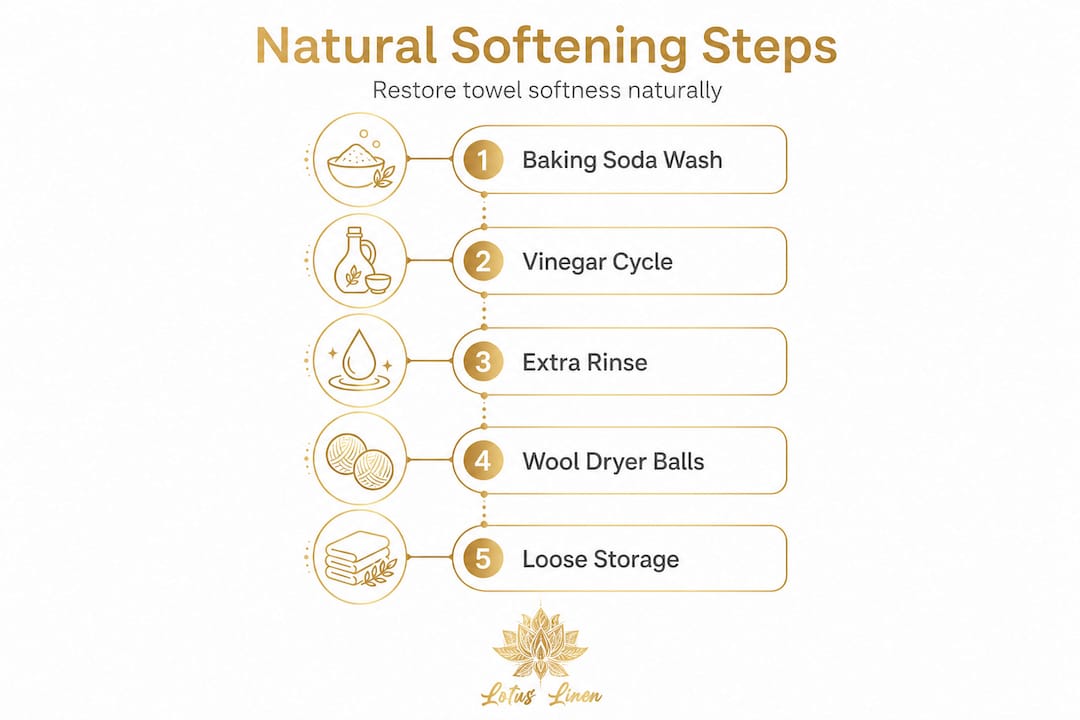
This process takes two wash cycles and one drying cycle. Yes, two cycles. Don’t skip either one. The vinegar and baking soda work best when they’re used separately so they can each do their specific job without canceling each other out.
Step 1: Run the first wash with baking soda Load your towels into the washing machine without any detergent. Add half a cup of baking soda directly to the drum with the towels. Set the water temperature to warm (not hot) and run a full wash cycle. The baking soda will loosen detergent buildup and open the cotton fibers.

Step 2: Run the second wash with vinegar Without drying the towels, run a second full wash cycle. This time, add half a cup of white distilled vinegar to the fabric softener dispenser or directly into the rinse compartment. Use warm water again. The vinegar will rinse away the loosened residue and neutralize any lingering mineral deposits. Your towels will not smell like vinegar once they’re dry.
Step 3: Check before drying Smell the towels quickly. If there’s a strong odor, run one more rinse cycle with plain water. This rarely happens, but it’s worth checking if your towels were particularly musty going in.
Step 4: Dry with wool balls Place your towels in the dryer with three to six wool dryer balls. Set the heat to medium rather than high. High heat may feel faster but it damages fibers. Medium heat with good air circulation produces fluffier, softer results. Proper drying technique makes a major difference in how soft your towels turn out.
Step 5: Shake before folding As soon as the cycle ends, take each towel out and give it a good shake before folding. This final shake realigns the fibers and prevents them from pressing flat and stiffening as they cool.
Step 6: Store properly Fold your towels loosely and store them in a well-ventilated space. Compressed, tightly packed storage flattens fibers over time and contributes to that stiff feeling after just one use.
| Method | Fiber impact | Absorbency | Eco-friendly | Long-term softness |
|---|---|---|---|---|
| Vinegar and baking soda | Gentle and restorative | Preserved | Yes | Excellent |
| Chemical fabric softeners | Coats and clogs fibers | Reduced | No | Declines over time |
| Dryer sheets | Chemical coating | Reduced | No | Moderate initially |
| Wool dryer balls | Physical fluffing | Preserved | Yes | Excellent |
For colored towels, following proper towel care instructions ensures the natural softening process won’t affect dye stability. Vinegar and baking soda are color-safe when used correctly.
Pro Tip: If you prefer air drying, hang towels in direct sunlight when possible. The UV rays help kill bacteria and the breeze naturally separates the fibers. Bring them in while they’re still very slightly damp and finish with 10 minutes in the dryer with wool balls for the best texture.
Choosing machine washable towel care methods that align with your towels’ construction makes the biggest difference in how long they stay soft between treatments.
After following these steps, it’s smart to double-check results and avoid common pitfalls.
Troubleshooting and keeping towels soft naturally
Sometimes one round of the natural softening process isn’t enough, especially if your towels have years of chemical softener and mineral buildup packed into the fibers. Don’t give up after one attempt.
If towels are still stiff after the first treatment: Repeat the two-cycle process a second time. For very stubborn cases, try a longer soak with vinegar before the first machine cycle. Towels that have been treated with commercial softeners for years can take two or three natural treatments before the fibers fully release that coating.
Signs a towel is no longer worth rescuing:
- Fibers are visibly matted or pilling severely
- The towel stays rough even after three or more natural treatments
- It has persistent odor that washing can’t eliminate
- Absorbency is gone, meaning water just beads off the surface
- There are thin or fraying spots that won’t recover
“Regular towel checks and responsible replacement cycles maintain both hygiene and softness over time.” Knowing when to retire a towel is just as important as knowing how to care for it.
Long-term maintenance habits that actually work:
- Run the vinegar rinse cycle once a month as a preventive measure, even when towels feel fine
- Use the minimum effective amount of detergent, usually half what the packaging recommends
- Avoid overloading the washing machine, towels need room to rinse properly
- Clean your washing machine drum and gasket monthly
- Never leave wet towels sitting in the drum for more than two hours
Pro Tip: Keep a small bottle of white vinegar next to your washing machine so it’s always within reach. When softening becomes part of your regular routine rather than a rescue mission, you’ll rarely have to deal with truly stiff towels.
How often should you repeat the full baking soda and vinegar treatment? For most households, once every four to six weeks keeps towels in great shape. If you have hard water, bump that up to every three weeks. Following sustainable bath linen care practices consistently adds years to your towels’ usable life.
Now that you know how to keep towels luxuriously soft, let’s consider a fresh perspective.
A fresh perspective: Why natural towel care is worth the effort
Here’s something the fabric softener industry won’t tell you: most people who reach for a bottle of commercial softener are solving a symptom, not the problem. The towel feels rough, so they add something to make it feel soft. But that product coats the fibers, reduces absorbency, and builds up over time, which eventually creates more roughness. It’s a loop that keeps you buying product.
Natural towel care breaks that loop entirely. When you stop coating fibers and start actually cleaning them, you restore what the towel was designed to do. A well-cared-for cotton towel doesn’t need chemical intervention to feel good. It just needs the residue cleared out.
There’s also a comfort truth that goes beyond texture. Towels that haven’t been treated with synthetic softeners feel noticeably better on sensitive skin. Many people who switch to natural care methods report that mild skin irritation they’d accepted as normal simply disappears. That’s not a coincidence.
From a sustainability standpoint, the math is compelling. Every bottle of commercial fabric softener contains synthetic fragrances, emulsifying agents, and preservatives that rinse into the water supply with every use. A half cup of white vinegar from a gallon jug you’ll use for months is a genuinely different environmental footprint.
Understanding the full picture around eco-friendly towel benefits makes it clear that natural care isn’t just a preference. It’s a smarter long-term choice for your home, your health, and the environment.
The effort involved is minimal once it becomes habit. Two wash cycles once a month. A bag of baking soda that costs under two dollars. A jug of vinegar. That’s the entire investment, and the return is towels that feel genuinely luxurious, dry you effectively, and last significantly longer.
Bring home luxury: Discover naturally soft towels and robes
If you’ve put real effort into caring for your towels naturally, you deserve linens that reward that effort. Not all towels are created equal, and starting with quality makes every care routine more effective.

At Lotus Linen, we design towels and robes that are built to respond beautifully to gentle, natural care. Our scallop bath towels are crafted for lasting plushness and are the perfect match for the vinegar and baking soda routine you’ve just learned. Pair them with one of our waffle robes for men to complete a home spa experience that feels genuinely indulgent. For something special, explore our personalized men’s robes for a custom touch that makes everyday comfort feel like a gift.
Frequently asked questions
How often should I soften my towels naturally?
Repeat the natural softening process every one to two months for routine maintenance, or sooner if towels start feeling rough between treatments.
Can I use vinegar and baking soda together when washing towels?
Use them in separate wash cycles, not together. Adding them at the same time causes a neutralizing reaction that reduces both ingredients’ effectiveness. Baking soda in the first cycle, vinegar in the second, delivers the best results. Both ingredients remove residue safely when applied this way.
Will natural softeners work with colored towels?
Yes. White distilled vinegar and baking soda are both safe for colored and dyed towels when used in the amounts described. They won’t strip color or cause fading when you follow the steps correctly.
What’s the best way to dry towels for extra softness?
Dry towels on medium heat with wool dryer balls, or air-dry outdoors and finish with a short dryer cycle. Proper drying techniques are just as important as the washing process for achieving that fluffy, soft texture.
How do I know when it’s time to replace my towels?
If your towels stay rough or lose their absorbency even after multiple natural care treatments, it’s time to replace them. Routine towel checks and replacement cycles help you maintain both hygiene and comfort in your home.