
The simple act of bathing holds hidden power for many american adults seeking peace in everyday life. Research shows that mindfulness practices can reduce stress and improve mental well-being within just minutes. Mindful bath time turns a daily routine into a restorative ritual, offering a way to recharge both body and mind. This guide explains the practical steps to make every bath a personal moment of calm and renewal.
Table of Contents
- Defining Bath Time Mindfulness And Core Concepts
- Types Of Mindful Bathing Routines
- Key Benefits For Body And Mind
- How To Create A Mindful Bath Space
- Common Pitfalls And Essential Safety Tips
Key Takeaways
| Point | Details |
|---|---|
| Mindful Engagement | Bath time mindfulness encourages full sensory awareness, transforming routine bathing into a restorative self-care experience. |
| Tailored Routines | Mindful bathing practices can be personalized to meet specific physical and mental health needs, enhancing overall wellness. |
| Physical and Mental Benefits | Regular mindful bathing promotes muscle relaxation, improved circulation, and reduced anxiety, fostering both body and mind health. |
| Creating a Serene Space | Designing a calming bath environment with minimal distractions, soothing elements, and intentional decor can significantly enhance the bathing experience. |
Defining Bath Time Mindfulness and Core Concepts
Bath time mindfulness transforms an everyday hygiene routine into a powerful moment of sensory awareness and personal restoration. At its core, this practice involves intentionally engaging with the present moment during bathing, shifting from a mechanical task to a deliberate self-care experience that nurtures both mental and physical well-being.
Mindfulness during bathing means fully experiencing each sensation - the temperature of water, the texture of soap, the rhythm of your breathing. Researchers have found that this focused attention can activate the parasympathetic nervous system, which helps reduce stress and promote deep relaxation. By consciously directing your awareness to the immediate physical experience, you create a meditative space that allows tension to dissolve and mental clarity to emerge.
The fundamental components of bath time mindfulness include several key practices:
- Sensory Engagement: Paying full attention to water temperature, sound, and tactile sensations
- Breath Awareness: Synchronizing breathing with the bathing experience
- Body Scanning: Systematically releasing physical tension
- Intentional Presence: Eliminating distractions and maintaining focus on the current moment
By approaching bath time as more than just personal hygiene, you transform a routine activity into a profound self-care ritual that supports holistic wellness. The goal is not perfection, but creating a compassionate space for personal restoration and mental reset.
Types of Mindful Bathing Routines
Mindful bathing is not a one-size-fits-all experience but rather a flexible practice with multiple approaches tailored to individual wellness needs. Intentional bathing rituals offer diverse techniques designed to address specific physical and mental health objectives, transforming a simple bath into a therapeutic journey.
Some prominent mindful bathing routines include:
- Stress Relief Bath: Incorporating calming essential oils like lavender and chamomile
- Energy Boosting Soak: Using invigorating herbs and warmer water temperatures
- Muscle Recovery Bath: Integrating Epsom salts and warm water to reduce physical tension
- Meditative Immersion: Focusing on breath work and sensory awareness during bathing
Creating a personalized bathing sanctuary involves more than just selecting the right water temperature. Practitioners recommend setting clear intentions, minimizing external distractions, and engaging all senses during the bathing experience. This might include dimming lights, playing soft music, using natural bath products, and maintaining a deliberate, slow breathing pattern.

Ultimately, the goal of these varied mindful bathing routines is to transform a basic self-care activity into a holistic wellness practice that nurtures both body and mind. Each approach offers unique benefits, allowing individuals to customize their bathing experience based on their current physical and emotional needs.
Key Benefits for Body and Mind
Mindful bathing is a powerful holistic practice that offers profound benefits for both physical and mental wellness. Research demonstrates that intentional bathing can activate the parasympathetic nervous system, creating a cascading effect of healing and restoration throughout the body and mind.
Physical benefits of mindful bathing are remarkably comprehensive:
- Muscle Relaxation: Warm water helps release physical tension
- Improved Circulation: Heat stimulates blood flow and reduces inflammation
- Pain Management: Targeted water temperatures can alleviate chronic muscle and joint discomfort
- Skin Health: Hydration and temperature regulation support natural skin regeneration
Psychological research confirms that consistent mindful bathing practices can significantly reduce anxiety and enhance emotional regulation. The meditative aspects of this practice create a unique mental reset, allowing individuals to interrupt stress cycles and cultivate a sense of inner calm. By focusing on sensory experiences and breath, practitioners can effectively lower cortisol levels and promote a state of deep relaxation.
Ultimately, creating a personal wellness sanctuary through mindful bathing represents a holistic approach to self-care. This practice transcends simple hygiene, transforming into a deliberate act of physical and emotional restoration that empowers individuals to reconnect with themselves in an increasingly chaotic world.
How to Create a Mindful Bath Space
Transforming your bathroom into a sanctuary of relaxation requires intentional design and thoughtful preparation. Experts recommend creating a multisensory environment that engages and soothes all your senses, turning an ordinary bath into a transformative experience.
Key elements of a mindful bath space include:
- Lighting: Soft, warm illumination using dimmable lights or candles
- Sound: Gentle background music or nature sounds
- Aromatherapy: Essential oils or natural botanical elements
- Temperature Control: Comfortable, consistent water temperature
- Minimal Clutter: Clean, organized space with intentional decor
Practical strategies for cultivating a serene atmosphere involve deliberately minimizing external distractions. This means silencing mobile devices, creating a dedicated time window for your bath, and setting clear personal intentions for the experience. Consider soft textiles, plush towels that enhance comfort, and intentional environmental design that signals to your brain it is time to relax and release stress.
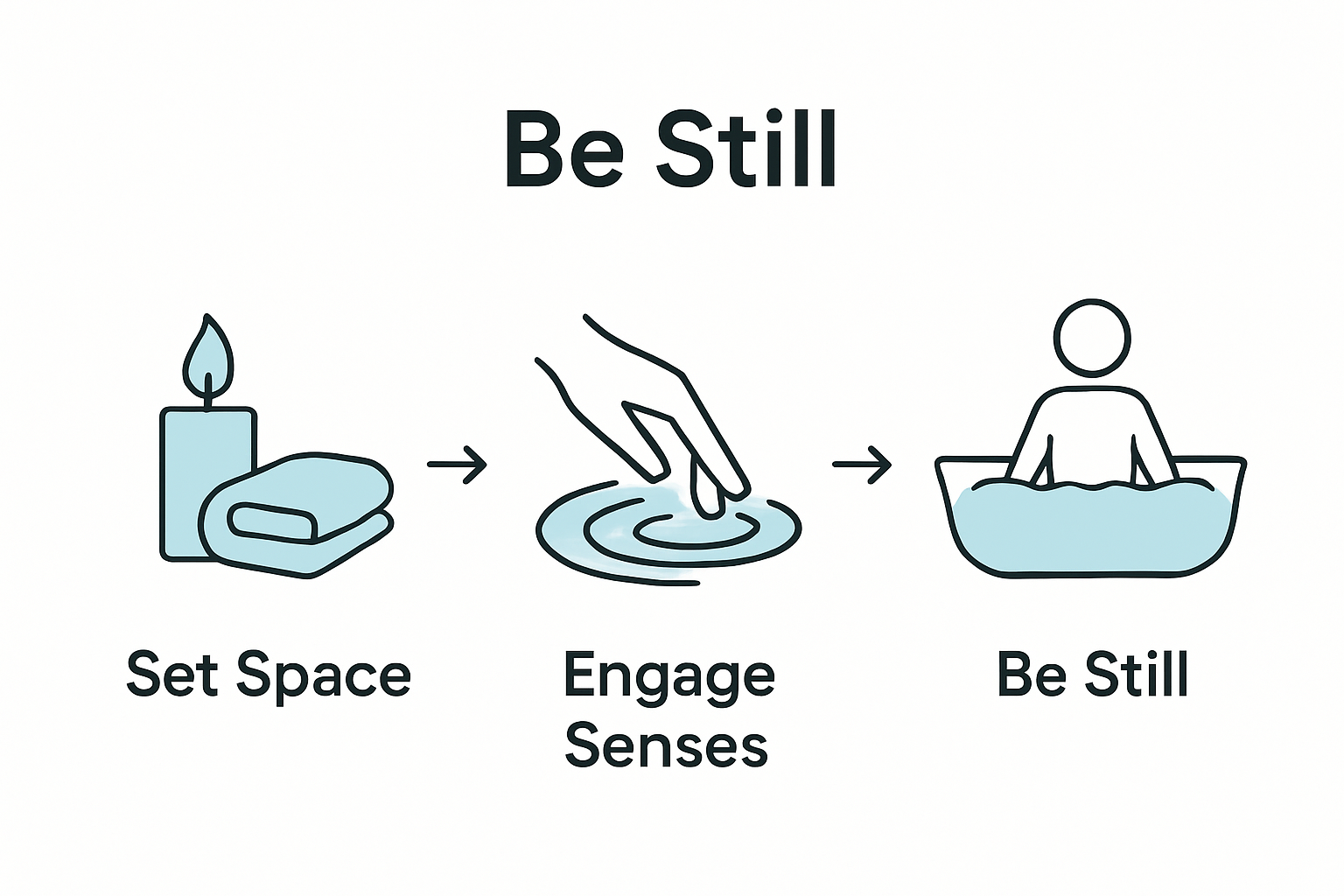
Ultimately, a mindful bath space is a personal sanctuary that reflects individual preferences and promotes holistic wellness. The goal is not perfection, but creating an intentional environment that supports mental clarity, emotional balance, and physical restoration.
Common Pitfalls and Essential Safety Tips
Mindful bathing requires more than good intentions. Sensory-aware strategies emphasize the importance of creating a safe, comfortable environment that prevents potential physical and emotional challenges during your bathing experience.
Common pitfalls to avoid include:
- Water Temperature Risks: Extreme temperatures can shock the system
- Sensory Overwhelm: Too many stimuli can cause anxiety
- Product Selection Errors: Using harsh chemicals or irritating ingredients
- Time Management: Prolonged bathing can lead to skin dehydration
- Distraction Dangers: Using electronic devices near water
Experts recommend careful product selection to prevent skin irritation and maintain a safe bathing environment. This involves checking water temperatures between 98-100 degrees Fahrenheit, using hypoallergenic and natural products, and maintaining a clean, clutter-free space. When preparing your bath with luxurious towels, prioritize safety by keeping electrical devices away from water sources and ensuring adequate lighting.
Ultimately, mindful bathing is about creating a balanced, safe experience that nurtures both body and mind. By being aware of potential risks and implementing thoughtful precautions, you transform a simple bath into a secure and rejuvenating ritual.
Elevate Your Bath Time Mindfulness with Lotus Linen
Transforming your bath into a mindful sanctuary means paying attention to every detail that nurtures your body and soul. The article highlights the importance of sensory engagement, breath awareness, and creating a calm environment. Yet a common challenge is finding bath essentials that enhance comfort while supporting your personal wellness ritual without distractions or irritants.
Discover the perfect complement to your mindful bathing practice with Lotus Linen’s premium collection. Our Scallop Piping Towels | Luxury Cotton Bath Sets offer plush softness and absorbency designed to pamper your skin after every soak. Each towel supports the gentle sensory experience essential to deep relaxation. Pair these with our customizable robes crafted for both luxury and safety as you transition from bath to rest.

Start crafting your ideal self-care routine now by exploring our exclusive bath ensemble at Lotus Linen. Embrace the calming elegance that turns every bath into a restorative escape. Why wait to invest in your wellness sanctuary when the opportunity to renew mind and body is just a click away? Visit our Scallop Piping Towel Set | Lotus Linen and elevate your bath time beginning today.
Frequently Asked Questions
What is bath time mindfulness?
Bath time mindfulness is the practice of engaging fully in the bathing experience to promote sensory awareness and personal restoration. It involves focusing on sensations such as water temperature and the textures of bath products, transforming a routine hygiene task into a deliberate self-care ritual that nurtures mental and physical well-being.
What are the key benefits of mindful bathing?
Mindful bathing offers numerous benefits, including muscle relaxation, improved circulation, pain management, and enhanced skin health. It also contributes to emotional well-being by reducing anxiety, promoting a sense of calm, and helping individuals regain mental clarity through focused sensory experiences.
How can I create a mindful bath space?
To create a mindful bath space, focus on soft, warm lighting, soothing sounds (like gentle music or nature sounds), and pleasant aromas using essential oils. Ensure the water temperature is comfortable, maintain a clean and organized space, and minimize distractions by setting aside time for your bath without electronic devices.
What are some common pitfalls to avoid during mindful bathing?
Common pitfalls to avoid include using water that is too hot or cold, overwhelming your senses with too many stimuli, using harsh bath products, prolonged bathing leading to skin dehydration, and distractions from electronic devices. It’s essential to prioritize safety and comfort to enhance the mindfulness experience.
Recommended
- How to Choose Bath Towels: Selecting the Perfect Luxe Towels – Lotus Linen
- 7 Luxurious Bathroom Inspirations for Your Oasis – Lotus Linen
- Bath Time Relaxation Tips: Complete Guide for 2025 – Lotus Linen
- Bathrobe History: From Ancient Comfort to Modern Luxury (2025) – Lotus Linen
- Mindfulness for Moms Workflow: Daily Calm and Connection - Mom on Quack

