
Every American parent knows that bath time can be more than just a daily chore. Studies show over 80 percent of infant caregivers consider bath time a key bonding opportunity that supports both hygiene and emotional connection. As simple as washing may seem, the right approach can shape your baby’s skin health and comfort for years to come. Explore how thoughtful routines transform an ordinary American bath into a nurturing and developmental ritual.
Table of Contents
- What Exactly Bath Time Means
- Why Delay Newborn’s First Bath
- Sponge Bath Vs Tub Bath
- Safe Bathing Practices And Hazards
- Soothing Skin Care After Bath
Key Takeaways
| Point | Details |
|---|---|
| Holistic Approach to Bath Time | Bath time is essential for physical care, emotional bonding, and developmental interaction between parents and infants, extending beyond basic hygiene. |
| Delaying First Bath | Postponing a newborn’s first bath helps preserve the vernix caseosa, supporting skin protection, temperature regulation, and early bonding. |
| Bathing Method Considerations | Transition from sponge baths to tub baths as a baby grows, maximizing comfort and developmental benefits while ensuring safety during bathing. |
| Post-Bath Skin Care | Implement gentle post-bath skin care routines with hypoallergenic products to maintain hydration and support the infant’s skin health. |
What Exactly Bath Time Means
Bath time for babies is far more than a simple cleaning routine. It represents a profound opportunity for physical care, emotional connection, and developmental interaction between parents and infants. Bathing practices involve complex physiological and psychological considerations that extend well beyond basic hygiene.
Research indicates that infant bathing encompasses critical elements of infant well-being. Proper bath techniques can significantly influence an infant’s thermoregulation, skin health, and stress levels. Newborn bathing methods are carefully calibrated to maintain physiological stability while creating a nurturing environment that supports the baby’s overall development.
The comprehensive nature of bath time includes multiple dimensions:
- Hygiene Maintenance: Removing dirt and potential pathogens
- Skin Health: Supporting delicate infant epidermis through gentle cleansing
- Sensory Stimulation: Providing tactile experiences that support neurological development
- Emotional Bonding: Creating intimate moments of physical and emotional connection between caregiver and infant
Cultural practices and medical recommendations vary, but the fundamental goal remains consistent: creating a safe, comfortable, and meaningful interaction that supports the infant’s physical and emotional growth. Bath time is not just about cleanliness—it’s a holistic experience of care, comfort, and connection.
Why Delay Newborn’s First Bath
Delaying a newborn’s first bath is an emerging recommendation in modern pediatric care, rooted in understanding the delicate physiological transition newborns experience during their initial hours of life. Infant care practices have evolved to prioritize the baby’s immediate biological needs and natural adaptation processes.
The primary reasons for postponing the first bath center on preserving the vernix caseosa, a waxy white substance covering a newborn’s skin immediately after birth. This protective coating serves multiple critical functions:
- Natural Moisturization: Helps maintain skin hydration
- Immune Protection: Contains antimicrobial properties
- Temperature Regulation: Assists in stabilizing body temperature
- Skin Barrier Development: Supports the infant’s emerging dermal defenses
Postponing bathing also supports critical early bonding and breastfeeding processes. Immediate skin-to-skin contact without interruption allows for crucial hormonal exchanges between mother and infant, promoting physiological stabilization and emotional connection. The recommended delay typically ranges from 12 to 48 hours, giving the newborn time to adjust to their new environmental conditions while maintaining optimal thermal and metabolic balance.
Parents should consult their healthcare providers for personalized guidance, as individual circumstances may vary. The fundamental goal remains creating the most supportive transition for the newborn, balancing hygiene needs with the infant’s delicate physiological requirements.
Sponge Bath Vs Tub Bath
Choosing between a sponge bath and a tub bath involves understanding the unique benefits and challenges of each method for newborn care. Infant bathing techniques require careful consideration of the baby’s age, developmental stage, and individual needs.
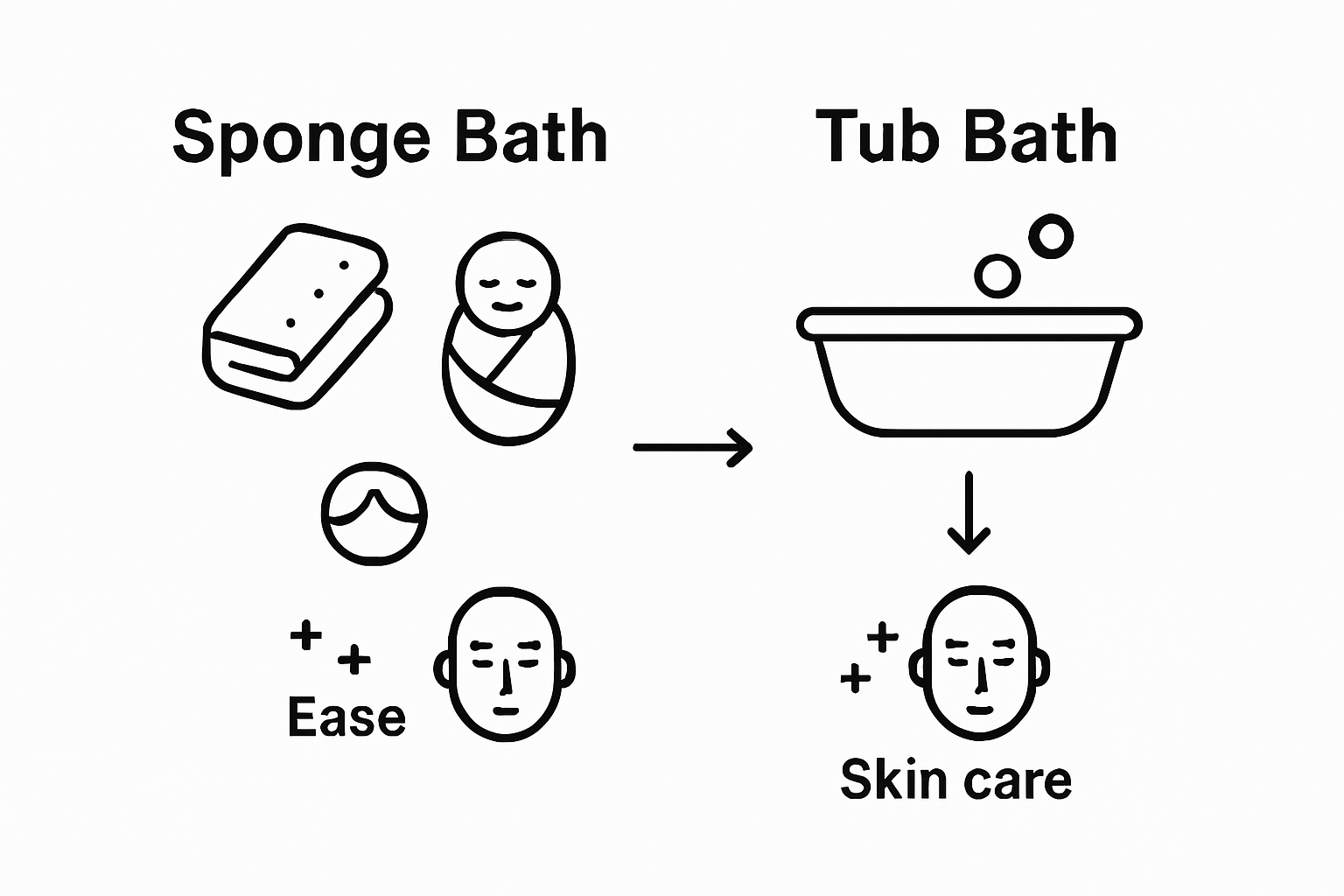
Research reveals that tub bathing offers significant advantages in terms of temperature stability and infant comfort. Tub baths provide a more comprehensive and gentle approach to cleansing, allowing for better temperature regulation and reduced stress for the newborn. The immersive environment helps maintain the baby’s body heat more effectively compared to sponge bathing.
Key differences between sponge and tub bathing include:
-
Sponge Bath Characteristics:
- Ideal for newborns under 2 weeks
- Requires less preparation
- Minimizes full body exposure
- Best for umbilical cord healing
-
Tub Bath Advantages:
- More thorough cleansing
- Improved temperature control
- Better sensory experience
- Supports muscle relaxation
Parents should transition from sponge baths to tub baths gradually, typically around 2-4 weeks of age or after the umbilical cord has completely healed. The ultimate goal is creating a safe, comfortable bathing experience that supports the infant’s physical and emotional well-being. Always ensure proper supervision, maintain a warm environment, and use gentle, baby-specific bathing products to protect the newborn’s delicate skin.

Safe Bathing Practices And Hazards
Ensuring infant safety during bath time requires a comprehensive approach that addresses both physical environment and bathing techniques. Infant care protocols demand meticulous attention to prevent potential accidents and protect the newborn’s delicate physical systems.
Skin health research suggests that frequency of bathing plays a crucial role in maintaining an infant’s dermal integrity. Contrary to popular belief, daily bathing can potentially compromise the natural protective barrier of a baby’s skin, leading to irritation and dryness. Pediatric recommendations typically suggest limiting baths to 2-3 times per week to preserve the infant’s natural skin microbiome and prevent unnecessary moisture loss.
Critical safety considerations for infant bathing include:
-
Water Temperature Management:
- Use thermometer to check water temperature
- Ideal range: 90-100 degrees Fahrenheit
- Always test water with inner wrist before bathing
-
Physical Safety Precautions:
- Never leave infant unattended
- Use non-slip bath mats
- Keep all bathing supplies within immediate reach
- Maintain constant hand contact with the baby
Parents should create a systematic approach to bath time, treating it as a carefully orchestrated process that prioritizes the infant’s physical safety and emotional comfort. This involves preparing all necessary supplies beforehand, maintaining a warm environment, and ensuring constant supervision throughout the entire bathing experience. The goal is to transform bath time from a potential hazard into a safe, nurturing interaction that supports the baby’s hygiene and developmental needs.
Soothing Skin Care After Bath
Post-bath skin care represents a critical moment in maintaining an infant’s delicate dermal health and overall comfort. Infant skincare techniques require a nuanced approach that balances hydration, protection, and gentle treatment.
Topical oil application emerges as a scientifically supported method for enhancing skin barrier function and supporting infant thermoregulation. However, parents must exercise careful selection, as not all oils provide uniform benefits, and some may potentially trigger adverse skin reactions or bacterial colonization.
Comprehensive post-bath skin care strategies include:
-
Immediate Drying Techniques:
- Pat skin gently with soft towel
- Avoid vigorous rubbing
- Ensure complete moisture removal
- Keep infant warm during process
-
Moisturizing Approach:
- Use hypoallergenic, fragrance-free products
- Apply light, natural oils sparingly
- Focus on preventing moisture loss
- Target areas prone to dryness
Parents should view post-bath skin care as an extension of the bathing experience - a moment of connection, comfort, and preventive health care. The goal transcends mere surface-level treatment, focusing instead on nurturing the infant’s developing skin ecosystem while creating a soothing, bonding interaction that supports both physical and emotional well-being.
Elevate Your Baby’s Bath Time with Comfort and Safety
Bath time for babies is much more than hygiene. It is about creating a safe, soothing, and bonding experience that supports your newborn’s delicate skin and emotional well-being. The article highlights key challenges such as maintaining ideal water temperature, protecting sensitive skin from dryness, and enhancing comfort during sponge or tub baths. These goals align perfectly with the need for gentle, plush materials that embrace your child in warmth after every bath.
At Lotus Linen, we understand the importance of softness, safety, and warmth during those precious moments. Our premium collection of plush robes and towels are designed to protect your baby’s delicate skin while promoting cozy bonding time. Crafted with care for families who want both functional and elegant bath accessories, our products become an essential part of your nurturing routine. Experience the difference in comfort and safety that turns routine bath time into a joyful ritual.

Make the next bath time safer and more comfortable for your baby. Visit Lotus Linen now to explore our exclusive range of robes and towels designed with families like yours in mind. Because your baby deserves nothing less than the best in care and comfort today.
Frequently Asked Questions
What is the significance of bath time for babies?
Bath time is not just a cleaning routine; it is an essential time for physical care, emotional bonding, and developmental interaction between parents and infants, promoting overall well-being.
Why should I delay my newborn’s first bath?
Delaying a newborn’s first bath helps preserve the vernix caseosa, a protective substance that moisturizes the skin, provides immune protection, and supports temperature regulation.
What are the differences between a sponge bath and a tub bath for infants?
A sponge bath is ideal for newborns under 2 weeks and is less invasive, while a tub bath offers a more thorough cleanse and better temperature regulation, making it advantageous for infants as they grow.
How often should I bathe my newborn?
It is generally recommended to bathe newborns 2-3 times per week to prevent irritation and dryness while maintaining their natural skin barrier.

