
TL;DR:
- Spa guest luxury relies on seamless service, thoughtful design, and high-quality amenities to create a deep sense of well-being. It emphasizes four pillars: hydrotherapy, restful environments, effortless dining, and quiet zones to deliver lasting relaxation and mental decompression. These principles can be effectively replicated at home through careful material selection, environment control, and ritual sequencing.
Spa guest luxury is defined as the frictionless, personalized delivery of high-standard services within an environment designed to support deep rest and well-being. It is not about marble countertops or exotic treatments alone. The concept, formally called guest experience excellence in the wellness industry, rests on four measurable pillars: expert staffing, thoughtful physical design, quality amenities, and consistent service delivery. Guests who encounter all four leave with something rare: the feeling that every detail was handled before they thought to ask. This guide breaks down exactly what creates that feeling, how spas measure it, and how you can bring those same principles into a home or boutique hospitality setting.
What is spa guest luxury, and what are its foundational features?
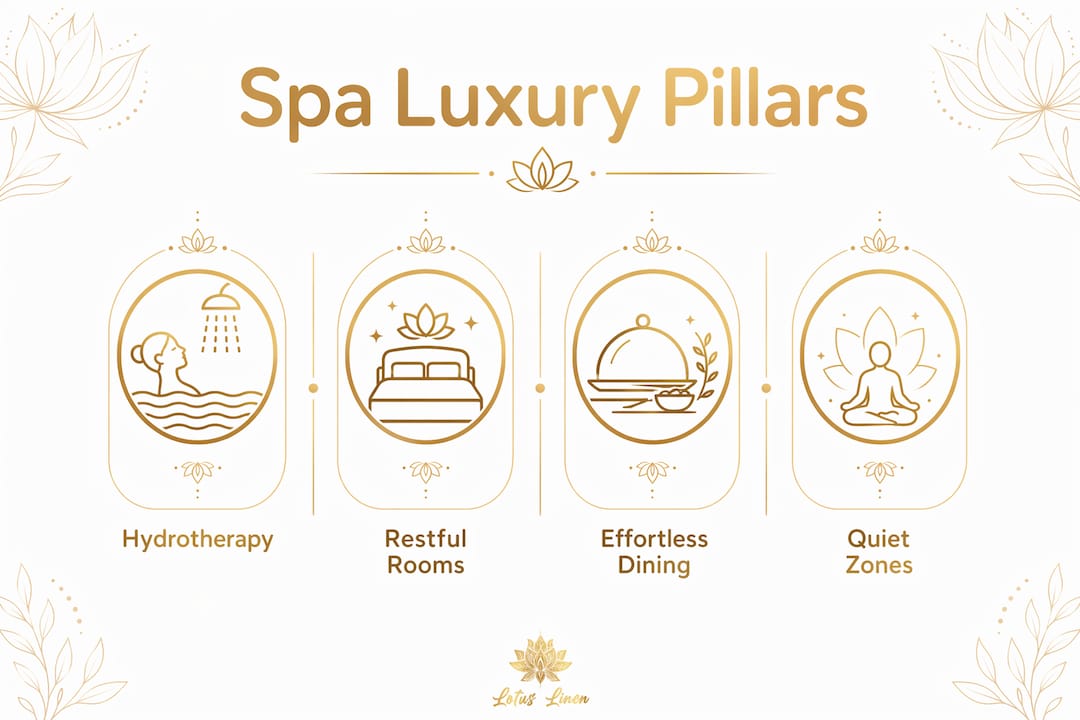
Four foundational pillars define the modern luxury spa experience: hydrotherapy and thermal circuits, restful room environments, effortless dining, and strictly enforced quiet zones. Each pillar addresses a specific guest need, and removing any one of them drops the experience from luxury to standard.
Hydrotherapy circuits, which include heated pools, cold plunge baths, and steam rooms, serve a physiological purpose. They prepare the body for treatment and extend the relaxation response long after a session ends. Restful room environments go beyond soft lighting. They require acoustic design, temperature control, and furniture that supports genuine stillness rather than just sitting.
Effortless dining means guests never feel interrupted or rushed. A luxury spa does not ask guests to navigate a cafeteria. Food arrives at the right moment, in the right portion, without a decision burden. Quiet zones are equally non-negotiable. Designated areas free from phone noise and conversation protect the mental decompression that guests pay for.
Pro Tip: When evaluating whether a spa truly delivers on quiet zones, arrive 20 minutes early and sit in the lounge before your treatment. The ambient noise level in that waiting period tells you everything about how seriously the facility takes guest rest.
| Pillar | Guest impact |
|---|---|
| Hydrotherapy circuits | Extends physical relaxation before and after treatment |
| Restful room design | Reduces sensory overload and supports sleep-quality rest |
| Effortless dining | Removes decision fatigue and sustains the relaxed state |
| Quiet zones | Protects mental decompression, the core luxury deliverable |
How does exceptional service and staffing elevate the luxury spa experience?
Leading spas invest heavily in staff: recruiting therapists from specialized training programs, funding continuous education, and paying competitively to retain those with a decade or more of hands-on experience. That investment shows up in every guest interaction, from the intake consultation to the final goodbye.
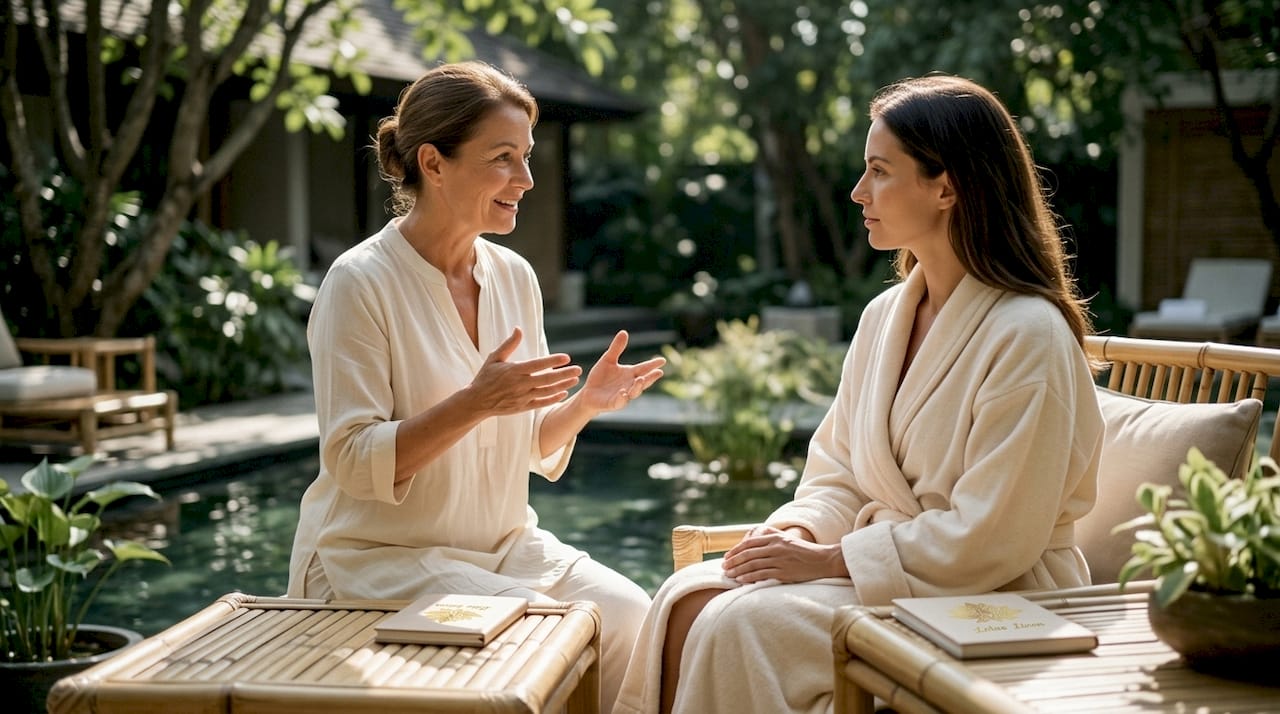
The difference between a good therapist and a great one is not technique alone. It is the ability to read a guest’s energy, adjust pressure without being asked, and create a session that feels tailored rather than templated. Guests rarely articulate this distinction, but they feel it immediately.
Frictionless service delivery is the clearest marker of true luxury. Guests should never manage the process themselves. They should not chase down a robe, ask twice for water, or wait at a desk while staff search for their booking. Every handoff between arrival, treatment, and departure must feel natural and pre-planned.
Smooth check-in and personalized communication set the tone before a single treatment begins. Reception is the moment that confirms or breaks the brand promise. A warm, informed greeting that references the guest’s name and booked services signals that the entire visit will be handled with the same care.
Key service behaviors that define luxury staffing:
- Therapists who complete a thorough intake consultation before every session, not just the first visit
- Staff who proactively offer water, adjustments, or a warmer robe without waiting to be asked
- Coordinators who manage transitions between areas so guests never feel lost or idle
- A team culture where every role, from reception to laundry, understands its impact on the guest experience
Pro Tip: Train your front desk team to confirm two personal details during check-in: the guest’s preferred room temperature and any areas to avoid during treatment. That two-question exchange signals attentiveness and reduces mid-session interruptions.
What subtle environmental touches enhance luxury perceptions for spa guests?
Luxury spa excellence lives in the “in-between” moments: the unhurried walk from the locker room to the treatment suite, the scent that greets you in the hallway, the weight of the robe you pull on after a shower. These transitions carry as much emotional weight as the treatments themselves.
Guests process environmental cues faster than they process verbal communication. A room that smells faintly of eucalyptus and cedar signals cleanliness and calm before a word is spoken. A robe that feels plush and well-fitted communicates care before any service begins. These are not decorative choices. They are functional signals that tell the nervous system it is safe to relax.
Specific environmental details that shape luxury perception:
- Soundproofing between treatment rooms and common areas, so no conversation bleeds through walls
- Temperature zoning that keeps thermal areas warm and relaxation lounges cool without guest adjustment
- Natural materials like stone, wood, and linen that ground the space visually and texturally
- Ambient scent layering that shifts subtly between zones, marking transitions without jarring the senses
- Lighting gradients that dim progressively as guests move deeper into the spa, reinforcing the shift from active to restful
Small, repeatable service details like a precisely folded towel at the edge of a treatment table or a personalized intake card waiting at a guest’s seat carry disproportionate weight. Guests interpret these details as evidence of care and attention applied specifically to them. That interpretation is the foundation of perceived luxury.
How can spa operators measure and improve their luxury guest experience?
Measuring luxury guest satisfaction requires two distinct tools: CSAT for short-term feedback and NPS for long-term loyalty signals. Using both CSAT and NPS gives operators a complete picture. CSAT captures how a guest felt about a specific visit. NPS reveals whether they would recommend the spa and return themselves.
Star ratings provide a fast external benchmark. Luxury spa clients expect ratings between 4.5 and 4.8 stars. A rating below 4.3 creates booking hesitancy, meaning potential guests scroll past without clicking. That threshold is not arbitrary. It reflects the standard that guests associate with a reliable luxury experience.
A practical improvement cycle for spa operators:
- Collect open-ended feedback after every visit, not just star ratings. Ask guests what felt effortless and what required effort on their part.
- Review feedback weekly with department leads. Identify patterns across at least 10 responses before making operational changes.
- Implement one small adjustment per month based on recurring feedback. Towel placement, intake question wording, and robe sizing availability are common starting points.
- Track NPS quarterly to measure whether loyalty is building or eroding over time.
- Follow up proactively with guests who leave neutral scores. A personal message within 48 hours converts a passive guest into an advocate more reliably than any discount.
Spas with at least five therapists should aim for 5–12 new reviews per month to maintain consistent visibility and credibility. That volume signals active, satisfied guests to both search algorithms and prospective visitors. For spa operators focused on growth, pairing strong review volume with targeted visibility strategies compounds the effect of every service improvement.
How can you replicate spa guest luxury at home or in a boutique setting?
Consistent, high-quality execution of foundational wellness services outperforms trendy concepts every time. The same principle applies at home. You do not need a hydrotherapy circuit to create a spa-worthy experience. You need the right materials, a quiet environment, and a sequence that removes friction.
The tactile layer matters most. A plush robe that wraps fully, a thick bath sheet that absorbs without scratching, and a personalized touch like an embroidered name or monogram shift the experience from functional to memorable. Shoplotuslinen’s plush robes collection and waffle robes are built specifically for this purpose, offering the weight and texture that guests associate with professional spa environments.
Practical ways to bring spa guest luxury into a home or boutique setting:
- Start with the robe. A spa-worthy robe for her or a well-fitted men’s robe signals the shift from everyday to restorative before any treatment begins.
- Control the sensory environment. Dim lights, add a single ambient scent, and silence notifications. These three steps replicate the quiet zone effect without renovation.
- Create a sequence. Warm shower, robe, quiet rest, then treatment or self-care ritual. The order matters because it mirrors the physiological preparation that professional spas build into their circuits.
- Add a personal detail. Custom embroidery on a robe or towel set transforms a functional item into a gift-quality experience. Shoplotuslinen’s personalization options make this straightforward for both home hosts and boutique hospitality operators.
For a full step-by-step approach, the home spa ambiance guide from Shoplotuslinen covers room setup, product selection, and ritual sequencing in practical detail.
Key Takeaways
Spa guest luxury is built on frictionless service, expert staffing, and sensory design that works before, during, and after every treatment.
| Point | Details |
|---|---|
| Four foundational pillars | Hydrotherapy, restful rooms, effortless dining, and quiet zones define luxury spa design. |
| Frictionless service is the standard | Guests should never manage the process; every transition must feel pre-planned and natural. |
| In-between moments carry the most weight | Transitions, scents, robes, and small details shape luxury perception more than treatments alone. |
| Measure with CSAT and NPS together | Short-term satisfaction scores and long-term loyalty metrics give a complete picture of guest experience. |
| Home replication is achievable | The right robe, a quiet environment, and a deliberate sequence deliver spa-quality comfort at home. |
Why understated luxury is the only kind that lasts
I have spent years working with hospitality clients and home spa enthusiasts, and the pattern is always the same. The guests who remember a spa visit most vividly are not the ones who had the most elaborate treatment menu. They are the ones who felt, from the moment they walked in, that someone had already thought of everything.
That is understated luxury. It is not invisible. It is felt in the weight of a robe, the silence of a well-designed lounge, and the therapist who adjusts without being asked. What strikes me most is how often operators miss this by chasing trends. A new cryotherapy pod or a signature facial does not compensate for a scratchy towel, a noisy waiting area, or a check-in that makes the guest repeat their name twice.
The same truth applies at home. When I see guests wrap themselves in a Shoplotuslinen plush robe after a bath, the reaction is immediate and physical. Their shoulders drop. That is the whole point. The robe is not the luxury. The ease it creates is. Operators and home hosts who understand this distinction stop spending on spectacle and start investing in the details that actually land.
The uncomfortable truth about luxury is that it requires discipline, not budget. Consistent execution of simple, high-quality elements beats a complicated menu of services every time. Start with what guests touch, hear, and smell before any treatment begins. Get those right, and everything else follows.
— Oguzhan
Shoplotuslinen robes and linens for a spa-worthy guest experience
Shoplotuslinen designs robes and bath linens specifically for the kind of comfort that guests remember. The men’s robes collection and women’s robes collection offer plush and waffle options built for full coverage, lasting softness, and a fit that feels intentional rather than generic. Each piece is available with custom embroidery, making personalization straightforward for home hosts, boutique operators, and anyone building a spa-worthy environment from the ground up. For a complete look at what spa-worthy amenities actually include, the luxury spa amenities guide covers the full picture. Wholesale options are also available for hospitality operators who want consistent quality across their entire guest experience.
FAQ
What is spa guest luxury in simple terms?
Spa guest luxury is the experience of receiving personalized, high-quality care in an environment where every detail is handled before you need to ask. It combines expert service, thoughtful physical design, and quality amenities into a frictionless whole.
What do spa guests enjoy most about a luxury experience?
Spa guests most value the feeling of effortless care: quiet spaces, attentive staff, and tactile comfort like plush robes and spa-worthy towels. In-between moments such as transitions and ambient details often matter more than the treatments themselves.
What star rating defines a luxury spa?
Luxury spa benchmarks set the standard at 4.5–4.8 stars. Ratings below 4.3 create booking hesitancy among guests who associate that threshold with reliable, high-standard service.
How do spas measure guest satisfaction effectively?
Spas use CSAT scores to measure satisfaction after individual visits and NPS to track long-term loyalty and likelihood to recommend. Using both metrics together gives operators a complete and actionable view of guest experience quality.
Can you recreate a luxury spa experience at home?
Yes. The core elements, including a quiet environment, a deliberate self-care sequence, and spa-worthy linens like a plush or waffle robe, replicate the foundational comfort of a professional spa without requiring specialized equipment. The spa day at home guide from Shoplotuslinen walks through the full ritual step by step.

