
TL;DR:
- Bath linen personalization involves adding monograms, embroidered designs, or printed motifs to towels and robes to reflect individual style. Embroidery and monogramming are highly durable methods that maintain their appearance through hundreds of washes, unlike printed designs that tend to fade faster. Proper fabric selection, placement, and care, such as washing inside out and avoiding fabric softeners, ensure long-lasting, spa-worthy personalized linens.
Bath linen personalization is the practice of customizing towels, robes, and related textiles with monograms, embroidered designs, or printed motifs that reflect your personal style and transform everyday bathroom items into spa-worthy statements. The industry term for this practice is textile customization, though most consumers and brands use “bath linen personalization” to describe the full range of options available today. At Shoplotuslinen, personalization sits at the core of what we do, from scallop piping towels with custom embroidery to plush robes monogrammed for weddings, gifts, or simply the pleasure of owning something made just for you. Personalized towels and robes also make lasting bath gifts that carry emotional weight far beyond their price point, which is why custom thread colors and font styles allow designs to suit individual personalities and spaces.
What is bath linen personalization and what types are available?
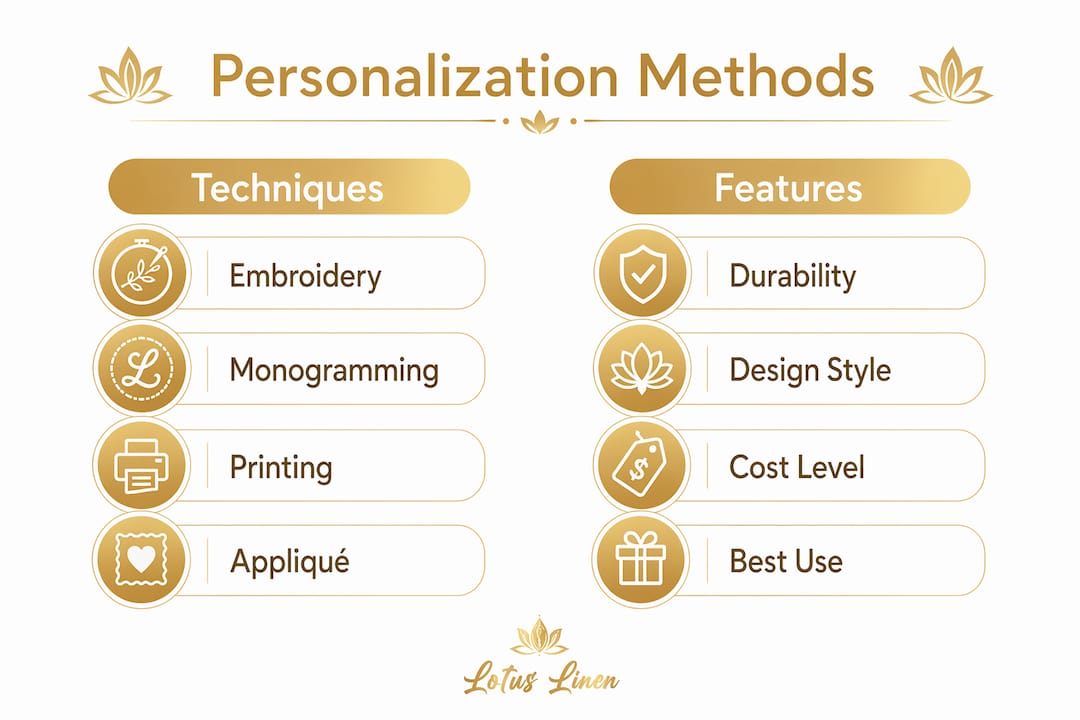
Bath linen personalization covers four main methods, each with a different look, durability profile, and price point. Understanding the differences helps you choose the right approach for your bathroom, your budget, and how long you want the design to last.
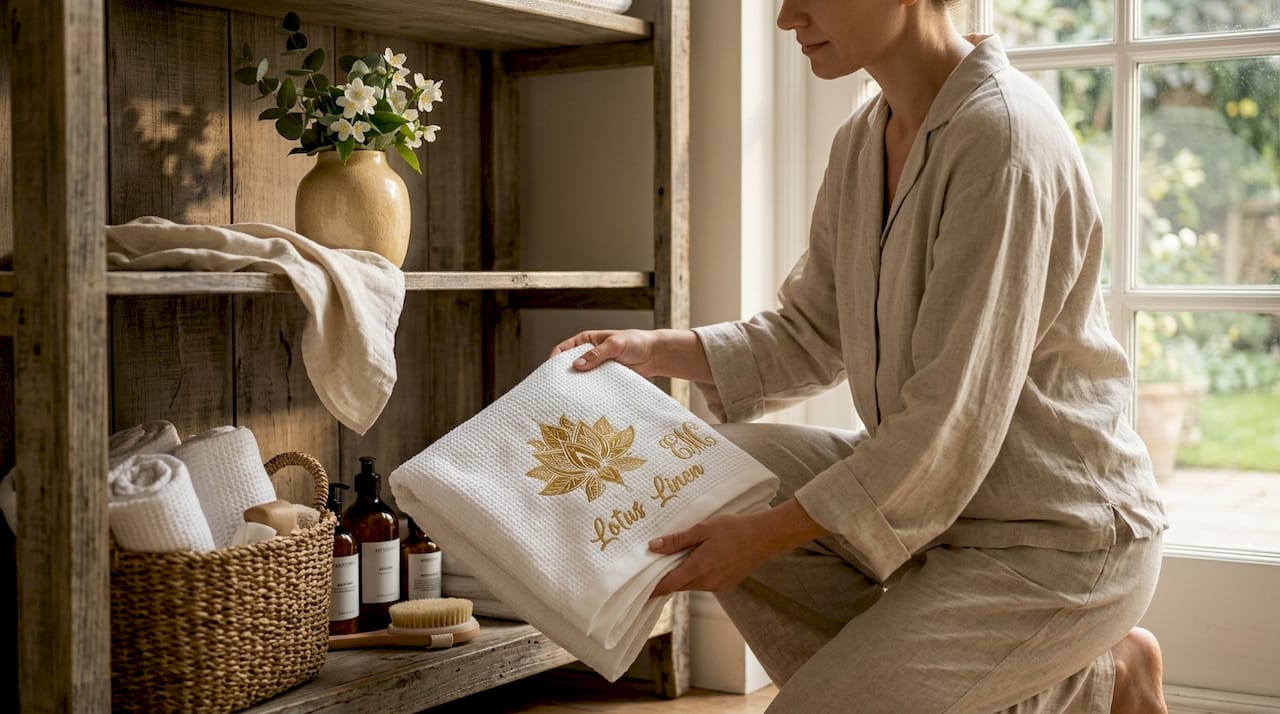
Embroidery is the most durable and spa-worthy option. Thread is stitched directly into the fabric using a machine or by hand, creating a raised, textured design that holds its shape through hundreds of washes. Monogrammed bath towels fall into this category, and they remain the most requested form of bath linen customization for both personal use and gifting.
Monogramming is a specific type of embroidery that uses initials, typically one to three letters, arranged in a classic or script typeface. It is the traditional choice for wedding gifts, housewarming sets, and spa-worthy bathroom upgrades. The result is understated and timeless.
Printed designs use heat transfer or screen printing to apply graphics, patterns, or text to the fabric surface. Printing allows more color complexity than embroidery, but it sits on top of the fabric rather than being woven into it. Printed designs fade faster, especially on terry cloth, where the looped surface resists ink adhesion.
Appliqué involves sewing a separate piece of fabric onto the base textile to create a design. It works well for bold shapes and logos but adds thickness and requires careful care to prevent peeling at the edges.
| Method | Durability | Best for | Cost level |
|---|---|---|---|
| Embroidery | Very high | Monograms, logos, names | Medium to high |
| Monogramming | Very high | Initials, wedding gifts | Medium |
| Printed design | Moderate | Complex graphics, color | Low to medium |
| Appliqué | Moderate | Bold shapes, decorative | Medium |
Pro Tip: For bath linens specifically, always choose embroidery or monogramming over printing. Terry cloth absorbs ink unevenly, and printed designs on towels typically fade within 20 to 30 washes, while embroidery holds for years.
How does the personalization process work for bath linens?
The embroidery process for bath linens follows a specific sequence that differs from embroidering on flat woven fabrics. Terry cloth is notoriously difficult to work with because its looped pile can swallow thread, blur fine details, and distort under a hoop. Here is how the process works from start to finish.
- Design preparation. The artwork or text is digitized into an embroidery file format. Font size, stitch density, and color count are finalized. Commercial embroidery typically limits custom text to 10 characters, so brevity matters.
- Stabilizer selection. A cut-away or tear-away stabilizer is placed beneath the towel to prevent the fabric from shifting during stitching. Medium-weight stabilizers and a water-soluble topping are placed over the terry loops to stop thread from sinking into the pile.
- Hooping. The towel is secured in an embroidery hoop. For DIY work, floating the towel rather than hooping it directly reduces distortion and puckering.
- Machine stitching. The embroidery machine runs the digitized design. Slowing the machine speed improves stitch clarity on terry cloth, which is why DIY embroiderers must test on sample towels before committing to the final piece.
- Finishing. The topping is removed, excess stabilizer is trimmed, and the towel is inspected for thread tension and legibility.
- Quality check and packaging. Commercial providers run a sew-out test and, for hospitality orders, conduct industrial laundering tests to confirm durability.
For commercial orders, rush orders are processed in 1 to 2 days for an additional fee. Standard production timelines typically run 5 to 10 business days depending on order volume and design complexity.
Pro Tip: If you are personalizing towels at home, mark your placement point with a fabric-safe pen before hooping. Placement errors are the most common reason DIY monograms look off-center or unbalanced.
For robe personalization, the process is nearly identical but placement options expand significantly. Shoplotuslinen’s embroidery ideas for bathrobes covers chest pocket placement, back yoke designs, and cuff monograms that work beautifully on both plush and waffle styles.
What fabric qualities influence personalization results?
Not all bath linens take embroidery equally well. The fabric’s weight, loop density, and fiber content directly affect how clean and durable the finished design looks.
GSM (grams per square meter) is the most useful number to know. A 480gsm 100% cotton towel provides enough density to hold embroidery without the fabric distorting, while still feeling spa-worthy against the skin. Towels below 400gsm tend to pucker around stitching because the base fabric lacks the body to support thread tension.
Terry loop height determines how much the pile interferes with stitch legibility. Tighter, shorter loops produce cleaner monograms. Long, plush loops look luxurious but require a water-soluble topping to keep thread from disappearing into the pile. This is why legibility depends on keeping text concise and avoiding fine serif fonts on high-pile terry cloth.
Thread type matters as much as fabric. For everyday home use, polyester embroidery thread offers the best color retention. For hospitality or high-wash environments, bleach-resistant threads and industrial wash testing confirm durability across up to 150 wash cycles at 90°C. That standard is worth knowing even for home buyers: it tells you what thread quality actually means in practice.
Care instructions for personalized linens are straightforward but specific:
- Wash embroidered towels inside out on a gentle cycle to protect thread tension.
- Use cold or warm water rather than hot, which can loosen stabilizer remnants and cause puckering over time.
- Tumble dry on low. High heat degrades both the embroidery thread and the cotton fibers around it.
- Avoid fabric softener on terry cloth. It coats the loops and reduces absorbency without benefiting the embroidery.
- Do not bleach unless the thread is specifically rated bleach-resistant.
How to choose and care for personalized bath linens
Choosing the right personalized bath linens comes down to three decisions: design, placement, and fabric. Getting all three right means your linens look intentional rather than improvised.
Design selection should reflect both your aesthetic and your bathroom’s color palette. A single monogram in a classic block font reads as timeless and works in any bathroom style. A script font with a decorative border suits a more romantic or vintage space. Custom logos or illustrated motifs work well for families who want something playful, especially on kids’ personalized towels where names or characters make bath time more engaging.
Placement is where many buyers underestimate the visual impact. Monogram placement near the lower third of a towel, just above any decorative border, creates the most balanced look when the towel is folded and displayed. Centered placement reads well when the towel is hung flat. For robes, chest placement is the most common choice, but back yoke embroidery creates a striking effect for spa-style presentation.
Sizing affects legibility. Text that is too small disappears into terry pile. Text that is too large overwhelms the design. A 3 cm character height is a practical minimum for readable monograms on standard bath towels.
For ongoing care, the rules are simple. Turn embroidered items inside out before washing. Skip the fabric softener. Dry on low heat. These three habits alone will extend the life of your personalized linens by years. If you are building a matched set, buy all pieces from the same production run so thread color and placement remain consistent across the collection. Each personalized linen carries slight stitching variation as a mark of handcrafted attention, which means slight differences between pieces are a feature, not a flaw.
Pro Tip: When ordering a set of monogrammed bath towels, request a physical sew-out sample before full production. This one step catches font legibility issues, color mismatches, and placement errors before they multiply across your entire order.
Key takeaways
Bath linen personalization works best when embroidery technique, fabric weight, and design placement are chosen together rather than separately.
| Point | Details |
|---|---|
| Embroidery outperforms printing | Embroidered designs last hundreds of washes; printed designs on terry cloth fade within 20 to 30 cycles. |
| GSM determines stitch quality | Choose 480gsm or higher cotton for clean, durable embroidery that holds its shape over time. |
| Placement drives visual balance | Position monograms in the lower third of a towel, above any border, for a professional, spa-worthy look. |
| Character limits matter | Most commercial services cap custom text at 10 characters; keep designs concise for maximum legibility. |
| Care habits extend linen life | Washing inside out, avoiding fabric softener, and drying on low heat preserves embroidery for years. |
Why personalization changed how I think about bath linens
By Oguzhan, founder of Shoplotuslinen
When I started Shoplotuslinen, I assumed personalization was a nice add-on. A monogram here, a name there. Something people ordered for weddings and then forgot about. I was wrong about that, and the customers who proved me wrong did it in the most straightforward way possible: they kept coming back.
What I have seen over years of working with custom embroidery is that personalized bath linens do something that no other home textile does. They make the bathroom feel like it belongs to you specifically. Not to the previous tenant, not to a generic interior design trend, but to you. That sounds small until you experience it. A robe with your initials on the chest is not just a robe. It is the first thing you reach for in the morning, and it signals something to your brain about how the day should feel.
The customers who order custom embroidered robes for themselves, not as gifts, are the ones who understand this most clearly. They are not buying a product. They are building a home environment that reflects who they are. That is a different kind of purchase, and it deserves a different kind of attention to craft.
My honest advice: do not treat personalization as decoration. Treat it as a decision about how you want your home to feel. Choose a font that actually reflects your taste. Choose placement that looks right when the towel is folded on your rack. Choose a fabric weight that will hold the embroidery for years. When you get those three things right, the result is not just a nice towel. It is something you will reach for every single day.
— Oguzhan
Explore Shoplotuslinen’s personalized bath collections
Shoplotuslinen offers in-house embroidery on every product we make, from scallop piping bath towels to personalized robes for men built for everyday spa-worthy comfort. Our Santa Ana, CA studio handles digitizing, stitching, and quality checks under one roof, which means faster turnaround and consistent results across every order. Whether you are outfitting your own bathroom, building a gift set, or exploring wholesale options for a hospitality property, our team works with you on design, placement, and fabric selection from the first conversation. Every piece ships with care instructions and a satisfaction guarantee. Start with a personalized towel and see what the difference feels like.
FAQ
What does bath linen personalization mean?
Bath linen personalization is the process of adding custom text, monograms, or embroidered designs to towels, robes, and related textiles to reflect personal style. The most durable method is machine embroidery, which stitches thread directly into the fabric.
What fabrics work best for personalized towels?
100% cotton terry cloth at 480gsm or higher produces the cleanest embroidery results because the fabric has enough density to support thread tension without distorting. Lighter fabrics tend to pucker around stitching.
How long does embroidery on bath linens last?
With proper care, embroidered designs on quality cotton towels last hundreds of washes. Hospitality-grade embroidery using bleach-resistant threads is tested to hold through up to 150 wash cycles at 90°C, which sets a useful benchmark for home buyers.
Can I personalize bath linens at home?
Yes. DIY embroidery on towels is achievable with a home embroidery machine, the right stabilizers, and a water-soluble topping to prevent thread from sinking into the terry pile. Testing on a sample towel before the final piece is the most important step.
How do I care for monogrammed bath towels?
Wash monogrammed towels inside out on a gentle cycle in warm water, tumble dry on low heat, and skip fabric softener. These three habits protect both the embroidery thread and the cotton loops around it, keeping your linens spa-worthy for years.

