
Finding towels that truly belong to your child, that stay soft through countless washes, and that spark joy at bath time can feel impossible. Personalized embroidered kids towels solve all three problems at once. They transform ordinary terry cloth into meaningful keepsakes while helping you track belongings in busy households. This guide walks you through selecting materials, executing clean embroidery on challenging towel fabric, and caring for your finished pieces so they last through years of use.
Table of Contents
- Getting Started: Materials And Preparation For Kids Towel Embroidery
- Step-By-Step Guide To Embroidering Kids Towels With Crisp, Professional Results
- Finishing Touches And Caring For Embroidered Kids Towels
- Discover Personalized Embroidered Towels And Robes For Your Family
- Frequently Asked Questions
Key takeaways
| Point | Details |
|---|---|
| Stabilizer selection matters | Using adhesive-backed tear-away stabilizers prevents distortion and allows towels to float on the hoop. |
| Personalization serves dual purposes | Custom embroidered towels identify belongings in shared spaces and create memorable gifts for birthdays or celebrations. |
| Proper preparation extends longevity | Correct hooping, stabilizing, and washing techniques preserve both embroidery clarity and fabric softness through years of laundering. |
| Design complexity affects results | Simple, bold patterns with clear outlines produce the cleanest results on textured terry cloth surfaces. |
Getting started: materials and preparation for kids towel embroidery
Successful towel embroidery depends entirely on choosing the right foundation materials and preparing your workspace correctly. Terry cloth presents unique challenges because of its looped texture and thickness.
Stabilizers are crucial to prevent distortion and ensure designs stand out clearly. Cut-away stabilizers work best for heavy towels because they provide permanent support underneath the embroidery. Tear-away versions suit lighter projects where you want to remove backing after stitching. Water-soluble topping goes on the towel surface to prevent stitches from sinking into the loops.
Adhesive products make positioning much easier. Adhesive spray reduces fabric slippage by up to 90%, dramatically improving precision when you float bulky towels over hooped stabilizer. This floating method avoids crushing the terry pile in a traditional hoop.
Essential materials checklist
- Quality cotton terry cloth towels in kid-friendly colors
- Cut-away or tear-away stabilizers depending on towel weight
- Water-soluble topping sheets
- Temporary adhesive spray
- Embroidery thread in washfast colors
- Sharp embroidery needles sized 75/11 or 80/12
- Embroidery machine with appropriate hoop sizes
| Material Type | Purpose | When to Use |
|---|---|---|
| Cut-away stabilizer | Permanent support under heavy fabrics | Thick bath towels, long-term durability |
| Tear-away stabilizer | Removable backing for lighter projects | Hand towels, delicate designs |
| Water-soluble topping | Prevents thread from sinking into loops | All terry cloth embroidery |
| Adhesive spray | Secures fabric to stabilizer without hooping | Bulky towels that resist traditional hooping |
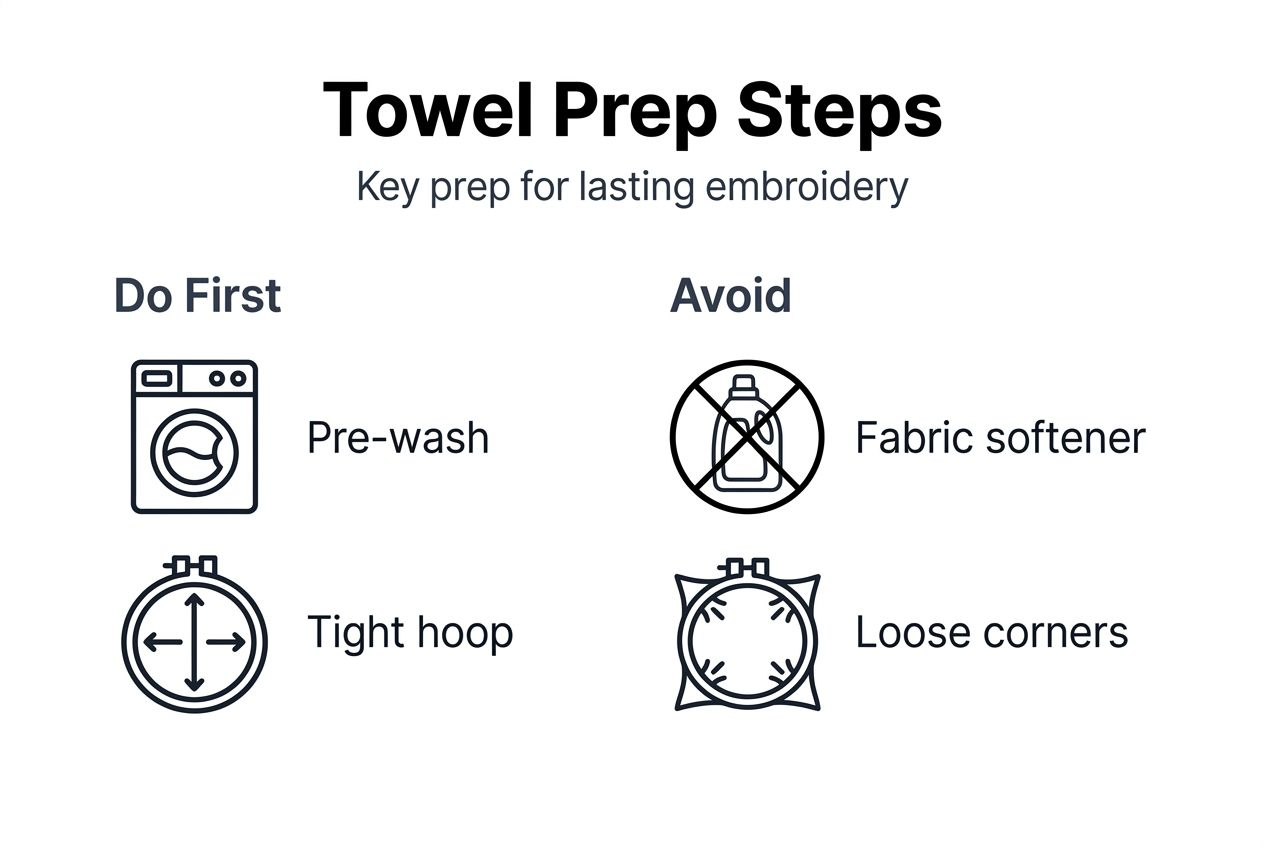
Pro Tip: Pre-wash new towels once without fabric softener before embroidering. This removes manufacturing residue and pre-shrinks the fabric, preventing design distortion after the first real wash.
Preparation steps determine whether your embroidery stays flat or puckers. First, hoop only your stabilizer tightly in the embroidery hoop. Apply a light, even coat of temporary adhesive spray to the hooped stabilizer surface. Press your towel section onto the adhesive, smoothing carefully to avoid wrinkles. Place a water-soluble topping sheet over the towel area where you will embroider. This creates a smooth stitching surface that prevents your needle from catching in terry loops.
When working with children’s towels, consider placement carefully. Corners and edges work beautifully for smaller designs like names or initials. Center placements suit larger motifs but require more stabilizer. Always test your setup on a towel scrap before committing to the final piece. Learn more about stabilizer options specific to different towel weights and fiber contents.
Step-by-step guide to embroidering kids towels with crisp, professional results
Executing clean embroidery on textured fabric requires specific techniques that differ from flat-weave materials. Following these steps in sequence produces professional results even on your first attempt.
Selecting and preparing your design
Choose designs with bold outlines and minimal fine detail. Simple shapes, chunky fonts, and clear graphics translate best to terry cloth. Avoid intricate lace patterns or tiny lettering under 8mm tall. Kids respond well to bright colors, favorite characters, animal shapes, and their own names in playful fonts.
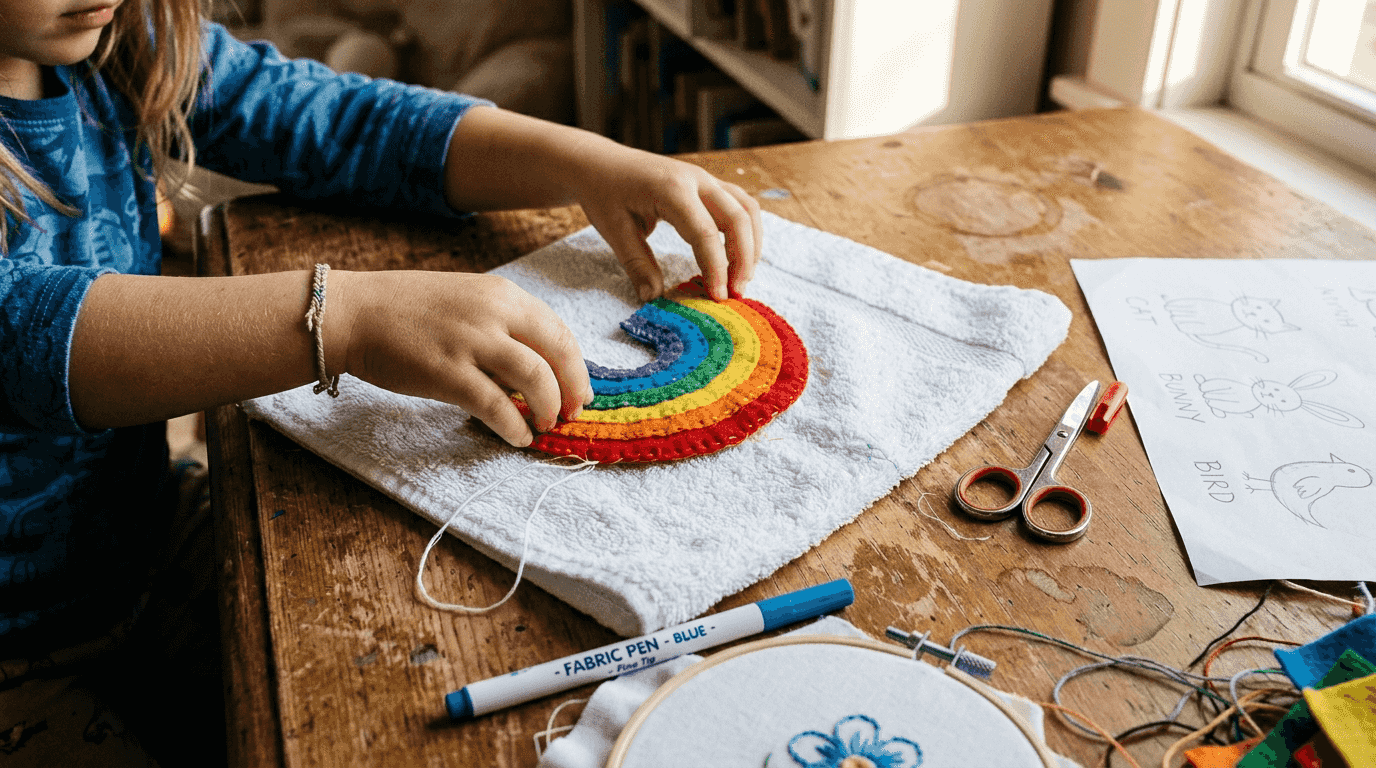
Digitizing converts your chosen artwork into machine-readable stitch patterns. Digitizing software affects stitch count and embroidery time based on design complexity. If you lack digitizing skills, purchase pre-made designs from reputable embroidery sites or hire a professional digitizer.
Underlay stitches flatten the fabric nap, allowing top stitching to show clearly without sinking. Your digitized file should include proper underlay in the stitch sequence. Without it, your beautiful design will disappear into the towel texture.
The embroidery process
- Load your prepared hoop with stabilizer, adhesive spray, towel, and topping into your embroidery machine.
- Thread your machine with quality polyester embroidery thread that withstands repeated washing.
- Insert a sharp 75/11 or 80/12 embroidery needle suitable for multiple fabric layers.
- Set your machine to medium speed to prevent thread breakage and skipped stitches.
- Begin stitching, watching the first few minutes to ensure the topping stays in place.
- Allow the machine to complete the entire design without stopping unless thread breaks.
- Remove the hoop carefully and trim jump stitches on both sides.
- Gently tear away excess stabilizer from the back, leaving support under dense stitch areas.
- Rinse the piece in lukewarm water to dissolve the water-soluble topping completely.
- Pat dry with a clean towel and allow to air dry flat before final inspection.
The Towel Sandwich Method uses cut-away stabilizer beneath and water-soluble topping on top for smooth stitches. This sandwich approach keeps terry loops compressed during stitching while providing support from below. The result is embroidery that sits on the fabric surface rather than sinking into it.
| Stabilizer Type | Removal Method | Best Towel Application | Durability |
|---|---|---|---|
| Cut-away | Leave in place permanently | Heavy bath towels, frequent washing | Excellent |
| Tear-away | Gently tear from back after stitching | Light hand towels, occasional use | Good |
| Wash-away | Dissolves completely in water | Sensitive skin projects, minimal residue | Very good |
Pro Tip: For raised, tactile designs kids love to touch, clip a few strategic loops around embroidered shapes after stitching. This creates a fun dimensional effect while the unclipped surrounding loops protect the threads. Always clip carefully to avoid cutting actual embroidery stitches.
Common problems include puckering from insufficient stabilizer, thread breakage from dull needles, and designs that sink into loops without proper topping. If you notice puckering, add a second layer of stabilizer. Thread breaks usually mean you need a fresh needle or slower machine speed. Sinking designs require water-soluble topping replacement or adjustment.
Explore unique embroidery ideas that translate well from bathrobes to towels. Many decorative concepts work across both product categories. When choosing toddler towels as your base, prioritize soft, absorbent cotton that can handle embroidery weight. Review expert towel embroidery techniques for additional troubleshooting and advanced methods.
Finishing touches and caring for embroidered kids towels
Proper finishing and maintenance determine whether your embroidered towels last one season or many years. These final steps protect your investment of time and materials.
After completing embroidery, inspect both sides carefully. Remove any stabilizer bits caught in the design and clip long thread tails flush with the fabric surface. The water-soluble topping should rinse away completely under lukewarm running water. Press gently against the embroidered area to ensure all residue dissolves. Never use hot water for this step, as it can set certain topping types permanently.
Drying methods matter significantly. Air drying flat preserves embroidery shape and prevents thread stress from tumbling. If you must use a dryer, choose low heat and remove towels while slightly damp. High heat can melt polyester threads or cause them to stiffen uncomfortably.
Washing guidelines for longevity
Washing towels inside out with mild detergents and no bleach extends embroidery life significantly. Turn embroidered towels inside out before placing them in the washing machine. This protects the stitching from abrasion against other items. Use gentle or permanent press cycles rather than heavy-duty settings.
Avoid chlorine bleach entirely, as it weakens both thread and fabric fibers. Oxygen-based bleaches work better for stain removal without damaging embroidery. Skip fabric softeners, which coat fibers and reduce absorbency. White vinegar in the rinse cycle maintains softness naturally.
Pro Tip: Store embroidered towels rolled rather than folded to prevent crease lines through the design. Rolling also makes grabbing the right towel from a linen closet easier for kids learning independence.
Safety considerations for children
Oeko-Tex certified fabrics ensure safety for children by meeting strict standards for harmful substances. When purchasing base towels for embroidery, look for this certification or similar safety ratings. Quality embroidery threads from reputable manufacturers undergo testing to confirm they are safe against skin and free from harmful dyes.
Check embroidered areas regularly for loose threads that curious toddlers might pull. Reinforce or trim any developing weak spots immediately. Well-executed embroidery with proper stabilization rarely develops these issues, but vigilance prevents problems.
“The combination of quality materials, proper technique, and thoughtful care creates embroidered towels that become treasured possessions rather than disposable items. Parents consistently report that personalized towels reduce morning bathroom arguments and make gift-giving deeply meaningful.”
Maintaining absorbency alongside embroidery preservation requires balance. Deep-pile terry naturally loses some absorbency over time as fibers compact. Washing in hot water occasionally (without the embroidered towel) refreshes other towels, but keep embroidered pieces to warm water only. The slight trade-off in maximum absorbency is worthwhile for preserving your custom work. Find more personalized gift ideas that pair beautifully with embroidered towels for comprehensive gift sets.
Discover personalized embroidered towels and robes for your family
Creating your own embroidered towels brings satisfaction, but sometimes you need ready-made quality without the learning curve. Lotus Linen specializes in premium personalized bath linens crafted from luxurious materials with expert embroidery.

Our luxury scallop bath towels offer elegant embroidery placement options that complement the sophisticated scallop edge detailing. For family coordination, explore personalized robes for men and waffle robes for men that match beautifully with customized kids towels. Every piece features careful construction designed to withstand years of regular use while maintaining embroidery clarity. Whether you need a special gift or want to elevate your own bathroom, our collection provides options that balance quality, personalization, and lasting value.
Frequently asked questions
What type of stabilizer is best for embroidering kids towels?
Cut-away stabilizers underneath combined with water-soluble topping on the surface produce the cleanest results on terry cloth. This combination prevents puckering while keeping stitches from sinking into loops. Adhesive-backed tear-away stabilizers work well when floating bulky towels over the hoop rather than hooping the towel itself.
How can I ensure the embroidery design stays clear and vibrant over time?
Wash embroidered towels inside out using mild detergents and avoid chlorine bleach entirely. Use gentle wash cycles and low dryer heat, or air dry flat for best results. These practices protect thread color and prevent loosening of stitches over dozens of wash cycles.
What are the best embroidery designs for kids’ towels?
Simple, bold designs with clear outlines work best on textured terry cloth because they resist visual distortion. Names in chunky fonts, favorite animal shapes, and geometric patterns personalize towels meaningfully while remaining visible through the pile texture. Avoid intricate details under 5mm, as they tend to blur on towels. Review more choosing toddler towel designs for age-appropriate options.
Are hooded towels good candidates for embroidery gifts?
Hooded towels make excellent embroidered gifts, especially for babies and toddlers who enjoy the cozy hood feature. The hood panel and back area provide ideal flat surfaces for names, appliqué, or monograms without interfering with towel function. They combine daily usefulness with personalization, creating memorable presents for birthdays, holidays, or baby showers. Explore hooded towel embroidery ideas that translate well from bathrobes to hooded towel designs.

