
TL;DR:
- Creating a spa-like bathroom doesn’t require a complete overhaul but depends on purposeful, layered choices. Thoughtful lighting, calming colors, tactile comfort, and proper ventilation transform the space into a soothing retreat that supports daily well-being. Prioritizing systems before finishes ensures longevity, while accessories and rituals personalize the space into a true wellness sanctuary.
You don’t need to gut your bathroom or spend tens of thousands of dollars to create a space that feels genuinely restorative. The truth is, most spa-like transformations happen through a series of purposeful, layered choices, not a single dramatic renovation. From lighting decisions to the weight of your bath towels, the details you choose send clear signals to your nervous system. This article walks you through everything from foundational psychology to practical upgrades, product picks, and the one technical step most homeowners skip.
Table of Contents
- Why spa ambiance matters: The psychology of a relaxing bathroom
- Layered lighting and mood: Setting the perfect spa scene
- Upgrades for every level: Easy tweaks to full spa systems
- Ventilation, humidity, and finishes: The secret ingredients
- Essential products and finishing touches for a true spa oasis
- Perspective: What most DIY spa bathrooms miss—and how to fix it
- Curate your spa bathroom with our wellness essentials
- Frequently asked questions
Key Takeaways
| Point | Details |
|---|---|
| Layered lighting is key | Using multiple light sources with dimmers instantly creates a calming spa atmosphere. |
| Start small for big impact | Simple upgrades like plush towels or towel warmers greatly enhance daily comfort. |
| Ventilation supports longevity | Properly sized, independent ventilation keeps your spa bathroom pristine and healthy. |
| Personal touches complete the look | Accessories, greenery, and scent make your bathroom uniquely soothing and personalized. |
Why spa ambiance matters: The psychology of a relaxing bathroom
Your bathroom is the first and last room you visit each day. That gives it unusual power over your mood, energy, and stress levels. A cluttered, harshly lit bathroom activates a low-grade tension that many people don’t even notice until it’s gone. A space designed with sensory intention does the opposite.
Spa-inspired design works because it talks directly to your senses. Soft, warm light tells your brain the day is winding down. Neutral, earthy colors signal safety and calm. Plush textures on your skin activate comfort responses. These aren’t marketing claims. They reflect how sensory environments shape emotional state, which is why hospitals, luxury hotels, and high-end spas invest heavily in these same cues.
Here’s what makes the biggest sensory difference in a home bathroom:
- Lighting warmth and intensity: Harsh overhead lighting spikes alertness; warm, dimmable light promotes relaxation
- Color palette: Soft greiges, warm whites, sage greens, and muted blues consistently reduce visual noise; bath linen colors can reinforce or undercut this palette instantly
- Tactile comfort: Rough towels, cold tile, and synthetic fabrics break the spa illusion immediately
- Scent and sound: Diffusers with eucalyptus, lavender, or cedar support the mood; a small waterproof speaker adds another sensory layer
- Window treatments: The quality of natural light filtering into your bathroom matters enormously, and window color choices affect how warm or cold the room reads throughout the day
“A bathroom redesigned with intentional sensory cues stops being a functional room and starts functioning as a daily reset button. That shift in purpose changes everything.”
Building daily self-care tips into a space that actually supports them is not a luxury. It’s one of the highest-return investments you can make in your wellbeing, and it starts with understanding what signals your space is currently sending.
Layered lighting and mood: Setting the perfect spa scene
Lighting is the single most powerful lever in spa bathroom design, and it’s the most commonly mishandled. Most homes rely on one overhead fixture. That’s the functional equivalent of a fluorescent convenience store light over your evening unwind. It works, technically. But it does not relax you.
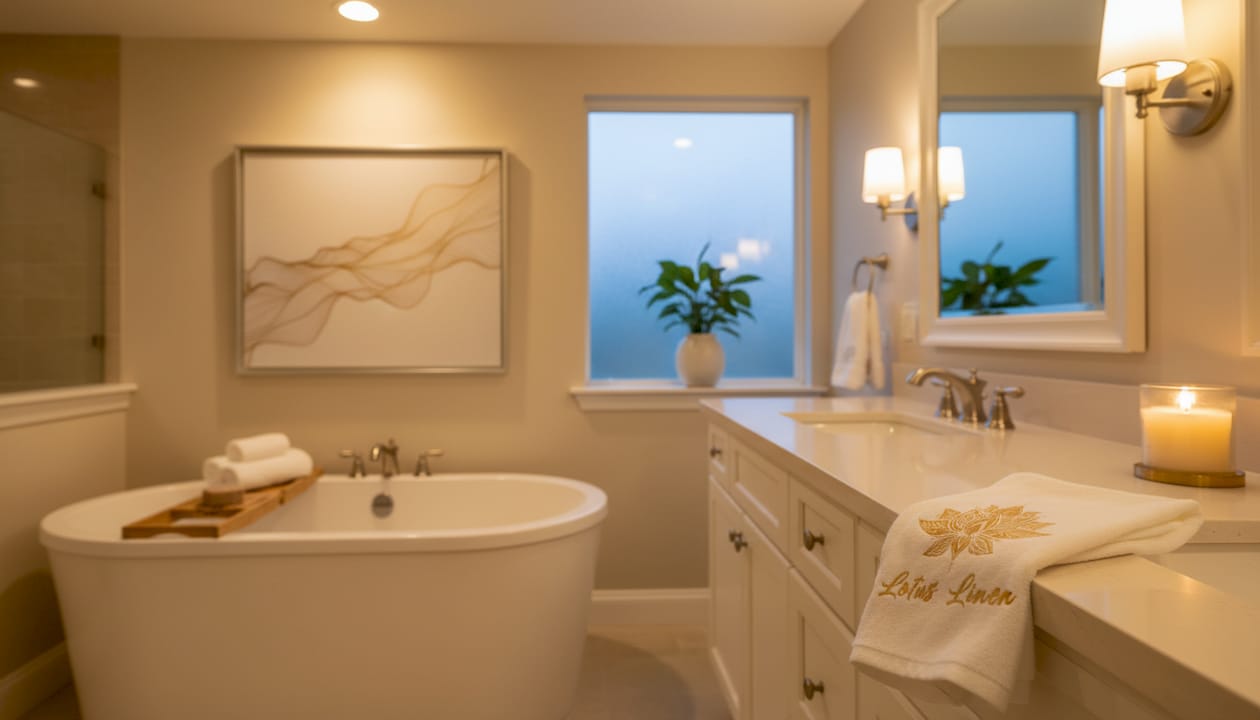
Layered, dimmable lighting using ambient, task, and accent sources is the primary method professionals use to achieve a spa-like feel. Each layer has a distinct job:
| Lighting Layer | Purpose | Example Fixture |
|---|---|---|
| Ambient | Overall soft illumination | Recessed ceiling LEDs, flush mounts |
| Task | Focused light for grooming | Vanity mirror strips, sconce pairs |
| Accent | Mood and depth | LED toe-kick lighting, niche lighting |
Ambient lighting sets the baseline warmth. Task lighting makes the space functional without being harsh. Accent lighting is where the magic happens. A strip of warm LED behind a floating vanity, a glowing niche in the shower, or soft toe-kick lights near the floor create depth that your eye reads as luxurious.
Drawing from onsen culture design cues, which prioritize long soaking sessions and a warm, enveloping atmosphere, waterproof LED lighting inside the shower or bath area adds an element of immersion. Onsen-inspired design also combines the tub and shower experience into a ritual, not just a task. That shift in intent is worth paying attention to.
Pro Tip: Install dimmer switches on every lighting circuit in your bathroom. A single afternoon of electrical work gives you years of instant ambiance control. A $15 dimmer switch is one of the highest-impact, lowest-cost spa upgrades available. Check out luxury bathroom inspiration for curated visual examples of how these layers come together.
For bulbs, choose LEDs rated between 2700K and 3000K. That range produces the warm, incandescent-style glow associated with relaxation. Anything above 4000K reads as clinical and cool, which is the opposite of what you’re after.
Upgrades for every level: Easy tweaks to full spa systems
Not every spa upgrade requires a contractor. The most effective approach is tiered: start with what you can change today, then evaluate whether bigger investments are worth it for your lifestyle and budget.
Here’s a practical sequence to follow:
- Start with textiles and lighting (zero renovation required): Swap in plush towels, add a dimmer switch, and replace your bath mat. Immediate impact, zero construction.
- Add comfort appliances: A plug-in heated towel rack costs $80 to $200 and transforms your post-shower experience. No plumbing needed.
- Upgrade window treatments: Moisture-resistant roller shades or cellular shades control light and privacy while surviving the humidity. Waterproof window coverings designed for bathrooms prevent warping and mold.
- Mid-level: heated floors: Radiant floor systems can often be installed under tile without touching walls or major plumbing. They add consistent warmth and eliminate the cold-floor shock.
- Major renovation: steam showers: These require a fully sealed, insulated, waterproofed enclosure. According to tiered wellness upgrades, steam showers are among the highest-implication projects because they demand down-to-the-studs work. They’re transformative, but they’re not a weekend project.
| Upgrade | Approx. Cost | Installation Complexity | Spa Impact |
|---|---|---|---|
| Dimmer switches | $15 to $40 | Low (DIY) | High |
| Heated towel rack | $80 to $250 | Low to medium | High |
| Radiant floor heating | $800 to $2,500 | Medium | Very high |
| Steam shower | $3,000 to $10,000+ | High (contractor) | Transformative |
Pro Tip: You don’t have to do everything at once. A step-by-step home spa guide helps you plan upgrades in a logical sequence so each change builds on the last without wasting money or effort.
The beauty of starting with textiles and lighting is that these upgrades reveal how much ambiance your space is capable of creating. Many homeowners discover that after swapping towels, adding a diffuser, and installing dimmers, they don’t actually want a steam shower. The bathroom rituals built around simpler upgrades often deliver the same reset they were looking for.
Ventilation, humidity, and finishes: The secret ingredients
This is the section most spa bathroom articles skip entirely, and it’s the reason so many beautiful renovations look tired within two years. Ventilation is not glamorous. But get it wrong, and your gorgeous finish choices, your eucalyptus steam, and your carefully chosen paint color will all deteriorate faster than they should.
Proper spa-level ventilation means planning your exhaust fan, humidity sensor, and lighting as separate, coordinated systems. One of the most common mistakes is wiring the exhaust fan to the light switch. That means your fan only runs when the light is on, which isn’t always when humidity is peaking, especially during long soaks or steam sessions.
Here’s what the most successful spa bathrooms get right, but that most homeowners overlook:
- Separate humidity controls: A humidity-sensing fan runs automatically when moisture levels rise, independent of whether the lights are on
- Correctly sized exhaust fans: Fan capacity should match your bathroom’s square footage; an undersized fan creates chronic condensation problems on mirrors, walls, and fixtures
- Moisture-resistant finishes throughout: Semi-gloss or satin paint, not flat; porcelain or ceramic tile rather than natural stone in high-moisture zones; waterproof window coverings instead of fabric curtains near shower areas
- Grout sealing: Unsealed grout in a spa-use bathroom will absorb moisture and harbor mold within months
- Ventilated towel storage: Closed cabinets in high-humidity rooms trap moisture in your linens; open shelving or ventilated linen towers keep towels fresher longer
These aren’t just maintenance tips. They’re the structural decisions that protect every other investment you make in the space. You can explore more about layering your DIY spa treatments once the room systems are working properly, because that’s when the experience of using the space actually delivers what you’re hoping for.
Essential products and finishing touches for a true spa oasis
Once the systems, lighting, and major upgrades are in place, the finishing layer is where your personality enters the room. This is also where onsen-inspired aesthetics offer a useful guide: simplicity, natural materials, and a few deliberate objects rather than dozens of decorative clutter pieces.
Here are the products and details that deliver the most sensory impact:
- Luxury bath towels: Weight matters. A towel between 600 and 900 GSM (grams per square meter) wraps like a robe and signals quality the moment you pick it up. Anything lighter feels like a gym towel
- Bath robes: A plush or waffle-weave robe hanging on a hook near the shower transforms your post-bath ritual and adds a visual texture that reads as spa immediately
- Bath tray: A simple bamboo or marble tray across the tub holds a candle, a book, and a drink. This single object reframes a bath as a ritual rather than a chore
- Scent diffusion: An ultrasonic diffuser with eucalyptus, bergamot, or sandalwood oil activates the olfactory system, which has a direct line to the brain’s emotional centers
- Live plants or botanicals: A small pothos, peace lily, or eucalyptus bundle brings organic texture and, in the case of eucalyptus, releases a natural aromatherapeutic oil in steam
- Stones and earthy materials: River stones, teak bath mats, and linen hand towels add visual grounding. They signal nature, not synthetic, which is the visual language of luxury wellness spaces
Personalization matters too. Monogrammed towels and robes aren’t just aesthetic choices. They create a sense of ownership over your space, turning a generic bathroom into your retreat. Styling bath linens with intentional folding, layering, and color coordination takes about five minutes but produces the visual cue of a boutique hotel every single day.
Scent layering is another underused strategy. Combine a room spray, a diffuser, and a candle in the same scent family for a multidimensional fragrance experience that feels professional without any investment in training. This is exactly what high-end hotel spas do.
Perspective: What most DIY spa bathrooms miss—and how to fix it
After absorbing the best designer and expert guidance available, one pattern stands out clearly. Most homeowners build their spa bathroom from the outside in. They start with the visible layer, the tiles, the fixtures, the towels, and they work backward. That sequence produces beautiful rooms that frustrate their owners within a year.
The right sequence is the opposite. Start with systems. Then surfaces. Then textiles and details. Bathroom systems planning means ventilation sizing, lighting circuit separation, humidity controls, and finish selection for moisture exposure. These decisions should happen before you choose your tile color or your towel brand. Yet in almost every DIY spa bathroom project, they’re afterthoughts.
Here’s the uncomfortable insight: a beautifully tiled, improperly ventilated bathroom will start showing mold in the grout lines within 18 months. A gorgeous steam shower without proper insulation will warp your wall finishes and compromise the enclosure. These failures aren’t bad luck. They’re predictable outcomes of a surface-first approach.
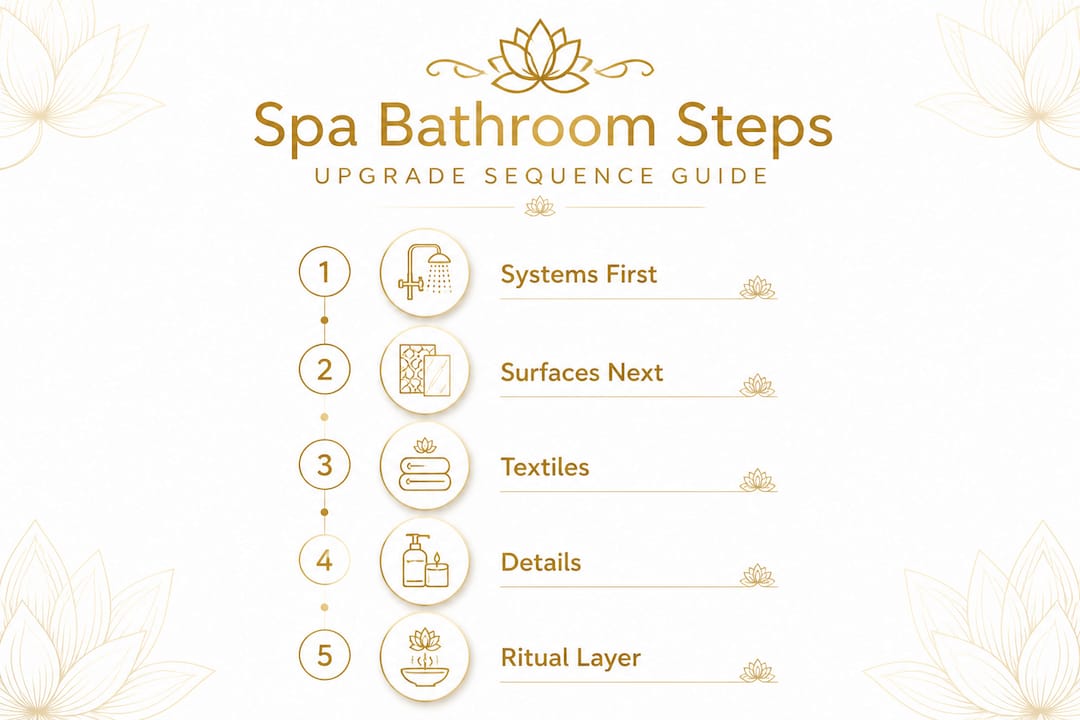
The fix is genuinely simple. Map out your systems before you shop for finishes. Identify whether your exhaust fan is properly sized. Check if your lighting is wired to allow independent humidity control. Then choose your tile, your paint, and your linens. This order ensures that every beautiful choice you make actually lasts.
The other thing most DIY spa bathrooms miss is the ritual layer. A room can be perfectly designed and perfectly built, but if you never actually use it for intentional rest, it’s just a nice room. Using a detailed spa ambiance guide to build small daily or weekly rituals into your space turns the investment into something your nervous system actually benefits from. That’s the real goal.
Curate your spa bathroom with our wellness essentials
Every tip in this article points toward the same truth: your bathroom’s transformation lives in the details you choose to bring into it.
At Lotus Linen, we specialize in exactly those details. Our luxury scallop bath towels are crafted at premium GSM weights, so they feel enveloping rather than functional. Pair them with one of our premium personalized robes in plush or waffle weave and you’ll feel the difference from the very first use. We offer customization options including monogramming for a personal, boutique-hotel touch. Whether you’re refreshing a guest bathroom or building a full wellness retreat, our curated collection is designed to meet you at every level of that journey.
Frequently asked questions
What is the easiest way to make my bathroom feel like a spa?
Start with layered, dimmable lighting, swap in plush towels, add a living plant, and choose calming neutral colors for an immediate transformation without any construction.
Do I need to renovate to have a spa-inspired bathroom?
Not at all. Simple additions like heated towel racks, ambient lighting, and quality bath linens create a strong spa feel, and tiered wellness upgrades mean you can expand your investment gradually over time.
How important is ventilation in a spa-inspired bathroom?
Ventilation is critical. Poor airflow leads to mold in grout, damage to finishes, and musty fabrics, and proper systems planning keeps every other upgrade looking and performing the way it should.
What spa-inspired products offer the most impact?
Luxury bath linens, a plush robe, a bamboo bath tray, and waterproof accent lighting deliver the strongest sensory shift, with onsen-inspired design pointing toward warmth, simplicity, and intentional soaking rituals.
Can I add a steam shower to any bathroom?
Steam showers require major construction including fully sealed waterproofing, insulation, and structural enclosure, so they’re not a plug-and-play upgrade and typically need a licensed contractor.
Recommended
- 7 Luxurious Bathroom Inspirations for Your Oasis – Lotus Linen
- 7 In-Room Bath Rituals for a Luxurious Spa Experience – Lotus Linen
- Create a Home Spa Ambiance: Step-by-Step Guide – Lotus Linen
- Create relaxing DIY bath spa treatments at home – Lotus Linen
- Innovative Bathroom Remodeling Ideas for West Valley Homes

