
TL;DR:
- High-quality spa towels in the 500–700 GSM range signal care, hygiene, and excellence, shaping guest perceptions instantly. Proper selection, presentation, and embroidery of towels and robes enhance guest loyalty and operational efficiency. Treat towels as a brand investment to build loyalty and elevate the overall spa experience.
Towel quality is defined in spa settings as the primary tactile standard guests use to judge your service before a single treatment begins. The role of towel quality in spa perception goes far beyond softness. Spa-worthy towels in the 500–700 GSM range signal a nonverbal promise of care, hygiene, and excellence that guests register within seconds of contact. Tactile cues from towels shape immediate impressions more reliably than décor or music. Post-pandemic guests read hygiene through sensory details, and a limp, thin towel communicates neglect faster than any negative review ever could.
What does towel quality actually do to spa guest perception?
Guests assess spa quality through touch before they form a conscious opinion. The moment a warm, weighty towel lands on a guest’s skin, their nervous system registers it as a signal of care. This is what hospitality consultants call “invisible luxury,” the kind of detail guests feel deeply but rarely articulate until they write a five-star review.
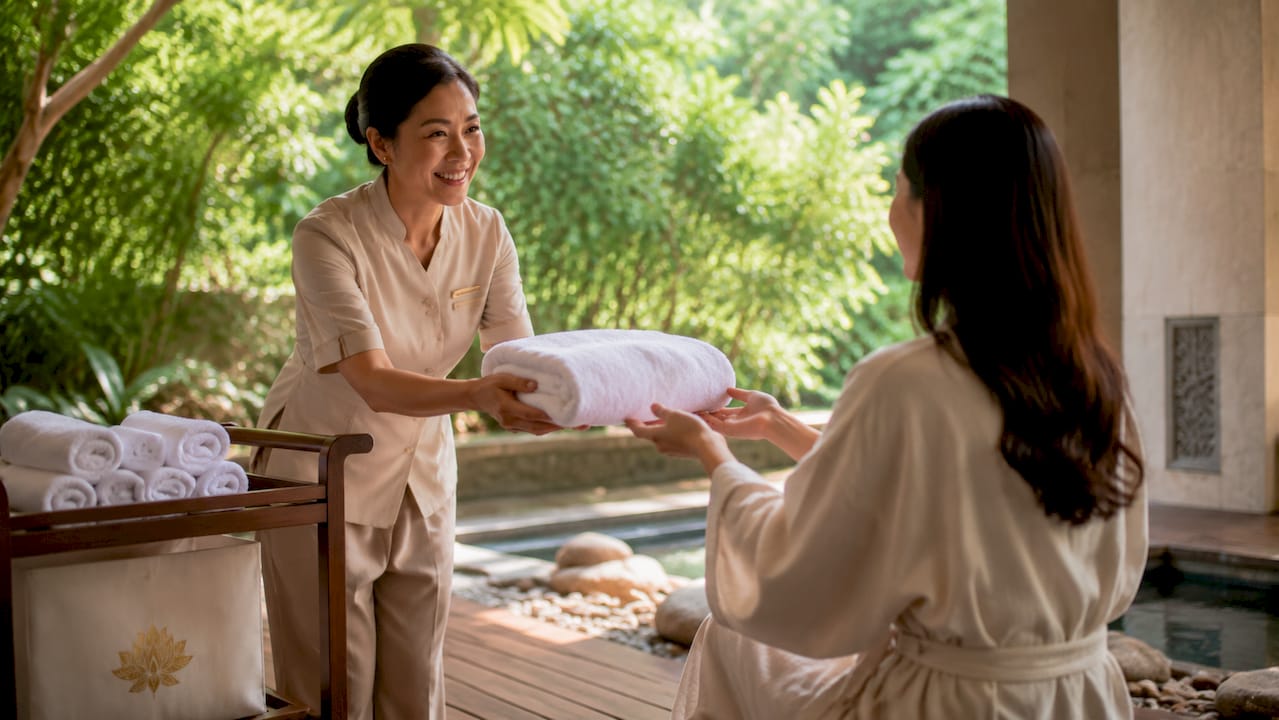
Towel softness and warmth create emotional connections guests remember and share, reinforcing brand loyalty long after the visit ends. That connection is not accidental. It is the result of deliberate material choices that communicate professionalism without a single word spoken.
Hygiene perception works the same way. Guests cannot see bacteria, but they can feel a scratchy, faded towel and draw their own conclusions. Visual and tactile cues now strongly influence guest trust, especially in a wellness environment where cleanliness is the core promise. A crisp, bright towel with a clean scent signals that your spa takes sanitation seriously.
Here is what guests notice, consciously or not, when they pick up a spa towel:
- Weight and density. A towel that feels substantial reads as spa-worthy. One that feels thin reads as an afterthought.
- Surface texture. Smooth, even loops signal new stock and careful laundering. Pilling or fraying signals neglect.
- Scent. A neutral, fresh scent signals clean. Any musty or chemical odor signals a hygiene problem.
- Temperature. A warm towel from a steamer or heated cabinet communicates that your team prepared for this guest specifically.
- Color consistency. Uniform white or consistent branded color signals a well-managed linen program.
Pro Tip: Introduce a towel warmer or steamer at your reception station. A warm towel handed to a guest on arrival costs almost nothing operationally and generates a disproportionate emotional response.
The role of towels in wellness extends into how guests perceive your brand’s overall commitment to their comfort. Spa managers who treat towels as a service narrative tool, not a supply line item, consistently outperform those who do not.
How do you choose the right spa towel specifications?
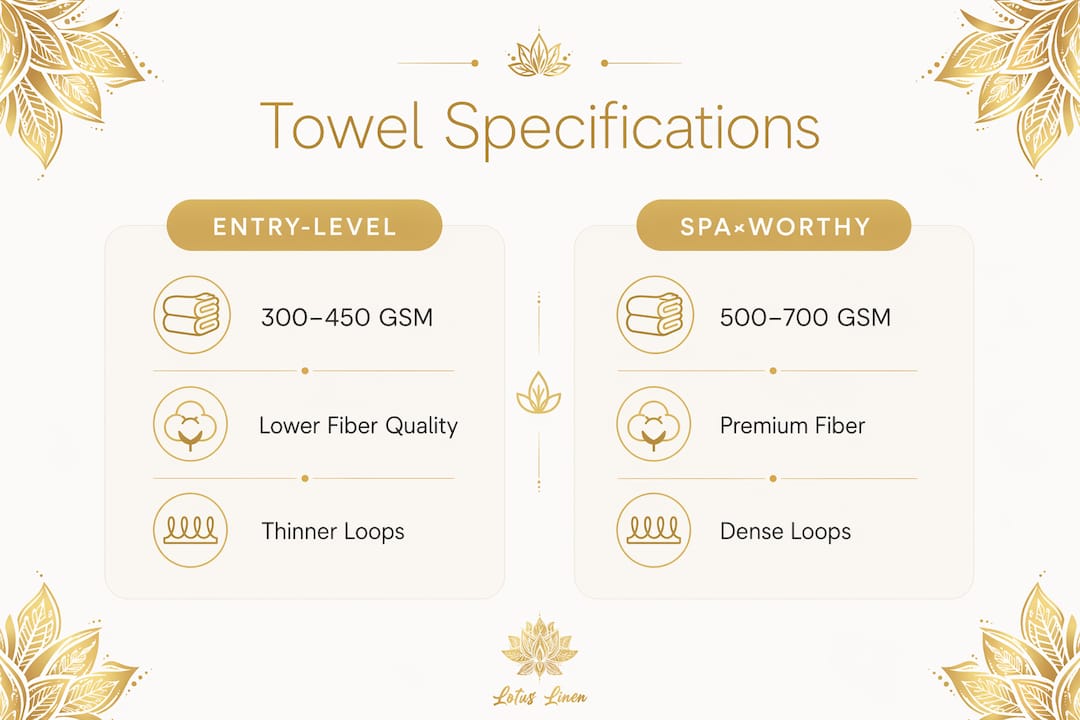
Selecting spa-worthy towels requires understanding four technical factors: GSM, fiber quality, loop density, and construction durability. Each one affects how a towel performs across dozens of commercial wash cycles.
GSM, or grams per square meter, measures towel weight. Professional-grade spa towels fall within the 500–700 GSM range. Below 400 GSM, softness degrades quickly. That degradation matters because a towel that starts soft but turns rough after 15 washes is not a value purchase. It is a liability.
Loop density and yarn quality determine whether a towel holds its structure over time. Poorly constructed towels suffer fraying and loss of softness after 10–20 commercial washes. A towel with tight, even loops and long-staple cotton yarn resists that breakdown. Long-staple cotton, such as Turkish or Egyptian cotton, produces longer fibers that create a smoother, more durable loop structure than short-staple alternatives.
The table below outlines the key specifications spa managers should evaluate before purchasing:
| Specification | Entry-Level Towel | Spa-Worthy Towel |
|---|---|---|
| GSM range | 300–450 | 500–700 |
| Fiber type | Short-staple cotton blend | Long-staple cotton (Turkish or Egyptian) |
| Loop density | Loose, uneven | Tight, uniform |
| Commercial wash durability | 10–20 cycles before degradation | 50+ cycles with proper care |
| Cost per use | Higher (faster replacement) | Lower (longer lifecycle) |
Calculating cost per use is the most important financial discipline in towel procurement. A towel that costs $8 and lasts 20 washes costs $0.40 per use. A towel that costs $18 and lasts 80 washes costs $0.23 per use. The spa-worthy option is cheaper over time, not more expensive.
Pro Tip: Ask your linen supplier for a wash-test sample. Run it through 20 commercial cycles before committing to a bulk order. A towel that passes that test will protect your guest experience and your budget.
For a deeper look at how towel density affects comfort and durability in commercial spa settings, the Shoplotuslinen resource library covers the technical side in practical terms.
How does towel quality affect spa operations and workflow?
Towel selection has a direct impact on your back-of-house efficiency. Spa managers who choose ultra-plush towels without auditing their laundry capacity often create peak-hour shortages that guests notice immediately.
Without dryer capacity upgrades, ultra-plush towels can cause shortages during peak hours despite adequate inventory. A 700 GSM towel holds significantly more water than a 450 GSM towel. That extra moisture extends drying time, which means fewer clean towels available per hour during your busiest periods.
The solution is operational mapping. Before selecting a towel weight, calculate your peak-day demand. Count the maximum number of guests you serve in a single day, multiply by the towels used per treatment, and compare that number against your laundry and drying throughput. If the math does not work, either upgrade your drying capacity or select a slightly lower GSM that still meets the 500+ threshold.
Here is a practical workflow for aligning towel selection with operational reality:
- Audit your laundry cycle. Measure how many towels your machines process per hour, including wash and dry time.
- Map peak-day demand. Calculate the maximum towels needed per day based on your busiest booking schedule.
- Calculate your buffer stock. Maintain at least 3x your daily demand in clean inventory to absorb laundry delays.
- Test drying time by GSM. Time how long your dryers take to fully dry towels at different weights before committing to a specification.
- Set a replenishment schedule. Build towel restocking into your daily opening checklist, not as a reactive task.
Thermal and pH-balanced washing protocols prevent bacteria retention and unwanted odors, which directly affect guest trust. Simple light-commercial cycles often fail to sanitize deeply. High-temperature wash cycles combined with proper chemical balance are the standard for spa environments in 2026. Guests who notice a musty towel will not return, and they will say so publicly.
Understanding what makes a spa towel perform across both guest experience and operational demands is the foundation of a well-run linen program.
How does towel presentation reinforce spa ambiance and brand identity?
Presentation is where towel quality becomes brand storytelling. A spa-worthy towel that is folded carelessly communicates the same message as a cheap one. The way your team presents linens tells guests how much you care about their experience.
Steamed, warm towels have a powerful psychological soothing effect that guests appreciate deeply. Warmth signals preparation and attentiveness. It tells the guest that someone thought about them before they arrived.
Folding and stacking methods also carry meaning. Tightly rolled towels stacked in a woven basket communicate a relaxed, organic spa aesthetic. Precisely folded flat stacks on open shelving communicate clinical precision and order. Neither is wrong. Both must be consistent. Inconsistency is the only presentation failure that always damages perception.
Here are the presentation practices that consistently raise guest perception scores:
- Fold or roll every towel the same way. Inconsistency signals a lack of training and care.
- Use towel steamers or heated cabinets to deliver warm towels at key touchpoints, including arrival and post-treatment.
- Maintain color uniformity. Replace any towel that has yellowed, grayed, or developed uneven wear.
- Scent lightly and intentionally. A faint lavender or eucalyptus scent on treatment towels reinforces your spa’s sensory identity.
- Add personalized embroidery to robes and towels. Personalized linens are valued guest keepsakes that extend brand reach beyond the spa visit.
Shoplotuslinen’s in-house embroidery service lets spa managers add a logo, monogram, or custom text directly to robes and towels. That small detail transforms a functional item into a brand artifact. Guests who take home a personalized robe carry your brand with them, which is a form of marketing no paid channel can replicate.
Pro Tip: Train your front-of-house staff to narrate the linen experience briefly. A single line like “We warm our towels before every treatment” shifts guest perception from passive to active appreciation.
For specific folding techniques that work in spa environments, the Shoplotuslinen guide on towel folding for spa decor offers visual and practical methods your team can implement immediately.
Key Takeaways
Towel quality is the single most cost-effective investment a spa manager can make to raise guest perception, loyalty, and review scores simultaneously.
| Point | Details |
|---|---|
| GSM signals quality instantly | Choose towels in the 500–700 GSM range to communicate spa-worthy standards at first touch. |
| Build quality outlasts GSM alone | Loop density and long-staple fiber determine how a towel performs after 50+ commercial washes. |
| Operations must match towel weight | Audit laundry and drying capacity before selecting a GSM to prevent peak-hour shortages. |
| Presentation amplifies quality | Warm, consistently folded, and lightly scented towels raise guest perception beyond the towel itself. |
| Personalization extends brand reach | Embroidered robes and towels become keepsakes that reinforce loyalty after guests leave. |
Why I stopped treating towels as a supply line item
Early in my work with spa operators, I watched a beautifully designed spa lose repeat bookings because their towels felt rough by the third visit. The space was stunning. The treatments were skilled. But the towels had been chosen on price per unit, not cost per use, and they degraded fast. Guests did not complain directly. They just did not rebook.
That pattern taught me something I now share with every spa manager I work with. Guests do not separate the towel from the treatment. They experience them as one thing. A rough towel mid-massage is not a minor inconvenience. It is a signal that the spa’s attention to detail has limits, and guests remember where those limits are.
The spas that invest in spa-worthy linens, and train their teams to present them with intention, consistently outperform their competitors on review platforms and on rebooking rates. The towel is not a commodity. It is the first and last thing a guest touches in your space. Treat it accordingly.
Shoplotuslinen was built on the belief that tactile quality is a long-term brand investment. The operators who see it that way are the ones building loyal guest communities, not just filling appointment slots.
— Oguzhan
Spa-worthy robes and linens from Shoplotuslinen
Towels set the standard, and robes complete the experience. Shoplotuslinen offers spa-worthy plush robes and waffle-style robes for men designed specifically for the demands of commercial spa environments, including repeated laundering, guest comfort across body types, and consistent presentation.
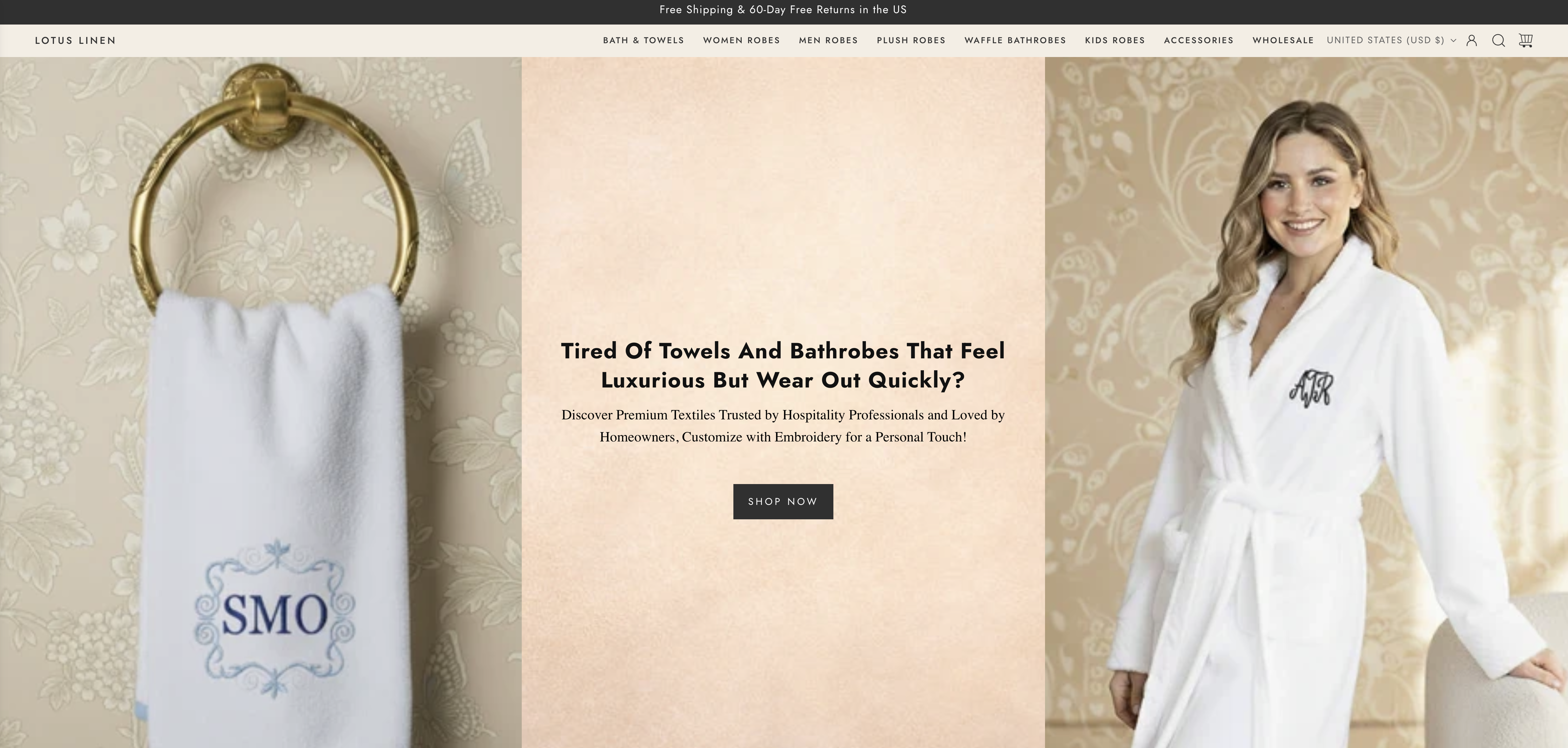
Every robe in the Shoplotuslinen catalog is available with in-house embroidery, so your logo or guest’s name becomes part of the fabric. The women’s plush hooded robe and the men’s plush robe are two of the most requested styles among spa operators who want a consistent, spa-quality look across their linen program. Wholesale pricing and customization options are available for spa managers ready to build a linen program that guests remember.
FAQ
What GSM is best for spa towels?
Spa-worthy towels fall within the 500–700 GSM range. Below 400 GSM, softness degrades quickly after commercial washing, which undermines guest perception.
How does towel quality affect guest reviews?
Towel softness, warmth, and presentation have a measurable impact on review scores and rebooking rates. Guests interpret tactile quality as a direct signal of the spa’s overall care standards.
How often should spa towels be replaced?
Towels should be replaced when they show fraying, pilling, color loss, or reduced softness. Well-constructed towels with tight loop density and long-staple cotton can last 50 or more commercial wash cycles before degradation.
What laundry standard do spa towels require?
Spa environments require thermal, pH-balanced wash cycles to fully sanitize towels and prevent bacteria retention. Standard light-commercial cycles do not meet the hygiene expectations guests now hold in 2026.
Does personalized embroidery on towels and robes affect guest loyalty?
Personalized robes and towels function as keepsakes that extend brand reach beyond the spa visit. Guests who take home an embroidered item carry a physical reminder of your brand, which reinforces loyalty and word-of-mouth referrals.

