
Choosing the right towel density can make or break the luxury experience your guests expect at an American spa. Many spa owners assume thicker towels are always better, but research shows that while density adds substance, actual guest satisfaction relies more on absorbency and softness than on sheer weight. Understanding the fine balance between comfort, drying speed, and lasting elegance lets you create a spa environment that feels truly indulgent yet operates smoothly behind the scenes. Get clarity on how towel density shapes comfort, absorbency, and premium presentation for your brand.
Table of Contents
- Towel Density Defined And Common Misconceptions
- Types Of Towels By Density And Material
- How Towel Density Impacts Comfort And Absorbency
- Customization, Appearance, And Guest Impressions
- What Spa Owners Should Avoid When Selecting Density
Key Takeaways
| Point | Details |
|---|---|
| Towel Density Matters | Towel density, measured in grams per square meter (GSM), affects absorbency, softness, and durability, influencing guest experience and satisfaction in spas. |
| Misconceptions of Density | Higher density does not always equate to better quality or comfort; understanding the right balance is crucial for tailored guest experiences. |
| Material and Density Synergy | The choice of material, like Egyptian cotton or bamboo, combined with density impacts overall performance and operational efficiency. |
| Customization Impact | The density of towels affects how well branding elements like embroidery perform, influencing both visual appeal and guest perception. |
Towel Density Defined And Common Misconceptions
Towel density measures the weight of fibers packed into a specific area of fabric, typically expressed in grams per square meter (GSM). This single number tells you how much cotton or other material occupies your towel’s weave. Higher density means thicker, heavier towels; lower density means lighter, thinner options.
When you’re selecting towels for your spa, density directly impacts how your guests experience comfort and quality. Think of it like thread count in sheets, except density better captures the towel’s actual substance and performance.
What Density Actually Measures
Density reflects fiber content compressed into the weave structure. A 700 GSM towel contains significantly more material than a 400 GSM towel. This affects everything from how the towel feels in your guest’s hands to how it performs after months of laundering.
The weave pattern works alongside density to determine the final product. A towel’s density and weave structure together create its absorbency, softness, and durability.
Common Misconceptions Luxury Spa Owners Face
Many spa owners believe higher density always means better quality. That’s not entirely accurate. Research on in-use towel properties shows that while density matters, wet strength and actual absorbency correlate more directly with guest satisfaction than GSM alone.
Another widespread myth: “Thicker towels feel better.” Guest preference varies considerably. Some guests prefer lightweight luxury towels that dry quickly, while others want substantial, plush textures. Neither is objectively “better”—your spa’s positioning determines which aligns with your brand.
Here’s where it gets tricky for spa operators:
- Higher density towels cost more upfront but may last longer
- Lower density towels can still deliver premium guest experiences when chosen strategically
- Density alone doesn’t determine absorbency or softness
- The weave structure matters as much as density in performance
- Luxury doesn’t always mean maximum density
Many owners also assume density remains stable after washing. In reality, towels compress and shift during laundering cycles. A 600 GSM towel after five washings may perform closer to 550 GSM initially.
Why This Matters for Your Spa
Understanding density helps you match towels to your specific guest expectations and spa environment. A high-density towel in a humid climate might take too long to dry between uses, creating operational challenges. Conversely, a premium spa targeting ultra-luxury positioning may need that substantial feel to reinforce brand perception.
Density tells you what’s in the towel; how it performs tells you if it’s the right choice for your operation.
When you’re considering customization options like embroidered logos or specific colors, density choices affect both aesthetics and functionality. Heavier towels display embroidery more prominently but require longer drying times.
Pro tip: Test towels at multiple density levels with actual guests during a soft launch phase, measuring both satisfaction scores and operational metrics like drying time and durability after 25 plus laundering cycles.
Types Of Towels By Density And Material
Towel construction combines material choice with density to create vastly different performance profiles. The material you select—cotton, bamboo, microfiber, or blends—determines how that density translates into guest experience. A 600 GSM bamboo towel feels completely different from a 600 GSM Egyptian cotton towel.
Your spa’s towel selection depends on matching material properties with your operational needs and guest preferences. Different materials absorb, dry, and age differently under your specific laundering regimen.
Premium Cotton Options
Egyptian cotton stands at the top tier for luxury spas. Long-staple fibers create exceptional softness and durability even at moderate densities (500–700 GSM). Egyptian cotton towels maintain their integrity through hundreds of wash cycles.
Turkish cotton offers another premium choice with slightly shorter fibers than Egyptian varieties. Turkish cotton typically delivers comparable performance at slightly lower price points. Both work beautifully at 600–800 GSM for ultra-luxury positioning.
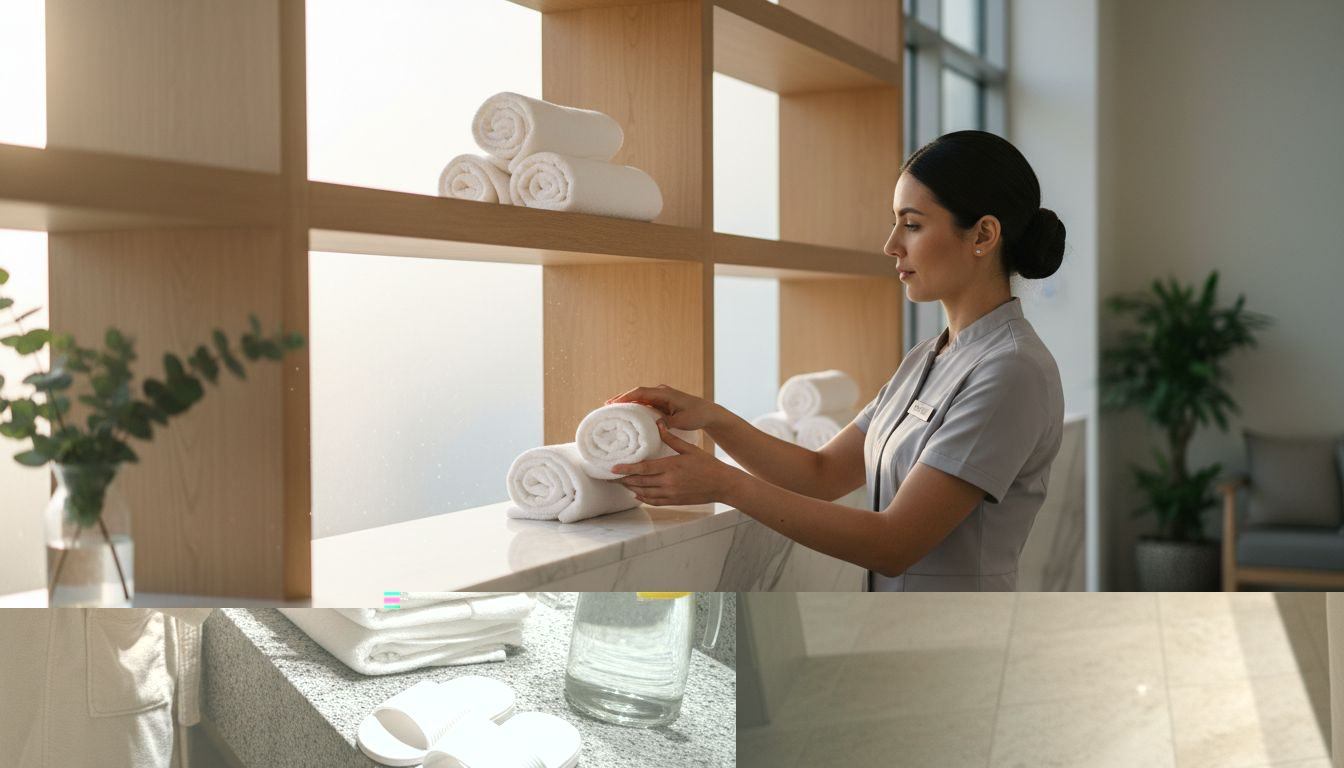
Cotton’s natural absorbency makes it the industry standard. Research on towel materials and performance characteristics confirms that pure cotton dominates luxury spa environments because of its proven durability and guest satisfaction ratings.
Alternative Materials Gaining Traction
Bamboo towels offer sustainability credentials your eco-conscious guests appreciate. Bamboo absorbs moisture quickly and dries faster than cotton, reducing operational time between guest uses. Density ranges of 400–600 GSM work effectively because bamboo fibers are naturally efficient.
Microfiber blends provide budget-friendly alternatives but sacrifice some luxury perception. Microfiber dries extremely fast—beneficial for high-turnover operations—but lacks the premium feel guests expect in upscale spas.
Here’s how materials stack up:
- Egyptian cotton: Premium feel, exceptional durability, slower drying
- Turkish cotton: Luxury softness, strong performance, moderate cost
- Bamboo: Fast-drying, sustainable, lighter feel
- Microfiber blends: Quick-dry, budget option, less luxurious perception
- Cotton-bamboo blends: Balance of performance and sustainability
Density And Material Working Together
Density amplifies a material’s strengths and weaknesses. High-density bamboo creates a heavier towel but loses its speed-drying advantage. Low-density Egyptian cotton feels thin and loses the premium perception you’re paying for.
Here’s how towel density and material choices impact spa operations:
| Density & Material | Comfort Level | Drying Speed | Lifespan |
|---|---|---|---|
| 700 GSM Egyptian Cotton | Plush and luxurious | Slow | 3+ years |
| 400 GSM Bamboo | Lightweight and soft | Fast | 2 years |
| 600 GSM Turkish Cotton | Soft, balanced feel | Moderate | 2.5 years |
| 550 GSM Microfiber Blend | Less plush, budget-friendly | Very fast | 1.5 years |
The sweet spot for luxury spas typically falls between 550–750 GSM in premium cotton. This range delivers substantial feel, excellent absorbency, and manageable drying times for daily operations.
The best towel material for your spa isn’t always the most expensive—it’s the one that matches your guest expectations and operational reality.
Customization also interacts with material and density. Embroidered logos on high-density towels project sophistication and permanence. Lower-density towels show embroidery less prominently, potentially undermining your branding investment.
Pro tip: Order sample sets in your top three material-density combinations, then track both guest feedback scores and actual performance metrics like absorbency retention after 30 professional laundering cycles before committing to bulk orders.
How Towel Density Impacts Comfort And Absorbency
Density doesn’t just feel heavier—it fundamentally changes how your towels absorb and perform. The relationship between density and comfort is more nuanced than most spa owners realize. Higher density doesn’t automatically mean better absorption or happier guests.
The science here matters because your towel choice directly affects guest satisfaction and operational efficiency. Understanding how density influences absorbency helps you make strategic selections aligned with your spa’s specific needs.
The Absorbency Connection
Absorbency depends on porosity and how water moves through the towel structure. Research on capillary action and absorbency mechanisms shows that density influences three-dimensional water absorption by affecting how fibers interact with moisture. Higher density enhances water-holding capacity in some scenarios.
But here’s the catch: more density doesn’t always mean faster absorption. A 800 GSM towel may hold more total water but absorb it more slowly than a 600 GSM towel. Your guests notice this difference immediately when they wrap up after a relaxing soak.
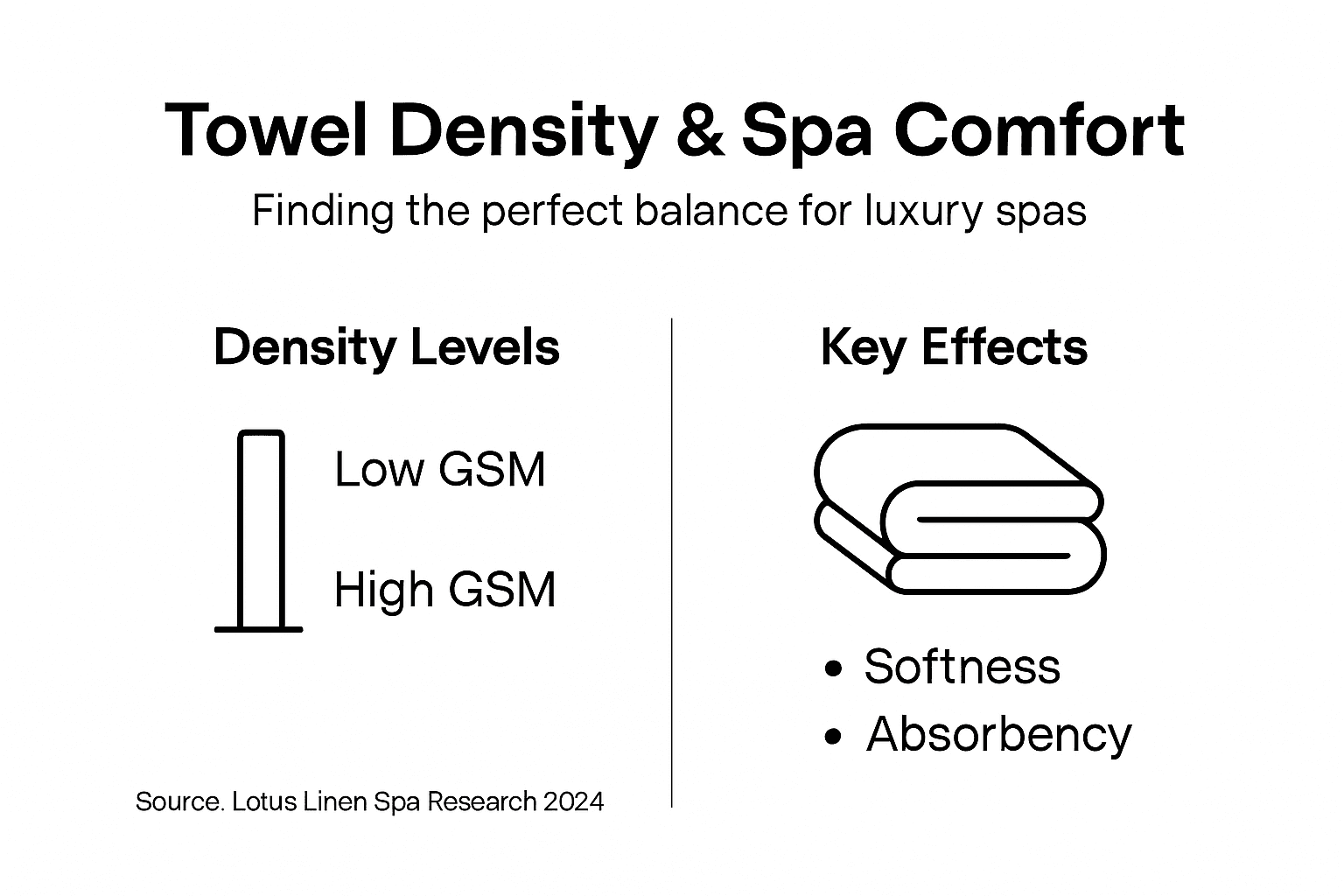
The sweet spot balances absorbency with practical performance. Moderate-to-high density towels (600–750 GSM) absorb efficiently while still drying within reasonable timeframes for your operation.
Comfort Versus Durability Trade-Offs
Density creates an interesting tension in luxury spas. Higher density typically means better durability and tensile strength. Scientific analysis of thread density effects on towel performance reveals that increased thread density strengthens towels but simultaneously reduces softness and absorbency ratings.
Guests want towels that feel plush and soft against their skin. Yet they also want towels that last through multiple stays without pilling or degrading. You’re balancing competing demands here.
Consider these performance impacts:
- Very high density (800+ GSM): Maximum durability, slower drying, potentially less soft feel
- Moderate density (600–750 GSM): Strong durability with acceptable absorption and comfort
- Lower density (400–550 GSM): Faster drying, softer feel, shorter lifespan
- Very low density (under 400 GSM): Quick-dry benefits offset by durability concerns
How Your Climate Matters
Density performance shifts based on humidity and operational demands. In humid climates, lower-density towels dry faster between guest uses, creating operational advantages. In dry climates, higher-density towels maintain plushness longer without becoming crispy.
Your laundry frequency also influences density selection. High-turnover spas with daily washing benefit from moderate density. Spas with less frequent laundering can sustain higher-density towels without operational friction.
Optimal density balances absorbency speed, durability, and comfort—there’s no one-size-fits-all answer for every spa.
Customized towels amplify these considerations. Embroidered logos on high-density towels create impressive visual impact but require longer drying times. Lower-density towels dry quickly but may not showcase your branding as prominently.
Pro tip: Conduct a 60-day operational trial with two density levels (one at 550 GSM, one at 700 GSM) in similar cotton blends, measuring guest satisfaction scores, actual drying times, and towel durability after 40 wash cycles to determine your optimal density threshold.
Customization, Appearance, And Guest Impressions
Customization transforms generic towels into branded luxury experiences that reinforce your spa’s identity. The density you select directly impacts how your customization elements appear and perform. This connection between density and visual presentation often gets overlooked by spa owners.
Your towel customization choices communicate brand values before guests even feel the fabric. Getting this right elevates perceived luxury and justifies premium pricing.
How Density Affects Branding Elements
Embroidered logos appear dramatically different on 550 GSM towels versus 800 GSM towels. Higher-density towels provide a firmer base for embroidery, making logos crisper and more prominent. The thread stands out with better definition against denser fabric.
Lower-density towels can still accommodate embroidery, but the design sits flatter and less visually striking. When you’re investing in custom branding, density choices determine whether that investment translates into impressive guest impact.
Color saturation also varies by density. Dark embroidery on high-density white towels creates dramatic contrast. The same embroidery on lower-density towels may appear softer or less defined.
Compare customization impacts according to towel density:
| Customization Type | Best Density Range | Branding Effect | Durability |
|---|---|---|---|
| Embroidered Logo | 650–800 GSM | Crisp, high definition | Long-lasting |
| Monogramming | 550–700 GSM | Clear, elegant appearance | Good retention |
| Jacquard Pattern | 700+ GSM | Textured, rich look | Retains clarity |
| Screen Print | 500–700 GSM | Soft, moderate impact | Fades sooner |
Consider these customization applications:
- Embroidered spa logos: Best at 650+ GSM for crisp definition
- Monogramming initials: Works well at moderate density (550–700 GSM)
- Jacquard weave patterns: Requires 700+ GSM for texture clarity
- Screen-printed designs: Performs better on moderate density
- Ribbon trim accents: Looks luxurious on high-density bases
Guest Perception And Unboxing Experience
When guests receive custom towels, they form instant quality judgments based on weight and appearance. A substantial, high-density towel in your hands immediately signals luxury. It feels expensive before being used.
This tactile first impression shapes their entire spa experience perception. Guests subconsciously connect towel quality to overall facility quality. You’re setting expectations through that initial contact.
The unboxing moment matters more than you might think. Premium spas present rolled, monogrammed towels in curated bathroom spaces. That presentation requires towels that maintain their visual polish—higher-density options hold shape better.
Lower-density towels wrinkle and compress more noticeably during storage and handling. If your marketing emphasizes luxury details, density selection becomes part of that delivery promise.
Your customized towels are silent ambassadors for your brand—their appearance and feel must match your positioning.
Photography for your website also changes with density. High-density towels photograph with better texture and visual richness. Social media images of your spa amenities look more luxurious when towels display fabric detail and substantial appearance.
Guests also photograph their spa experiences and share them online. Premium towels make for better photos and more shareable content. This indirect marketing amplifies when you’ve chosen density that looks impressive on camera.
Durability And Maintaining Appearance
Density influences how long your customization remains vibrant and intact. Higher-density towels resist pilling and degradation longer, keeping embroidery and dyed colors looking fresh through hundreds of guest uses.
When you’re investing in personalized towels, durability directly impacts return on investment. A 700 GSM towel with embroidery might maintain appearance-quality for two years. A 450 GSM towel may show wear within six months.
Your laundering process accelerates fabric breakdown. High-heat dryers wear lower-density towels faster. If you’re customizing towels, you need density that survives your operational demands.
Pro tip: Select towel density (minimum 650 GSM) specifically to showcase your customization, test the embroidery durability after 50 professional wash cycles, and photograph your branded towels against neutral spa backgrounds to assess visual impact before committing to large orders.
What Spa Owners Should Avoid When Selecting Density
Density selection mistakes cost spa owners money, guest satisfaction, and operational efficiency. Many owners chase premium perceptions by selecting towels that sound impressive on paper but create real problems in practice. Knowing what to avoid protects your investment and guest experience.
The most costly mistakes happen when owners prioritize density numbers over operational reality. This section highlights the pitfalls that separate successful spa towel programs from frustrating, expensive failures.
The Density Trap: Too Heavy
Excessively high density sounds luxurious until you experience the operational consequences. Research on spa towel selection warns that overly dense towels reduce absorbency and slow drying time, creating cascading laundry challenges. A 900 GSM towel may take six to eight hours to dry completely, disrupting your operational schedule.
High-density towels also feel cumbersome to guests. What seems substantial in marketing becomes uncomfortably heavy after wrapping it around wet hair or shoulders. Guest comfort suffers when towels feel burdensome rather than pampering.
The financial impact compounds quickly. Longer drying times mean higher energy costs, more frequent handling, and potential mildew growth in humid environments. You’re essentially paying premium prices for operational headaches.
Avoid these density-related problems:
- Selecting above 800 GSM without testing drying logistics
- Ignoring humidity impacts on drying cycles
- Choosing density based purely on competitor offerings
- Prioritizing weight over actual absorbency performance
- Failing to account for your laundry facility capabilities
The Durability Trap: Too Light
Low-density towels save money upfront but create long-term quality problems. Towels below 400 GSM wear out quickly, losing softness after multiple washes. Guest perception deteriorates when towels feel thin and fragile.
According to research on commercial spa towel durability, low-density towels lose quality rapidly under professional laundering, negatively impacting guest experience and forcing frequent replacement. A 350 GSM towel might require replacement after 18 months. A 600 GSM towel can serve three years.
When you’re customizing towels with embroidery or logos, low density becomes even more problematic. Designs fade and degrade faster. Your branding investment disappears as towels deteriorate.
Customization factors shift your density requirements upward. You need 550 GSM minimum for branded towels to justify the customization cost over their lifespan.
Environmental And Climate Mismatches
Density selection without considering your specific environment creates unnecessary problems. Humid climates require different density strategies than dry regions. Understanding how humidity impacts linens helps you avoid selecting towels that won’t dry properly in your location.
High humidity favors moderate-to-lower density. Very high density towels never fully dry in tropical or coastal spas, inviting mildew and odors. High-altitude, dry spas can sustain higher density without drying time concerns.
Skipping this analysis is a common mistake. You’re essentially gambling with operational efficiency.
Avoid selecting density based on what other spas use—your location, humidity, and laundry systems are unique variables that demand customized solutions.
Your laundry facility also influences optimal density. Industrial dryers handle higher-density towels better than small in-house systems. Mismatching towel density to your laundry capacity creates bottlenecks.
Pro tip: Before ordering any towels, document your current laundry cycle times, measure bathroom humidity levels throughout the day, and test a small sample batch (minimum 20 towels) at your target density through at least 15 complete wash-and-dry cycles to confirm they fit your actual operational parameters.
Elevate Your Spa Experience with the Perfect Towel Density Choice
Choosing the right towel density is more than a numbers game. It directly impacts your spa guests’ comfort, absorbency, and the long-term durability of your linens. The article highlights key challenges such as balancing high-density towels for luxury feel against operational efficiency like drying time and laundering durability. Many spa owners struggle with finding that sweet spot between luxury, functionality, and sustainability without compromising their brand impression.
At Lotus Linen, we understand these challenges deeply. Our premium towel collections are thoughtfully crafted to offer a range of densities and materials that meet diverse needs—from plush Egyptian cotton options designed to highlight your embroidered logos to faster-drying bamboo blends that optimize operational flow. Your spa’s branding deserves towels that do more than look good; they must perform under real-world conditions while leaving a lasting impression.
Discover our carefully curated selections that help you achieve that balance. Every towel promises comfort, durability, and the perfect weight for your environment and guest preferences. Explore our full line of customizable towels and robes designed with your spa’s identity in mind.

Experience firsthand how selecting the right towel density can transform guest satisfaction and operational ease. Visit Lotus Linen now to explore our premium collections and request samples that align with your unique spa needs. Don’t wait to redefine comfort and luxury with linens designed to impress and perform.
Frequently Asked Questions
What is towel density and how is it measured?
Towel density measures the weight of fibers packed into a specific area of fabric, typically expressed in grams per square meter (GSM). Higher density means thicker, heavier towels, while lower density indicates lighter, thinner options.
How does towel density affect absorbency and comfort?
Towel density influences how much water a towel can hold and how it feels against the skin. Moderate-to-high density towels (600–750 GSM) tend to absorb efficiently while providing comfort without taking too long to dry.
Are higher density towels always better for luxury spas?
Not necessarily. While higher density can indicate durability and plushness, factors like wet strength and actual absorbency are more crucial to guest satisfaction. Some guests prefer lighter towels that dry quicker, depending on personal preference and spa positioning.
How does the choice of material impact towel density performance?
The type of material, such as Egyptian cotton, Turkish cotton, bamboo, or microfiber blends, affects how density translates into guest experience. Different materials have unique absorbent capabilities, drying speeds, and softness, which can significantly impact their overall performance.
Recommended
- How to Choose Bath Towels: Selecting the Perfect Luxe Towels – Lotus Linen
- Cooling Towel Technologies: Elevating Comfort Outdoors – Lotus Linen
- White vs Colored Towels: Impact on Family Wellness – Lotus Linen
- 7 Luxurious Bathroom Inspirations for Your Oasis – Lotus Linen
- Indoor Humidity Control: Protecting Comfort and Health - HVAC Service and Repair | Louisville, KY | Project Heating & Cooling
- Bathroom Cleaning Routine Guide for Lasting Freshness

