
Every parent faces that moment when a pile of freshly washed American linens promises comfort, but drying them the right way can feel like a puzzle. Whether you are outfitting a cozy city apartment or navigating a busy family schedule, getting towels luxuriously soft and truly clean matters for both comfort and health. This guide spotlights simple, effective steps to keep your premium linens fresh, bacteria-free, and always ready to wrap your loved ones in softness.
Table of Contents
- Step 1: Prepare Towels For Drying
- Step 2: Select The Ideal Drying Method
- Step 3: Arrange Towels To Maximize Airflow
- Step 4: Set Temperature And Timing Correctly
- Step 5: Check Towels For Dryness And Softness
Quick Summary
| Main Insight | Clarification |
|---|---|
| 1. Wash new towels before use | Initial washing removes silicone coatings that hinder absorbency. |
| 2. Use optimal drying methods | Choose from line drying, machine drying, or hybrid methods for best results. |
| 3. Space towels for airflow | Arrange towels with gaps to promote drying speed and prevent mildew. |
| 4. Set correct temperature | Match heat settings to towel types to protect fabric integrity. |
| 5. Check for complete dryness | Ensure towels feel soft and dry to avoid odors and deterioration. |
Step 1: Prepare towels for drying
Preparing your towels for optimal drying starts with understanding their unique characteristics and how to maximize their performance. Before hanging or machine drying, you’ll need to take a few strategic steps to ensure freshness, absorbency, and long-lasting comfort.
New towels often come with a water-repellent silicone finish that can significantly reduce their ability to absorb moisture. Removing manufacturing finishes is crucial for achieving maximum towel effectiveness. Here’s how to prep your towels:
- Wash new towels before first use to remove factory coatings
- Use hot water for the initial wash to help break down protective treatments
- Select a heavy-duty detergent that can fully remove silicone finishes
- Avoid using fabric softener, which can further reduce towel absorbency
Laundry processes actually help improve towel performance over time. Each wash relaxes the fabric’s tension, creating a more open and absorbent surface. Terry cloth towels with thick, looped piles are especially effective because they increase surface area for better water absorption and faster drying.
Properly prepared towels can dramatically improve your drying experience and maintain long-term fabric quality.
Pro tip: Always separate white and colored towels during washing to prevent color bleeding and maintain their original appearance.
Step 2: Select the ideal drying method
Choosing the right drying method can dramatically impact your towels’ performance, longevity, and overall freshness. Your goal is to balance efficient moisture removal with preserving the fabric’s softness and quality.
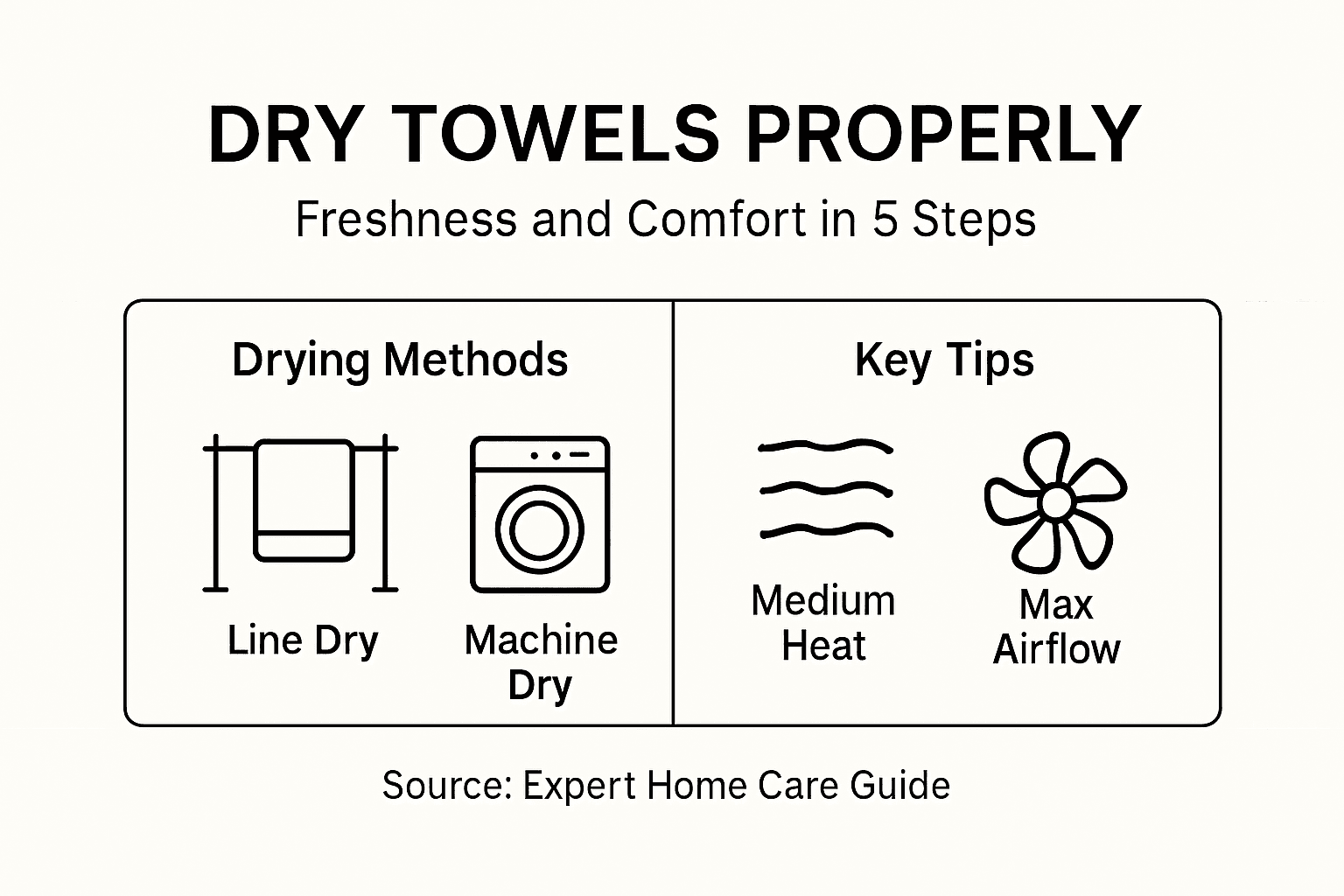
Towel drying technologies offer multiple options, each with unique advantages. Consider these primary drying approaches:
- Line drying outdoors or indoors using airflow
- Machine drying with standard or energy-efficient dryers
- Hybrid drying methods combining air and heat
Machine dryers provide quick results, but heat pump and exhaust heat exchange technologies can significantly reduce energy consumption. When selecting your method, consider factors like drying time, energy efficiency, and towel fabric characteristics.
Optimal drying preserves towel softness while efficiently removing moisture.
Natural drying works best for thick, looped towels that absorb moisture more effectively. However, machine drying can be faster and more convenient for busy households. The key is finding a method that suits your lifestyle and maintains your towels’ quality.
Here’s a quick comparison of popular towel drying methods and their main benefits:
| Drying Method | Speed | Energy Usage | Fabric Impact |
|---|---|---|---|
| Line Drying | Slow | Very low | Gentle, preserves life |
| Machine Drying | Fast | Moderate-high | Risk of overdrying |
| Hybrid Drying | Moderate | Moderate | Balanced effectiveness |
| Outdoor Drying | Moderate-fast | Low, weather-based | Adds freshness |
Pro tip: Select a medium heat setting to prevent fabric damage and maintain towel softness during machine drying.
Step 3: Arrange towels to maximize airflow
The way you arrange towels during drying can dramatically impact their freshness, drying speed, and overall quality. Your goal is to create optimal conditions that promote rapid moisture evaporation and prevent musty odors.
Strategic towel positioning makes a significant difference in drying efficiency. Consider these key strategies for maximizing airflow:
- Space towels with at least 2-3 inches between each item
- Spread towels fully to expose maximum surface area
- Rotate towels periodically to ensure even drying
- Avoid folding or bunching which traps moisture
When using indoor drying racks or outdoor lines, placement matters. Position your rack near windows or fans to enhance air circulation. Indoor air quality techniques suggest opening windows or using fans to accelerate drying and prevent bacterial growth.
Proper towel arrangement transforms drying from a passive to an active process, significantly reducing drying time.
Outdoor drying offers additional benefits, with wind and sunlight naturally accelerating moisture removal. For indoor environments, strategic positioning near ventilation sources can mimic these natural drying conditions.
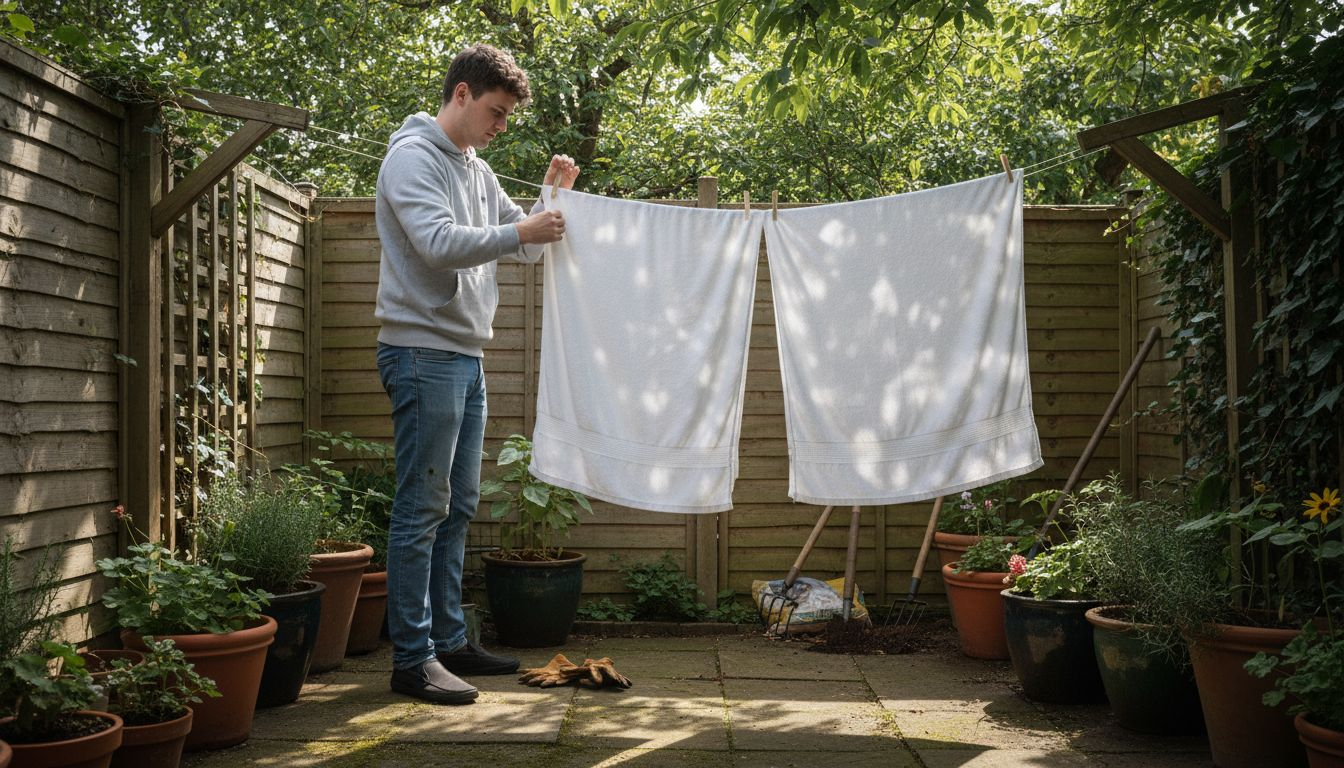
Pro tip: Use lightweight, breathable drying racks that allow air to circulate completely around each towel.
Step 4: Set temperature and timing correctly
Drying your towels at the right temperature and duration is crucial for maintaining their quality, softness, and overall performance. Understanding the nuanced balance between heat and time can prevent damage while ensuring complete moisture removal.
International textile drying standards provide critical guidance for optimal towel care. Consider these essential temperature and timing recommendations:
- Low heat for delicate or thin towels
- Medium heat for standard cotton towels
- High heat only for thick, heavy terry cloth towels
- Limit drying time to prevent fabric stress
Most modern dryers offer specific settings for different fabric types. Pay close attention to manufacturer labels and avoid generic one-size-fits-all approaches. Thick terry cloth towels typically require 40-50 minutes on medium heat, while lighter towels might need just 30-35 minutes.
Precise temperature control is the secret to preserving towel quality and extending their functional lifespan.
Be mindful that overdrying can cause fabric deterioration, reducing towel absorbency and creating unnecessary wear. Always remove towels promptly when they are dry to prevent unnecessary heat exposure and potential fiber damage.
Here’s a summary of temperature settings and recommended towel types:
| Heat Setting | Towel Type | Typical Time (min) | Fabric Care Advice |
|---|---|---|---|
| Low Heat | Delicate or thin cotton | 25-35 | Prevents shrinkage |
| Medium Heat | Standard bath towels | 35-50 | Balances softness |
| High Heat | Thick terry cloth towels | 50-60 | Use cautiously |
Pro tip: Use dryer balls to help separate towel fibers and reduce overall drying time.
Step 5: Check towels for dryness and softness
The final step in your towel drying process involves carefully assessing both moisture level and fabric quality. Your goal is to ensure complete dryness while preserving the towel’s luxurious texture and comfort.
Towel softness measurement involves more than a simple touch test. Professional textile experts evaluate softness through multiple sensory and technical assessments that you can easily adapt at home:
- Check for dampness by feeling the towel’s center and edges
- Evaluate fabric texture by gently rubbing against your skin
- Listen for crisp sounds when shaking out the towel
- Observe fabric movement for signs of residual moisture
Properly dried towels should feel completely dry, with a soft and supple texture that feels light and airy. Over-drying can create stiffness, while under-drying leads to musty odors and potential bacterial growth.
A perfectly dried towel strikes a delicate balance between complete moisture removal and maintained fabric integrity.
Instrumental analysis suggests that surface smoothness and bulk softness are key indicators of towel quality. Pay attention to how the fabric feels against your skin, looking for a consistent, plush texture that signals optimal drying.
Pro tip: Run your hand slowly across the entire towel to detect any hidden damp spots that might have been missed during the drying process.
Elevate Your Towel Care Routine with Premium Comfort from Lotus Linen
Mastering the art of drying towels properly means achieving that perfect balance between freshness, softness, and durability. If you’ve faced challenges like towels losing absorbency due to manufacturing finishes or overdrying damage, you know how important careful towel care is. Applying concepts like low to medium heat drying, maximizing airflow, and avoiding fabric softeners can drastically improve your towel’s quality and comfort at home.

Discover how Lotus Linen complements your towel care with a luxurious collection designed for ultimate comfort and lasting softness. Our premium towels and spa accessories are made to withstand your ideal drying methods while offering plush textures that enhance your everyday routine. Visit Lotus Linen to explore robes and towels made for those who value freshness and elegance. Embrace the next level of cozy with products that work harmoniously with your drying process and bring spa-like comfort to your home today.
Frequently Asked Questions
How do I prepare new towels for maximum absorbency?
To prepare new towels for maximum absorbency, wash them in hot water with a heavy-duty detergent before their first use. This will help remove any factory coatings that can inhibit moisture absorption.
What is the best method for drying towels to keep them fresh?
The best method for drying towels to keep them fresh is line drying outdoors or using a machine dryer on a medium heat setting. Ensure there’s enough space between towels to allow for proper airflow, which enhances freshness.
How can I arrange towels to improve drying efficiency?
Arrange towels by spacing them 2-3 inches apart and spreading them out fully to expose maximum surface area. Rotate the towels periodically during drying to ensure even moisture evaporation.
What temperature and timing should I use when machine drying towels?
Use medium heat for standard cotton towels and limit drying time to 35-50 minutes to prevent fabric damage. Always remove towels promptly once dry to preserve their quality and softness.
How can I check if my towels are fully dry and soft?
Check towels for dryness by feeling both the center and edges for dampness and evaluating their texture against your skin. Look for a soft, fluffy feel and listen for a crisp sound when shaking them out; these are signs they are properly dried.
Recommended
- White vs Colored Towels: Impact on Family Wellness – Lotus Linen
- Humidity and Linens: Impact on Guest Comfort – Lotus Linen
- 7 Expert Tips for Smart Children’s Towel Choices – Lotus Linen
- How to Choose Bath Towels: Selecting the Perfect Luxe Towels – Lotus Linen
- Improving HVAC Air Flow for Optimal Comfort and Efficiency - HVAC Service and Repair | Louisville, KY | Project Heating & Cooling

