
TL;DR:
- Linen is the primary tactile element that shapes guest perceptions and influences relaxation in spa environments. High-quality, well-presented linens signal cleanliness and care, reducing stress levels and enhancing the overall experience. Proper selection, maintenance, and presentation of linens are essential for creating a restorative spa atmosphere.
Linen is defined as the primary tactile and visual element that determines whether a spa feels genuinely restorative or merely decorative. The role of linen in spa ambiance goes far beyond aesthetics. Multisensory design in healing spaces can reduce guest stress levels by 30–40%, and linens are the most direct vehicle for that sensory engagement. Spa guests feel the quality of a space before they see it. The moment they touch a sheet, wrap themselves in a robe, or press their face into a cradle cover, they have already formed a judgment about the entire experience. Shoplotuslinen builds every product with that first moment in mind.
How does linen texture and material affect spa ambiance?
Texture is the first signal the nervous system receives in a spa setting. Before the music registers or the scent settles, the skin reads the fabric. Spa ambiance built around nervous-system regulation uses linens and robes as key sensory signals to promote relaxation and reduce tension. That means fabric choice is not a secondary decision. It is the foundation of the entire guest experience.
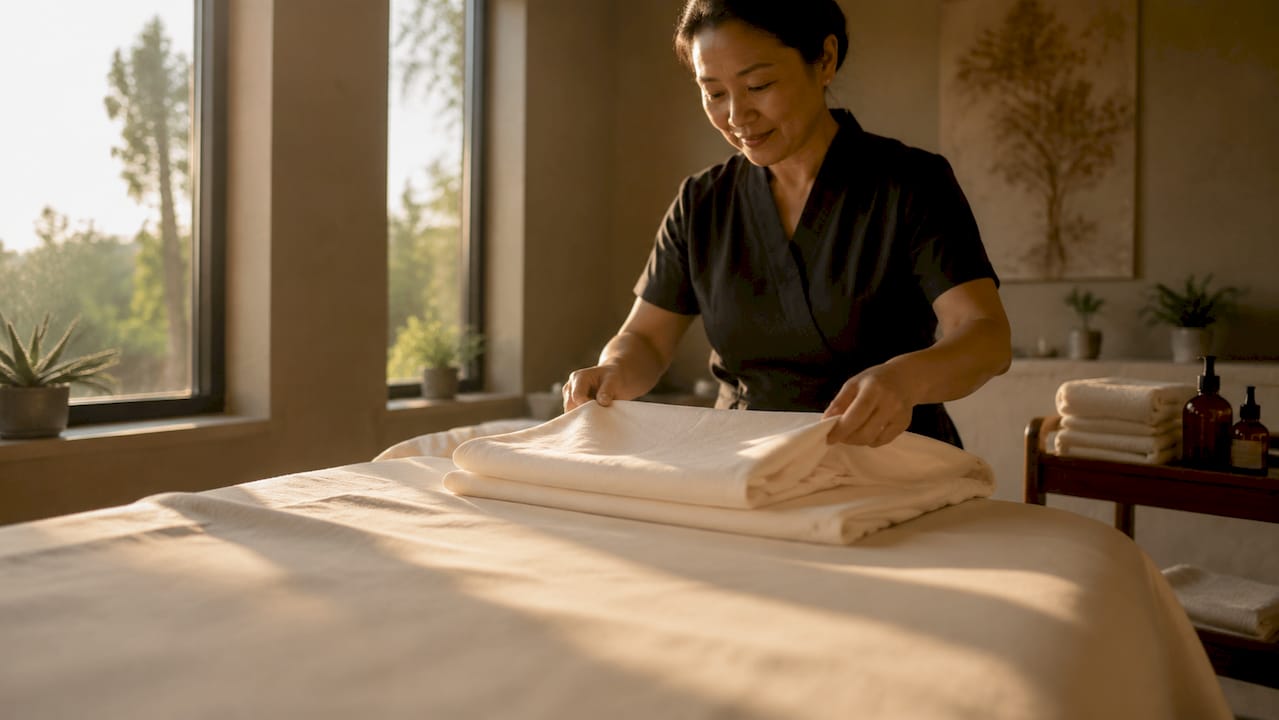
The most effective spa fabrics share three qualities: they feel soft against bare skin, they manage moisture without feeling wet or clammy, and they hold their texture through repeated washing. Cotton remains the gold standard for spa use because it breathes, absorbs, and softens with each launder. Microfiber can feel silky at first touch but tends to trap heat and loses its appeal quickly under commercial conditions. Blended fabrics offer a middle ground, though they rarely match the long-term softness of pure cotton.
Optimal spa linens balance plushness with functional grip. Fabrics that are too slick cause guests to feel unstable on the table. Fabrics that are too coarse create friction that distracts from treatment. The goal is a texture that disappears from conscious awareness entirely, letting the guest sink into the experience.
- Plush terry weaves deliver deep softness and high absorbency, ideal for body wraps and post-treatment drying.
- Waffle weaves offer a lighter, more breathable feel that works well in warm treatment rooms or during hot stone sessions.
- Smooth percale cotton suits facial treatments where a flat, cool surface supports relaxation without bulk.
- Flannel-finish sheets add warmth in cooler rooms, signaling comfort before the treatment even begins.
Pro Tip: Test new linen samples by pressing them against the inside of your forearm for 30 seconds. If the fabric still feels pleasant after that sustained contact, it will hold up well during a 60-minute treatment.
What role do linen visuals, color, and presentation play in spa atmosphere?
Color is the fastest visual cue the brain processes in any room. In spa settings, linen color directly shapes the emotional tone a guest carries into a treatment. White remains the most trusted choice because it signals cleanliness and order without requiring interpretation. Soft grays and warm off-whites add depth without introducing tension. Cool blues and sage greens align with the parasympathetic nervous system response, gently nudging guests toward calm.
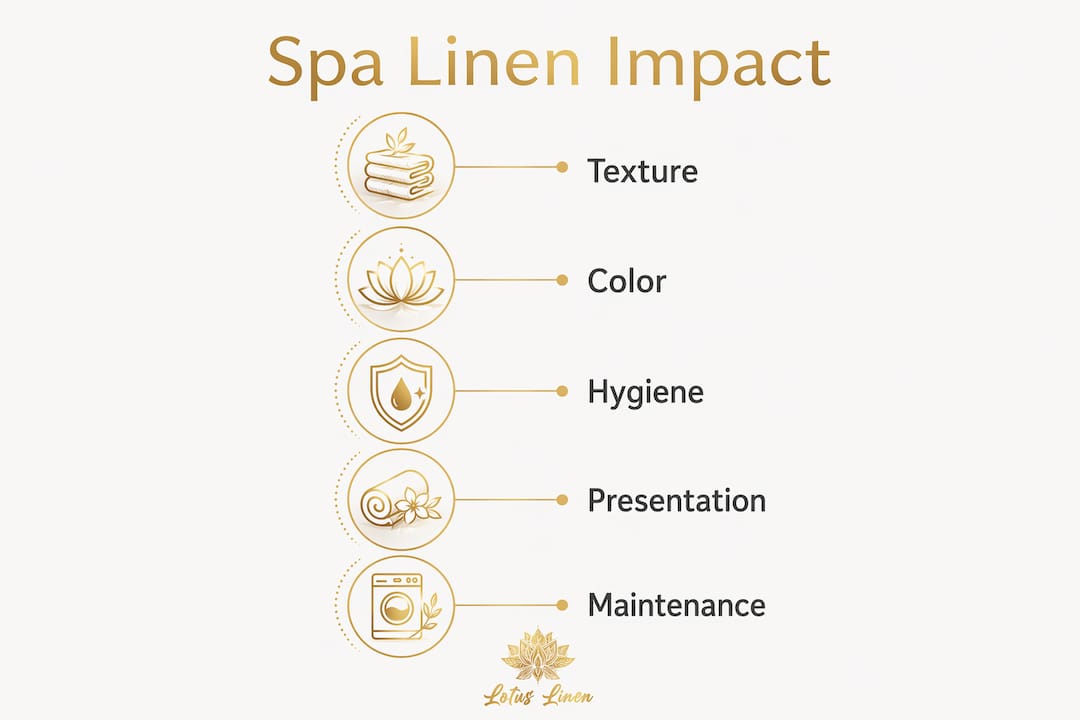
Sensory integration involving texture, scent, and light in spa environments supports emotional restoration and enhances recovery outcomes. Linen color participates in that integration. A pale linen under warm amber lighting creates a completely different mood than the same fabric under cool white light. Spa operators who choose linens without considering the room’s lighting miss half the equation.
Layering is equally powerful. A base sheet, a folded blanket at the foot of the table, and a neatly pressed face cradle cover together communicate care and attention. Each layer adds visual weight that reads as luxury. Guests notice when layers are absent or carelessly arranged, even if they cannot articulate why.
- White or ivory base sheets create a clean visual foundation that photographs well and reads as professional.
- Layered blankets in coordinating tones add perceived warmth and generosity without visual clutter.
- Pressed, wrinkle-free linens signal that the spa pays attention to details guests cannot see.
- Consistent color palettes across all textiles build a cohesive brand identity that guests remember.
Knowing how to arrange bath linens for visual impact is a skill that directly affects how guests rate their experience. Presentation is not vanity. It is communication.
Pro Tip: Choose linen colors by holding fabric swatches under your actual treatment room lighting, not in a showroom or on a screen. The difference can be dramatic.
How do linen hygiene and maintenance influence guest perception?
Cleanliness is not a baseline expectation in spas. It is the single most powerful trust signal a guest encounters. A systematic review of 55 peer-reviewed studies confirms that atmosphere, hygiene, and tactile comfort provided by linens directly determine women’s well-being and satisfaction in spas. Guests who sense any compromise in linen hygiene disengage from the experience immediately, and that disengagement is nearly impossible to reverse mid-treatment.
Guests subconsciously assess spa professionalism through the initial touch of linens, forming trust before treatment begins. A slightly musty sheet or a pilling surface communicates neglect. A crisp, fresh, smooth surface communicates mastery. The difference in guest perception is not subtle.
Maintaining that standard requires a disciplined approach to linen care and replacement. Commercial-grade spa linens are engineered for absorbency, moisture-wicking, and durability to withstand industrial laundry cycles without losing softness or shape. Consumer retail linens are not built for that volume and degrade quickly under spa conditions.
- Wash linens at the highest temperature the fabric tolerates to eliminate bacteria and oils from treatments.
- Use fragrance-free, hypoallergenic detergents to avoid triggering sensitivities in guests with skin conditions.
- Dry linens fully before folding to prevent mildew, which embeds in fibers and survives subsequent washes.
- Inspect each piece before use. Remove any linen showing pilling, thinning, or discoloration immediately.
- Follow a scheduled linen replacement policy rather than waiting for visible failure.
Proper spa linen care extends the life of each piece and protects the sensory quality that guests rely on. The cost of replacing linens on schedule is far lower than the cost of a single negative review citing hygiene concerns. Linen quality directly affects guest reviews in measurable ways, and that connection is well-documented across hospitality research.
How can spa operators integrate linen choices to enhance guest well-being?
Linen selection becomes a design decision when it is treated as part of a complete sensory system rather than a supply purchase. The sensory environment of a spa includes fabric warmth, weight, scent, and tactile feel, all aligned to trigger relaxation responses. Every linen choice either supports or disrupts that alignment.
Room temperature is the most overlooked variable in linen selection. A plush, heavy sheet that feels luxurious in a cool room becomes oppressive in a warm one. Waffle-weave textiles breathe better and suit warmer environments. Weighted blankets add grounding pressure that supports nervous-system regulation, but only when the room temperature allows for them comfortably.
Personalized and branded linens add a layer of ambient consistency that generic textiles cannot provide. Custom embroidery on robes and towels signals that the spa has invested in its identity, and guests read that investment as a proxy for quality throughout the entire visit. Shoplotuslinen offers in-house embroidery on spa-worthy pieces, making personalization accessible without requiring large minimum orders.
| Linen category | Best use case | Key sensory benefit |
|---|---|---|
| Plush terry sheets | Full-body treatments, wraps | Deep softness, high absorbency |
| Waffle-weave textiles | Warm rooms, hot stone sessions | Breathability, light weight |
| Scallop piping towels | Post-treatment, hand stations | Visual refinement, tactile comfort |
| Weighted blankets | Relaxation rooms, float prep | Grounding pressure, warmth |
| Embroidered robes | Guest arrival, post-treatment | Brand identity, perceived luxury |
- Coordinate linen weight with room temperature before purchasing in bulk.
- Use scallop piping bath towels at every guest touchpoint for visual consistency.
- Introduce spa-quality washcloths at facial stations to reinforce tactile care at close range.
- Offer scallop piping hand towels at hand-washing stations as a small but memorable detail.
- Review your full linen maintenance guide annually to catch degradation before guests do.
Pro Tip: Build a linen “sensory kit” for each treatment room: one plush sheet, one waffle blanket, and one weighted layer. Rotate based on season and treatment type rather than using the same setup year-round.
Key Takeaways
Spa-worthy linens are the primary sensory tool for nervous-system regulation, and their texture, color, hygiene, and presentation collectively determine whether guests fully relax or remain guarded throughout a treatment.
| Point | Details |
|---|---|
| Texture drives relaxation | Soft, breathable cotton signals safety to the nervous system before treatment begins. |
| Color shapes emotional tone | White, soft gray, and cool blue linens support calm and signal cleanliness to guests. |
| Hygiene builds trust | Crisp, fresh linens form the first trust signal guests use to evaluate the entire spa. |
| Layering communicates luxury | Coordinated layers of sheets, blankets, and face covers read as care and attention to detail. |
| Personalization reinforces identity | Custom embroidery on robes and towels signals investment in quality throughout the visit. |
Why linens are the soul of every spa I’ve built
I have spent years watching guests walk into treatment rooms and do the same thing every time. They touch the sheet before they lie down. Not to check the thread count. Not to evaluate the brand. They touch it to decide whether they are safe. That moment tells me everything about why linens matter more than almost any other design decision in a spa.
The candles, the music, the scent diffusers — those elements support the experience. But the linen is the experience. When a guest wraps themselves in a robe that feels genuinely spa-worthy, their shoulders drop. Their breathing slows. The nervous system receives a clear signal: you can let go here. That signal cannot be faked with a beautiful room and mediocre fabric.
What surprises most spa operators is how quickly guests detect linen quality without being able to name it. They will not say “the GSM was too low.” They will say “something felt off” or “I couldn’t fully relax.” The linen was the cause. I have seen this pattern enough times to treat it as a rule rather than an observation.
My advice to any wellness center operator is simple. Invest in your linens before you invest in your decor. A guest in a plain room with spa-worthy textiles will leave satisfied. A guest in a beautifully designed room with rough, worn linens will leave disappointed. The tactile experience wins every time.
— Oguzhan
Shoplotuslinen’s spa-worthy linen collections
Shoplotuslinen designs every piece for the moment a guest makes contact with it. The scallop piping towel collection brings visual refinement and tactile softness to every station in a spa, from hand-washing areas to post-treatment wrap-up. Plush and waffle robes give guests a spa-worthy arrival and departure experience that extends the relaxation well beyond the treatment table.
Custom embroidery and personalization options let wellness centers build a consistent brand identity across every textile touchpoint. Whether you are outfitting a single treatment room or a full wellness facility, Shoplotuslinen’s wholesale program supports operators who take linen quality seriously. Every piece is built to hold its softness, color, and shape through the commercial laundry cycles that spa environments demand.
FAQ
What is the role of linen in spa ambiance?
Linen is the primary tactile element that signals safety, cleanliness, and care to spa guests. Multisensory design research shows that quality linens can reduce guest stress levels by 30–40%, making them the most direct tool for creating a genuinely restorative atmosphere.
What are the best fabrics for spa linens?
Pure cotton is the most effective fabric for spa use because it breathes, absorbs moisture, and softens with repeated washing. Waffle weaves suit warmer treatment rooms, while plush terry is best for body wraps and post-treatment drying.
How do linen colors affect the spa atmosphere?
White and soft neutral tones signal cleanliness and order, while cool blues and sage greens support a calm, parasympathetic response in guests. Color choice should always be tested under actual treatment room lighting, not in a showroom.
How often should spa linens be replaced?
Spa linens should be replaced on a scheduled cycle rather than waiting for visible wear. Pilling, thinning, or any loss of softness signals that a piece has degraded past the point where it supports the guest experience.
Why do guests notice linen quality even when they cannot describe it?
Guests use the initial touch of linens as a subconscious evaluation of spa professionalism and hygiene. The nervous system processes tactile signals before conscious thought, meaning linen quality shapes the entire relaxation response from the first moment of contact.

