
Over 85 percent of American households report battling lingering towel odor, turning what should be a relaxing bathroom ritual into a source of frustration. For health-conscious women who value a fresh, visually appealing space, eliminating unpleasant smells means more than just clean towels. You will discover practical steps that blend everyday wellness, smart home routines, and elegant storage solutions to keep your bath essentials feeling and smelling revitalized.
Table of Contents
- Step 1: Prepare Towels For Optimal Freshness
- Step 2: Wash Towels Using Proper Techniques
- Step 3: Dry Towels Thoroughly To Remove Moisture
- Step 4: Store Towels Correctly To Minimize Odor
- Step 5: Check Towel Freshness And Repeat As Needed
Quick Summary
| Key Takeaway | Explanation |
|---|---|
| 1. Hang towels for optimal drying | Always hang towels on a well-ventilated rack to prevent moisture and bacterial growth. |
| 2. Wash towels weekly or more | Wash bath towels at least once a week or more in humid conditions to maintain freshness. |
| 3. Dry completely to avoid odors | Ensure towels are fully dry after washing to prevent unpleasant musty aromas. |
| 4. Use appropriate storage | Store towels in dry, well-ventilated areas to minimize odor development and moisture. |
| 5. Monitor for wear and tear | Regularly check towels for odors or dampness and wash immediately if deterioration occurs. |
Step 1: Prepare towels for optimal freshness
Ensuring your bath towels remain fresh and odor-free requires strategic preparation and maintenance. Proper preparation starts with understanding how moisture and bacteria can compromise your towels’ cleanliness. Experts recommend washing towels consistently to prevent microbial growth and unpleasant odors.
To optimize towel freshness, focus on three critical elements: drying technique, storage method, and washing frequency. Always hang your towels immediately after use on a well-ventilated towel rack that allows maximum air circulation. Avoid bundling or cramping towels, which traps moisture and creates an ideal environment for bacterial proliferation. If possible, use a rack that provides ample space between towels, ensuring each one dries completely between uses. Microfiber towels can be particularly helpful, as they dry faster and are less prone to bacterial growth compared to traditional high thread count towels.
Consistent care is key to maintaining towel freshness. Wash your bath towels at least once a week, paying attention to care instructions and using appropriate detergents. For bathrooms with high humidity, consider washing towels more frequently or implementing moisture control strategies like running a dehumidifier or keeping windows open to improve air circulation.
Here’s a comparison of towel materials for freshness and drying efficiency:
| Towel Type | Drying Speed | Odor Resistance | Space Needed |
|---|---|---|---|
| Microfiber | Very fast | High, dries quickly | Minimal |
| Cotton (terry) | Moderate | Moderate, retains odors | Average |
| Bamboo | Fast | Good natural resistance | Minimal |
| High thread count | Slow | Low, holds moisture | High |
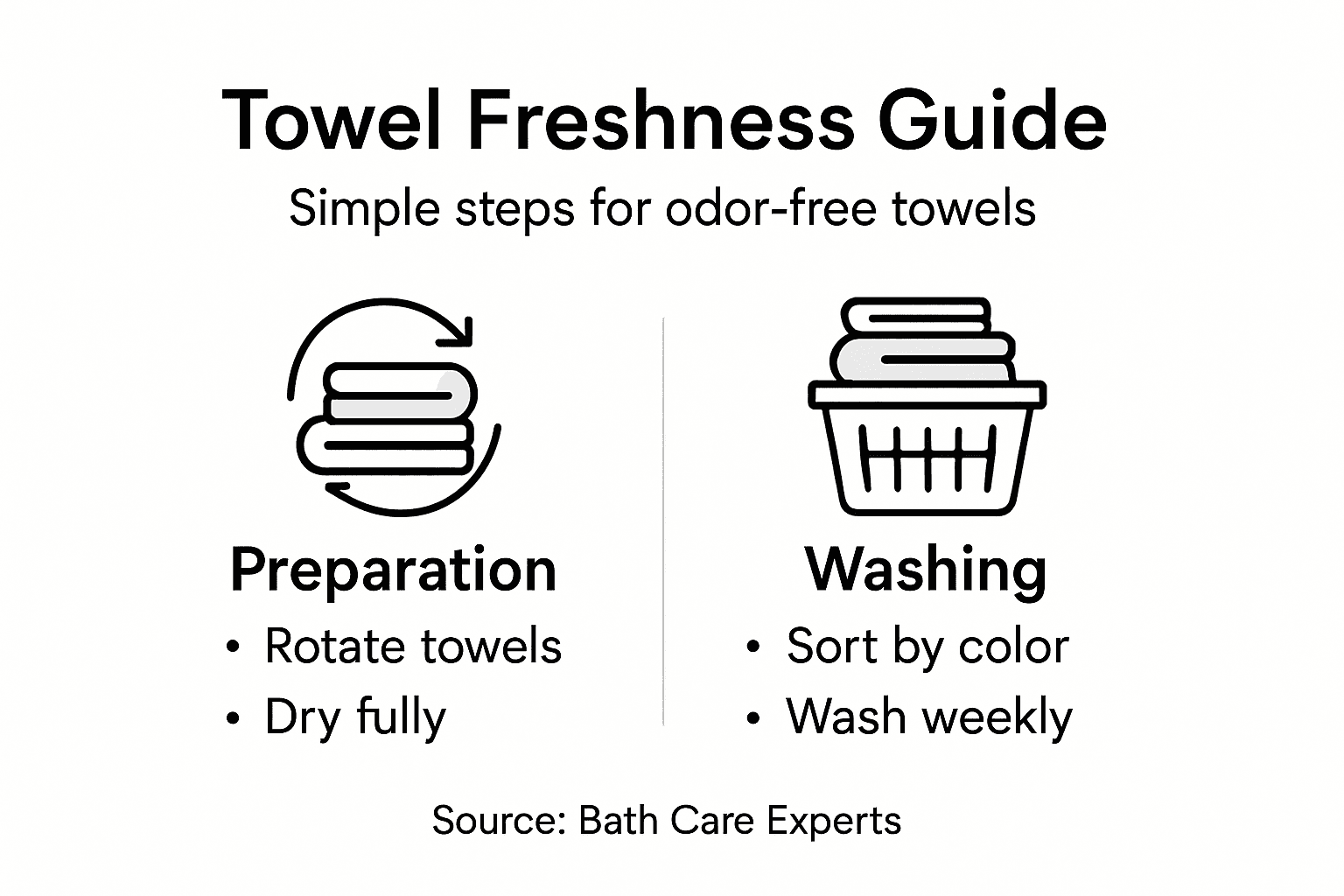
Pro tip: Rotate your towel collection to ensure even wear and allow each towel sufficient drying time between uses.
Step 2: Wash towels using proper techniques
Mastering the art of towel washing is crucial for maintaining their freshness and extending their lifespan. Proper washing techniques are essential for eliminating bacteria and preventing unpleasant odors that can accumulate over time.
Start by sorting your towels carefully. Separate white towels from colored ones and wash them in appropriate water temperatures. For most bath towels, hot water is recommended to effectively kill bacteria and remove accumulated body oils and dead skin cells. Use a generous amount of detergent but avoid overloading the washing machine. This ensures each towel gets thoroughly cleaned and rinsed. If your towels have stubborn stains or need extra sanitization, consider adding oxygen-based cleaners or a small amount of bleach for white towels.
Drying techniques are just as important as washing. Always dry towels completely after washing to prevent bacterial growth. Use the highest heat setting appropriate for the fabric type, and remove towels promptly from the dryer to prevent musty odors from developing. For added freshness, consider using dryer balls or a small amount of white vinegar during the rinse cycle to help soften towels and eliminate any lingering odors.
Pro tip: Wash your towels separately from lint-producing fabrics to maintain their clean appearance and prevent unnecessary fabric buildup.
Step 3: Dry towels thoroughly to remove moisture
Thoroughly drying your towels is a critical step in preventing bacterial growth and eliminating unpleasant odors. Drying techniques play a crucial role in maintaining towel hygiene and extending their usable life.
Start by maximizing air circulation when drying. Hang towels on a wide towel rack instead of a narrow hook, ensuring each towel has ample space to spread out. If using a dryer, select the highest heat setting appropriate for the fabric type. Remove towels promptly to prevent musty odors from developing. For those with outdoor space, consider air drying in sunlight and wind, which can naturally help reduce bacteria and speed up the drying process.
Pay special attention to your drying environment. Avoid storing towels in humid bathrooms or folding them before they are completely dry. If possible, use a fan or dehumidifier in your laundry area to accelerate moisture removal. For faster drying, try using microfiber towels, which naturally dry more quickly than traditional terry cloth. When air drying, periodically shake out the towels and rotate them to ensure even drying and prevent moisture pockets from forming.
Pro tip: Use a spin cycle in your washing machine before drying to remove excess water and significantly reduce overall drying time.
Step 4: Store towels correctly to minimize odor
Proper towel storage is a critical strategy for maintaining freshness and preventing unpleasant bacterial growth. Towel storage techniques significantly impact odor control by minimizing moisture and restricting microbial development.
Choose your storage location wisely. Opt for well-ventilated areas with low humidity away from bathroom dampness. Install wide towel racks that allow maximum air circulation instead of cramped hooks or closed cabinets. Spread out your towels completely rather than bunching or folding them when they are not fully dry. If your bathroom lacks proper ventilation, consider storing towels in a separate linen closet with good air movement and low moisture levels.
Maintain a rotation system for your towel collection. After washing and thoroughly drying each towel, store them with space between individual items to prevent moisture trapping. Microfiber towels are particularly advantageous since they dry faster and require less storage space. Consider using moisture absorbing products like silica gel packets in your storage area to further reduce ambient humidity and protect against potential odor development.
Pro tip: Invest in a small portable dehumidifier for your towel storage area to dramatically reduce moisture and prevent bacterial growth.
Step 5: Check towel freshness and repeat as needed
Maintaining towel hygiene requires consistent monitoring and proactive care. Signs of towel deterioration indicate when to wash and replace your linens to ensure optimal cleanliness and prevent potential health risks.
Perform a comprehensive freshness check by engaging multiple senses. Smell your towels for any musty or sour odors, which signal bacterial growth. Examine the fabric texture for changes such as stiffness or reduced softness. Feel the towel for lingering dampness or an unclean sensation. If any of these warning signs emerge, immediately wash the towel using hot water and a thorough cleaning cycle. Most towels can be safely reused 3 to 5 times before requiring washing, but this number decreases in humid environments or if you have sensitive skin or health concerns.
Establish a routine towel maintenance schedule that fits your lifestyle. For individuals with high humidity bathrooms or those who exercise frequently, consider washing towels more often. Create a tracking system whether it is a simple wall calendar or a digital reminder that helps you monitor towel usage and washing frequency. Pay special attention to hand towels and washcloths, which typically require more frequent washing due to higher bacterial exposure.
Quick reference: Common towel hygiene issues and their solutions.
| Issue | Prevention Strategy | Solution |
|---|---|---|
| Musty odor | Dry towels fully | Wash in hot water |
| Stiff texture | Use proper detergents | Add white vinegar to rinse cycle |
| Lingering moisture | Improve air circulation | Use spin cycle before drying |
| Faded color | Wash separately, cool water | Sort by color for each wash |
Pro tip: Keep a small laundry basket specifically for towels to streamline your washing routine and prevent cross contamination with other clothing items.
Keep Your Towels Fresh and Luxurious with Lotus Linen
Tired of fighting musty towel odors despite your best efforts to dry and wash them properly The challenge of preventing bacterial growth and maintaining towel freshness is real and requires more than routine care. Lotus Linen understands your need for plush, resilient towels and robes that not only look elegant but also stay fresh longer thanks to premium materials designed for quick drying and odor resistance.

Explore our carefully crafted collection at Lotus Linen where every towel and robe supports your goal for impeccable hygiene and lasting softness. Experience how our waffle and plush fabrics make drying easier and enhance your bathroom’s freshness routine. Don’t wait until odors take over make your next purchase now at Lotus Linen and transform your daily ritual into one of comfort and confidence.
Frequently Asked Questions
How often should I wash my bath towels to prevent odor?
To prevent odor, wash your bath towels at least once a week. If you live in a humid environment or use towels frequently, consider washing them every 3 to 5 days.
What drying techniques help keep towels fresh and odor-free?
To keep towels fresh, dry them completely after each wash. Use the highest heat setting appropriate for the fabric and promptly remove them from the dryer to avoid musty smells.
How can I store my towels to minimize odor?
Store towels in a well-ventilated area with low humidity. Avoid folding or stacking them when wet, and ensure there is space between each towel to promote air circulation.
What can I do if my towels already smell musty?
If your towels have a musty smell, wash them immediately using hot water and a generous amount of detergent. You can add white vinegar to the rinse cycle to help eliminate odors and soften the fabric.
Are certain towel materials better at resisting odor?
Yes, microfiber towels tend to resist odor better than traditional cotton towels due to their fast-drying properties and lower moisture retention. Consider incorporating microfiber towels into your collection for optimal freshness.
How can I check if my towels need to be washed?
Perform a quick check by smelling your towels for any sour odors and feeling for lingering dampness. If they smell musty or feel stiff, it’s time to wash them to prevent further bacterial growth.
Recommended
- How to Choose Bath Towels: Selecting the Perfect Luxe Towels – Lotus Linen
- What Is Terry Cloth? Guide to Cozy, Stylish Choices 2025 – Lotus Linen
- Choosing Robes for Guests: Create Comfort and Style – Lotus Linen
- 7 Luxurious Bathroom Inspirations for Your Oasis – Lotus Linen
- Zestaw Do prania Raypath – płyny z nanosrebrem | Przestrzeń Od Nowa Sklep
- Why Some Scents Last Longer: What Every UK Perfume Lover Should Know


