
TL;DR:
- Proper preparation of your spa environment ensures an uninterrupted, relaxing experience lasting 90 to 120 minutes. Gathering all necessary tools and products in advance, controlling ambient cues, and following a structured treatment sequence create a calming ritual that trains your nervous system to relax. Consistency in ambiance and routine is the key to making home spa nights truly restorative and enjoyable.
Home spa night preparation is the deliberate practice of assembling your space, tools, and mindset before a self-care ritual so that nothing interrupts the experience once it begins. A well-prepared spa night delivers 90–120 minutes of genuine rest, not a scattered series of trips to the linen closet. The difference between a forgettable bath and a truly restorative evening comes down to what you do before you ever turn on the faucet. Shoplotuslinen’s approach centers on three pillars: a spa-worthy environment, the right essentials within arm’s reach, and a repeatable sensory routine that trains your nervous system to relax on cue.
What spa night essentials should you gather before starting?
Pre-assembling all spa items before you begin is the single biggest factor in maintaining uninterrupted flow. Rummaging for a serum mid-mask or hunting for a towel while dripping wet breaks the calm you worked to create.
Gather these items and place them on a dedicated tray or basket before your spa night starts:
- Robe and towels: A plush or waffle bathrobe and at least two spa-worthy towels, warmed if possible
- Skincare products: Cleanser, exfoliant, clay or cream mask, serum, and facial oil
- Body care: Body scrub or chemical exfoliant, body oil or lotion
- Tools: Facial steamer or a heat-safe bowl, Gua Sha stone or jade roller, nail kit if doing a mani-pedi
- Hair care: Deep conditioning mask or hair oil
- Hydration: A large glass of water or a pot of herbal tea (chamomile, peppermint, or passionflower work well)
- Ambiance items: Candle, essential oil diffuser, and a charged device for your playlist
The tray concept is borrowed from professional spa prep. Estheticians lay out every product in treatment order before a client arrives. You get the same benefit at home: zero decisions mid-routine, zero friction.
Pro Tip: Label your tray items in treatment order from left to right. When you reach for the next product, it is already waiting. This one habit removes the mental load that quietly kills relaxation.
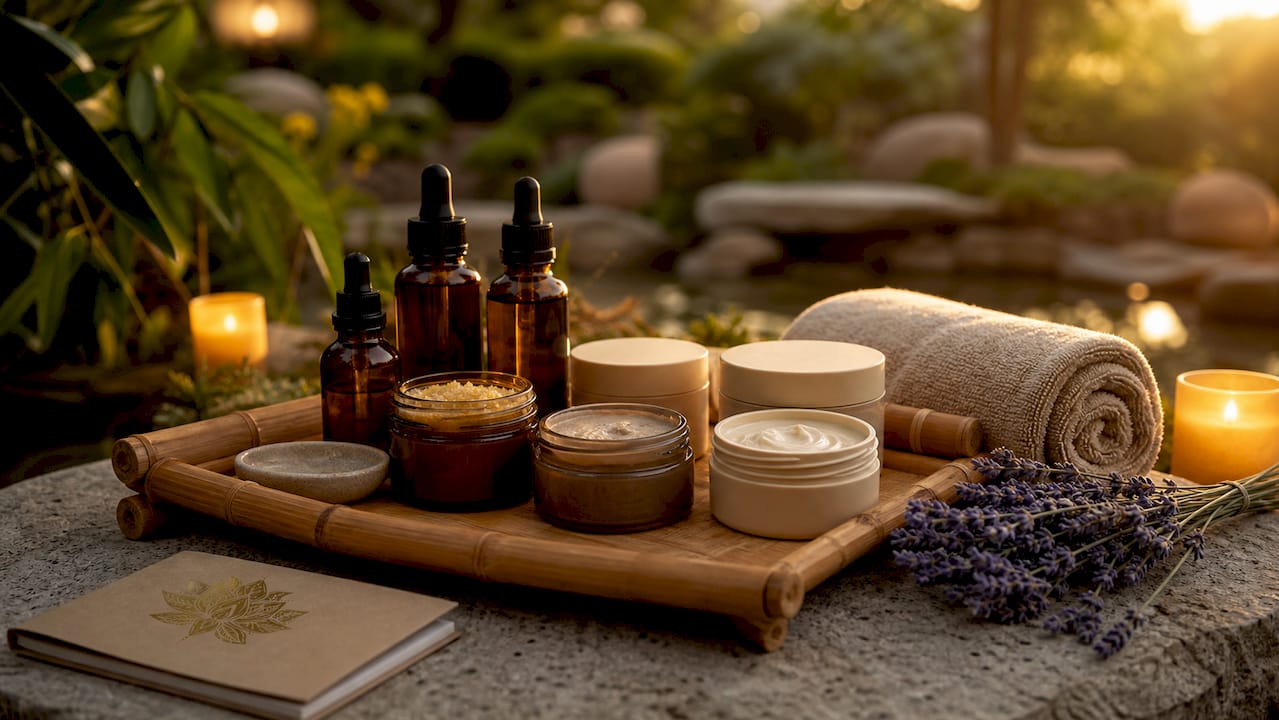
Reducing friction through upfront assembly creates the biggest luxury in a DIY spa night. Luxury is not a price point. It is the absence of interruption.
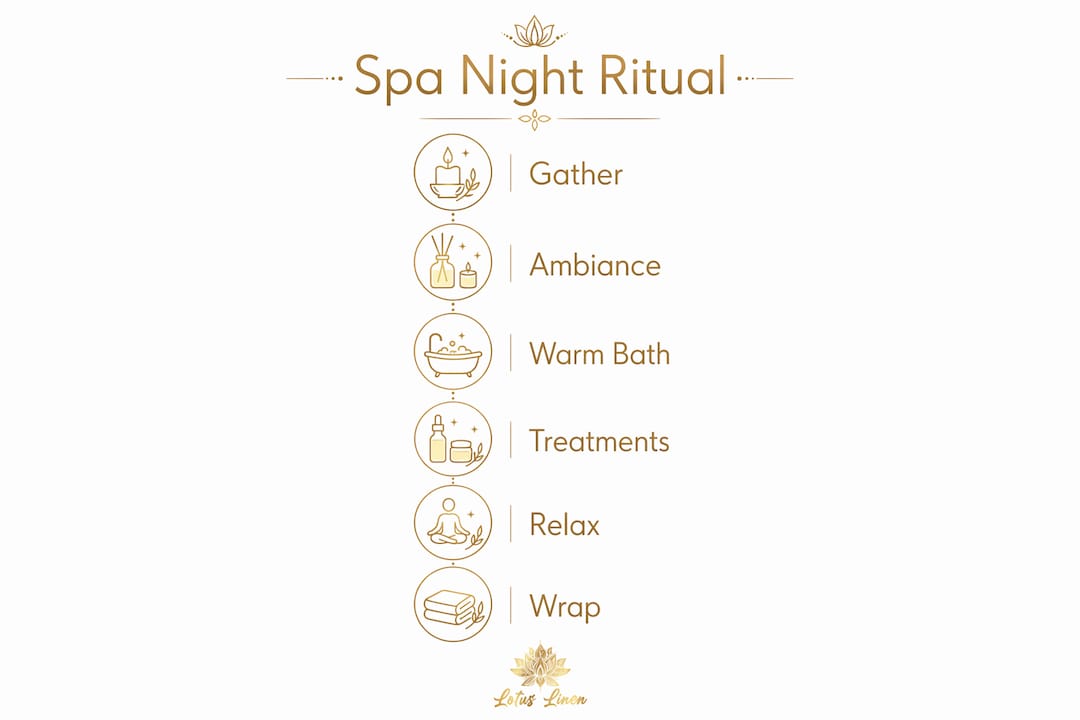
How do you create the right ambiance for a home spa night?
Ambiance is not decoration. It is a physiological signal to your nervous system that it is safe to slow down. Consistent environmental cues like scent and light train your nervous system to recognize rest, making each subsequent spa night more effective than the last.
Lighting
Dim every overhead light before you begin. Use warm-toned lamps, LED candles, or real candles placed safely away from water. Bright white light suppresses melatonin and keeps your brain in alert mode. Warm amber light does the opposite.
Sound
A 30-minute music therapy intervention improved relaxation scores and sleep quality compared to quiet rest in a 2026 clinical trial. That finding validates what spa professionals have known for years. Build a playlist of spa piano, lo-fi beats, or Tibetan singing bowls and let it run uninterrupted. Set it before you step into the bath so you never touch your phone again.
Scent
Choose one consistent scent for your spa nights. Lavender, eucalyptus, and sandalwood are the most studied for relaxation. Use a diffuser with 4–6 drops of essential oil, or light a single-scent candle. Mixing multiple scents creates sensory noise rather than calm. The goal is one clear olfactory cue that your brain begins to associate with rest over time.
Temperature and linens
Keep your bathroom between 68°F and 72°F for comfort. Warming your towels and robe before use creates a genuinely comforting transition when you step out of the bath. Drape them over a heated towel bar or run them through a dryer for 10 minutes before your session starts.
Pro Tip: Use the same candle scent and the same playlist every single spa night. After 3–4 sessions, your body will begin relaxing before you even step into the tub. That is the nervous system learning your ritual.
For a deeper home spa ambiance guide, Shoplotuslinen covers lighting, scent layering, and decluttering in detail.
What is the step-by-step treatment sequence and timing?
A structured sequence prevents you from doing treatments in the wrong order (moisturizer before mask, for example) and keeps the session within your 90–120 minute window. Follow this order for the most effective results.
- Hydrate first. Drink a full glass of water 60–90 minutes before your bath. Hydration before bathing supports circulation and prevents the lightheadedness that warm water can cause.
- Cleanse your face. Remove makeup and surface debris before any steam or mask. This takes 2–3 minutes.
- Draw your bath. Target 100–102°F water temperature for a 10–15 minute soak. Enter gradually to let your body adjust. Hotter is not better.
- Steam your face. While soaking, lean over a facial steamer or a heat-safe bowl of hot water for 3–6 minutes. Steaming opens pores and primes skin for mask absorption.
- Apply your mask. Choose based on your skin’s needs: clay for oily or congested skin, cream for dry or sensitive skin, enzyme for dull or uneven texture. Leave on for the time specified on the product.
- Body exfoliation. While the mask sets, use a gentle body scrub or chemical exfoliant on arms, legs, and feet. Rinse thoroughly.
- Rinse and exit the bath slowly. Stand up gradually to avoid a blood pressure drop. Wrap yourself in your pre-warmed robe immediately.
- Remove mask and apply serum. Rinse your face with cool water, then apply your serum and facial oil while skin is still slightly damp.
- Facial massage. Use a Gua Sha stone or jade roller for 3–5 minutes to reduce puffiness and improve circulation.
- Body moisturizing. Apply body lotion or oil while your skin is still warm and slightly damp for maximum absorption.
- Optional add-ons. Apply a hair mask before step 3 and rinse during step 7. Set up a mani-pedi station after step 10.
Here is a quick reference for treatment timing:
| Treatment | Duration | Notes |
|---|---|---|
| Warm bath soak | 10–15 minutes | 100–102°F, enter gradually |
| Facial steam | 3–6 minutes | Keep face 8–12 inches from steam |
| Face mask | 10–15 minutes | Follow product instructions |
| Body exfoliation | 5–7 minutes | Gentle pressure only |
| Facial massage | 3–5 minutes | Use oil or serum as slip |
| Post-spa wind-down | 10–15 minutes | Tea, quiet rest, no screens |
Pro Tip: Manage heat gradually throughout your session. If you feel warm or lightheaded at any point, sit on the edge of the tub, breathe slowly, and sip water before continuing. Your comfort is the priority.
For more DIY bath spa treatments, Shoplotuslinen has a full breakdown of facial, body, and hair care sequencing.
What mistakes should you avoid on spa night?
The most common spa night failures are not product-related. They are preparation failures. Knowing what to avoid is as useful as knowing what to do.
- Skipping the phone silence. One notification pulls you out of parasympathetic mode instantly. Put your phone on Do Not Disturb and place it in another room before you start.
- Skipping the pre-warm. Cold towels and a cold robe waiting at the end of your bath undo the warmth you built. Warm your linens every time.
- Bath water that is too hot. Temperatures above 105°F increase the risk of lightheadedness and cardiovascular strain. Gradual entry and moderate temperature keep the experience safe and comfortable.
- Over-exfoliating. Using a physical scrub and a chemical exfoliant in the same session damages your skin barrier. Choose one or the other per session.
- Eating a heavy meal beforehand. A full stomach redirects blood flow to digestion and makes lying in a warm bath uncomfortable. Eat lightly at least two hours before.
- Skipping the aftercare buffer. Planning 5–10 minutes for moisturizing, sipping tea, and resting in your robe after treatments extends the relaxation response and prevents an abrupt return to stress.
- Changing your ritual every time. Novelty feels fun but works against the nervous system conditioning that makes spa nights more effective over time. Keep the core routine consistent.
Pro Tip: Try slow diaphragmatic breathing or write three thoughts in a journal during your facial steam. A 10-day digital mindfulness program showed measurable improvements in sleep efficiency and heart rate variability. Even two minutes of intentional breathing during your steam delivers a real physiological shift.
Key takeaways
Effective home spa night preparation comes down to assembling everything upfront, controlling your environment deliberately, and following a consistent treatment sequence that your nervous system learns to trust.
| Point | Details |
|---|---|
| Assemble before you start | Place every product and tool on a tray in treatment order before your session begins. |
| Control ambiance with three cues | Use warm light, one consistent scent, and a relaxing playlist to signal rest to your nervous system. |
| Follow safe bath temperature | Keep water at 100–102°F and enter gradually to prevent lightheadedness. |
| Sequence treatments correctly | Move from cleanse to steam to mask to body care to moisturize for best results. |
| Build in aftercare time | Reserve 10–15 minutes post-treatment for quiet rest, tea, and robe comfort to extend relaxation. |
Why preparation is the real spa treatment
There is a version of a spa night that most people have tried: a rushed bath, a mask applied while scrolling, a robe grabbed cold from the hook. It feels fine. It does not feel transformative.
What I have seen, both in building Shoplotuslinen and in my own practice, is that the ritual of preparation is where the real shift happens. The act of warming your robe, lighting your candle, and laying out your products in order is not just logistics. It is a signal to yourself that this time matters. That you matter.
The linens you choose are part of that signal. A plush bathrobe that wraps you the moment you step out of the bath, or a waffle robe that breathes lightly while you do your facial massage, changes the texture of the entire experience. Scallop piping towels that feel spa-worthy against your skin after exfoliation are not indulgences. They are the physical environment of your self-care.
Repeatable 5–10 minute sensory rituals using the same candle and scent serve as mental rest cues that improve relaxation efficiency over time. That is not a wellness trend. That is how the nervous system works. Consistency is the luxury.
My honest advice: start simpler than you think you need to. One good robe, one candle, one playlist, and a tray with five products. Do it the same way three weeks in a row. By the fourth session, your body will be relaxing before you even fill the tub. That is the goal.
— Oguzhan
Wrap your spa night in something worth wearing
The right robe is not the last thing you reach for. It is the first thing you should plan around.
Shoplotuslinen’s women’s ultra-soft plush bathrobe wraps you in deep, spa-worthy comfort the moment you step out of the bath. For something lighter, the waffle piping bathrobe offers a breathable, spa-style feel that works perfectly during facial treatments and wind-down time. Pair either with Shoplotuslinen’s scallop piping bath towels for a coordinated, spa-worthy set that makes every step of your ritual feel intentional. Men’s options are available too, including the waffle spa bathrobe for men. Invest in the pieces that make your space feel like yours.
FAQ
What is the ideal time to block for a home spa night?
Block 90–120 minutes for a complete home spa ritual. This allows time for bath soaking, facial and body treatments, and a 10–15 minute post-treatment wind-down without rushing.
What bath temperature is safe for a relaxing soak?
Start at 100–102°F and soak for 10–15 minutes. Temperatures above 105°F increase the risk of lightheadedness, so enter the bath gradually and keep a glass of water nearby.
How do i stop my spa night from feeling interrupted?
Pre-assemble every product and tool on a tray before you start, silence all notifications, and warm your robe and towels in advance. Removing every decision from mid-routine is what keeps the experience uninterrupted.
How often should i do a home spa night?
Once a week is the most effective frequency for building the nervous system conditioning that makes each session more relaxing than the last. Consistent sensory cues like the same scent and playlist accelerate that effect.
Do i need expensive products for a good spa night at home?
No. The quality of your preparation and environment matters more than product price. A warm robe, a consistent scent, a calming playlist, and a simple cleanser-mask-serum sequence deliver real results regardless of budget.

