
Most people assume all cotton robes deliver the same cozy experience, but organic cotton robes stand apart with unique health and environmental advantages. Unlike conventional cotton, organic varieties eliminate harsh chemicals from farming to finishing, creating textiles that feel luxurious against your skin while protecting ecosystems. This combination of personal comfort and planetary responsibility makes organic cotton robes increasingly popular among consumers who refuse to compromise on quality or values. Understanding these benefits helps you make confident choices for your home or when selecting thoughtful gifts.
Table of Contents
- Key takeaways
- Comfort and skin health benefits of organic cotton robes
- Environmental sustainability advantages of organic cotton
- Weighing the trade-offs: cost, durability, and supply considerations
- Choosing and caring for your organic cotton robe
- Explore premium organic cotton robes at Lotus Linen
- Frequently asked questions about organic cotton robes
Key Takeaways
| Point | Details |
|---|---|
| Comfort and skin health | Organic cotton robes are breathable, hypoallergenic, and soften with washing, delivering comfortable wear for sensitive skin. |
| Environmental benefits | They use up to 91 percent less irrigation water and emit about 45 percent less CO2 per hectare than conventional cotton. |
| GOTS certification | GOTS certification verifies organic farming and ethical production from fiber to finished robe. |
| Care and longevity | Proper care helps retain softness and extend the robe lifespan, preserving value over time. |
| Cost considerations | Organic cotton robes usually cost more upfront than conventional robes. |
Comfort and skin health benefits of organic cotton robes
Organic cotton robes deliver exceptional comfort through their naturally breathable and hypoallergenic properties. The fibers allow air circulation while wicking moisture away from your body, creating an ideal microclimate whether you’re fresh from the shower or lounging on a lazy morning. This breathability becomes particularly valuable during temperature fluctuations, keeping you comfortable without overheating.
The absence of chemical residues sets organic cotton apart for sensitive skin. Conventional cotton farming relies heavily on synthetic pesticides and fertilizers, with residues potentially remaining in finished textiles. Organic cotton eliminates this concern entirely, avoiding toxic chemicals like formaldehyde and AZO dyes throughout cultivation and manufacturing. People with eczema, psoriasis, or general skin sensitivities notice immediate differences when switching to organic cotton robes.
The softness factor deserves special attention. Organic cotton fibers maintain their natural structure without harsh chemical processing, creating an inherently plush texture. This softness actually improves with each wash as the fibers relax and bloom, unlike conventional cotton that may feel stiff initially. The result is a robe that becomes your favorite comfort piece, perfect for extended wear during weekend mornings or evening relaxation.
Key comfort advantages include:
- Natural temperature regulation keeps you comfortable across seasons
- Zero chemical irritants protect even the most reactive skin types
- Improving softness with age rather than degrading texture
- Lightweight options available for year-round wearability
Pro Tip: Verify GOTS certification labels before purchasing to ensure your robe meets strict chemical-free and organic standards. This certification guarantees the entire production chain maintains skin-safe textile practices.
Environmental sustainability advantages of organic cotton
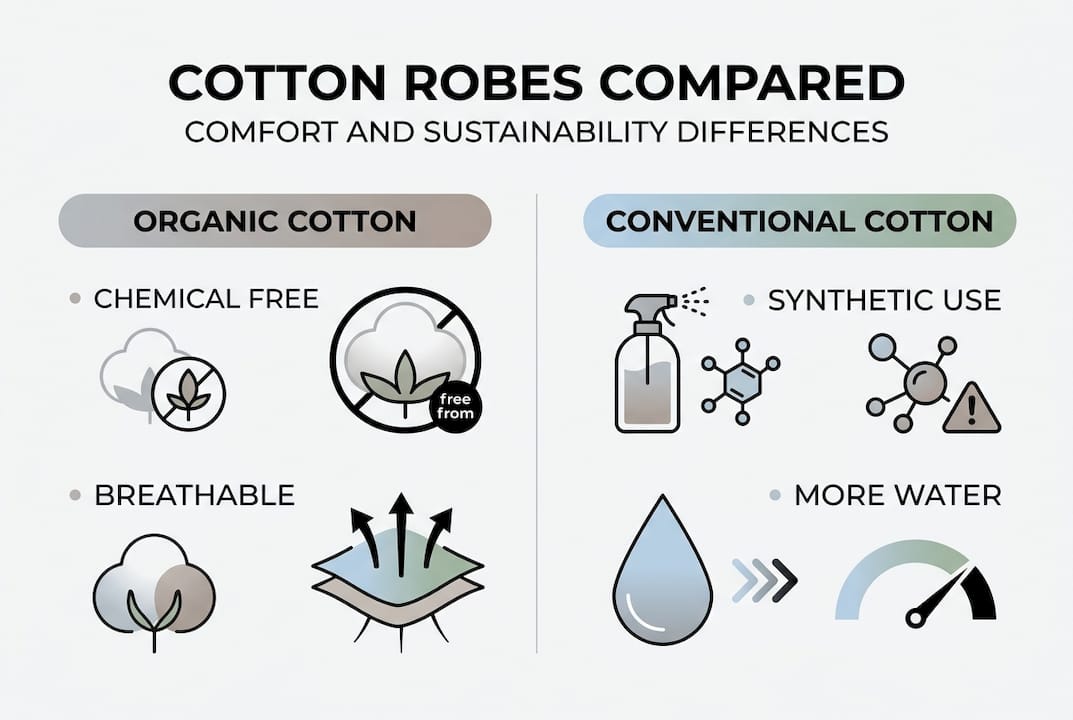
The environmental case for organic cotton proves compelling when examining resource consumption. Organic cotton farming uses up to 91% less irrigation water compared to conventional methods, relying primarily on rainfall and sophisticated soil management techniques. This dramatic reduction matters enormously in water-stressed regions where cotton cultivation traditionally depletes precious freshwater resources.
Carbon footprint differences reveal another significant advantage. Organic cotton production generates approximately 45% lower CO2 emissions per hectare than conventional cotton farming. This reduction stems from eliminating synthetic fertilizers and pesticides, which require substantial fossil fuel inputs for manufacturing and application. Organic methods build soil health naturally through crop rotation and composting, sequestering carbon rather than releasing it.
| Environmental Factor | Organic Cotton | Conventional Cotton |
|---|---|---|
| Water usage per kg | 182 liters | 2,000+ liters |
| CO2 emissions per hectare | 978 kg | 1,778 kg |
| Synthetic pesticides | Zero | 16% of global pesticide use |
| Soil health impact | Improves over time | Degrades fertility |
The elimination of synthetic pesticides protects biodiversity in farming regions. Conventional cotton accounts for roughly 16% of global insecticide use despite occupying only 2.5% of cultivated land. These chemicals harm beneficial insects, contaminate water sources, and endanger farmworker health. Organic practices foster thriving ecosystems where natural predators control pests, creating sustainable agricultural communities.
Organic cotton farming reduces environmental impact by 91% in water usage and 45% in carbon emissions while completely eliminating synthetic pesticide harm to ecosystems.
GOTS certification provides rigorous verification of these environmental claims. This global standard enforces strict ecological criteria including toxin bans, wastewater treatment requirements, and energy efficiency benchmarks throughout the supply chain. Social criteria ensure fair wages and safe working conditions, making GOTS the gold standard for truly sustainable textiles. When you choose GOTS certified robes, you support comprehensive environmental and ethical practices.
The benefits extend beyond farming to processing and manufacturing. Organic cotton facilities must meet stringent chemical restrictions, eliminating chlorine bleaching, heavy metal dyes, and formaldehyde finishes. This creates healthier working environments for textile workers while preventing toxic discharge into waterways.
Weighing the trade-offs: cost, durability, and supply considerations
Organic cotton robes command premium pricing, typically costing 20-50% more than conventional alternatives. This price difference reflects genuine production realities rather than marketing markup. Organic farming requires more labor-intensive practices, achieves lower yields per acre, and demands rigorous certification processes. These factors create higher base costs that manufacturers pass along to consumers.
Durability presents a nuanced consideration. Organic cotton robes generally show slightly lower durability compared to chemically treated conventional cotton because they lack strengthening treatments and synthetic finishes. Conventional cotton often receives formaldehyde-based treatments that enhance initial durability and wrinkle resistance. Without these interventions, organic cotton requires more attentive care to maintain its condition over time.
| Comparison Factor | Organic Cotton Robes | Conventional Cotton Robes |
|---|---|---|
| Average cost | $80-150 | $50-100 |
| Expected lifespan with proper care | 3-5 years | 4-6 years |
| Environmental impact | Minimal | Significant |
| Skin safety | Hypoallergenic | May contain irritants |
| Care requirements | Gentle washing essential | More forgiving |
Supply chain constraints affect availability and pricing. Organic cotton represents only 1% of global cotton production, with yields running 20-30% lower per acre than conventional farming. This limited supply struggles to meet growing demand, occasionally creating stock shortages for popular styles and sizes. The situation improves gradually as more farmers transition to organic methods, but supply limitations persist.
Consider these factors when evaluating organic cotton robes:
- Higher upfront investment delivers long-term health and environmental returns
- Proper care significantly extends lifespan, narrowing the durability gap
- Limited availability may require patience when seeking specific styles or sizes
- Premium pricing reflects genuine production costs, not inflated margins
- Chemical-free production protects your health and supports sustainable agriculture
Pro Tip: Maximize your investment by following gentle washing protocols and air drying whenever possible. These simple practices dramatically extend organic cotton’s lifespan while maintaining its signature softness.
Budget-conscious consumers face legitimate decisions between immediate affordability and long-term values. Organic cotton robes suit those prioritizing health, sustainability, and quality over lowest initial cost. The premium pays for tangible benefits including chemical-free comfort, reduced environmental harm, and support for ethical farming practices.
Choosing and caring for your organic cotton robe
Verifying authentic organic cotton requires checking for legitimate certifications. GOTS certification remains the most reliable indicator, guaranteeing organic farming and chemical-free processing throughout the supply chain. Look for the GOTS logo on product tags or request certification documentation from retailers. Other credible certifications include USDA Organic and OEKO-TEX Standard 100, though GOTS provides the most comprehensive coverage.
Selecting the right weave and weight depends on your climate and preferences. Terry cloth robes offer maximum absorbency and warmth, ideal for cooler environments or post-bath use. Waffle weave provides lighter weight with excellent breathability, perfect for warmer climates or year-round comfort. Lightweight jersey knits work beautifully for travel or layering. Consider your primary use case when choosing between these options.
Proper care practices protect your investment and maintain comfort:
- Wash in cold or lukewarm water using gentle cycles to preserve fiber integrity
- Choose mild, eco-friendly detergents without optical brighteners or harsh chemicals
- Skip fabric softeners entirely as they coat fibers and reduce absorbency
- Air dry when possible or use low tumble heat to prevent shrinkage
- Store in breathable cotton bags rather than plastic to maintain freshness
- Wash before first use to remove natural oils and maximize softness
Care do’s and don’ts:
- Do wash similar colors together to prevent dye transfer
- Do shake out robes before drying to reduce wrinkles naturally
- Do rotate between multiple robes to extend each one’s lifespan
- Don’t use chlorine bleach which degrades organic fibers rapidly
- Don’t overload washing machines as this prevents thorough cleaning
- Don’t iron at high temperatures; medium heat suffices if pressing becomes necessary
Pro Tip: Avoid bleach and fabric softeners completely as these products degrade organic cotton fibers and diminish the natural softness you paid premium prices to enjoy.
Understanding shrinkage expectations helps set realistic size choices. Organic cotton typically shrinks 3-5% after initial washing, slightly more than chemically treated cotton. Purchase robes with this shrinkage factored in, or follow pre-shrinking instructions if provided. Most quality manufacturers account for expected shrinkage in their sizing charts.
Color fastness varies with dye quality and processing methods. GOTS certified robes use low-impact dyes that meet strict environmental and safety standards. These dyes may fade slightly faster than synthetic alternatives but avoid toxic heavy metals. Washing in cold water and avoiding direct sunlight during drying preserves color vibrancy longer.
The investment in authentic organic cotton robes pays dividends through years of comfortable, healthy wear. Proper selection and care transform these premium textiles into beloved daily essentials that align your personal comfort with environmental values.
Explore premium organic cotton robes at Lotus Linen
Lotus Linen specializes in authentic GOTS certified organic cotton robes that deliver the comfort and sustainability you deserve. Our carefully curated men’s collection and women’s selection feature diverse styles from plush terry to lightweight waffle weaves, ensuring perfect options for every preference and climate.

Customization elevates your robe from luxury item to personalized treasure. Our product designer tool lets you add monograms, select custom colors, and create truly unique pieces perfect for gifting or treating yourself. Each robe combines certified organic materials with exceptional craftsmanship, supporting both your wellbeing and environmental responsibility. Discover how sustainable luxury feels when comfort meets conscience.
Frequently asked questions about organic cotton robes
What does GOTS certification mean for organic cotton robes?
GOTS certification guarantees organic farming without synthetic pesticides, chemical-free processing throughout manufacturing, and fair labor practices across the supply chain. This comprehensive standard ensures your robe meets the highest environmental and social responsibility criteria, verified by independent third-party auditors.
Are organic cotton robes worth the higher price?
The premium price delivers tangible value through hypoallergenic comfort, zero chemical exposure, and significantly reduced environmental impact. For consumers prioritizing skin health, sustainability, and supporting ethical production, organic cotton robes justify their cost through superior quality and aligned values.
How do I care for my organic cotton robe to ensure longevity?
Wash in cold water with mild detergent, avoid fabric softeners and bleach, and air dry or use low heat tumbling. These gentle practices preserve fiber integrity and maintain the natural softness that makes organic cotton special, extending your robe’s comfortable lifespan.
Can organic cotton robes help with sensitive skin?
Organic cotton robes eliminate chemical irritants including pesticide residues, formaldehyde, and synthetic dyes that commonly trigger skin reactions. The hypoallergenic fibers provide comfort for people with eczema, psoriasis, or general sensitivities who struggle with conventional textiles.
Is organic cotton always more sustainable than conventional cotton?
Organic cotton consistently demonstrates superior environmental performance with 91% less water usage, 45% lower carbon emissions, and zero synthetic pesticides. While conventional cotton continues improving through better practices, organic methods currently offer the most comprehensive sustainability benefits across the entire production cycle.

