
TL;DR:
- Spa-grade cotton is made from long-staple or extra-long-staple fibers that yield softer, stronger, and more durable fabrics than standard cotton. The key factor is fiber length, with verified varieties like Supima® and Turkish cotton providing measurable quality advantages, especially after repeated laundering. Proper laundering and product transparency further ensure these textiles maintain their premium qualities over time.
Spa-grade cotton is cotton made from long-staple or extra-long-staple fibers that produce fabrics measurably softer, stronger, and more durable than standard cotton. The term “spa-grade” is a marketing descriptor, not a regulated industry standard. The recognized technical framework behind it is staple length classification, and understanding that framework is what separates an informed buyer from someone paying more for a label. Varieties like Supima® and Turkish cotton are the most cited examples of spa-quality cotton in the luxury textile market, and both earn that status through verifiable fiber length, not branding alone.
What fiber characteristics define spa-grade cotton?
Spa-grade cotton is defined by its fiber length, which textile scientists call staple length. Cotton fibers are grouped into four categories: short staple (under 25 mm), medium staple (25 to 28 mm), long staple (29 to 34 mm), and extra-long staple) (ELS), which measures 35 mm or longer. ELS fibers produce stronger, smoother yarns because each fiber wraps around its neighbors more times during spinning, creating a tighter, more cohesive thread. That structural difference is what you feel when you press a spa-quality towel against your face.
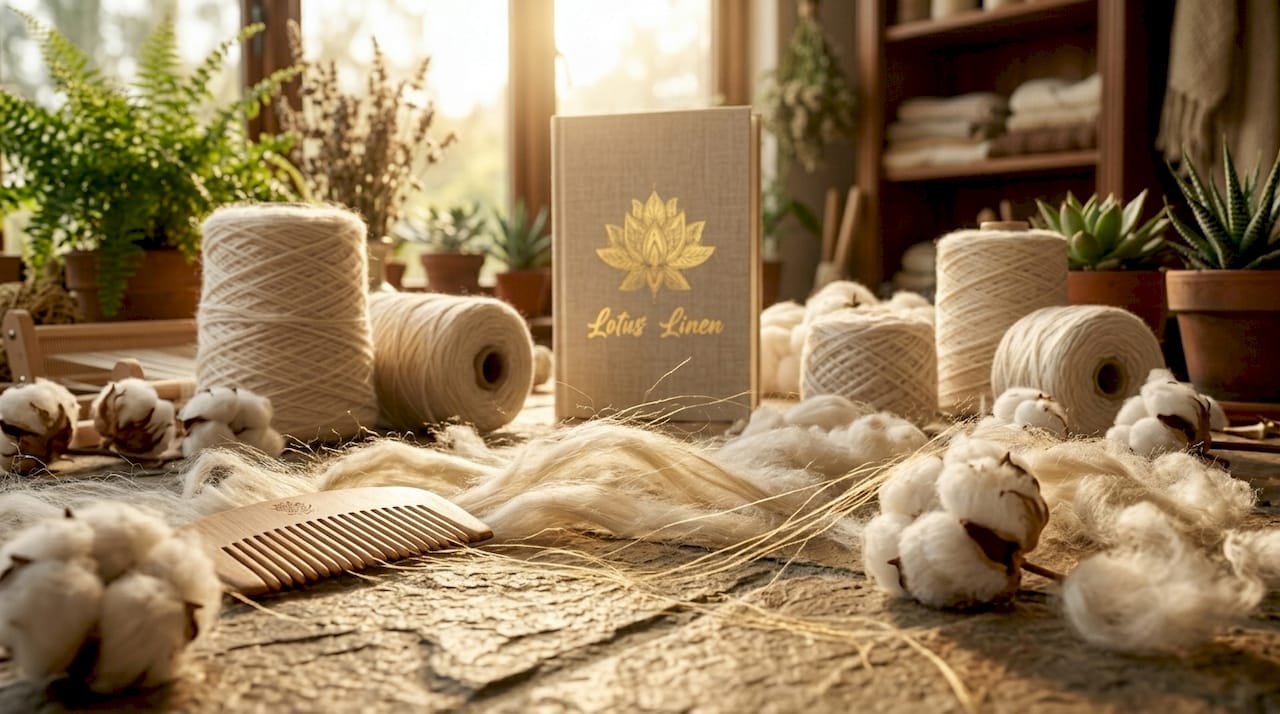
The species Gossypium barbadense produces the world’s most prized ELS cotton, including Supima® and Egyptian cotton varieties. Supima fibers measure about 1.5 inches, nearly twice the length of standard Upland cotton fibers, which explains why Supima fabrics resist pilling, hold color longer, and soften with each wash rather than roughening. Supima represents less than 1% of global cotton production, which reflects both its growing difficulty and its genuine scarcity.
Short-staple cotton, by contrast, produces yarns with more exposed fiber ends. Those exposed ends create the slightly rough, hairy texture that causes pilling and fraying) after repeated washing. The difference is not subtle after six months of regular use.
Pro Tip: When shopping for spa-worthy cotton textiles, look for the Supima® trademark or a specific mention of “extra-long staple” on the product label. Generic terms like “100% cotton” tell you nothing about fiber length.
How does spa-grade cotton compare to other cotton types?
Spa-grade cotton occupies the top tier of a quality spectrum that most consumers never see clearly labeled. The table below maps the key differences between common cotton types used in robes, towels, and spa cotton bedding.
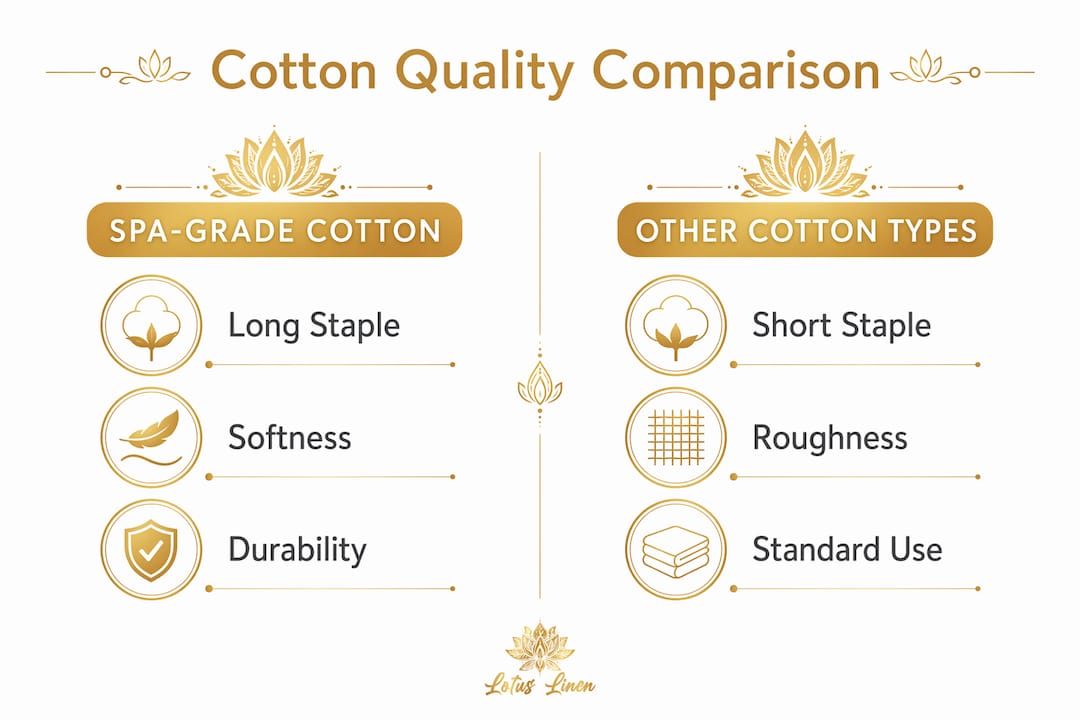
| Cotton type | Staple length | Softness | Durability | Typical use |
|---|---|---|---|---|
| Short-staple Upland | Under 25 mm | Low to medium | Moderate | Budget towels, basic apparel |
| Medium-staple cotton | 25 to 28 mm | Medium | Good | Everyday bath linens |
| Long-staple Turkish cotton | 29 to 34 mm | High | Very good | Spa towels, quality robes |
| Extra-long staple Supima® | 35 mm and above | Exceptional | Excellent | Luxury robes, spa textiles |
Standard Upland cotton accounts for roughly 90% of global cotton production. It is the fiber in most budget bath towels and basic robes. It works, but it does not hold up the way long-staple cotton does, and it never develops the buttery softness that spa-quality cotton gains through repeated laundering.
Microfiber is the other common alternative. It dries faster than cotton and feels soft initially, but it is a synthetic fiber that does not breathe the way cotton does. For wellness use, where skin contact and temperature regulation matter, cotton outperforms synthetics in comfort over time. Organic cotton is a growing category worth noting. It refers to how cotton is grown, not its fiber length. Organic short-staple cotton is still short-staple cotton. Organic certification and spa-grade quality are separate attributes that can overlap but do not automatically go together.
Cotton blends, typically cotton mixed with polyester, reduce cost and improve wrinkle resistance. The trade-off is reduced breathability and a slightly synthetic feel that becomes more noticeable after washing. For a genuine spa-quality experience, 100% long-staple cotton is the benchmark.
Pro Tip: Verified cotton brands like Supima® reduce consumer uncertainty by tying quality claims to measurable fiber-length standards rather than subjective marketing language. If a brand cannot name the cotton variety, ask why.
What are the practical benefits of spa-quality cotton textiles?
The benefits of spa-grade cotton are not abstract. They show up in specific, measurable ways during daily use.
Softness that improves over time. Long-staple cotton fibers smooth out with each wash cycle rather than breaking down. A spa-quality robe or towel typically reaches peak softness after three to five washes, then maintains that feel for years. Standard cotton peaks early and declines.
Absorbency without weight. Long-staple fibers allow manufacturers to produce lighter, more breathable weaves without sacrificing durability. This means a spa-quality towel can absorb moisture quickly without feeling heavy or slow to dry. That balance is critical for post-shower comfort and for anyone building a home spa routine.
Breathability for temperature regulation. Cotton is a naturally breathable fiber, and longer fibers amplify that quality by allowing tighter, more uniform weave structures that still permit airflow. In a robe or wrap, this translates to warmth without overheating, which is the exact sensation that makes a spa robe feel different from a standard one.
Durability under repeated laundering. Long-staple cotton provides enhanced tactile comfort and moisture management that holds up through intensive use. Professional spas launder their linens dozens of times per week. The fact that spa-grade cotton survives that cycle without degrading is the clearest proof of its structural advantage.
For home wellness use, these benefits compound. A spa-worthy robe that stays soft, absorbs well, and breathes properly turns a routine post-shower moment into something that genuinely supports relaxation. That is not a small thing when you are trying to build consistent wellness habits at home.
How is spa-grade cotton made and what should buyers look for?
Understanding how spa-grade cotton moves from field to finished textile helps you evaluate products with more confidence.
-
Growing and harvesting. ELS cotton varieties like Supima® are grown in specific climates, primarily the San Joaquin Valley in California. The plants require precise irrigation and are often hand-harvested to protect fiber length. This is why ELS cotton costs more at the source before any manufacturing begins.
-
Combing. After harvesting, long-staple cotton goes through a combing process that removes short fibers and aligns the remaining long fibers in parallel. Combed cotton produces a smoother, stronger yarn than carded cotton, which simply untangles fibers without removing the shorter ones. Most spa-quality textiles specify “combed cotton” on their labels.
-
Spinning and weaving. Longer, combed fibers allow for finer yarn counts, which produce denser, smoother fabrics. The weave structure, whether terry, waffle, or plain weave, then determines the final texture and performance profile of the textile.
-
GSM and thread count. High GSM cotton towels in the 400 to 700 range offer plushness and absorbency, though they take longer to dry than lighter options. Thread count matters more for flat-woven fabrics like sheets and spa cotton bedding than for terry towels, where loop density is the relevant measure.
-
Mercerization. Many spa-quality cotton fabrics undergo mercerization, a finishing process using sodium hydroxide that swells the fiber, increases luster, and improves dye uptake. Mercerized cotton looks richer and holds color longer than untreated cotton.
Pro Tip: When evaluating a spa-quality cotton product, check for three things: a named cotton variety (Supima®, Turkish, Egyptian), a GSM specification, and a mention of combing or mercerization. Any brand that lists all three is being transparent about what you are actually buying.
For a deeper look at what separates spa-worthy towels from standard ones, the spa towel quality guide at Shoplotuslinen covers the key construction details worth knowing before you buy.
How to care for spa-worthy cotton linens at home
Proper care is what separates a spa-quality cotton textile that lasts five years from one that degrades in twelve months. The fiber quality is the foundation, but laundering habits determine how long that quality holds.
- Wash in warm water, not hot. Hot water weakens cotton fibers over time and causes shrinkage, particularly in the first few washes. Warm water (around 104°F or 40°C) cleans effectively without stressing the fiber structure.
- Use a gentle, residue-free detergent. Detergent buildup is the most common reason spa-quality towels lose their softness. Use a small amount of liquid detergent and skip the fabric softener entirely. Fabric softener coats fibers with a waxy residue that reduces absorbency over time.
- Dry on low heat or air dry. High heat is the fastest way to degrade long-staple cotton fibers. Low heat or air drying preserves the fiber length and maintains the fabric’s hand. An eco-friendly laundry routine also extends the life of your textiles while reducing energy use.
- Shake before drying. A quick shake before placing cotton items in the dryer fluffs the loops and prevents matting, which is what makes towels feel stiff after drying.
- Store loosely folded in a dry space. Tight compression over time can flatten terry loops and reduce loft. A linen closet with good airflow is better than a sealed storage bin.
Pro Tip: Add half a cup of white vinegar to the rinse cycle once a month. It dissolves detergent residue and naturally softens fibers without coating them the way commercial softeners do.
For more detailed guidance on preserving softness through laundering, the towel care instructions from Shoplotuslinen walk through each step with specifics on temperature and product choices.
Key takeaways
Spa-grade cotton earns its quality through fiber length, not marketing language. Extra-long staple cotton like Supima® produces measurably softer, stronger, and more durable textiles than standard Upland cotton, and proper care preserves those qualities for years.
| Point | Details |
|---|---|
| Fiber length is the defining factor | Extra-long staple fibers (35 mm+) produce smoother yarns and softer, more durable fabrics. |
| Named varieties signal real quality | Supima® and Turkish cotton are verifiable ELS types; generic “100% cotton” labels are not. |
| GSM and combing matter at purchase | Look for combed cotton and a GSM between 400 and 700 for spa-worthy towels and robes. |
| Care habits protect your investment | Warm water, gentle detergent, and low-heat drying preserve fiber length and softness over time. |
| Blends and synthetics fall short | For wellness use, 100% long-staple cotton outperforms microfiber and cotton-polyester blends. |
Why fiber length is the only spec that actually matters
I have handled a lot of cotton over the years, and the single most consistent observation I can share is this: most people are buying cotton grade on feel in the store, which is the worst possible time to judge it. A fabric softener finish can make short-staple cotton feel silky on the shelf. Three months of washing strips that finish away, and you are left with what the fiber actually is.
The industry does not make this easy. “Spa-grade” is not a regulated term. Neither is “luxury cotton” or “resort-quality.” What those phrases mean in practice depends entirely on whether the brand behind them is using long-staple fibers and honest construction. The brands that are transparent about fiber variety, GSM, and weave construction are the ones worth trusting. The ones that lead with vague adjectives and no specifications are usually hiding short-staple cotton behind good marketing.
I also want to push back on the idea that thread count is the primary quality signal for spa cotton bedding and bath linens. Thread count matters for flat-woven sheets. For towels and robes, GSM and loop density are far more relevant. A 900-thread-count towel is a marketing claim. A 600 GSM combed Turkish cotton towel is a specification.
The practical takeaway is to buy less and buy better. One spa-worthy robe made from verified long-staple cotton will outlast three budget alternatives and feel better every single time you use it. That is not a luxury argument. That is a cost-per-use argument, and it holds up.
— Oguzhan
Bring spa-worthy cotton into your home with Shoplotuslinen
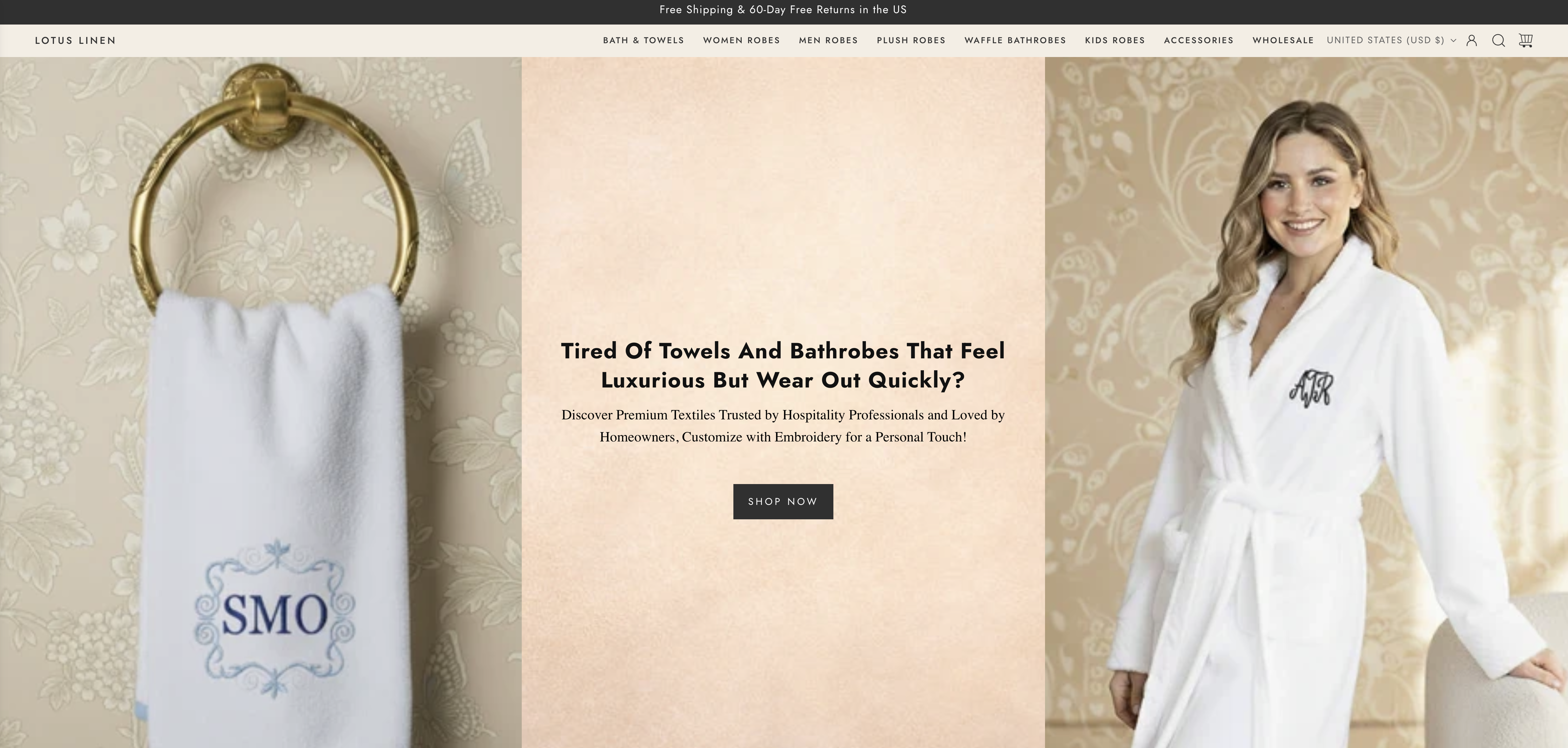
At Shoplotuslinen, every robe and towel in the collection is built around the same fiber principles covered in this article: long-staple cotton construction, thoughtful weave structures, and finishes that hold up through real use. The waffle robes for women combine a breathable waffle weave with spa-quality cotton for a lightweight feel that works year-round. The scallop piping bath towels bring quick-dry performance and elegant detail to your daily routine. For a personalized touch, the personalized robe collection offers custom embroidery on spa-worthy cotton robes, making them a standout gift or a daily indulgence. Shop the full collection at Shoplotuslinen and find the piece that fits your wellness routine.
FAQ
What is spa-grade cotton, exactly?
Spa-grade cotton refers to textiles made from long-staple or extra-long-staple cotton fibers, typically measuring 29 mm or longer, which produce softer, stronger, and more durable fabrics than standard short-staple cotton. The term is not regulated, so look for named varieties like Supima® or Turkish cotton as proof of genuine fiber quality.
How is spa-grade cotton different from regular cotton?
Regular Upland cotton uses short-staple fibers that produce rougher yarns prone to pilling and fraying, while spa-grade cotton uses long or extra-long staple fibers that create smoother, more cohesive yarns. The practical difference shows up after repeated washing, when spa-quality cotton softens and standard cotton roughens.
What does GSM mean for spa cotton towels and robes?
GSM stands for grams per square meter and measures fabric weight. For spa-quality towels and robes, a GSM between 400 and 700 delivers the balance of plushness and absorbency most associated with a spa experience, with higher GSM fabrics feeling more plush but taking slightly longer to dry.
Is Supima® cotton worth the price for home use?
Supima® cotton is a verified extra-long staple variety representing less than 1% of global cotton production, and its fiber length produces fabrics that are measurably softer and more durable than standard cotton. For home wellness use, the longer lifespan and sustained softness make it a strong value over time compared to budget alternatives.
How do I know if a cotton product is genuinely spa-grade?
Look for a named cotton variety (Supima®, Turkish, Egyptian ELS), a stated GSM, and a mention of combing or mercerization in the product description. Brands that list these specifications are being transparent about construction. Brands that rely only on adjectives like “luxurious” or “spa-quality” without supporting details are worth questioning.

