
TL;DR:
- A premium hospitality robe is engineered for durability, comfort, and a luxurious guest experience, not just stitched with a logo.
- It features high-quality fabrics, reinforced stress points, and industrial laundering resilience to withstand heavy use and washing cycles.
Most people assume a premium hospitality robe is just a fluffy bathrobe with a hotel logo stitched on the chest. That assumption misses most of what actually makes these robes worth investing in. A premium hospitality robe is a purpose-engineered garment designed to deliver a genuine luxury experience for the guest while holding up under the relentless demands of commercial laundering and heavy daily use. Whether you are outfitting a boutique hotel, a resort spa, or simply want that same high-end experience at home, understanding what separates these robes from standard options changes how you shop.
Table of Contents
- Key Takeaways
- What is a premium hospitality robe made of?
- Durability features that survive commercial use
- Styles and aesthetic details that define luxury
- Hospitality robe benefits for guests and operators
- Selecting and caring for your premium robe
- My take on what premium really means
- Explore premium robes from Shoplotuslinen
- FAQ
Key Takeaways
| Point | Details |
|---|---|
| Fabric choice drives everything | Material selection determines softness, absorbency, drying time, and how long a robe holds up. |
| Construction quality matters most | Reinforced stitching and stress-point engineering keep premium robes intact through hundreds of wash cycles. |
| Design influences guest perception | Collar style, embroidery, and fit shape how guests perceive the quality of the entire property. |
| Robes deliver measurable ROI | Durable, fast-drying robes reduce replacement costs and energy spend for hospitality operators. |
| Care practices protect your investment | Proper laundering preserves softness, color, and structure for years beyond a standard robe’s lifespan. |
What is a premium hospitality robe made of?
The fabric is where premium robes start, and where cheap alternatives immediately fall short. The three most common hospitality robe materials are cotton terry, microfiber, and fleece, each with a distinct performance profile that makes it better suited for certain settings and guest expectations.
Cotton terry remains the gold standard for absorbency. Cotton terry is highly absorbent and ideal for drying guests after a bath or shower, but it is bulkier and slower to dry than microfiber blends. That slower dry time has real operational costs in a busy hotel laundry. It is worth choosing cotton terry when warmth and that classic spa-weight feel are the priority.
Microfiber has become a serious competitor for hospitality settings. Dual-layer robes combine a quick-drying microfiber outer shell with an ultra-soft, anti-pilling fleece inner lining to provide superior guest comfort and operational resilience. The result is a robe that feels plush against the skin while drying faster between guest turns. For high-volume properties like resorts or spas, that matters enormously.
Here is a quick comparison of the most common hospitality robe materials:
| Material | Softness | Absorbency | Dry Time | Durability | Best For |
|---|---|---|---|---|---|
| Cotton Terry | High | Excellent | Slow | Good | Spas, post-bath use |
| Microfiber | Very High | Moderate | Fast | Very Good | High-volume hotels |
| Fleece | Excellent | Low | Moderate | Good | Cold climates, lounging |
| Microfiber/Fleece Blend | Excellent | Moderate | Fast | Excellent | Resorts, luxury hotels |
| Cotton Waffle | Medium | Good | Moderate | Very Good | Boutique, warm climates |
For a deeper breakdown of luxury bathrobe materials and how they perform for both home and hospitality use, Shoplotuslinen has an excellent resource worth reading before you commit to a fabric type.
Pro Tip: Wash new cotton terry robes two to three times before putting them into guest rotation. The first few cycles open up the terry loops and significantly increase absorbency and softness.
Durability features that survive commercial use
A robe can feel incredible on day one and fall apart by month three. What separates a genuinely premium hospitality robe from an ordinary soft bathrobe is how it holds up after the fiftieth wash cycle, not the first.
Commercial robes feature double-stitched seams and reinforced belt loops, pockets, and armpits to withstand hundreds of wash cycles. These reinforced stress points are the engineering detail most buyers overlook. Belt loops and pocket corners are where garments fail first under repeated stress. Bar-tacking, which is a tight cluster of machine stitches at those junction points, is a non-negotiable feature in any robe built for hospitality use.
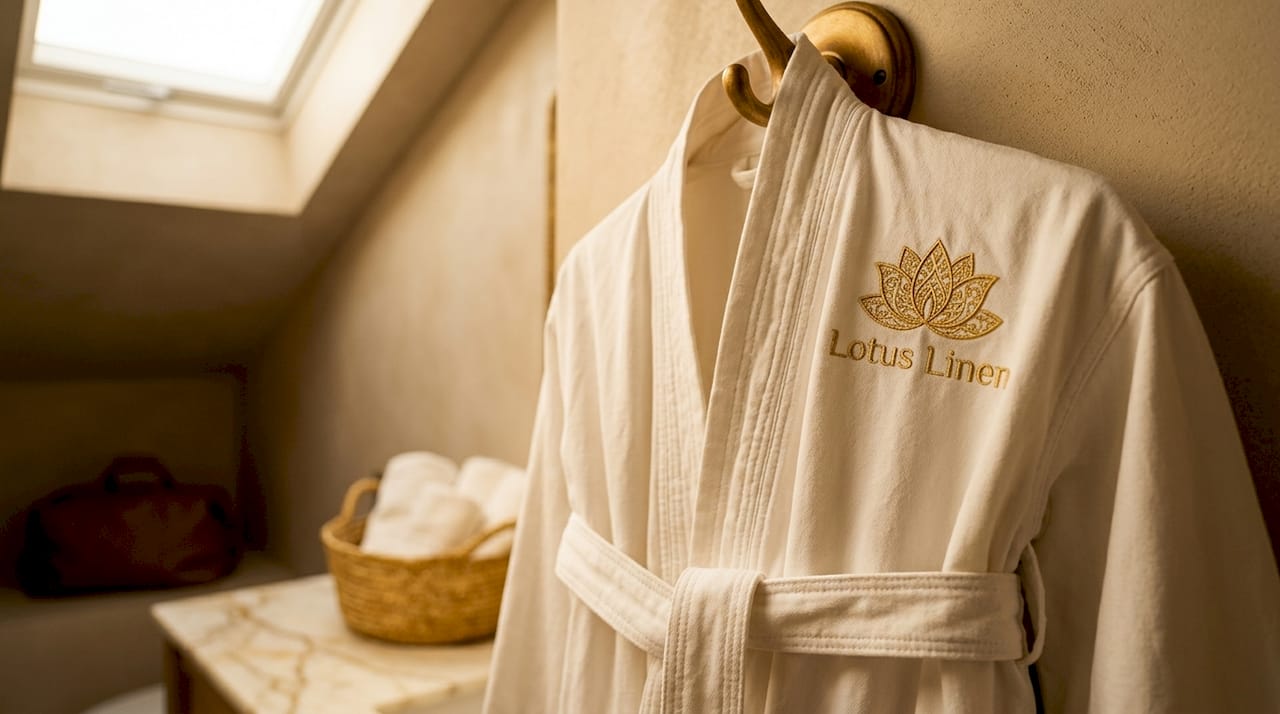
Anti-pilling technology in the fabric weave is equally critical. Pilling, those small fuzzy balls that form on the surface after washing, is the most visible sign of a robe aging poorly. Premium hospitality robes use higher-twist yarns and tighter weaves that resist this breakdown. Color retention is another marker of quality. Cheap dyes fade quickly under industrial detergents and hot water cycles, leaving robes looking gray and worn within months.
Key durability features to look for when evaluating hospitality robes:
- Double-stitched seams throughout the garment body
- Bar-tacked belt loops and pocket corners
- Anti-pilling yarn treatment in the fabric specification
- Colorfast dyes rated for commercial laundering temperatures
- Pre-shrunk fabric to maintain size consistency after repeated washing
- A minimum GSM (grams per square meter) of 400 for cotton terry in hospitality use
The operational payoff from these features is real. Microfiber robes reduce tumble dry time, leading to measurable savings in hospitality laundry services. Multiply that saving across hundreds of robes washed daily and the cost difference becomes significant over a single year.
Pro Tip: Ask suppliers for the robe’s GSM rating and industrial wash cycle rating before ordering. A legitimate premium product will have both specifications listed. If a supplier cannot provide them, treat that as a red flag.
Styles and aesthetic details that define luxury
The way a robe looks and fits is not purely cosmetic. Design decisions directly shape guest perception of quality, and by extension, their perception of your property or their own home spa experience.
The two dominant collar styles in hospitality are the shawl collar and the kimono collar. Shawl collars add warmth and coziness while giving the robe a classic, upscale silhouette guests recognize immediately as “luxury hotel.” Kimono-style robes offer a cleaner, more minimal look that suits warmer climates and properties going for a spa-forward or Asian-inspired aesthetic.
Beyond collar choice, the features that distinguish premium design include:
- Piping along edges and cuffs in a contrasting or complementary color
- Custom embroidery at the chest or cuffs for property branding or personalization
- Generous length options, typically mid-calf for women and full-length for men, to accommodate different body types
- Oversized or standard fit distinctions that affect comfort across a diverse guest base
- Coordinated belt width and length proportional to the robe’s overall size
Embroidery is worth calling out specifically because it does two jobs at once. It makes the robe feel like a personalized luxury item for the guest, and it serves as a subtle but consistent branding touchpoint. Testing of 39 robes by Travel + Leisure showed that the best robes combine plushness with resilience, confirming that guests notice and remember how a robe makes them feel.
For anyone exploring types of spa robes before making a purchase, understanding these style distinctions makes the decision much easier.
Hospitality robe benefits for guests and operators
A premium robe does something most amenities cannot. It wraps the guest in an immediate, physical experience of comfort that stays with them long after checkout. That sensory memory is a powerful driver of return visits and positive reviews. High-quality robes contribute to positive guest reviews and repeat patronage in luxury hotels and spas, which means the robe is not just a comfort item. It is a business asset.
Here is how the benefits stack up for both guests and property operators:
- Guest comfort and perceived luxury. A plush, well-fitted robe signals quality and care from the moment a guest slips it on. That first impression sets the tone for the entire stay.
- Brand identity through consistency. Every robe in your inventory that looks identical and feels consistently premium reinforces the property brand. Cheap robes that fade or pill at different rates undermine that consistency.
- Reduced replacement frequency. A robe engineered for commercial laundering lasts significantly longer than a consumer-grade equivalent. Fewer replacements directly reduce annual linen budgets.
- Energy and labor cost savings. Faster-drying fabrics like microfiber blends cut drying time, reducing both energy consumption and labor hours in the laundry cycle.
- Upsell and retail opportunity. Many properties now sell their branded robes to guests who want to bring the experience home. A robe that holds up to scrutiny can become a genuine revenue stream.
Understanding how bathrobes elevate guest experience in ways most operators underestimate is one of the most overlooked ROI conversations in hospitality purchasing.
Selecting and caring for your premium robe
Knowing what defines a premium robe is only half the equation. Buying smart and maintaining the robe correctly determines whether that investment pays off over months or years.
Follow this process when evaluating robes for personal or commercial purchase:
- Check the fabric specification. Request the GSM, fiber content percentage, and any treatment certifications. A GSM of 400 to 500 is ideal for hotel-weight cotton terry. Lower than 350 is consumer grade.
- Inspect the stitching before ordering samples. Look at belt loops, pocket corners, and underarm seams. These are the first failure points. Double stitching and bar-tacking should be visible.
- Match the fabric to the intended use. A resort pool area benefits from fast-drying microfiber. A cold-climate mountain lodge calls for heavyweight cotton terry or a fleece blend.
- Order samples before bulk purchasing. This is standard practice for hospitality buyers but often skipped by personal shoppers. Wash the sample three times before judging its final texture and color.
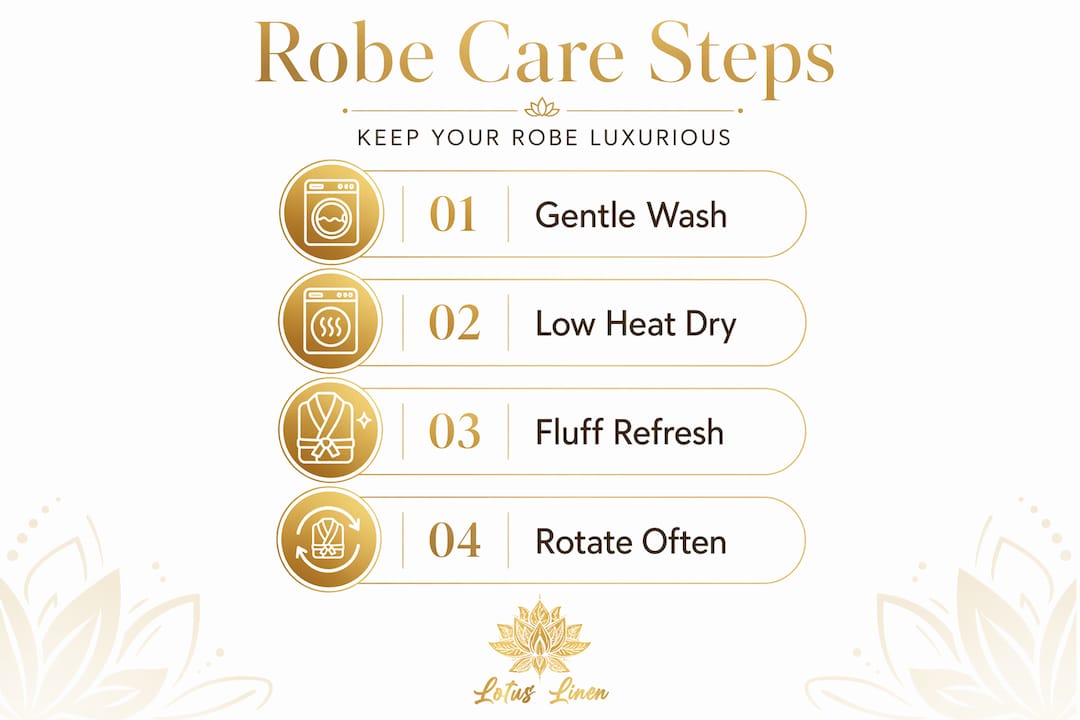
- Follow laundering specifications exactly. Proper laundering with gentle detergents minimizes shrinkage, pilling, and dulling. Hot water and harsh detergents are the single fastest way to shorten a premium robe’s life.
For home use, machine washing on a gentle warm cycle and tumble drying on low heat preserves the softness and structure that make these robes worth buying in the first place. Avoid fabric softeners with cotton terry robes because softeners coat the fibers and reduce absorbency over time.
Pro Tip: If you want to refresh the plushness of a cotton terry robe that has gone flat, throw it in the dryer with two clean tennis balls and run it on low heat for 20 minutes. The balls break up compressed fibers and restore loft without washing.
My take on what premium really means
By Oguzhan
I have spent years working with premium bath and loungewear, and the one thing that consistently surprises buyers is how often they conflate “expensive” with “premium.” They are not the same thing.
The robes that genuinely earn the premium label are the ones engineered to be both comfortable for the guest and reliable for the operator. I have seen properties invest in visually beautiful robes that disintegrate after forty wash cycles. The guest experience they were trying to create actually suffered because inconsistent quality was more damaging than a slightly less plush but consistent product.
What I have learned is that durability and comfort are not competing priorities. The best manufacturers solved this problem years ago with dual-layer construction and high-twist yarns. The challenge is that buyers often cannot see this quality in a product photo or a quick feel test in a showroom. You have to ask the right questions: GSM, wash cycle rating, stress-point reinforcement.
I also think people underestimate what a robe communicates to a guest on a psychological level. It is one of the few amenities that literally envelops the guest. That physicality makes it disproportionately powerful in shaping how comfortable and valued a person feels. A great robe does not just keep you warm. It tells you that someone thought carefully about your comfort. That is the real return on investment, and it shows up in reviews and repeat bookings in ways that are genuinely measurable.
Invest in the robe. Ask hard questions before you buy. And maintain it correctly so the investment holds.
— Oguzhan
Explore premium robes from Shoplotuslinen
If you have spent time thinking about what a premium hospitality robe should actually deliver, Shoplotuslinen makes that decision straightforward.
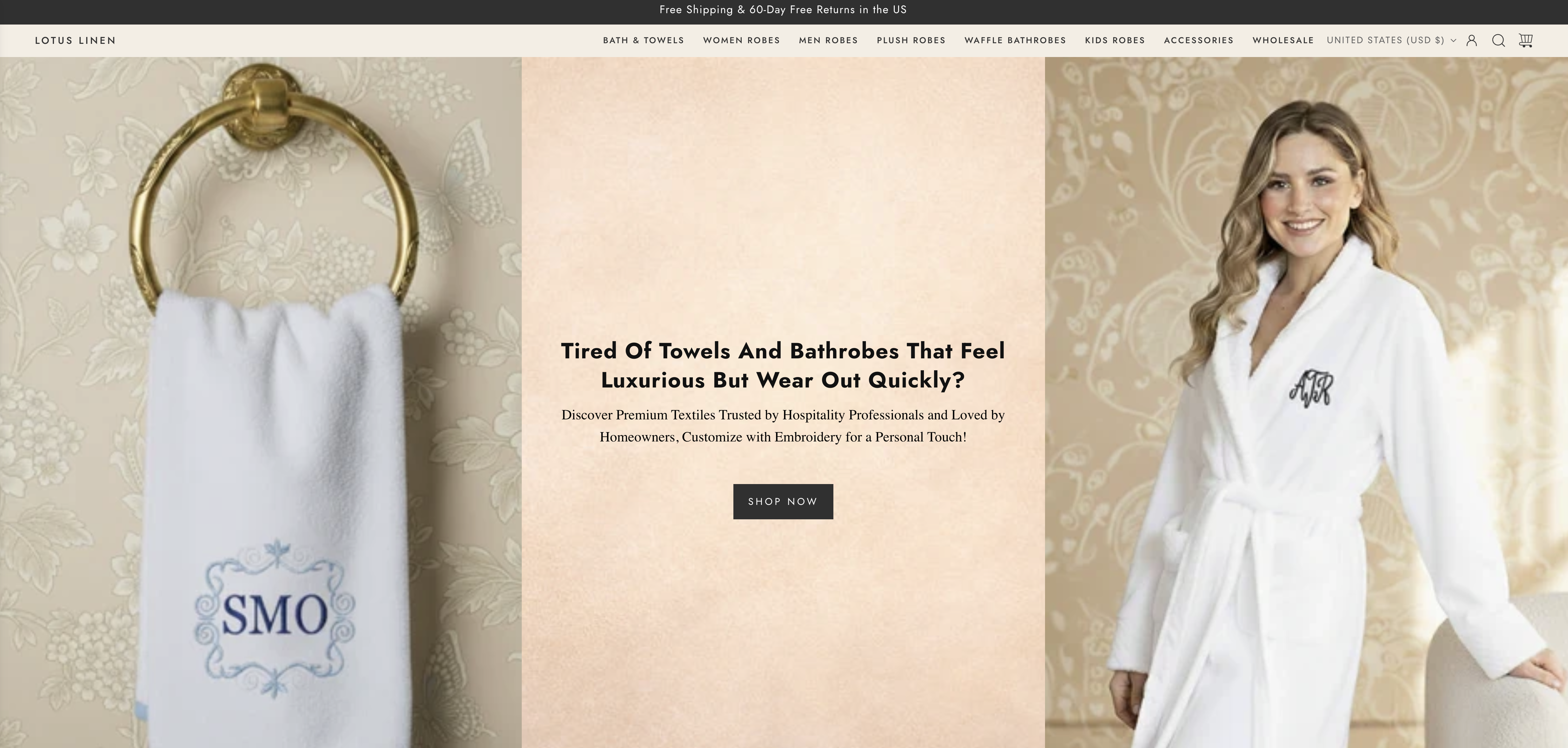
Shoplotuslinen’s personalized robes for men are built with the same principles this article covers: quality fabrics, reinforced construction, and customization options that make each robe feel personal and intentional. Whether you are a home spa enthusiast wanting to recreate a five-star experience or a hospitality buyer sourcing for a property, the customization options from monograms to embroidered logos give you exactly what you need.
Pair a premium robe with Shoplotuslinen’s luxury scallop bath towels to complete the experience. The elegant piping detail and quick-dry construction complement any premium robe and bring the full spa-quality feel together. For anyone building a home spa upgrade or restocking a hospitality linen program, this combination delivers real value with lasting quality.
FAQ
What makes a hospitality robe “premium”?
A premium hospitality robe combines high-quality fabric (typically 400 to 500 GSM cotton terry or a microfiber/fleece blend) with reinforced construction at stress points and commercial-grade laundering resilience. The distinction from a standard robe is both sensory and structural.
What fabric is used in the best hospitality robes?
The best hospitality robes use cotton terry, microfiber, fleece, or dual-layer blends depending on the setting. Dual-layer microfiber and fleece construction is increasingly preferred in high-volume properties because it balances softness with fast drying times.
How long should a premium hospitality robe last?
A properly constructed and maintained premium robe should withstand hundreds of commercial wash cycles without significant degradation in softness, color, or structure. Following manufacturer laundering instructions with gentle detergents is the most reliable way to maximize lifespan.
Can I buy premium hospitality robes for personal home use?
Absolutely. Many individuals buy hospitality-grade robes specifically because the durability and comfort exceed what consumer-grade robes offer. Brands like Shoplotuslinen offer premium robes with comfort and style designed for both home and commercial settings.
What is the difference between a shawl collar and a kimono robe?
A shawl collar robe features a wide, rounded lapel that folds around the neck for warmth and a classic luxury look. A kimono robe has a flat, open collar with a simpler silhouette, making it better suited to warmer climates or minimalist spa aesthetics.

