
TL;DR:
- Luxury bathing is a multisensory wellness practice that promotes relaxation and reduces stress through controlled temperature and ritualized environments.
- Consistent sensory cues in a properly prepared environment condition the nervous system for relaxation and improve mental and physical health.
Luxury bathing is defined as a deliberate, multisensory wellness practice that engages the body and mind through controlled temperature, curated materials, and ritualized sensory environments. The role of bath luxury in wellness goes far beyond hygiene. Research confirms that thermal immersion reduces cortisol, relieves musculoskeletal pain, and conditions the parasympathetic nervous system into a learned relaxation response. When you pair those physiological effects with spa-worthy linens, ambient lighting, and consistent ritual cues, the bath becomes one of the most accessible and evidence-backed self-care tools available. Shoplotuslinen was built around exactly this idea: that what surrounds you in the bath matters as much as the water itself.
What is the role of bath luxury in wellness?
Luxury bathing functions as a form of somatic therapy, meaning it works through the body rather than through conscious thought. That distinction matters. Bathing induces somatic relaxation that bypasses the cognitive effort required in traditional mindfulness or meditation. For anyone who has ever tried to meditate with a racing mind, the bath offers a gentler, body-first path to calm.
The wellness industry recognizes this under the broader term “balneotherapy,” which refers to therapeutic bathing using water temperature, minerals, and immersion duration as active treatment variables. Luxury bathing builds on balneotherapy by adding environmental and sensory layers: premium fabrics, scent, lighting, and ritual timing. Each layer amplifies the physiological baseline.
Shoplotuslinen’s spa-worthy philosophy starts from this premise. The products you reach for after stepping out of the water, including plush robes and scallop piping towels, are not accessories. They are part of the therapeutic arc. The benefits of bath time extend well past the tub when the environment supports them.
How does thermal immersion in a luxury bath support physical and mental health?
Water temperature is the most studied variable in therapeutic bathing, and the research is specific. Optimal wellness benefits occur within a water temperature of 38°C–40°C (100°F–104°F) and an immersion time of 15–20 minutes. Exceeding those parameters causes physiological strain rather than relief.
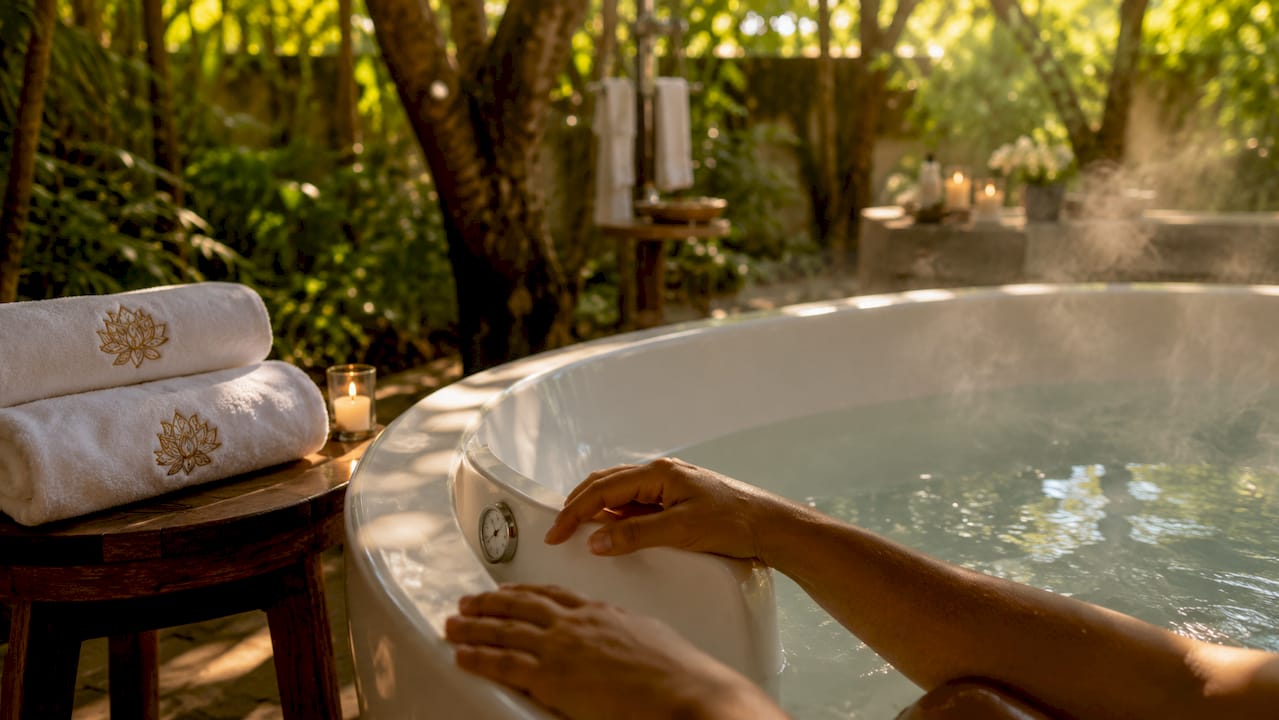
The pain relief data is striking. A meta-analysis found that water immersion therapy at 37°C–40°C significantly reduces pain in musculoskeletal disorders, with a standardized mean difference of -1.08 (P < 0.0001). That effect size is clinically meaningful. It places regular warm baths in the same conversation as physical therapy for chronic pain management.
The stress reduction evidence is equally strong. A randomized controlled trial showed that thermal water immersion modulates the hypothalamic-pituitary-adrenal axis, reducing salivary cortisol with medium to large effect sizes (p < 0.05). In plain terms, a warm bath measurably lowers your body’s primary stress hormone.
Key physical and mental benefits of controlled thermal immersion include:
- Pain relief: Significant reduction in musculoskeletal pain with sessions three times weekly
- Stress reduction: Lower cortisol levels through HPA axis modulation
- Sleep priming: A 90-minute post-bath buffer before bedtime triggers melatonin release through the body’s natural cooling process
- Somatic relaxation: Body-level calm that works even when the mind resists meditation
- Nervous system conditioning: Repeated ritual cues train the parasympathetic system over 2–3 weeks
Pro Tip: Take your bath 90 minutes before your target sleep time, not right before bed. The body’s rapid cooling after leaving the water is what signals melatonin release and deepens sleep onset.
What environmental and sensory elements define luxury bathing for wellness?
The environment surrounding the bath determines whether the experience registers as therapeutic or merely functional. A study of 450 spa customers found that spa facility experience directly precedes positive emotional outcomes and well-being. The quality of the space, not just the water, shapes the result.
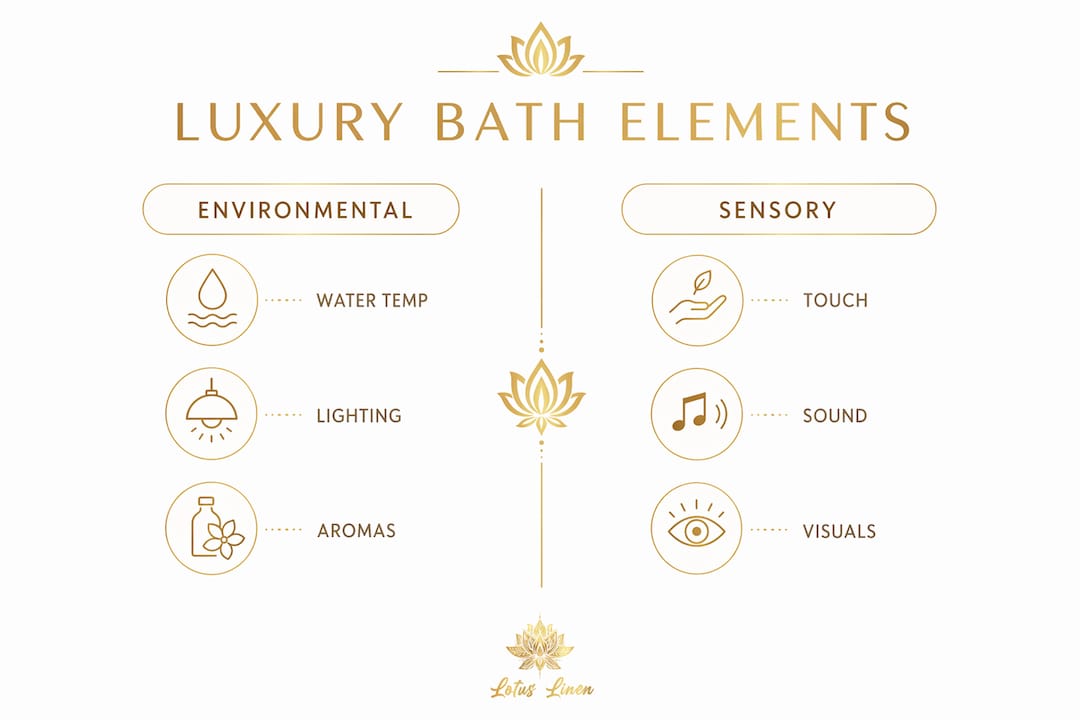
Four sensory categories carry the most weight:
- Materials: Stone, cast iron, and dense cotton fabrics retain heat and provide proprioceptive comfort. A plush robe waiting on the hook signals safety before you even step in.
- Lighting: Soft, warm light reduces visual cortical arousal. Overhead fluorescents actively work against relaxation.
- Scent: Olfactory input reaches the limbic system faster than any other sense. Lavender, eucalyptus, and bergamot have documented calming effects. Choose bath products with intention, not habit.
- Order: A tidy, organized bathroom reduces background cognitive load. Clutter competes for attention and keeps the nervous system alert.
“Wellness rituals prioritize predictable sensory experience over complexity. Simple, consistent routines anchor the nervous system and build a genuine sense of self-worth over time.” — Psychology of Beauty Rituals
Consistency across these sensory cues is what separates a pleasant bath from a therapeutic one. The nervous system learns to associate the combination of warm light, a specific scent, and the weight of a spa-worthy towel with safety. That learned association is what makes the ritual work faster and deeper over time. Exploring bathroom relaxation tips that address each sensory layer is a practical starting point.
How can you incorporate luxury bathing rituals into everyday self-care?
Building a bath ritual that delivers consistent wellness benefits requires structure, not spontaneity. Consistent timing and sensory cues condition the parasympathetic nervous system into a learned relaxation response after just 2–3 weeks. The ritual trains the body before the water even runs.
Follow this sequence to build a ritual that compounds over time:
- Set a fixed time. Choose the same window each day or evening. Predictability is the mechanism, not the mood.
- Prepare the environment first. Dim the lights, set out your towel and robe, and add your chosen scent before starting the water. The preparation itself begins the nervous system shift.
- Fill to temperature. Target 100°F–104°F. Use a simple bath thermometer if you are new to this. Guessing leads to water that is too hot or too cool to deliver the therapeutic window.
- Immerse for 15–20 minutes. Set a timer and resist the urge to scroll. The bath works through stillness and sensation, not distraction.
- Transition with intention. Wrap yourself in a plush bath sheet immediately after stepping out. The warmth retention matters. Cold air after a hot bath disrupts the somatic calm you just built.
- Layer your post-bath routine. Apply body oil or lotion while your skin is still warm. Put on a robe. Give yourself 10 minutes before re-engaging with screens or demands.
The linens you use in steps 5 and 6 are not trivial. Shoplotuslinen’s scallop piping towel sets are designed to hold warmth and provide the kind of tactile comfort that extends the parasympathetic state past the tub. Personalization through custom embroidery adds another layer of ritual ownership. When a towel has your name on it, it signals that this time belongs to you.
Pro Tip: Add a personalized robe to your post-bath routine. The act of putting on something that is specifically yours reinforces the psychological boundary between bath time and the rest of your day.
The role of towels in wellness is often underestimated. The fabric you reach for first shapes the emotional landing of the entire experience.
What distinguishes a wellness bath from a casual soak?
The difference is intentionality, and it shows up in measurable outcomes. Warm baths provide a sanctuary from external demands that aids mental health through boundary-setting and sensory redirection. A casual soak does not create that boundary. It is reactive, unstructured, and often cut short.
A wellness bath is defined by three qualities a casual soak lacks: controlled parameters, consistent ritual cues, and a protected transition period afterward. Each quality serves a specific physiological function.
| Element | Casual soak | Wellness ritual |
|---|---|---|
| Water temperature | Unmonitored, often too hot | 100°F–104°F, timed |
| Duration | Variable, distracted | 15–20 minutes, screen-free |
| Sensory environment | Default lighting, no scent | Dim light, chosen scent, tidy space |
| Post-bath transition | Immediate re-engagement | 10-minute buffer, robe, body care |
| Nervous system effect | Minimal conditioning | Learned parasympathetic response over weeks |
| Mental health outcome | Temporary comfort | Sustained mood stabilization and self-worth |
The nervous system cannot distinguish between a bath taken out of habit and one taken with intention unless the sensory cues are consistent. Ritual predictability is the signal. Without it, the body stays partially alert, waiting for the next demand. With it, relaxation becomes automatic. That is the core insight behind bathrobe self-care as a wellness practice, not just a comfort habit.
Key Takeaways
Luxury bathing delivers measurable wellness benefits through thermal immersion, consistent sensory ritual, and spa-worthy materials that together train the nervous system into a reliable relaxation response.
| Point | Details |
|---|---|
| Temperature precision matters | Keep bath water at 100°F–104°F for 15–20 minutes to maximize pain relief and stress reduction. |
| Ritual consistency builds response | Repeating the same sensory cues for 2–3 weeks conditions the parasympathetic nervous system to relax on cue. |
| Environment shapes outcomes | Lighting, scent, and material quality directly precede positive emotional and well-being results. |
| Post-bath transition is part of the ritual | A 10-minute buffer with a plush robe and body care extends the therapeutic state past the tub. |
| Sleep timing is specific | Bathing 90 minutes before bed leverages the body’s cooling process to deepen sleep onset naturally. |
Why I think most people are missing the real point of a luxury bath
People often ask me what makes a bath “luxury.” They expect me to talk about products. I always redirect to intention.
I have watched customers at Shoplotuslinen go from buying a single towel to building an entire evening ritual around it. The towel did not change their life. The ritual did. The towel just made the ritual feel worth protecting.
What I have learned from years of working in this space is that the bath is one of the few places where the body gets to lead. No agenda, no output, no performance. The wellness benefits of bathing that research keeps confirming are not accidents. They are what happens when you stop treating the bath as a transition between tasks and start treating it as the task itself.
The customers who get the most from their bath rituals are not the ones with the most expensive products. They are the ones who protect the time, control the environment, and follow through on the post-bath transition. A spa-worthy towel or a personalized robe matters because it signals to your own nervous system that this moment is real and it belongs to you.
My honest advice: start with the ritual structure, then invest in the materials. In that order. The structure gives the materials meaning. Without it, even the softest robe is just fabric.
— Oguzhan
Shoplotuslinen’s spa-worthy bath collection
Shoplotuslinen’s bath linens are built for people who take their wellness rituals seriously.

The ultra-soft bath towels with scallop piping are designed to hold warmth and provide the tactile comfort that extends relaxation past the tub. The oversized bath sheets wrap you fully, giving the post-bath transition the weight and warmth it needs to work. Every piece is available with custom embroidery, so your ritual feels personal from the first touch. Whether you are building a daily self-care practice or creating a spa-worthy bathroom at home, Shoplotuslinen has the linens to anchor it. Explore the full collection and find the pieces that make your ritual feel like yours.
FAQ
What water temperature is best for a wellness bath?
The optimal range for therapeutic bathing is 100°F–104°F (38°C–40°C), with an immersion time of 15–20 minutes. Exceeding this range causes physiological strain rather than relaxation.
How long does it take to build a bath ritual that works?
Research shows the parasympathetic nervous system develops a conditioned relaxation response after 2–3 weeks of consistent sensory cues. Repeating the same ritual at the same time each day accelerates this process.
Can a luxury bath replace meditation for stress relief?
Bathing induces somatic relaxation that bypasses the cognitive effort required in meditation, making it especially effective for people with racing thoughts or trauma. It is not a replacement but a body-first alternative that produces measurable cortisol reduction.
Does the quality of bath linens actually affect wellness outcomes?
Yes. Research on spa facility experience shows that environment quality and accessory quality directly precede positive emotional and well-being outcomes. The materials you use in the post-bath transition are part of the therapeutic experience, not separate from it.
When is the best time to take a wellness bath for sleep?
Taking a warm bath 90 minutes before your target sleep time allows the body’s natural cooling process to trigger melatonin release, which deepens sleep onset and improves overall sleep quality.

