
Declining linen quality is a persistent challenge for spa owners, often caused by improper washing and handling practices. Specialized care protocols are essential because spa linens endure frequent use and exposure to oils, lotions, and moisture that regular linens do not. This guide provides practical, fabric-specific techniques to maintain hygiene, preserve softness, and extend linen lifespan while reducing replacement costs and enhancing guest satisfaction.
Table of Contents
- Introduction To Spa Linen Care
- Prerequisites: Tools, Knowledge, And Conditions Before Starting Spa Linen Care
- Step 1: Sorting And Pre-Cleaning Preparation
- Step 2: Washing, Detergents, Temperature, And Techniques
- Step 3: Drying Methods And Best Practices
- Step 4: Storage And Handling Of Spa Linens
- Common Mistakes And Troubleshooting In Spa Linen Care
- Expected Results And Benefits From Proper Spa Linen Care
- Enhance Your Spa Experience With Premium Linen Products
- FAQ
Key takeaways
| Point | Details |
|---|---|
| Sorting and pre-treatment | Separate linens by color and fabric type, pre-treat stains immediately to prevent damage and improve wash effectiveness. |
| Optimal washing protocol | Wash at 60°C to kill over 99.9% of microbes using low-alkaline, bleach-free detergents to balance hygiene and fabric integrity. |
| Drying techniques | Air dry delicate robes to reduce shrinkage; use controlled machine drying for towels while avoiding overdrying above 70°C. |
| Avoid fabric softeners | Fabric softeners reduce absorbency by up to 25%; use antimicrobial rinses instead to maintain towel performance. |
| Long-term benefits | Proper care reduces fiber degradation by 30%, extends linen lifespan, and saves spas up to 20% annually in replacement costs. |
Introduction to spa linen care
Spa linens face unique challenges that standard hospitality linens do not encounter. These fabrics endure constant exposure to body oils, massage lotions, essential oils, and moisture from steam rooms and saunas. Without specialized care protocols, this exposure accelerates fiber breakdown, causes persistent odors, and creates hygiene risks that compromise guest comfort and safety.
High-quality linen care directly impacts your spa’s reputation and operational efficiency. When towels lose absorbency or robes develop stiff textures, guest satisfaction declines noticeably. Proper care protocols balance three critical needs: maintaining exceptional softness, ensuring rigorous hygiene standards, and maximizing linen lifespan to control replacement costs.
The financial impact of improper care is substantial. Premature fabric deterioration forces frequent replacements, increasing operational expenses by 15 to 30% annually. Implementing spa-specific washing, drying, and storage protocols prevents this waste while preserving the luxurious feel guests expect.
Key considerations for spa linen care include:
- Understanding fabric composition and manufacturer care requirements for robes, towels, and wraps
- Recognizing how oils and lotions penetrate fibers differently than standard soil
- Establishing temperature and detergent protocols that prioritize both hygiene and fabric preservation
- Training staff on consistent sorting and handling procedures to prevent cross-contamination
- Creating storage conditions that inhibit microbial growth between uses
Prerequisites: tools, knowledge, and conditions before starting spa linen care
Effective spa linen care requires proper equipment, knowledge, and environmental preparation before washing begins. Commercial-grade washers with precise temperature controls are essential because washing at 60°C kills over 99.9% of microbes without damaging delicate fibers. Standard residential machines lack this precision and capacity.
Understanding fabric types guides treatment decisions. Cotton terry towels tolerate higher temperatures and agitation than bamboo or microfiber blends. Waffle weave robes require gentler cycles than plush varieties. Always review manufacturer care labels before processing new linen batches.
Detergent selection critically affects outcomes. Low-alkaline, bleach-free formulas designed for hospitality linens clean effectively without the fiber degradation caused by harsh chemicals. Pair these with antimicrobial rinse agents to prevent biofilm formation that traps odors and bacteria.
Essential equipment and supplies:
- Commercial washer with programmable temperature settings from 40°C to 70°C
- Commercial dryer with moisture sensors to prevent overdrying
- Low-alkaline detergent formulated for delicate fabrics
- Antimicrobial rinse aid compatible with your water hardness level
- Enzyme-based pre-treatment spray for oil and lotion stains
- Color-coded sorting bins to prevent mixing whites, lights, and darks
- Clean, breathable storage shelving away from direct sunlight
| Equipment Type | Key Features | Purpose |
|---|---|---|
| Commercial Washer | Temperature control 40-70°C, large capacity | Ensures proper hygiene while preserving fabrics |
| Commercial Dryer | Moisture sensors, adjustable heat | Prevents overdrying and fiber damage |
| Low-Alkaline Detergent | pH balanced, bleach-free | Cleans without degrading delicate fibers |
| Antimicrobial Rinse | Biofilm prevention | Inhibits bacterial growth and odor |
| Sorting System | Color-coded bins | Prevents staining and cross-contamination |
Laundry room conditions matter significantly. Ensure proper ventilation to reduce humidity that promotes mildew growth on stored linens. Maintain room temperature between 18°C and 24°C for optimal fabric storage. Install adequate lighting for staff to inspect linens for damage or stains during sorting.
Step 1: sorting and pre-cleaning preparation
Proper sorting prevents color transfer, fabric damage, and inefficient cleaning. Establish a systematic approach that separates linens by color, fabric type, and soil level before washing begins. This foundational step determines wash cycle effectiveness and fabric preservation.
Start by separating whites from colored linens completely. Even small amounts of color bleeding cause permanent discoloration on white towels and robes. Within each color group, further divide by fabric weight and texture: heavy terry towels separate from lightweight waffle robes.
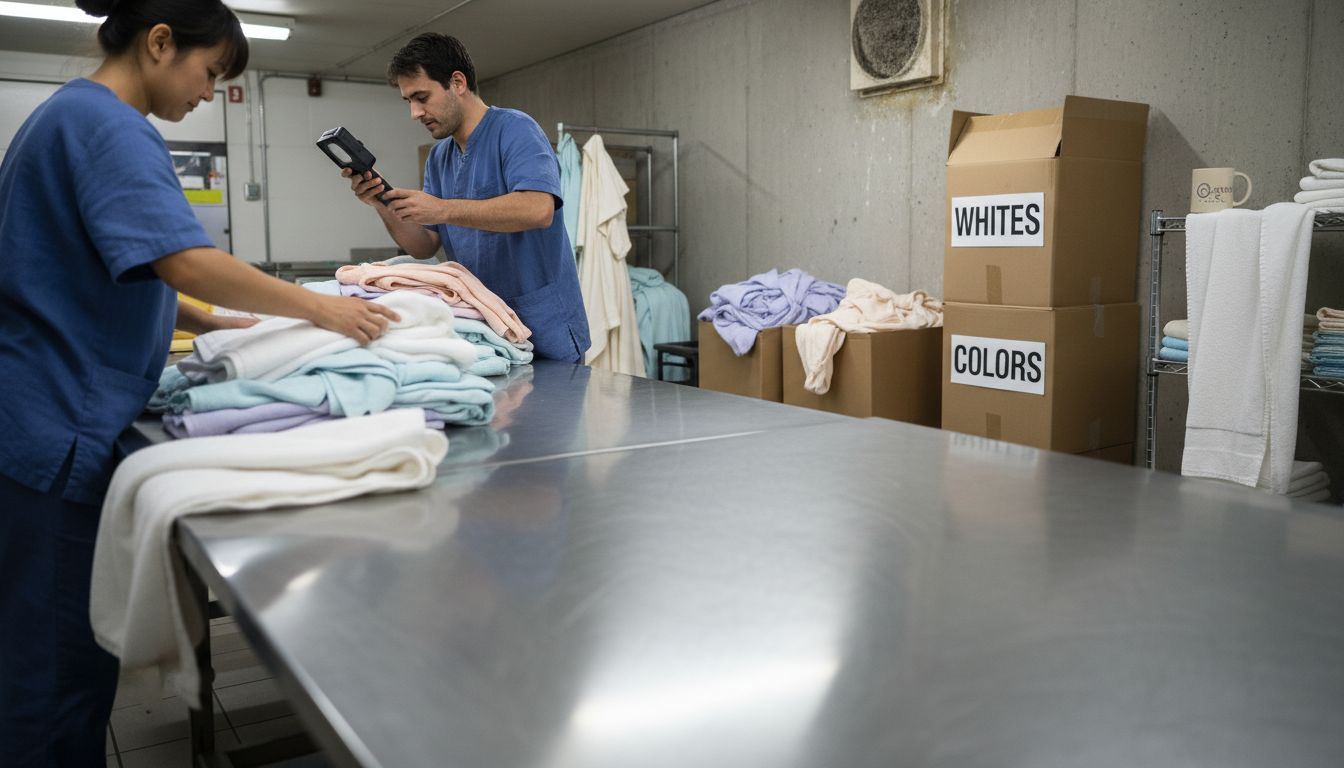
Soil level sorting optimizes wash efficiency. Heavily soiled linens from massage rooms require longer wash cycles and stronger agitation than lightly used reception area towels. Mixing these categories wastes water, energy, and cleaning agents while potentially under-cleaning heavily soiled items.
Pre-treatment significantly improves stain removal success. Address oil-based stains from massage oils and lotions immediately with enzyme-based cleaners. Spray directly on stained areas and allow five to ten minutes of dwell time before washing. For tips on arranging bath linens systematically, consider color-coding by treatment room.
Sorting protocol steps:
- Remove all debris, hair, and product residue from linens before sorting
- Inspect each item for stains requiring pre-treatment
- Separate whites into dedicated bins, checking carefully for any colored items
- Divide colored linens by hue: lights, mediums, and darks
- Further categorize by fabric type within each color group
- Apply enzyme-based pre-treatment to visible oil, lotion, or makeup stains
- Allow pre-treatment products to dwell for five to ten minutes
- Load washers without exceeding 80% capacity for proper agitation
Staff training prevents costly sorting errors. Create visual guides showing correct color and fabric categories. Implement a double-check system where a second staff member verifies sorting before washing begins.
Step 2: washing, detergents, temperature, and techniques
Washing protocols balance hygiene requirements with fabric preservation. Temperature selection is critical: washing at 60°C effectively kills microbes while minimizing fiber damage that occurs at higher temperatures. This temperature eliminates over 99.9% of bacteria, viruses, and fungi without the fabric stress caused by 90°C industrial cycles.
Detergent choice dramatically impacts linen longevity. Low-alkaline formulas designed for hospitality applications clean effectively without the harsh pH levels that degrade natural fibers. Avoid chlorine bleach completely as it weakens cotton fibers and yellows whites over time. Oxygen-based alternatives provide sanitization without structural damage.
Fabric softeners present a hidden problem for spa towels. These products coat fibers with waxy residues that reduce absorbency by approximately 25%, defeating the primary purpose of bath linens. The bath linen hygiene guide emphasizes this issue as a leading cause of guest complaints about ineffective towels.
Antimicrobial rinse aids offer superior benefits without absorbency loss. These specialized products prevent biofilm formation in fabric fibers, inhibiting bacterial growth and odor development between washes. Select products compatible with your local water hardness for optimal performance.
Washing best practices:
- Set water temperature to 60°C for all spa linens except those with specific lower-temperature requirements
- Use detergent quantities according to manufacturer recommendations based on load size and water hardness
- Select gentle or delicate wash cycles for robes and wraps to reduce mechanical stress
- Choose normal cycles with moderate agitation for terry towels and washcloths
- Add antimicrobial rinse during the final rinse cycle according to product instructions
- Run an extra rinse cycle if detergent residue remains visible or detectable
- Avoid overloading washers; maintain 20% free space for proper agitation and rinsing
Pro Tip: Test new detergent formulas on a small linen batch before full implementation. Monitor for any adverse reactions, residue buildup, or changes in fabric texture over three wash cycles.
Cycle duration varies by soil level and fabric type. Heavily soiled massage linens benefit from extended wash times of 45 to 60 minutes. Lightly used reception area towels clean adequately in 30 to 40 minute cycles. Adjust based on water quality and specific soil challenges in your facility.
Step 3: drying methods and best practices
Drying method selection significantly impacts fabric lifespan and texture. Air drying offers the gentlest approach, reducing shrinkage by approximately 5% compared to machine drying. However, air drying increases drying time by 40 to 60%, creating operational challenges for high-volume spas with limited linen inventory.
Machine drying provides efficiency but requires careful temperature control. Overdrying at high heat increases fiber damage by 15 to 20%, accelerating wear and reducing softness. Modern commercial dryers with moisture sensors prevent this issue by automatically stopping cycles when linens reach optimal dryness.
Temperature limits protect fabric integrity. Never exceed 70°C for any spa linen. Delicate robes and wraps perform best at 50°C to 60°C. Terry towels tolerate up to 70°C but benefit from lower settings that preserve fiber elasticity and softness over hundreds of wash cycles.
For guidance on towel drying techniques that maintain fluffiness, consider hybrid approaches combining brief machine drying with air finishing.
| Drying Method | Shrinkage Risk | Time Required | Best For | Fiber Preservation |
|---|---|---|---|---|
| Air Drying | 5% lower than machine | 40-60% longer | Delicate robes, specialty fabrics | Excellent |
| Machine (50-60°C) | Moderate | Standard | Robes, lightweight towels | Good |
| Machine (60-70°C) | Higher | Fastest | Heavy terry towels | Fair if not overdried |
| Hybrid (brief machine + air) | Low | Moderate | All linen types | Very good |
Drying best practices:
- Sort linens by fabric weight before drying; heavy and light items dry at different rates
- Set dryer temperature based on fabric type: 50 to 60°C for robes, up to 70°C for towels
- Use moisture sensor settings instead of timed cycles to prevent overdrying
- Remove linens promptly when cycle completes to minimize wrinkles
- Shake out towels and robes before loading to promote even drying and fluffiness
- Avoid overloading dryers; maintain 30% free space for proper air circulation
- For external guidance on drying methods, review textile preservation research
Pro Tip: Schedule air drying overnight for delicate robes during low-demand periods. This preserves fabric quality while maintaining adequate inventory rotation during peak hours.
Monitor dryer performance monthly. Clogged lint filters and exhaust vents reduce efficiency and increase drying temperatures, causing unintended fiber damage. Clean filters after every load and schedule professional vent cleaning quarterly.
Step 4: storage and handling of spa linens
Post-cleaning storage conditions determine how long linens maintain freshness and quality between uses. Store all spa linens in cool, dry environments away from direct sunlight to prevent discoloration and microbial growth. Temperature ranges between 18°C and 24°C with relative humidity below 60% provide optimal conditions.
Humidity control is essential. Damp storage areas promote mildew and bacterial growth that cause musty odors and hygiene issues. Install dehumidifiers in storage rooms if natural ventilation proves insufficient. Monitor humidity levels weekly with simple hygrometers.
Lighting affects fabric longevity. Prolonged exposure to natural or fluorescent light causes whites to yellow and colors to fade. Store linens in closed cabinets or use UV-filtering covers on open shelving. If natural light enters storage areas, install blackout shades.
Proper handling prevents contamination between cleaning and guest use. Staff should wash hands thoroughly or wear clean gloves when folding and shelving linens. Designate specific carts for clean linen transport separate from soiled linen collection carts. For comprehensive towel care instructions, review handling protocols that preserve cleanliness.
Storage best practices:
- Use breathable cotton or mesh storage bags instead of plastic containers that trap moisture
- Arrange shelving to allow air circulation on all sides of folded linen stacks
- Maintain at least five centimeters of space between linen stacks and walls
- Implement first-in, first-out rotation to ensure even wear across inventory
- Label shelves by linen type and date received for easy rotation tracking
- Keep storage areas clean with weekly dusting and monthly deep cleaning
Pro Tip: Rotate linen stock every two weeks even during slow periods. This practice prevents permanent creasing and ensures all inventory receives equal use, maximizing total lifespan.
Inventory rotation prevents uneven wear patterns. Linens stored at the front of shelves receive more frequent use while back stock sits unused, creating quality inconsistencies guests notice. Weekly rotation equalizes wear across your entire inventory. Additional towel softness maintenance tips emphasize rotation as crucial for preserving texture.
Common mistakes and troubleshooting in spa linen care
Recognizing and correcting care errors prevents costly damage and maintains linen quality. The most common mistake is mixing white and colored linens during washing, which causes irreversible staining through dye transfer. Even a single colored item can discolor an entire load of white towels. Maintain strict sorting discipline.
Fabric softener overuse represents another frequent error. Despite marketing claims about softness benefits, these products reduce towel absorbency by coating fibers with hydrophobic residues. Guests notice immediately when towels fail to dry skin effectively. Eliminate fabric softeners completely from spa linen care.
Overdrying damages fibers progressively with each cycle. Overdrying at high heat increases fiber damage by 15 to 20%, causing roughness, shrinkage, and premature wear. Invest in dryers with moisture sensors to prevent this expensive mistake.
Ignoring fabric-specific care instructions leads to preventable damage. Waffle robes require gentler treatment than terry towels. Bamboo blends need lower temperatures than pure cotton. Review and follow manufacturer guidelines for every linen type in your inventory. Common robe cleaning mistakes include using excessive heat and harsh detergents.
Improper storage creates hygiene issues that undermine careful washing protocols. Storing linens in humid, poorly ventilated areas promotes mildew growth and odor development. Even perfectly cleaned linens develop problems when storage conditions allow microbial contamination.
Frequent care errors:
- Failing to pre-treat oil and lotion stains before washing, allowing them to set permanently
- Using chlorine bleach on colored linens, causing fading and fiber weakening
- Overloading washers beyond 80% capacity, preventing proper cleaning and rinsing
- Skipping regular equipment maintenance, reducing wash and dry performance
- Storing clean linens near soiled linen collection areas, risking cross-contamination
- Purchasing low-quality linens that deteriorate quickly despite proper care
For guidance on avoiding purchase decisions that create care challenges, consult the towel buying mistakes guide before investing in new inventory.
Expected results and benefits from proper spa linen care
Implementing comprehensive care protocols delivers measurable improvements in linen lifespan, cost efficiency, and guest satisfaction. Proper washing, drying, and storage techniques reduce fiber degradation by up to 30% over 50 wash cycles compared to standard practices. This preservation translates directly into extended usable life.
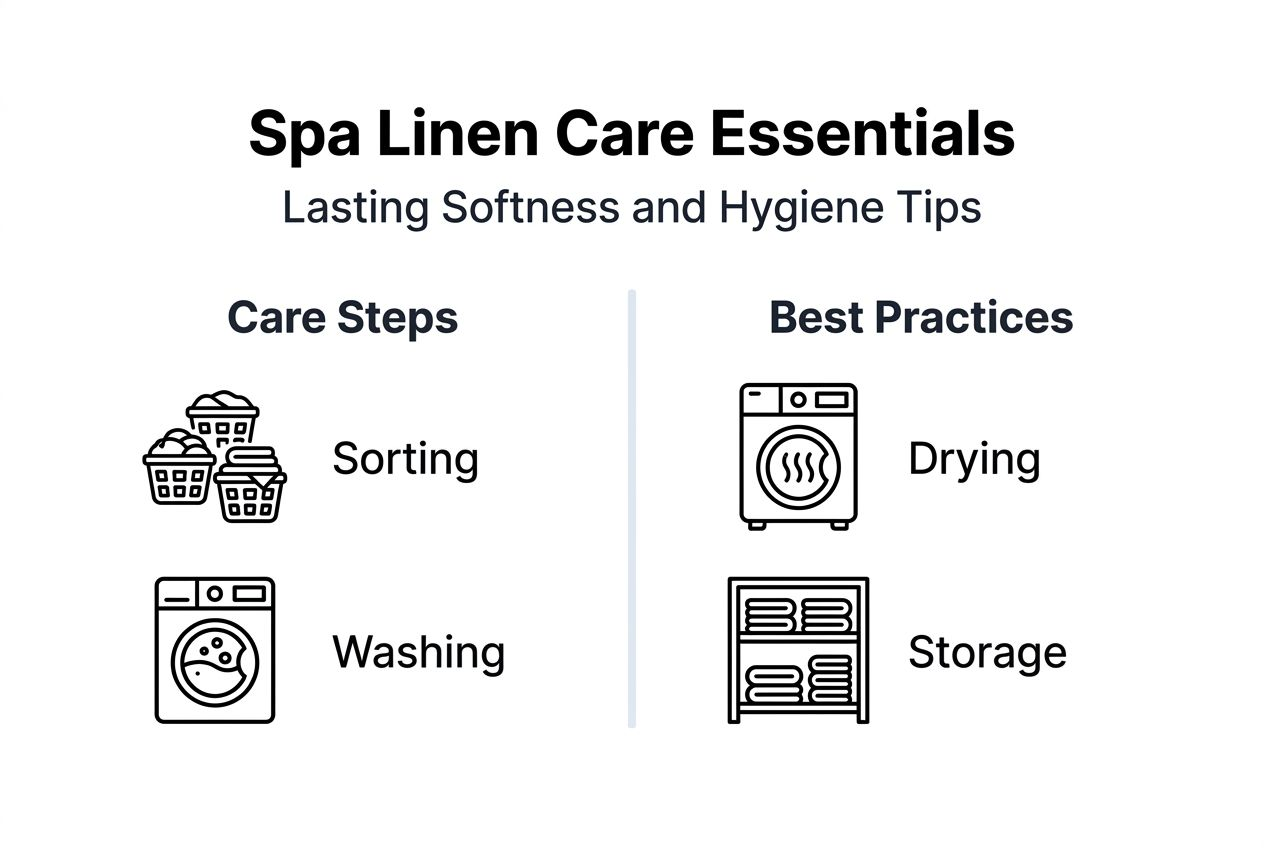
Financial benefits accumulate significantly over time. Optimal care timing can save spas up to 20% annually in linen replacement costs by extending average linen lifespan from 18 months to 24 to 30 months. For a mid-sized spa with $15,000 in annual linen expenses, this represents $3,000 in savings.
Hygiene improvements enhance guest safety and satisfaction. Consistent use of 60°C wash temperatures with antimicrobial rinses eliminates over 99.9% of microorganisms, far exceeding standard hospitality cleaning protocols. Guests perceive this difference through fresher scents and cleaner-feeling fabrics.
Avoiding fabric softeners while using proper detergents increases towel absorbency by approximately 25% compared to softener-treated alternatives. This performance difference directly impacts guest comfort and towel effectiveness. For detailed guidance, review the spa linen replacement policy to optimize timing.
| Care Practice | Measured Benefit | Guest Impact |
|---|---|---|
| 60°C washing with low-alkaline detergent | 99.9% microbial elimination | Enhanced safety and freshness |
| Avoiding fabric softeners | 25% higher absorbency | Improved towel performance |
| Controlled drying below 70°C | 30% less fiber degradation | Maintained softness over time |
| Proper storage and rotation | 20% cost savings annually | Consistent quality experience |
| Regular stain pre-treatment | Extended linen appearance | Professional aesthetic maintained |
Consistently soft, fresh linens elevate the overall spa experience and strengthen your facility’s reputation. Guests associate linen quality directly with overall service standards. Investing in proper care protocols pays dividends through positive reviews, repeat visits, and word-of-mouth recommendations. The luxury linen maintenance guide provides additional strategies for premium fabric care.
Long-term care consistency matters more than occasional perfect execution. Establish standard operating procedures, train staff thoroughly, and monitor compliance weekly. Small daily improvements compound into substantial quality and cost benefits over months and years. Understanding the benefits of waffle robes helps match fabric selection to your care capabilities.
Enhance your spa experience with premium linen products
Proper care protocols work best when paired with high-quality linens designed for spa environments. Premium fabrics engineered for durability withstand frequent washing while maintaining the softness and absorbency guests expect. Investing in quality from the start reduces replacement frequency and amplifies the benefits of careful maintenance.

Explore luxury waffle robes for men that combine elegant texture with exceptional durability. Waffle weave construction provides lightweight comfort that dries quickly while resisting the fiber compression common in standard terry robes. These robes complement your care routine by maintaining their structure through hundreds of wash cycles.
Pair premium robes with luxury scallop bath towels featuring decorative details that elevate your spa’s aesthetic. The scallop piping adds sophisticated visual appeal while the towel’s construction ensures long-lasting absorbency when cared for properly.
Personalization options elevate your spa branding and create memorable guest experiences. Premium personalized robes for men feature custom embroidery that withstands repeated washing without degradation. This combination of quality materials and customization reinforces your commitment to excellence.
FAQ
How often should spa linens be replaced if properly cared for?
Properly maintained spa linens typically last 1.5 to 3 years depending on usage intensity and fabric composition. Terry towels withstand more wash cycles than delicate waffle robes. Regular inspection for thinning, permanent staining, or loss of absorbency indicates replacement timing. Following the spa linen replacement policy helps maintain consistent guest comfort.
Can I use regular fabric softeners on spa towels and robes?
Avoid fabric softeners completely on spa linens. These products reduce towel absorbency by approximately 25% by coating fibers with waxy residues. Use antimicrobial rinse aids instead to maintain softness while preserving performance. The towel care instructions explain alternatives that enhance rather than compromise fabric functionality.
What is the best way to remove oils and lotions from spa linens?
Pre-treat oil and lotion stains immediately with enzyme-based cleaners designed to break down these substances. Allow the pre-treatment to dwell for five to ten minutes before washing. Wash at 60°C with low-alkaline detergent to fully remove residues. Address stains promptly during sorting as explained in the sorting and pre-cleaning preparation section.
Is air drying always better than machine drying for spa linens?
Air drying reduces shrinkage and fabric stress, making it ideal for delicate robes and specialty fabrics. However, it requires 40 to 60% more time. Machine drying efficiently handles terry towels when temperatures stay below 70°C and moisture sensors prevent overdrying. Hybrid approaches work well for balanced results. Review drying towels properly for detailed technique guidance.

