
TL;DR:
- Engaging all five senses through targeted upgrades transforms a modest bathroom into a spa-like retreat without extensive remodeling.
- Strategic lighting, decluttering, natural elements, and sensory items like aromatherapy and heated towels create a calming, immersive environment.
- Focusing on sensory details and minimalism yields a relaxing space that can be achieved on any budget with thoughtful layering and consistent finishes.
Your bathroom has real potential as a personal retreat, but most people settle for functional over restorative. Spa inspired bathroom decor is not about expensive remodels or gut renovations. It is about understanding how sensory design works and making targeted upgrades that engage sight, scent, sound, touch, and warmth simultaneously. Get those five dimensions right, and a modest bathroom can feel like a boutique hotel suite. This guide breaks down exactly how to do that, with concrete examples and honest comparisons between budget and premium options.
Table of Contents
- Key takeaways
- 1. Start with spa inspired bathroom decor criteria
- 2. Upgrade your lighting before anything else
- 3. Declutter to the point of discomfort
- 4. Invest in a heated towel rail
- 5. Use natural elements intentionally
- 6. Introduce aromatherapy as a design element
- 7. Choose materials that communicate texture
- 8. Add sound to your sensory toolkit
- 9. Compare budget vs. premium upgrades honestly
- 10. Keep hardware finishes consistent
- My honest take on spa bathroom decor
- How Shoplotuslinen helps you get this right
- FAQ
Key takeaways
| Point | Details |
|---|---|
| Sensory design beats structural remodels | Engaging all five senses transforms bathroom ambiance faster than knocking down walls. |
| Lighting layer is non-negotiable | Combining ambient, task, and accent lighting is what separates a spa from a bathroom. |
| Clutter is the enemy of calm | Limiting countertop items to 4 to 6 pieces is enough to measurably reduce visual stress. |
| Warmth is the overlooked element | Heated towel rails and warm wood tones deliver tactile and visual comfort that tiles alone never will. |
| Budget upgrades punch far above their weight | A $150 to $200 investment in key sensory items can replicate the spa atmosphere without renovation. |
1. Start with spa inspired bathroom decor criteria
Before you buy anything, you need a framework. Most people go straight to Pinterest, pick an aesthetic they like, and end up with a bathroom that looks good in photos but does not actually feel relaxing. The gap is almost always sensory.
A genuinely spa-like bathroom engages all five senses rather than focusing only on how surfaces look. Sight, sound, scent, touch, and warmth each play a role. When even one of these is jarring, the whole experience breaks down.
Use these criteria to evaluate every decor decision you make:
- Visual calm: Neutral color palettes (warm whites, stone, greige, muted sage), minimal clutter, and natural materials like wood and stone
- Tactile comfort: Plush or waffle-weave textiles, heated surfaces, smooth stone or wood finishes underfoot and at hand
- Scent: Aromatherapy diffusers, eucalyptus bundles, or beeswax candles rather than synthetic air fresheners
- Sound: A Bluetooth speaker playing ambient or nature-based soundscapes, or even a small tabletop fountain
- Warmth: Heated towel rails, radiant floor heating, or a bathroom that retains steam effectively
Safety matters here too. As wet surfaces increase slip risks in larger spa-style showers, grab bars styled to match your hardware finish are worth integrating from the start rather than retrofitting later.
Pro Tip: Evaluate your bathroom by standing in it for 60 seconds with your eyes closed. What do you hear, smell, and feel? That exercise tells you exactly which sensory element needs the most work.
2. Upgrade your lighting before anything else
Lighting is the single most common reason a bathroom fails to feel like a spa. Most bathrooms rely entirely on a single overhead fixture, which creates harsh, flat light. That is the opposite of relaxing.
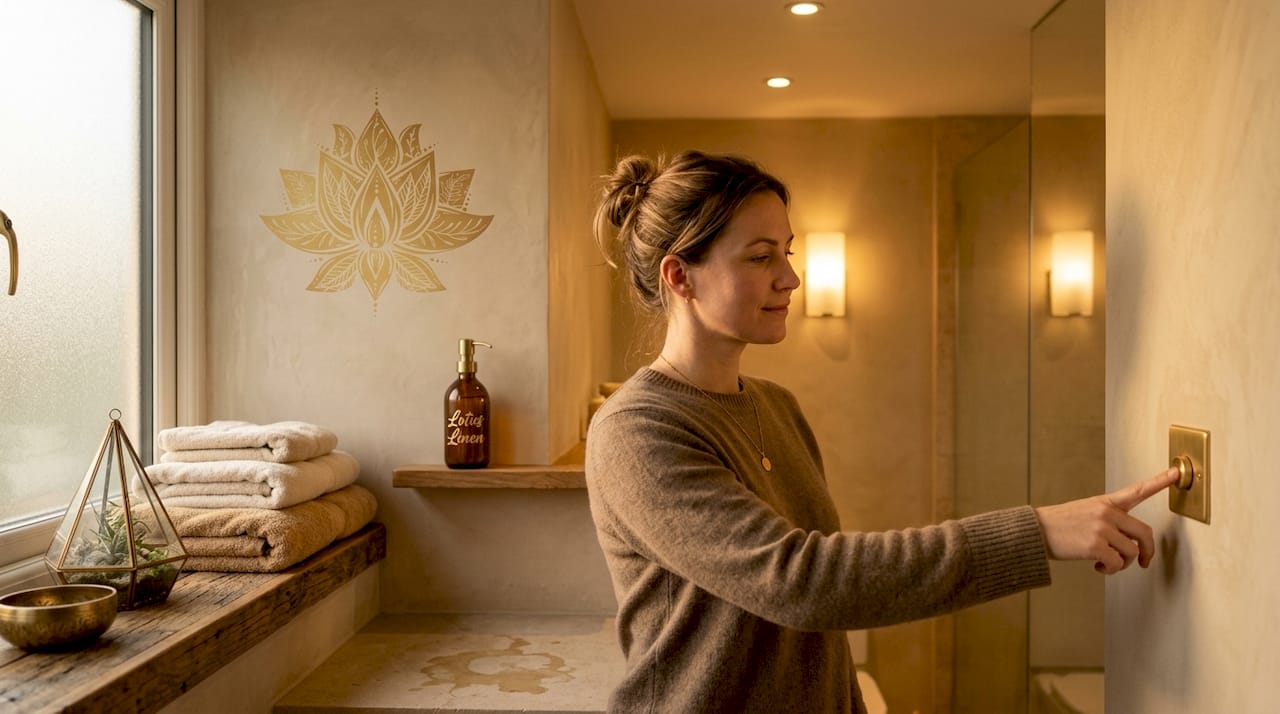
Soft indirect lighting, filtered through frosted glass or linen shades, signals relaxation in a way that overhead fluorescents never can. This principle comes directly from Japanese bathroom design, where light is treated as an architectural material rather than an afterthought.
The professional standard is layered lighting combining three types: ambient ceiling light for general visibility, face-level task lighting at the vanity mirror, and low-level accent lighting near the floor, tub, or shelving. LED strip lights under a floating vanity are one of the most affordable ways to add that third layer.
Dimmer switches are mandatory. The ability to lower the ambient light by 60 to 70 percent in the evening costs almost nothing compared to the ambiance it creates.
3. Declutter to the point of discomfort
This one is harder than it sounds. Visual clutter genuinely activates the stress response in your brain, and reducing countertop items to just 4 to 6 curated pieces is enough to shift the entire feeling of the room.
The standard advice is to store everything in cabinets. That is fine, but the smarter move is to swap the items that must stay on the counter. Replace your plastic soap dispenser with a ceramic one. Move dry cotton balls and cotton swabs into small glass jars with lids. Consolidate your everyday products onto a single wooden or marble vanity tray so the grouping reads as intentional rather than cluttered.
Wall-mounting storage and choosing floating vanities also expands the visual floor space, which makes the room feel larger and calmer without changing a single tile.
4. Invest in a heated towel rail
Heated towel rails consistently rank as the most appreciated upgrade in spa bathroom renovations. The reason is both obvious and slightly surprising: the experience of reaching for a warm towel after a bath or shower is so different from a cold one that it changes the entire emotional note of the moment.
Electric towel rails start around $80 to $120 for a quality wall-mounted unit. Hydronic versions that connect to your central heating are more expensive to install but cost almost nothing to run. Either way, this is one case where the functional and the aesthetic converge perfectly. A brushed brass or matte black rail also reads as a design statement, not just a utility fixture.
Pair the rail with premium cotton towels at 600 GSM or higher and the tactile difference is noticeable immediately.
5. Use natural elements intentionally
Natural elements in bathrooms serve a double function: they look beautiful and they work psychologically by creating subconscious associations with outdoor calm. The key word is intentionally. A single large-leaf plant in the corner reads as a design choice. Six small plastic plants lined up on a shelf reads as decoration for decoration’s sake.
Warm wood tones in vanities, shower benches, or floating shelves consistently distinguish spa-like bathrooms from generic ones. Oak, walnut, and teak are the most durable choices for humid environments when properly sealed.
Stone textures work the same way. You do not need a marble floor to get the effect. A stone soap dish, a travertine tray, or even a single piece of river rock on a shelf introduces that organic, grounded quality.
Live plants that thrive in humidity include pothos, peace lilies, spider plants, and certain ferns. Place one statement plant at floor level and one small trailing plant at shelf height for visual layering.
6. Introduce aromatherapy as a design element
Scent is the fastest path to a changed mood state, and most bathrooms either smell like cleaning products or nothing at all. Neither is spa.
An ultrasonic aromatherapy diffuser with eucalyptus, lavender, or cedarwood essential oil costs $30 to $50 and transforms the atmosphere within minutes. Eucalyptus bundles hung from the shower head are a more visual option. The steam from a hot shower activates the oils naturally, filling the room with a menthol-forward scent that genuinely mimics high-end spa steam rooms.
Beeswax or soy candles in ceramic holders add both scent and warm ambient light simultaneously. Keep the scent palette consistent. Mixing too many fragrance families creates olfactory confusion, which is the opposite of calming.
7. Choose materials that communicate texture
Serene bathroom aesthetics are never flat. They layer different textures that invite you to touch them, even visually. This is one area where bathroom wellness design separates itself from plain decorating.
Large-format porcelain tiles at 60 by 120 centimeters or larger reduce grout lines dramatically, creating a cleaner, more expansive visual that mimics natural stone at a fraction of the cost and maintenance. Matte finishes read warmer than high-gloss, which tends to feel clinical.
The contrast between a matte tile wall, a warm wood vanity, and a woven cotton bath mat creates the kind of tactile layering that professional spa designers build entire rooms around. You can achieve a credible version of that without replacing your tile.
Pro Tip: Limit your material palette to three to four finishes per room. More than that and the space starts to feel busy rather than curated. Stick to matte stone, warm wood, one metal finish, and one soft textile.
8. Add sound to your sensory toolkit
This is the most overlooked element in spa bathroom ideas for home. People spend thousands on tile and fixtures but run their morning shower in silence or to the noise of a podcast. Actual spas almost never do that.
A water-resistant Bluetooth speaker in the $40 to $80 range delivers genuine audio quality for a bathroom-sized space. Nature soundscapes (rain, running water, forest ambiance) or instrumental playlists work particularly well because they have no lyrics demanding cognitive attention. The brain can genuinely rest.
If you want to go further, explore a small tabletop water feature near the vanity. The sound of moving water is biologically calming and works even when the room is otherwise quiet.
9. Compare budget vs. premium upgrades honestly
Not every upgrade justifies its price. Here is a direct comparison of where to spend and where to save.
| Upgrade | Budget option | Premium option | Worth the extra? |
|---|---|---|---|
| Towel warmth | Electric towel rail ($80 to $120) | Hydronic towel system ($400+) | Only if renovating already |
| Scent | Eucalyptus bundle ($8 to $12) | Built-in steam aromatherapy | No, eucalyptus works just as well |
| Storage aesthetics | Glass jars from dollar store | Custom cabinetry with soft-close | Custom wins for long-term kitchens; jars win here |
| Tiles | Large-format porcelain ($3 to $6/sq ft) | Natural stone ($15 to $40/sq ft) | Only for feature walls |
| Shower experience | Rainfall showerhead upgrade ($60 to $150) | Multi-spray panel system ($1,000+) | Rainfall head is 80% of the experience at 10% of the cost |
| Textiles | Standard cotton towels | 600+ GSM spa-weight towels | Yes, the tactile difference is significant |
Under $2 for luxury storage hacks like glass decanters for mouthwash or hand sanitizer is real. Those small swaps collectively read as a high-end aesthetic at almost no cost.
The total sensory upgrade of heated towel rail, Bluetooth speaker, and aromatherapy diffuser lands around $150 to $200 and outperforms most cosmetic renovations ten times the price in terms of daily experience.
10. Keep hardware finishes consistent
This is the small detail that separates a bathroom that looks almost right from one that looks completely intentional. When your towel bar is chrome, your soap dispenser is brushed nickel, your mirror frame is brass, and your light fixture is matte black, the room reads as assembled rather than designed.
Pick one metal finish and use it everywhere: towel rail, cabinet pulls, faucet, mirror frame, light sconces. Matte black and brushed brass are the two finishes that read most warmly in spa-style spaces right now. Polished chrome still works but leans more clinical.
Cohesive decor bundles and themed sets that ship within days are an increasingly practical way to achieve that hardware and textile coordination without hiring a designer.
Pro Tip: If you already have mismatched hardware, spray paint is a legitimate option. Matte black spray paint on existing chrome fixtures costs $8 and buys you a year or two of cohesion while you replace pieces gradually.
My honest take on spa bathroom decor
I have seen homeowners spend $15,000 on a bathroom remodel and still end up with a room that does not feel relaxing. I have also seen people spend $300 and get it exactly right. The difference is almost never budget.
What I have found is that most people make one of two mistakes. They either focus purely on aesthetics (new tile, new vanity, new mirror) without addressing sensory friction, or they try to do everything at once and end up with a space that feels chaotic rather than calm. A beautiful stone tile wall means nothing when the single overhead light turns it into a cave, or when the counter is still covered in twelve different products.
The minimalist bathroom decor principle I keep coming back to is this: remove something before you add something. Every time. If you are considering a new candle, a new plant, or a new shelf, first identify one thing that leaves the room before the new item enters it. That discipline alone will put you ahead of 90% of bathrooms.
Start with lighting and textiles. Those two changes alone will make you feel it on the first morning. Then layer in scent, sound, and warmth. Big remodels can wait until you are clear on exactly what you are trying to create. Build the sensory experience first, and let the structural decisions follow.
— Oguzhan
How Shoplotuslinen helps you get this right
Creating a spa-like retreat at home starts with the textiles you reach for every single day. At Shoplotuslinen, every product is designed around that first-moment experience when you step out of the shower or slip into a robe.
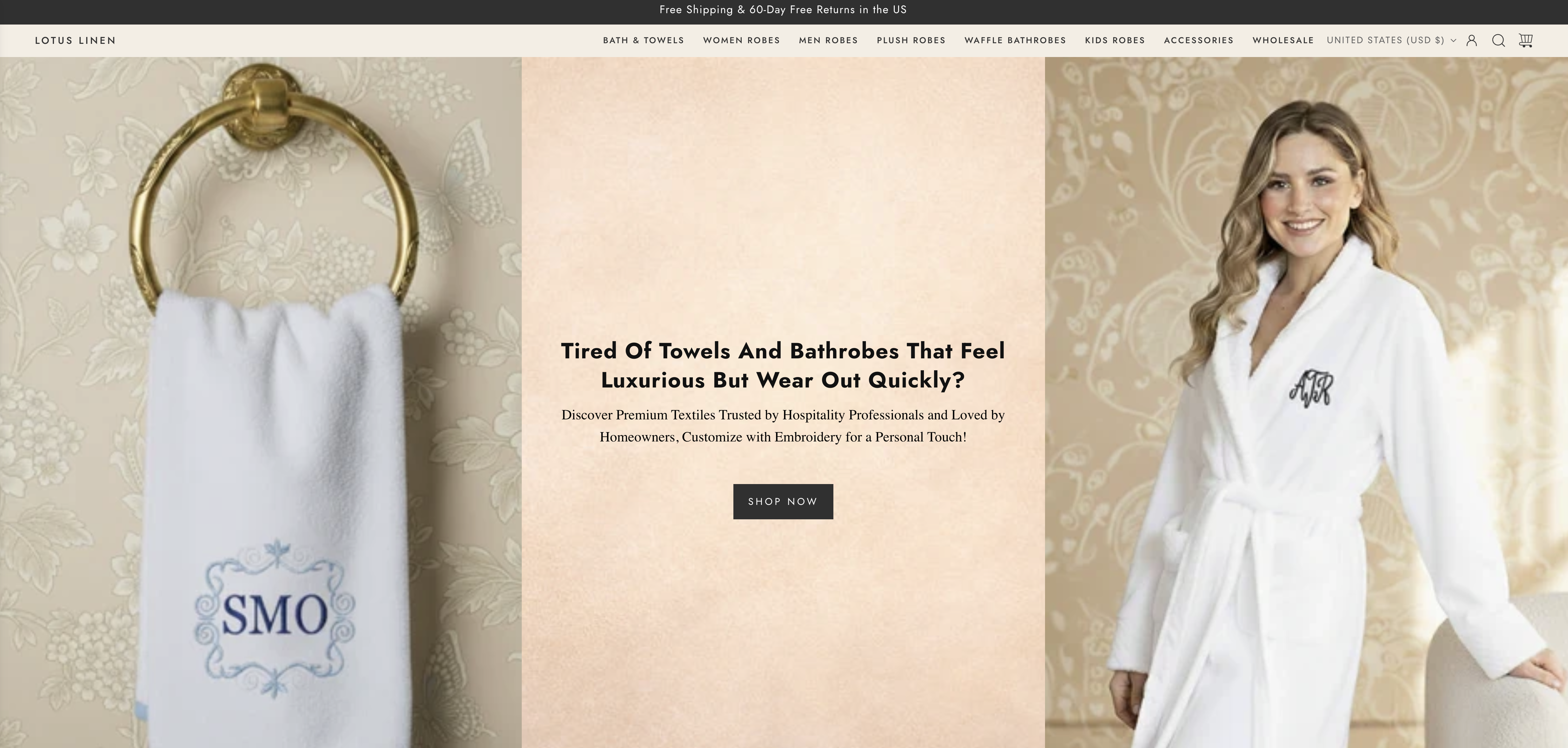
Our scallop-edge bath towels are crafted from premium cotton that delivers genuine spa-weight softness. Pair them with our waffle robes for men for a complete post-bath ritual that turns your bathroom into a real retreat. Both are available with personalization options, making them a thoughtful gift or a personal indulgence. Free from harsh chemicals and designed for long-term softness, these are the textiles your spa bathroom has been missing.
FAQ
What is the easiest first step to create a spa bathroom?
Upgrade your lighting and add a heated towel rail. These two changes alone shift the sensory experience of the room immediately, without any structural work.
How much does spa inspired bathroom decor cost?
A full sensory upgrade including a heated towel rail, aromatherapy diffuser, and Bluetooth speaker runs approximately $150 to $200. Small aesthetic swaps like glass storage jars cost under $2 each.
What colors work best for a spa-like bathroom?
Warm neutrals like greige, warm white, muted sage, and stone tones create visual calm. Avoid high-contrast color combinations, which create visual tension rather than restfulness.
Do I need to renovate to achieve spa bathroom ideas?
No. Sensory upgrades like diffusers, speakers, quality textiles, and lighting adjustments transform ambiance faster than structural changes and require no permits or contractors.
What plants work best in a bathroom wellness design?
Pothos, peace lilies, and certain ferns thrive in humid bathroom conditions. One statement plant at floor level and one trailing plant at shelf height creates visual depth without overwhelming the space.

