
TL;DR:
- Proper seasonal towel care involves adjusting washing, drying, and storage routines to maintain freshness and softness year-round. Increasing wash frequency in winter, fully drying towels, and storing only completely dry linens help prevent mildew and odor buildup. Consistent habits like hanging towels open after use and performing seasonal deep cleans extend towel longevity and spa-like comfort.
Seasonal towel care means adjusting your washing, drying, and storage practices throughout the year to keep your linens fresh, plush, and long-lasting. Most households use a fixed routine regardless of season, which is exactly why towels go stiff in winter, smell musty in summer, and lose their spa-worthy softness faster than they should. This guide pulls from expert sources including Real Simple, Cotton With Love, and Wirecutter to give your family a practical, season-by-season towel care guide that actually works.
How seasonal towel care changes your washing routine
The foundation of any solid towel care guide is washing frequency, and that number shifts with the seasons. The general rule is to wash towels every 3 to 5 uses on a cold cycle to prevent shrinkage and fiber damage. Cold water protects the cotton loops that give towels their texture. High heat weakens those fibers over time, leaving towels feeling hard and flat.
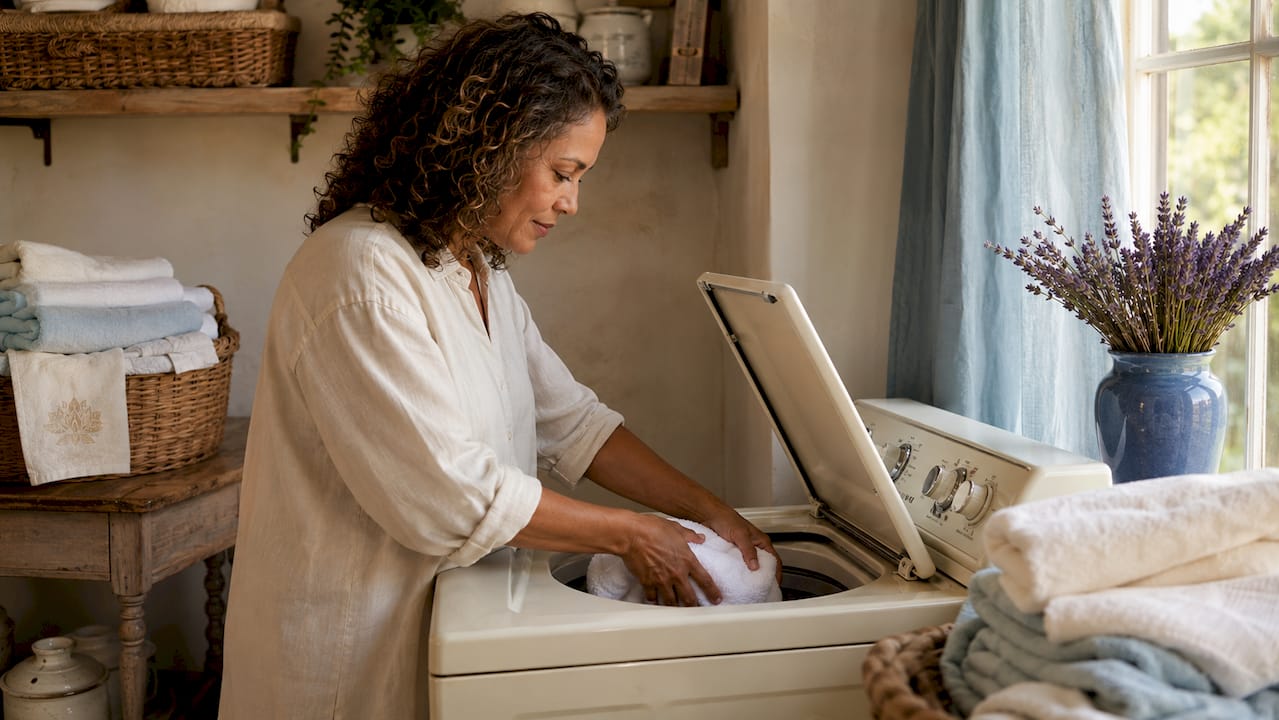
In winter and humid climates, that schedule tightens. Wash more frequently, every 2 to 3 uses, because longer indoor drying times create the warm, damp conditions where bacteria thrive. Wirecutter recommends a time-based swap every 3 days as a practical alternative to counting uses, especially in households where bathroom humidity varies. That flexibility matters more than any fixed number.
Here is what to do and what to skip in your wash routine:
- Use cold or warm water for regular washes. Reserve hot water for sanitizing after illness or heavy gym use.
- Use less detergent than the label suggests. Overusing detergent stiffens towels and reduces absorbency by leaving residue in the fibers.
- Add half a cup of white vinegar to the rinse cycle instead of fabric softener. Vinegar removes residue and naturally softens cotton without coating the fibers.
- Add half a cup of baking soda to the wash cycle when odors are present. Baking soda neutralizes odors and balances pH for cleaner, fresher fibers.
- Skip fabric softeners and dryer sheets entirely. They leave a waxy film that reduces absorbency and makes towels feel slick rather than plush.
- Wash towels separately from clothing with zippers, hooks, or rough textures that snag terry loops.
Pro Tip: Never mix vinegar and baking soda in the same wash cycle. Use baking soda in the wash and vinegar in the rinse as two separate steps. Combining them neutralizes both and wastes the benefit of each.
What are the best drying practices for every season?
Drying is where most towel care routines fail. Mildew forms when towels dry unevenly, which happens when they are folded, bunched, or draped over a single rod with no airflow. The fix is simple but non-negotiable: hang every towel fully open on a bar so air reaches the entire surface.
A towel hung properly dries evenly within 4 to 6 hours, which is fast enough to prevent the musty smell that builds up in bathrooms with poor ventilation. That window shrinks in summer and stretches in winter, which is why your drying setup needs to adapt with the seasons.
Seasonal drying strategies worth adopting:
- In summer, line drying outdoors works well for most cotton linens. Give each towel a firm shake before hanging to open the fibers, then finish with 10 minutes in a low-heat dryer to restore fluffiness.
- In winter, use a heated towel rack, a bathroom exhaust fan running for at least 30 minutes after a shower, or a small dehumidifier to speed up drying time and prevent moisture buildup.
- In the dryer, use wool dryer balls instead of dryer sheets and set the heat to low or medium. High heat is the leading cause of fiber damage and the reason towels feel crispy after repeated machine drying.
- High-GSM or plush towels dry slower than lightweight linens. Spread them flat or fully open and gently fluff the fabric mid-dry to prevent core dampness that leads to stiffening and odor.
- Avoid hanging towels on shower rods or closed hooks where two surfaces touch. Those contact points trap moisture and are the most common source of that sour smell.
Pro Tip: For proper towel drying in winter, run your bathroom exhaust fan for the full hour after showering, not just during. That extra airflow cuts drying time significantly and keeps the bathroom from becoming a humidity trap.
Smart seasonal towel storage solutions for freshness
Storage is the final step in proper towel care techniques, and it is where most families lose the freshness they worked to build. The rule that overrides all others: never store a towel that is not completely dry. Even slight dampness in a linen closet creates a mildew environment that spreads to every towel on the shelf.
Proper folding on a clean flat surface prevents wrinkles, supports seasonal rotation, and keeps your storage looking organized. Martha Stewart recommends folding bath towels into vertical thirds lengthwise, then in thirds again, so the clean folded edge faces out. For a spa-style display, a tight roll works well on open shelves or baskets. These techniques are not just aesthetic. Consistent folding means towels stack evenly, which reduces the chance of pulling a damp one from the middle of a pile.
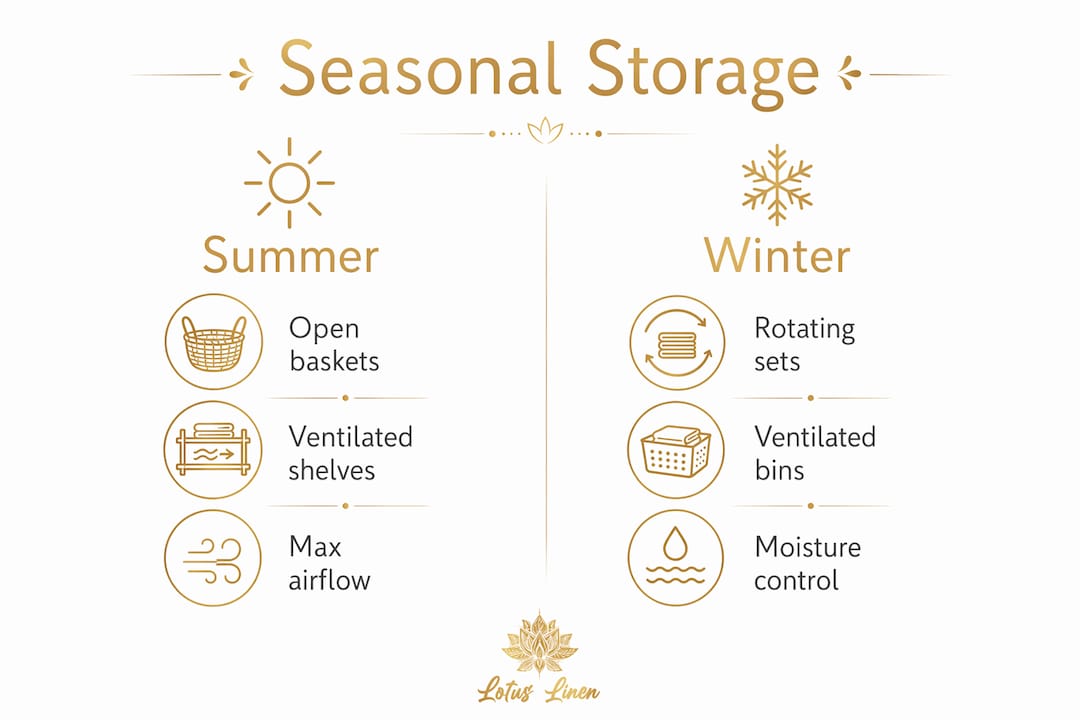
Here is a quick comparison of storage approaches by season:
| Season | Storage approach | Key priority |
|---|---|---|
| Summer | Open baskets or ventilated shelves | Maximum airflow to prevent humidity buildup |
| Winter | Small active set in bathroom; rest stored elsewhere | Keep daily-use linens accessible, reduce closet moisture |
| Year-round | Labeled bins sorted by towel type and size | Easy rotation and even wear across your full set |
Winter storage works best when you keep a small rotating set in the bathroom for daily use and store the rest in a ventilated space outside the humid bathroom environment. Cleaning professionals consistently recommend against storing your full towel supply in the bathroom, where steam and moisture accumulate daily. For more ideas on organizing your space, the Shoplotuslinen guide to easy towel storage ideas covers practical setups for every bathroom size.
How to perform seasonal deep cleaning and maintenance
Routine washing keeps towels clean, but seasonal deep cleaning restores what regular cycles cannot. Detergent and mineral deposits accumulate in cotton fibers over weeks of washing, and the result is a towel that repels water instead of absorbing it. That is not wear. It is buildup, and it is fully reversible.
Follow these steps for a complete seasonal maintenance reset:
- Run a hot wash with one cup of white vinegar and no detergent. Periodic vinegar strip washes remove detergent and mineral buildup and restore absorbency. Cotton With Love recommends this every 4 to 5 washes for best results.
- Follow with a second hot wash using half a cup of baking soda and no detergent. This neutralizes any vinegar residue and refreshes the fiber structure.
- Dry on low heat with wool dryer balls. Remove towels while slightly warm and give each one a firm shake to open the terry loops before folding.
- If you live in a hard water area, add a water softener product to your regular wash cycle. Mineral deposits from hard water are a leading cause of rough, scratchy towels that no amount of vinegar can fully fix without addressing the water source.
- Assess absorbency after each seasonal deep clean. Pour a small amount of water onto the towel surface. If it beads up rather than absorbing, repeat the vinegar strip wash.
- Retire towels when the terry loops flatten and do not recover after washing. With consistent care, a well-made cotton towel lasts two to three years of regular use. Shoplotuslinen’s guide on towel replacement cycles explains exactly when to make that call.
Pro Tip: Adjust your deep cleaning frequency based on household factors. A family of four using towels daily in a humid climate needs a vinegar strip wash monthly. A single person in a dry climate can stretch it to every two months.
Common mistakes that shorten towel life across seasons
Most towel problems trace back to a short list of repeated errors. Recognizing them is faster than diagnosing a musty smell or a stiff texture after the fact.
- Overloading the washer. Towels need room to move for the water and detergent to rinse out fully. A packed drum leaves residue behind and is one of the most common causes of stiffness.
- Using too much detergent. More soap does not mean cleaner towels. Excess detergent coats fibers and reduces absorbency. Use half the recommended amount and adjust from there.
- Folding towels while they are still damp. This is the fastest route to a musty smell. Always confirm towels are fully dry before folding and storing.
- Leaving wet towels in a laundry basket. Wet fabric in a closed basket starts developing odor within hours. Move towels to the wash or hang them to air out immediately after use.
- Using bleach on colored or patterned towels. Bleach degrades cotton fibers and fades color. For sanitizing, a hot wash with white vinegar is effective and fiber-safe.
- Ignoring seasonal drying conditions. A routine that works in July will not work in January. Seasonal routines must adapt to indoor humidity changes, drying airflow, and wash frequency rather than following a fixed schedule year-round.
- Over-drying in a machine dryer. Running the dryer until towels are bone dry at high heat causes shrinkage and fiber breakdown. Pull them out slightly warm and let them finish air drying.
- Not rotating your towel supply. Using the same two towels while six sit in a closet creates uneven wear. Rotate your full set so every towel gets equal use and rest.
For a deeper look at year-round towel hygiene, Shoplotuslinen covers the full picture of keeping your bathroom linens clean and healthy across every season.
Key takeaways
Consistent seasonal towel care requires adapting your wash frequency, drying method, and storage approach to the season, not following a single fixed routine year-round.
| Point | Details |
|---|---|
| Wash frequency shifts with seasons | Increase to every 2 to 3 uses in winter or humid conditions to prevent bacteria growth. |
| Skip fabric softeners always | Use white vinegar in the rinse cycle instead to preserve absorbency and softness. |
| Dry fully open, every time | Hang towels spread wide on a bar so air reaches the full surface and drying completes within hours. |
| Deep clean seasonally | Run a vinegar strip wash every 4 to 5 cycles to remove buildup and restore absorbency. |
| Store only completely dry linens | Even slight dampness in storage spreads mildew to your entire supply. |
Why I stopped treating towel care as an afterthought
By Oguzhan
Most people treat towel care the same way they treat changing a smoke detector battery. They know it matters, but they do not do it until something goes wrong. I spent years watching families come to Shoplotuslinen frustrated that their linens had gone flat or sour within months, and almost every time, the cause was the same: a routine that never changed with the season.
What shifted my thinking was realizing that a towel is a daily wellness tool, not a commodity. The way it feels against your skin after a shower sets the tone for the next hour of your day. When it smells off or feels rough, that is not a small thing. It is a signal that the care routine is not matching the environment.
The habit that makes the biggest difference in my experience is not the vinegar wash or the dryer balls, though both help. It is simply hanging the towel fully open after every single use and adjusting wash frequency when the season changes. Those two habits alone prevent 80 percent of the problems families bring to us. Everything else is refinement.
I also think there is something genuinely satisfying about treating your linens with intention. It connects to the same instinct that makes people light a candle or keep fresh flowers in the bathroom. Your home should feel like a place of rest. Well-cared-for linens are part of that. Start with the basics, build the seasonal habit, and your towels will reward you with years of spa-worthy softness.
— Oguzhan
Complete your spa-worthy routine with Shoplotuslinen

The care you put into your linens deserves a collection that holds up to it. Shoplotuslinen’s scallop piping bath towels are built for the kind of seasonal care routine this guide describes. The cotton construction responds well to vinegar washes, low-heat drying, and proper folding, staying soft and absorbent through years of use. Pair them with a plush robe for a complete after-shower experience that feels intentional rather than routine. For families who want something personal, Shoplotuslinen’s personalized robes for men and waffle robes for women make thoughtful additions to any seasonal linen refresh.
FAQ
How often should you wash towels in winter?
Wash towels every 2 to 3 uses in winter, when longer indoor drying times create conditions where bacteria and odor develop faster. A time-based swap every 3 days also works well as a practical alternative to counting uses.
What is the best way to fold towels for storage?
Fold bath towels into vertical thirds lengthwise, then fold in thirds again so the clean edge faces outward. This method prevents wrinkles, supports even stacking, and makes seasonal rotation easier to manage.
Can you use fabric softener on towels?
Fabric softeners leave a waxy residue that coats cotton fibers and reduces absorbency over time. Use white vinegar in the rinse cycle instead for natural softening without the buildup.
How do you get musty smell out of towels?
Run a hot wash with one cup of white vinegar and no detergent, followed by a second hot wash with half a cup of baking soda. This combination removes detergent buildup and neutralizes odor at the fiber level.
When should you replace your towels?
Replace towels when the terry loops flatten and do not recover after washing, or when absorbency is noticeably reduced even after a vinegar strip wash. With proper seasonal maintenance, quality cotton towels typically last two to three years of regular use.

