
Most people assume their fluffy cotton bath towel dries quickly because it feels dry to the touch after a few hours. In reality, cotton traps moisture deep in its fibers, taking far longer to fully dry than modern quick drying alternatives. Quick drying towels use innovative materials like microfiber and specialized cotton weaves that move moisture to the surface rapidly, cutting drying time by more than half. This guide reveals how these towels work, which fabrics perform best for different situations, and how to choose and care for towels that stay fresh, dry faster, and resist mildew in any environment.
Table of Contents
- Key takeaways
- Understanding quick drying towel materials
- How quick drying works: the science of towel drying
- Comparing quick drying performance and user benefits
- Choosing and caring for quick drying towels
- Explore luxury quick drying towels and robes
- FAQ
Key Takeaways
| Point | Details |
|---|---|
| Microfiber dries fastest | Microfiber towels dry in about 15 to 30 minutes due to ultra thin fibers and high surface area that promote rapid evaporation. |
| Capillary wicking action | Thin microfiber channels move moisture from your skin to the towel surface where it evaporates quickly. |
| Specialized cotton weaves | Turkish cotton and waffle weave reduce water retention while maintaining softness. |
| Fabric choice matters | Choose microfiber for fastest drying or cotton for luxury softness depending on your needs. |
Understanding quick drying towel materials
Quick drying towels rely on specific fabric compositions that fundamentally differ from traditional terry cloth. Microfiber towels use polyester and polyamide blends with fibers 100 times thinner than human hair, creating massive surface area for moisture contact. These ultra-thin fibers form microscopic channels that transport water away from your skin and spread it across the towel’s surface. The lightweight construction means less water gets absorbed overall, but what does get absorbed evaporates dramatically faster than in dense cotton.
Cotton towels can achieve quick drying through specialized weaves rather than fiber composition alone. Turkish cotton features long staple fibers woven into flat, tight patterns that minimize water retention. Waffle weave cotton creates a grid structure with raised squares and recessed pockets, reducing fabric density while maintaining absorbency. These cotton variants bridge the gap between traditional plush towels and synthetic quick drying options, offering faster drying than standard terry cloth without sacrificing natural fiber softness.
Each material brings distinct advantages and trade-offs for quick drying performance:
- Microfiber dries in 15-30 minutes, weighs almost nothing when wet, and resists bacterial growth
- Turkish cotton balances moderate drying speed with luxurious feel and improves with each wash
- Waffle weave cotton provides excellent airflow, dries faster than terry cloth, and offers textured grip
- Spunlace nonwovens deliver disposable convenience with moderate absorbency for single use applications
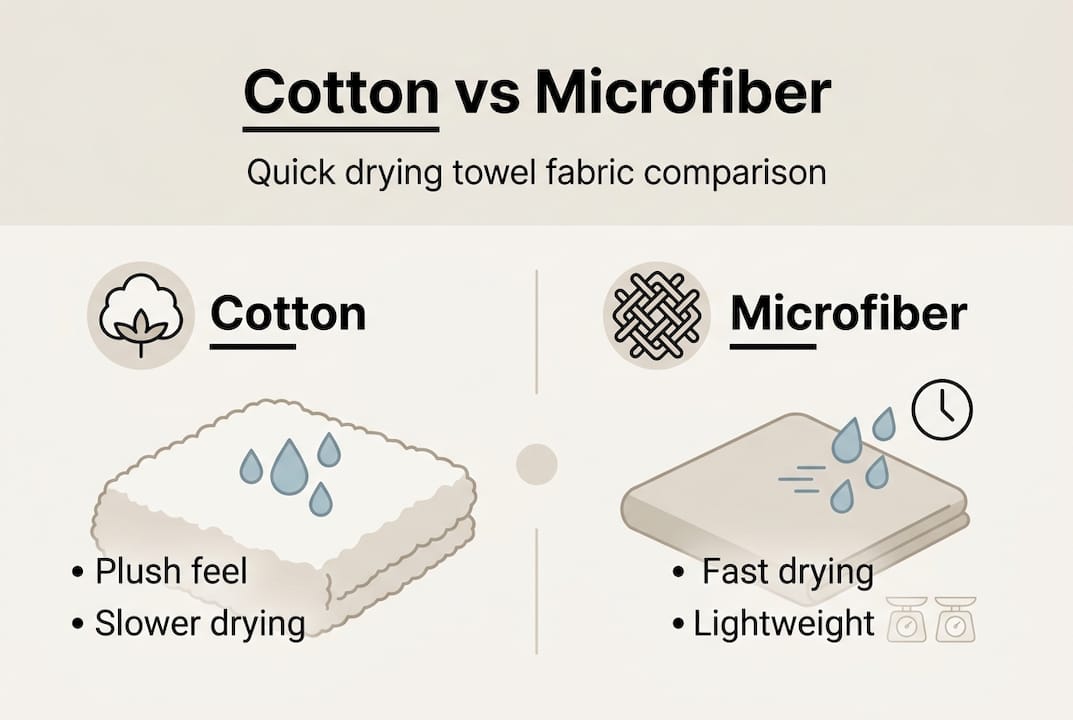
Understanding cotton vs microfiber towels helps you match fabric properties to your specific needs, whether prioritizing speed, comfort, or durability.
How quick drying works: the science of towel drying
The drying speed difference between materials comes down to how water moves through fabric structures. Microfiber relies on capillary action, where thin fiber channels pull moisture from your skin and transport it to the towel’s outer surface through physical wicking. Once water reaches the surface, it spreads across the massive fiber surface area and evaporates rapidly into surrounding air. This process happens continuously as you dry off, meaning the towel never becomes saturated the way cotton does.
Cotton operates through absorption rather than wicking. Terry cloth loops trap water molecules inside the fiber structure, holding moisture within the towel rather than moving it outward. This internal retention creates the plush, heavy feeling of a wet cotton towel and explains why it takes hours to dry completely. The water must slowly migrate to the surface through diffusion before evaporation can occur, creating a bottleneck that extends drying time significantly.
Quick drying towels achieve faster results through these steps:
- Initial contact spreads moisture across thin microfiber surfaces instead of deep absorption
- Capillary channels transport water molecules from fiber core to exterior surface
- Large surface area exposure accelerates evaporation into ambient air
- Low water retention means less total moisture needs to evaporate
- Complete drying occurs in fraction of time required for saturated cotton
Empirical testing reveals dramatic performance differences between materials:
Polyester dries 40-60% faster than natural fibers, with microfiber towels reaching complete dryness in 15-30 minutes compared to cotton’s 1-2 hours under identical conditions.
These speed advantages compound in humid environments where cotton struggles to release moisture. Microfiber maintains consistent drying performance regardless of ambient humidity because the wicking mechanism actively moves water to the surface rather than waiting for slow diffusion. This makes quick drying towels especially valuable in bathrooms, gyms, and travel situations where air circulation may be limited and rapid reuse becomes necessary.
Comparing quick drying performance and user benefits
Real world testing data reveals how different towel types perform across key metrics that matter for daily use. The table below compares microfiber and cotton across drying time, absorbency capacity, weight characteristics, and tactile experience to help you evaluate trade-offs:
| Metric | Microfiber | Cotton Terry | Waffle Cotton |
|---|---|---|---|
| Drying time | 30-90 minutes | 2-6+ hours | 90-180 minutes |
| Absorbency ratio | 4-7x weight | Up to 27x weight | 15-20x weight |
| Wet weight | Minimal | Heavy | Moderate |
| Fabric feel | Smooth, less plush | Soft, luxurious | Textured, grippy |
| Mildew resistance | Excellent | Poor | Good |
Empirical benchmarks show microfiber towels complete drying cycles in under 90 minutes while absorbing 4-7 times their dry weight, making them ideal for situations requiring quick turnaround. Cotton towels absorb significantly more water per use but require 2-6 hours to dry completely, which can lead to musty odors in humid conditions. Waffle weave cotton splits the difference, offering better absorbency than microfiber with faster drying than traditional terry cloth.
These performance characteristics align with specific use cases where each towel type excels:
- Travel and backpacking: Microfiber packs small, dries overnight, and weighs almost nothing in a bag
- Gym and pool: Quick drying prevents bacterial growth between uses and eliminates soggy gym bag syndrome
- Home luxury: Cotton delivers spa-like softness and absorbency for relaxed morning routines
- Hospitality: Mid-weight cotton balances guest comfort expectations with laundry efficiency
- Humid climates: Microfiber resists mildew in bathrooms with poor ventilation
Pro Tip: Hang towels immediately after use with maximum surface area exposed to air. Bunched or folded wet towels take twice as long to dry and create perfect conditions for bacterial growth, regardless of material type.
The choice between materials often comes down to priority ranking. If drying speed and mildew prevention top your list, microfiber delivers unmatched performance. If tactile luxury and maximum absorbency matter more, quality cotton justifies the longer drying time. Many households keep both types on hand, using microfiber for high-frequency situations and reserving plush cotton for relaxed weekend showers. Understanding how to dry towels fast helps you maximize performance from either material through proper hanging and air circulation techniques.
Choosing and caring for quick drying towels
Selecting the right quick drying towel requires matching fabric specifications to your intended use pattern. GSM (grams per square meter) indicates towel weight and density, directly impacting both absorbency and drying speed. Lower GSM towels around 300-400 prioritize rapid drying for gym bags and travel, while mid-range 500-600 GSM options balance home comfort with reasonable drying times. Anything above 600 GSM enters luxury territory where drying speed becomes secondary to plush absorbency.
Fabric type selection depends on your specific priorities and environment:
- Choose microfiber for maximum drying speed, minimal weight, and frequent washing cycles
- Select Turkish cotton for natural fiber preference with better-than-average drying performance
- Pick waffle weave for textured grip, good airflow, and visual interest in bathroom decor
- Consider blends that combine natural fiber softness with synthetic quick drying properties
Avoid fabric softeners when laundering quick drying towels, as these products coat fibers and block the capillary channels that enable rapid moisture wicking. The temporary softness gain comes at the cost of reduced absorbency and slower drying, defeating the purpose of quick drying materials. Instead, wash towels in warm water with minimal detergent and add white vinegar to the rinse cycle occasionally to remove mineral buildup without damaging fiber structure.
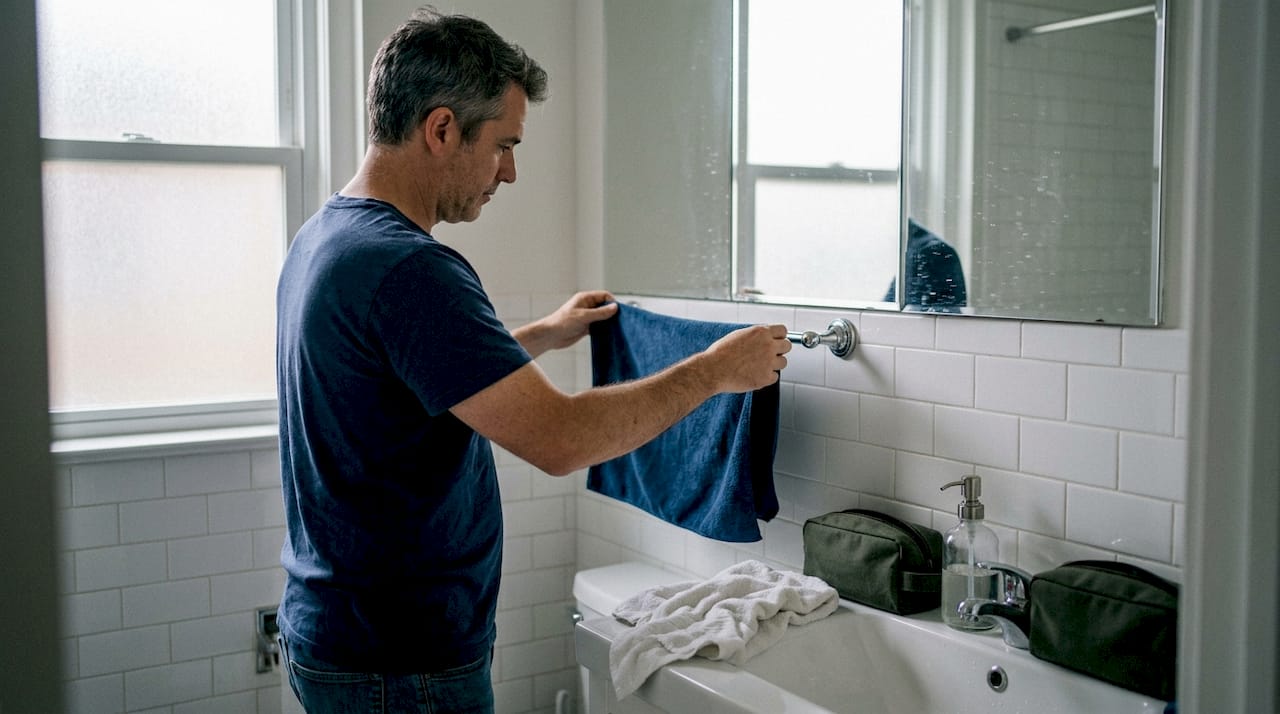
Proper drying technique preserves towel performance and extends usable life significantly. Machine dry on medium heat until completely dry, never leaving towels damp in the dryer or hamper. Overdrying on high heat can damage microfiber and make cotton brittle, so remove towels promptly when the cycle completes. For air drying, spread towels flat or hang with maximum surface exposure rather than folding over a narrow bar, which traps moisture in the fold and doubles drying time.
Pro Tip: Store completely dry towels in open shelving or breathable linen closets rather than sealed cabinets. Even minimal residual moisture can create musty odors over time, especially in humid climates where towels never fully release trapped water vapor.
Regular maintenance keeps quick drying towels performing like new for years. Wash towels every three to four uses to prevent bacterial buildup, more frequently in hot, humid conditions. Deep clean monthly by washing in hot water with oxygen bleach to remove body oils and product residue that accumulate in fibers. Inspect towels regularly for signs of wear like thinning fabric or frayed edges, replacing them before performance degrades noticeably.
Following towel care instructions specific to your fabric type ensures you get maximum value from your investment. Microfiber requires gentle handling to preserve its delicate fiber structure, while cotton can withstand more aggressive washing. Understanding these material differences helps you choose bath towels that match both your performance needs and maintenance preferences, creating a towel collection that stays fresh, dries quickly, and lasts through hundreds of wash cycles.
Explore luxury quick drying towels and robes
Now that you understand how quick drying materials work and how to select towels for your needs, you can explore premium options that combine performance with refined comfort. Lotus Linen offers luxury quick drying bath towels crafted from high-quality materials that balance rapid drying with the soft, absorbent feel you expect from premium linens. These towels feature thoughtful design details like scallop piping that add visual elegance to functional performance.

Complement your towel collection with coordinating robes designed for post-shower comfort and quick drying convenience. Browse the men’s robes collection for options ranging from lightweight waffle weaves to plush terry styles, or explore the women’s robes collection featuring elegant designs that transition seamlessly from bathroom to bedroom. Each piece reflects Lotus Linen’s commitment to combining premium materials with practical functionality for elevated daily routines.
FAQ
Are microfiber towels less soft than cotton?
Microfiber towels typically feel smoother and less plush than cotton terry cloth due to their thin, tightly woven fiber structure. The lightweight construction prioritizes quick drying and compact storage over the thick, fluffy texture that cotton provides. Many users find microfiber perfectly comfortable once accustomed to the different feel, especially appreciating how quickly it dries skin without the heavy, saturated sensation of wet cotton.
Can quick drying towels prevent mildew better than cotton?
Microfiber resists mildew better than cotton because it dries completely in 30-90 minutes, eliminating the damp environment where bacteria and mold thrive. Cotton towels that remain moist for hours create ideal conditions for microbial growth, especially in humid bathrooms or gym bags. This makes microfiber the superior choice for high-humidity environments, frequent use situations, and any scenario where towels cannot be washed immediately after use.
What towel GSM is best for quick drying and absorbency?
Lower GSM ratings around 300-400 prioritize maximum drying speed for gyms, pools, and travel where rapid turnaround matters most. Mid-range 500-600 GSM towels balance quick drying with sufficient absorbency for comfortable home use and hospitality settings. Higher GSM towels above 600 offer luxury plushness but sacrifice drying speed, making them better suited for situations where towels can air dry thoroughly between uses.
How should I dry quick drying towels to maintain performance?
Dry towels completely using either machine drying on medium heat or air drying with maximum surface exposure to prevent moisture retention. Avoid fabric softeners entirely, as they coat fibers and block the capillary channels that enable quick drying. Ensure towels reach complete dryness before folding or storing, and wash them in warm water with minimal detergent to preserve fiber structure and wicking ability through hundreds of use cycles.

