
Over 60 percent of American households say the softness and absorbency of their towels are top priorities for daily comfort. Yet the difference between plushness and absorbency is often misunderstood, leading shoppers to choose towels that disappoint. Whether you love a thick, hotel-quality feel or need fast drying for busy mornings, this guide breaks down what truly sets towels apart so you can always enjoy the perfect touch and function after every shower.
Table of Contents
- Defining Plushness and Absorbency in Towels
- How Plushness and Absorbency Are Measured
- Material Differences: Cotton, Bamboo, and Blends
- When to Prioritize Plushness or Absorbency
- Common Myths About Towel Comfort and Performance
Key Takeaways
| Point | Details |
|---|---|
| Plushness vs. Absorbency | Plushness offers a luxurious feel, while absorbency ensures quick moisture removal. Choose based on your comfort and drying needs. |
| Material Matters | Cotton provides excellent absorbency and softness, but consider blends for enhanced performance. Bamboo is a softer, eco-friendly alternative. |
| Measurement Techniques | Scientific assessment of towels includes pile height, fiber density, and water absorption rates, offering objective quality indicators. |
| Myth Busting | Thickness does not guarantee quality; focus on fiber type and weave for true performance. Understand the specifics of cotton varieties for informed choices. |
Defining Plushness and Absorbency in Towels
When shopping for the perfect towel, two critical characteristics determine your ultimate comfort and functionality: plushness and absorbency. While they might sound similar, these attributes represent distinct qualities that significantly impact your drying experience. Understanding how fabric construction influences these properties can help you make a more informed selection.
Plushness refers to the soft, luxurious feel of a towel, which is primarily determined by its pile height, fiber density, and weaving technique. Researchers investigating terry cloth construction have found that factors like fabric weight, yarn twist, and material composition dramatically influence a towel’s tactile sensation. Cotton towels with longer, denser loops tend to feel more plush, creating that sumptuous sensation we all crave after a shower.
Absorbency, on the other hand, measures how quickly and efficiently a towel can wick moisture away from your skin. Scientific studies on terry towel fabrics reveal that absorbency depends on multiple factors, including fabric thickness, weave structure, and fiber properties. Higher absorbency means faster drying times and a more comfortable post-bathing experience. Factors like thread count, yarn quality, and surface area directly impact a towel’s ability to soak up water effectively.
Pro Tip: Towel Performance Test: To quickly assess a towel’s plushness and absorbency, gently run your hand across its surface and perform a quick water droplet test. A high-quality towel will feel soft yet structured, and water should be immediately absorbed rather than beading on the surface.
How Plushness and Absorbency Are Measured
Measuring towel performance requires sophisticated scientific techniques that go beyond simple visual or tactile assessments. Comprehensive performance evaluations of terry towel fabrics involve complex assessments of multiple physical characteristics that determine a towel’s overall quality and functionality.
To measure plushness, textile experts analyze several key parameters. Pile height is measured using specialized micrometers that determine the length of fabric loops. Fiber density is assessed through microscopic examination, which reveals the number of yarn threads per square inch. Softness is quantified using standardized tactile sensors that measure the fabric’s compression resistance and surface smoothness. These scientific measurements provide objective data about a towel’s luxurious feel, moving beyond subjective human perception.
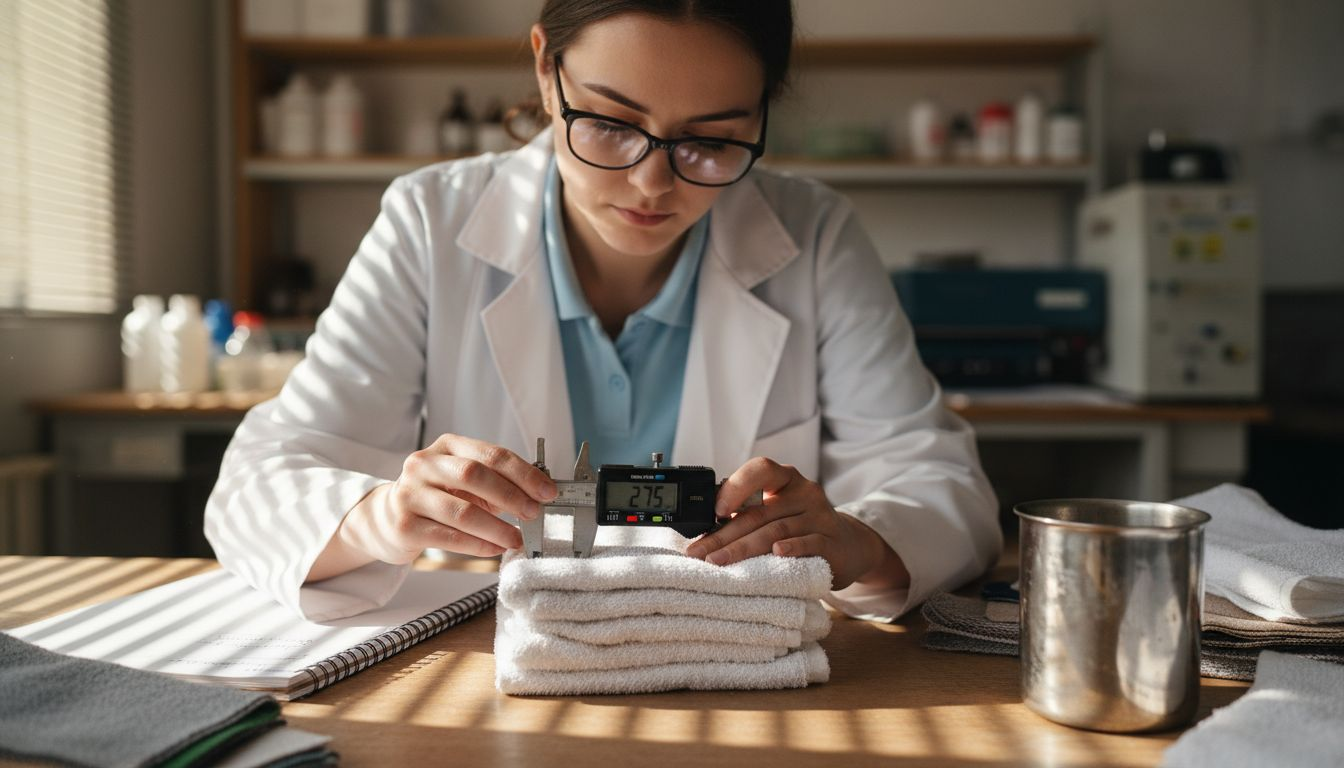
Absorbency measurements are equally sophisticated. Scientific research on moisture absorption employs precise instruments that track water absorption rates, measuring variables like absorption time, vertical wicking speed, and total moisture retention capacity. Researchers use high-precision scales to determine exactly how much water a towel can absorb within specific time frames, and advanced imaging techniques to visualize moisture distribution across different fabric structures. These metrics help manufacturers and consumers understand a towel’s true performance potential.
Pro Tip: Fabric Performance Insight: When shopping for towels, look for technical specifications that detail fabric weight (grams per square meter) and fiber composition, as these numbers provide concrete indicators of potential plushness and absorbency beyond visual appearance.
Material Differences: Cotton, Bamboo, and Blends
Choosing the right towel material can dramatically impact your drying experience, comfort, and long-term satisfaction. Comprehensive research on terry towel fabric performance reveals that different materials bring unique characteristics to towel construction, making material selection a nuanced decision.
Cotton remains the gold standard for towel materials, prized for its exceptional absorbency and soft texture. Traditional 100% cotton towels offer superior moisture-wicking capabilities, with long-staple cotton fibers providing maximum softness and durability. Scientific investigations of cotton terry fabrics demonstrate that factors like fabric weight and yarn twist significantly influence the towel’s water absorption and overall performance. Egyptian and Pima cotton represent premium variations, offering extra-long fibers that create exceptionally plush and absorbent towels.
Bamboo represents an emerging alternative with distinct advantages. These towels are naturally antimicrobial, hypoallergenic, and incredibly soft. Bamboo fibers create a lightweight, quick-drying fabric that feels silky against the skin. While not as traditionally absorbent as cotton, bamboo towels excel in moisture-wicking and temperature regulation. They’re particularly beneficial for individuals with sensitive skin or those seeking eco-friendly textile options. Blended materials like cotton-bamboo combinations offer a compromise, combining the best properties of both fibers to create towels with enhanced performance characteristics.
Here’s a clear comparison of popular towel materials and how their properties differ:
| Material | Softness Level | Absorbency Performance | Special Benefits |
|---|---|---|---|
| Egyptian Cotton | Extremely plush | Excellent moisture wicking | Very durable, luxurious feel |
| Pima Cotton | Very soft | Superior absorbency | Strong, resists pilling |
| Bamboo | Silky and gentle | Fast-drying, moderate | Naturally antimicrobial |
| Cotton-Bamboo Blend | Soft and resilient | Good balance | Eco-friendly, versatile use |
Pro Tip: Fabric Selection Strategy: When comparing towel materials, prioritize your primary need first – whether that’s maximum absorbency, quick drying, softness, or environmental sustainability – and choose a material that best matches your specific requirements.
When to Prioritize Plushness or Absorbency
Comprehensive research on terry towel fabric performance reveals that choosing between plushness and absorbency depends on specific functional requirements and personal preferences. The decision is not always straightforward, as different scenarios demand unique towel characteristics that balance comfort and utility.
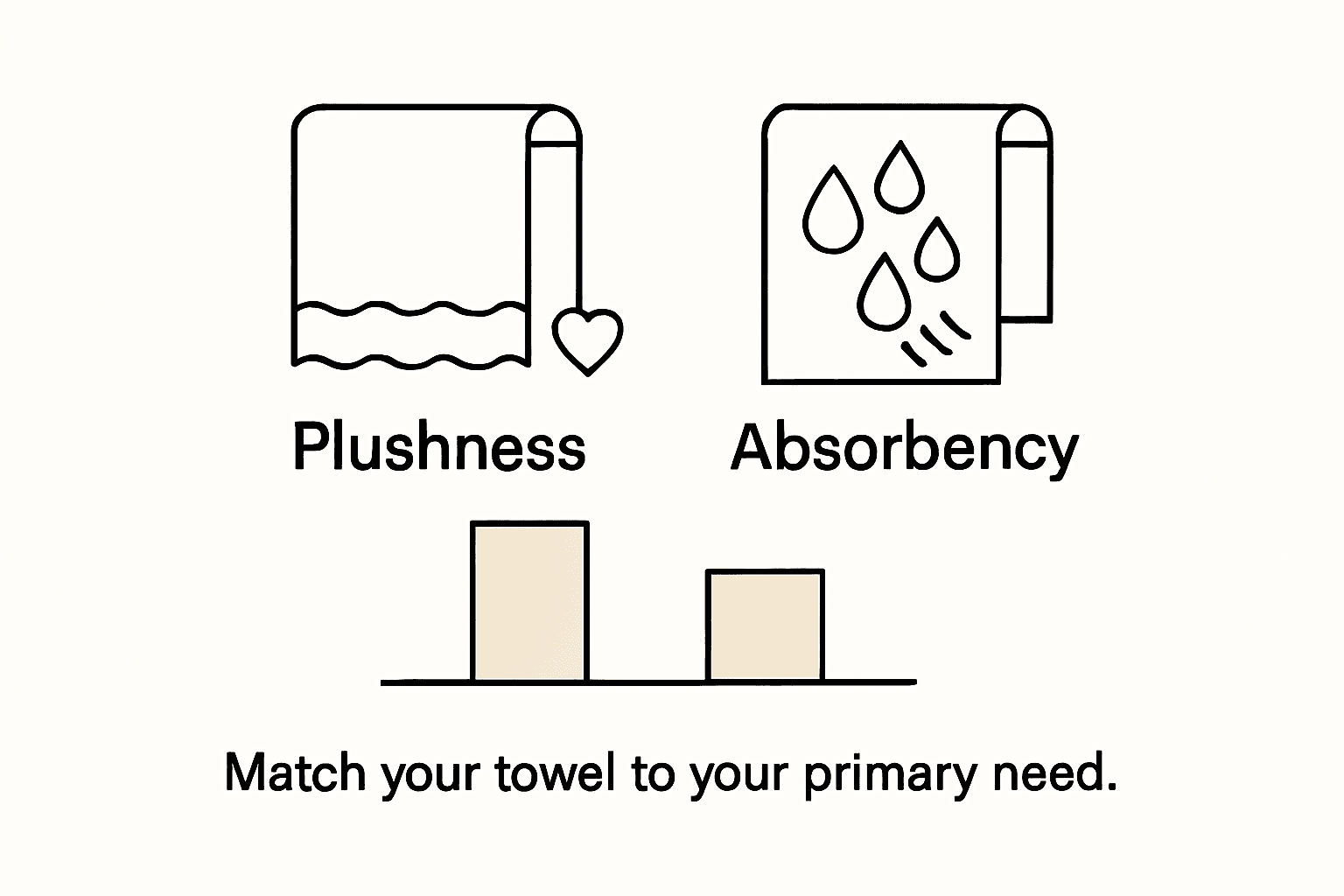
Prioritize plushness when comfort and sensory experience are paramount. Spa environments, luxury hotels, and personal self-care routines typically benefit from incredibly soft, thick towels that provide a luxurious post-bathing experience. Scientific investigations of towel fabric properties demonstrate that plush towels with higher pile density and longer fibers create a more indulgent tactile sensation. Individuals with sensitive skin, those recovering from medical treatments, or anyone seeking maximum comfort should lean toward towels that prioritize softness over pure absorption.
Conversely, absorbency becomes critical in high-moisture environments or situations demanding rapid drying. Athletes, swimmers, gym enthusiasts, and families with active lifestyles need towels that quickly wick moisture and dry rapidly. Thin, tightly woven towels with shorter pile heights often perform better in these scenarios, offering faster water absorption and quicker overall drying times. Outdoor activities, marine environments, and tropical climates also benefit from towels that prioritize moisture management over plush texture.
The table below summarizes when to prioritize plushness or absorbency for your towel choice:
| User/Setting | Best to Prioritize | Reason for Choice |
|---|---|---|
| Spa/Hotel guests | Plushness | Comfort and indulgent experience |
| Athletes/Swimmers | Absorbency | Quick moisture removal needed |
| Sensitive skin users | Plushness | Minimize irritation, maximize softness |
| Outdoor/Tropical use | Absorbency | Faster drying, moisture management |
Pro Tip: Balanced Selection Strategy: For most households, select towels with a moderate balance between plushness and absorbency, ensuring both comfort and functionality without compromising on either essential characteristic.
Common Myths About Towel Comfort and Performance
Comprehensive research on terry towel fabric performance challenges several widespread misconceptions about towel quality, revealing that consumers often misunderstand the complex science behind textile performance. Understanding these myths can help shoppers make more informed purchasing decisions and set realistic expectations about towel functionality.
One prevalent myth suggests that the thickest towel automatically represents the highest quality. However, scientific investigations of towel fabric properties demonstrate that thickness does not necessarily correlate with superior absorbency or comfort. Some thin, tightly woven towels can outperform thick, fluffy alternatives in moisture absorption and drying speed. Factors like fiber quality, yarn twist, and weaving technique play more significant roles in determining a towel’s actual performance than pure visual volume.
Another common misconception is that all cotton towels perform identically. In reality, cotton varieties differ dramatically in their characteristics. Long-staple cotton fibers offer superior softness and durability compared to shorter fibers, while the manufacturing process and specific cotton type can significantly impact a towel’s plushness, absorbency, and longevity. Consumers should look beyond generic cotton labeling and understand the specific attributes of their chosen fabric.
Pro Tip: Material Verification Method: Always check the detailed fabric specifications and performance metrics rather than relying solely on visual appearance or marketing claims when selecting towels.
Discover Towels That Perfectly Balance Plushness and Absorbency for Your Comfort
Choosing towels that feel soft while absorbing moisture efficiently can be challenging. This article highlights the importance of plushness and absorbency in towels, explaining how fabric construction, fiber types, and weave impact your drying experience. If you desire towels that deliver both luxurious softness and excellent moisture-wicking power, exploring premium options that meet these needs is essential.
Experience the ultimate blend of comfort and performance with our Scallop Piping Towels | Luxury Cotton Bath Sets. 
Shop now at Lotus Linen to find towels designed with precise attention to plushness and absorbency. Our collection is crafted for those who value softness without sacrificing functionality. Plus, complement your towel choice with our Plush Robes for Women for a complete spa-quality comfort experience at home. Don’t wait to transform your daily routine with towels that pamper your skin and absorb moisture quickly.
Frequently Asked Questions
What is the difference between plushness and absorbency in towels?
Plushness refers to the soft, luxurious feel of a towel, determined by factors like pile height and fiber density. Absorbency measures how effectively a towel can wick moisture away from your skin, influenced by fabric thickness and weave structure.
How can I test a towel’s plushness and absorbency before buying?
You can assess a towel’s plushness by gently running your hand across its surface to feel its softness. For absorbency, perform a water droplet test; a high-quality towel will absorb water quickly without it beading on the surface.
What materials are best for towels if I want both plushness and absorbency?
Cotton is typically the gold standard for its high absorbency and soft texture, with Egyptian and Pima cotton being premium options. Blends, such as cotton-bamboo, can also provide a good balance of softness and moisture-wicking properties.
When should I prioritize plushness over absorbency in my towel selection?
Prioritize plushness when comfort is key, like in spa settings or self-care routines. Plush towels provide a luxurious feel, making them ideal for individuals with sensitive skin or for those looking for maximum comfort after a bath.

