TL;DR:
- Proper care routines are essential to maintain luxury towels’ softness and durability.
- Best towels have long-staple fibers, high GSM (600-700), and durable construction features.
- Gentle washing, correct drying, and storage practices extend towel lifespan significantly.
Most people spend good money on plush, hotel-quality towels and watch them turn scratchy and flat within a few months. The problem is almost never the towel itself. It is the gap between what marketing promises and what proper care actually requires. Luxury towels are only as good as the habits surrounding them. Whether you are outfitting a home bathroom, a spa treatment room, or keeping a health-conscious household running smoothly, knowing what to buy and exactly how to maintain it makes the difference between towels that feel indulgent for years and ones that disappoint by spring.
Table of Contents
- What makes a towel truly machine washable and luxurious
- Understanding GSM: The key to softness, durability, and absorbency
- Machine washing towels: Expert secrets for long-lasting luxury
- Drying and storing machine washable towels: Where most people go wrong
- Why luxury towels often disappoint — and how to make them a lasting investment
- Bring luxury machine washable towels to your home or spa
- Frequently asked questions
Key Takeaways
| Point | Details |
|---|---|
| Material matters most | Opt for towels made with long-staple cotton and OEKO-TEX certification for lasting softness and safe family use. |
| GSM reveals quality | Luxury towels with 600-900 GSM offer superior plushness, absorbency, and durability. |
| Proper washing is essential | Use cold or warm water, half detergent, and never mix towels with other clothes for optimal results. |
| Smart drying prevents damage | Dry towels on racks, not hooks, and use dryer balls to retain fluff and freshness. |
| Simple habits extend lifespan | Adopting evidence-based routines means your towels stay luxurious and inviting after every wash. |
What makes a towel truly machine washable and luxurious
Now that you know why most luxury towels don’t last, let’s break down what actually makes a towel worthy of your home or spa.
The phrase “machine washable” on a tag means almost nothing without the right construction underneath it. A towel can survive a wash cycle without becoming soft or absorbent on the other side. True machine washability in a luxury towel comes from the fiber type, the weave density, and the finishing process used during manufacturing. Without all three working together, you are left with a towel that holds its shape but loses everything that made it feel special.
Fiber quality is everything. Long-staple cottons like Turkish, Egyptian, or Aegean are the benchmark for luxury towels because their longer fibers produce smoother, stronger yarn that resists pilling and retains softness across dozens of wash cycles. Short-staple cotton, by contrast, starts breaking down after just a handful of washes, leaving you with rough texture and reduced absorbency. The difference is not subtle once you feel it side by side.
For parents and spa owners, certifications are not optional. OEKO-TEX Standard 100 certification means every component of the towel, from the fiber to the dye, has been tested and confirmed free from harmful chemicals. This matters enormously for babies, young children, and guests with sensitive skin. Following children’s towel safety tips from trusted sources can also guide you toward the safest fabric choices when shopping for kids.
“All high-quality luxury towels are machine washable, with care instructions specifying cold to warm water (30 to 40°C), gentle or normal cycles, and tumble dry low to preserve softness and absorbency.”
Common shopping mistakes include choosing a towel based solely on color, pattern, or price tag. A beautifully dyed towel with poor weave construction will bleed color, lose shape, and scratch your skin within weeks. Smart buyers check the construction first and aesthetics second. Following solid hygienic towel practices also helps families preserve towel quality alongside safety.
One often-overlooked factor is the environmental footprint of your towel care routine. Choosing towels that tolerate cooler wash temperatures naturally reduces energy use. Pairing this with eco-friendly cleaning at home approaches supports a healthier household without sacrificing hygiene standards.
Key features to look for when buying:
- Long-staple cotton: Turkish, Egyptian, or Aegean
- OEKO-TEX or GOTS certification for chemical safety
- Double-stitched hems for durability through repeated washing
- Tight, even loop construction (not cut pile, which flattens faster)
- GSM rating of 600 or higher for true plushness
Pro Tip: Always ask for the GSM rating before purchasing. Brands that proudly display it are usually more confident in their construction quality. If the label doesn’t mention GSM, that is often a warning sign.
Understanding GSM: The key to softness, durability, and absorbency
With the basics covered, the next critical factor is GSM, a term often seen but rarely understood by buyers.
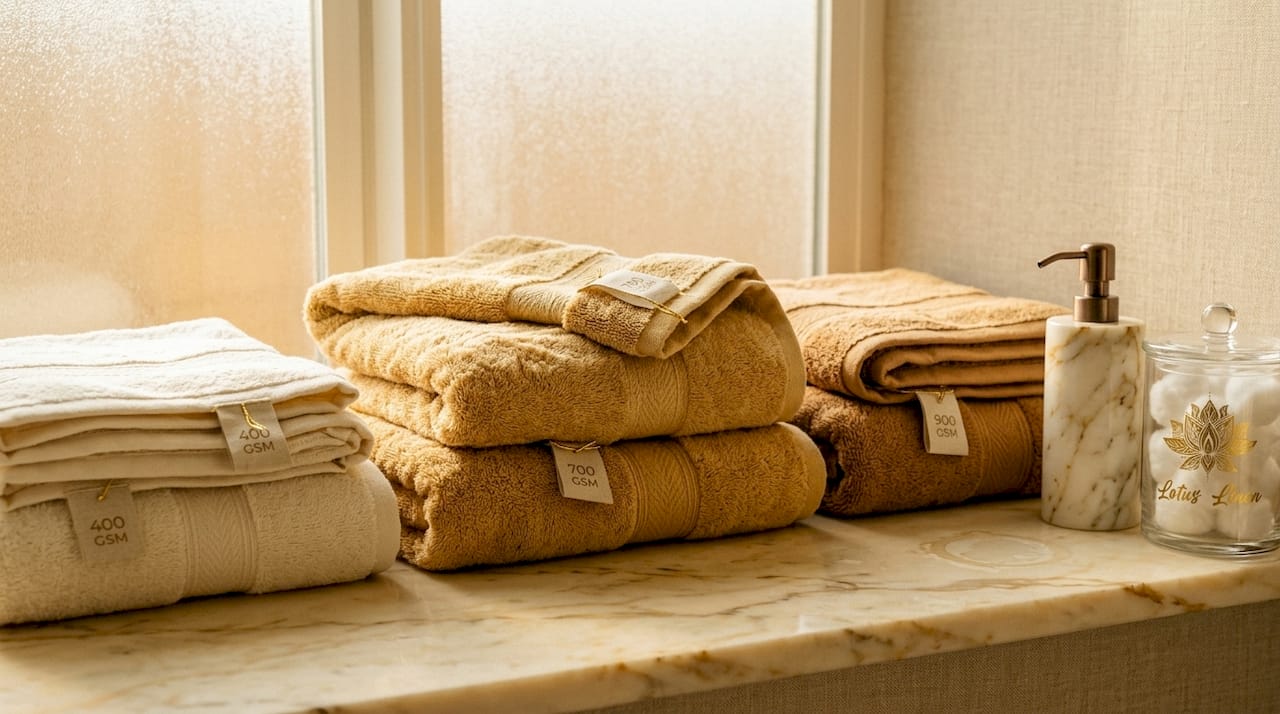
GSM stands for grams per square meter. It measures how much material is packed into every square meter of fabric, which directly determines how thick, heavy, absorbent, and plush a towel feels in your hands. It is the single most reliable number you can use to compare towels across brands.
Optimal GSM for luxury towels sits between 600 and 900, delivering the spa-like weight and absorbency most buyers are looking for. The Brooklinen Super-Plush towel comes in at 770 GSM, while Parachute’s Organic Plush sits at 750 GSM, both landing in the sweet spot for home and spa use.

Here is how GSM breaks down across different use cases:
| GSM Range | Feel and Weight | Best For | Machine Wash Notes |
|---|---|---|---|
| 300 to 400 | Light, quick-dry | Beach, gym, travel | Easy to wash and dry fast |
| 450 to 550 | Medium weight | Everyday home use | Good durability and care |
| 600 to 700 | Plush and absorbent | Luxury home, family bathrooms | Wash warm, tumble dry low |
| 700 to 900 | Ultra-dense, spa-grade | Spas, hotels, premium gifting | Longer dry time needed |
| 900+ | Very heavy | Boutique spas only | Requires commercial drying |
For most families and home spa setups, the 600 to 700 GSM range hits the ideal balance. It is plush enough to feel indulgent but light enough to dry fully between uses, which prevents mildew and odor buildup. Heavier towels above 800 GSM are beautiful, but they need more time to dry completely, which matters if you only own a few sets.
Benchmark testing confirms the performance difference. Top-rated towels score around 84% overall in independent evaluations, with 100% cotton at 600 GSM earning 84% and Egyptian cotton at 675 GSM scoring 80%. Absorption is measured by post-rinse weight gain, and higher GSM towels consistently outperform lighter options in that test.

Higher GSM towels do require more attention when it comes to washing and drying. Overloading the machine with thick, heavy towels prevents proper rinsing and leads to detergent buildup, which ironically makes the towels feel stiff and less absorbent over time. Understanding how to maintain that plushness long-term is something the team at maintaining towel softness covers in detail.
What GSM ratings reveal at a glance:
- Under 500 GSM: Not genuinely luxurious regardless of branding
- 600 to 700 GSM: The real luxury home standard
- 700 to 900 GSM: True spa grade, but demands careful drying
- Above 900 GSM: Reserved for boutique settings with commercial laundry equipment
Machine washing towels: Expert secrets for long-lasting luxury
Understanding what to buy is just the start. Real luxury comes from how you wash and care for those towels day to day.
The most common mistake is treating towels like any other laundry. Tossing them in with jeans, shirts, and sheets creates a recipe for lint transfer, snags, and uneven rinsing. Towels need their own load, their own temperature setting, and their own detergent approach to stay genuinely soft and hygienic.
Here is an expert-backed washing routine you can follow consistently:
- Sort and separate. Wash towels alone or with similar linens only. Wash separately from clothes to avoid lint transfer and snags that roughen surface fibers.
- Use half the detergent. Excess detergent does not rinse out fully, which leaves residue that stiffens the towel. Half the recommended amount is enough for most luxury cottons.
- Skip fabric softener entirely. This one surprises most people. Fabric softeners coat cotton loops and reduce their ability to absorb water. Over time, softener-treated towels feel greasy rather than plush.
- Use vinegar or baking soda instead. Baking soda and vinegar outperform hot water alone and synthetic additives when it comes to whitening, odor removal, and natural softening. Add half a cup of white vinegar to the rinse cycle to break down mineral buildup and residue.
- Choose warm over hot. Wash every three uses or weekly using warm water rather than hot. Hot water accelerates fiber breakdown over time. Reserve hot settings for when a towel genuinely needs sanitizing after illness.
- Don’t overload the machine. Towels need room to agitate and rinse properly. Fill the drum to about two-thirds capacity maximum.
- Front-loaders need extra care. If you use a front-loading machine, front-loaders need less vinegar and HE-specific detergent to avoid over-sudsing and poor rinsing.
Following solid towel care instructions from the start protects your investment from day one. You can also find specific guidance on preventing towel odor before it becomes a stubborn problem.
Wash frequency by user type:
- Individuals: Every three to four uses
- Families with children: Every two to three uses
- Spa or guest towels: After every single use without exception
- Gym or pool towels: After every use due to sweat and chlorine exposure
Pro Tip: Run a second rinse cycle once a month with nothing but half a cup of baking soda and no detergent. This deep-cleans residue buildup from the fibers and restores absorbency without any harsh chemicals.
Drying and storing machine washable towels: Where most people go wrong
Even the best washing routine can be ruined by what happens after towels leave the machine. Drying and storage are the unsung heroes of pampered linens.
Most people throw their towels in the dryer on high heat and call it done. This is where the damage accumulates silently. Over-drying on high heat breaks down cotton fibers faster than almost anything else, leaving you with thin, flat, scratchy towels that look years older than they are.
The right approach to drying:
- Shake towels before drying to fluff the loops and prevent them from compressing flat during the cycle
- Use dryer balls instead of dryer sheets to add fluff naturally without coating the fibers
- Set the dryer to low or medium heat, never high
- Remove towels while still very slightly damp and allow them to finish air drying on a rack
- Air dry on a rack, not a hook, so all surfaces get air circulation and moisture can escape evenly
The hook mistake is one of the most widespread. Hanging a damp towel on a single hook bunches the fabric, traps moisture in the center, and creates the perfect environment for mildew to develop, even when you cannot smell it yet. A rack or towel bar spreads the towel flat and lets it breathe properly.
For drying towels properly in smaller spaces, over-the-door racks work just as well as wall-mounted bars. The principle is the same: maximum air circulation, zero bunching.
Choosing sustainable bathroom materials and pairing them with proper towel storage elevates both function and aesthetics in any bathroom. Ventilated closets and open shelving keep folded towels dry and fresh between uses, which is especially important for spa environments where towels sit longer before being called into rotation.
Storage rules that preserve quality:
- Only fold and store towels that are completely dry, not just cool to the touch
- Use open shelving or ventilated closets rather than sealed drawers
- Rotate your stack so older towels get used first, keeping wear even across your collection
- Avoid cramming towels tightly together, which compresses the loops permanently
- Store away from direct sunlight to protect color and fiber integrity
Pro Tip: If you ever notice your towels feel rough after washing, the culprit is almost always hard water mineral buildup combined with detergent residue. Run a cycle with one cup of white vinegar and no detergent, then follow with a baking soda cycle. The difference is immediate.
Why luxury towels often disappoint — and how to make them a lasting investment
Here is an opinion that runs counter to most towel marketing: the quality of the towel matters far less than most buyers think. What truly determines how a luxury towel performs over time is the habits that surround it.
We hear from spa owners who spent serious money on high-end towels only to see them turn flat and dingy within six months. In nearly every case, the culprit was overloaded machines, too much detergent, and tumble drying on high heat. The towel was not the problem. The routine was.
Brands rarely teach you how to care for what they sell. The care label is a legal requirement, not a guide to genuinely preserving quality. Marketing focuses almost entirely on the purchase moment and not on the two, three, or five years of daily use that follow. This leaves buyers with gorgeous towels and no real plan for keeping them that way.
There is also a myth worth challenging directly: that expensive means durable. A $20 towel with long-staple cotton and proper care will outlast a $60 towel made from short-staple cotton that gets over-dried every week. Durability is a combination of construction quality and care habits working together. Neither one alone is enough.
For spa owners specifically, establishing what we think of as “towel rules” is transformational. A written protocol for washing temperature, load size, detergent amount, and drying method eliminates guesswork across staff and keeps every guest experience consistent. The investment in luxury linens only pays off when the care system is just as intentional as the purchase decision.
For families, keeping colors vibrant long-term comes down to cold washes for colored towels, separation from whites, and avoiding bleach entirely. These are simple habits that most households skip because nobody explained why they mattered until the towel faded beyond saving.
The most powerful reframe we can offer is this: treat your towels like you treat your favorite clothing. You would not throw a cashmere sweater in a hot dryer. You would not overload a delicate wash cycle with a dozen heavy items. Apply that same intentionality to your towel routine and the investment pays for itself many times over.
Bring luxury machine washable towels to your home or spa
Armed with these insights and proven routines, your next step is simple: choose towels and robes that make everyday luxury effortless.

At Lotus Linen, every towel is built for the kind of performance this article describes: high GSM construction, long-staple cotton fibers, and care-forward design that holds up beautifully across hundreds of machine wash cycles. Our luxury scallop bath towels deliver spa-grade softness with an elegant finish that works in both home and commercial settings. To complete the experience, explore our men’s robe collection and women’s robe collection for plush, machine washable robes that pair seamlessly with your upgraded towel setup. When quality starts at the fiber level, the everyday ritual of stepping out of the shower becomes genuinely luxurious.
Frequently asked questions
How often should I wash luxury towels to keep them fresh and safe?
Wash luxury towels every three uses or once a week under normal conditions. In spa settings or after illness, wash after every single use without exception.
Is hot water safe for machine washing high-end towels?
Use cold or warm water for regular washes to protect the long-staple fibers. Hot water occasionally sanitizes effectively but repeated hot washing degrades fiber quality faster than any other factor.
Can fabric softeners be used on plush towels?
No. Avoid fabric softeners entirely and use white vinegar or baking soda instead. Softeners coat the cotton loops and reduce absorbency over time, which defeats the purpose of a luxury towel.
What does GSM mean and why does it matter for towels?
GSM stands for grams per square meter. It measures the density and weight of the fabric, and optimal GSM for luxury home and spa towels sits between 600 and 900, giving you the absorbency and plushness that justify the price.
How do I prevent towels from losing their softness and absorbency?
Use gentle detergent in small amounts, use dryer balls for fluff, avoid over-drying on high heat, and always air dry or rack-dry between uses rather than hanging on a hook.