
TL;DR:
- Modern luxury robes prioritize softness, fit, and durability over traditional status symbols.
- Historically, robes signified rank and wealth through materials like silk and embroidery.
- Actual comfort and longevity in use define true luxury today, not brand or price.
Walk into any upscale hotel and the robe hanging in the closet feels like a promise. It signals pampering, status, and a certain elevated life. But here’s what most people miss: that promise is only worth keeping if the robe is actually comfortable. Modern buyers evaluate robes on softness, fit, and durability after repeated washes, not on prestige alone. Understanding where luxury robes come from, how their meaning changed over centuries, and what genuinely makes one worth owning today gives you a real advantage when choosing the robe that actually fits your life.
Table of Contents
- Tracing the origins of luxury robes
- Evolution and changing meaning of luxury robes
- Modern luxury robes: What really matters today
- How to identify and care for a true luxury robe
- Why the real luxury is comfort: Our take
- Elevate your comfort: Explore modern luxury robes
- Frequently asked questions
Key Takeaways
| Point | Details |
|---|---|
| Origins in prestige | Luxury robes began as ceremonial and status garments across ancient cultures. |
| Shift to performance | Today, softness and durability matter as much as historical styles or brand. |
| Know what to look for | Test quality by material feel, construction, fit, and care in real use. |
| Redefining luxury | True luxury is about comfort and daily satisfaction, not exclusive labels. |
| Easy maintenance | Gentle care keeps modern luxury robes plush use after use. |
Tracing the origins of luxury robes
To understand what a luxury robe means today, you have to start with where the concept was born. Robes as a category of clothing have existed for thousands of years, but their association with luxury emerged in some very specific cultural moments.
In ancient China, long flowing silk garments worn by imperial court members were both practical and deeply symbolic. The dragon robe, or “long pao,” was reserved for royalty, with embroidery patterns that communicated rank, region, and role. Silk itself was so prized that its production remained a closely guarded Chinese state secret for centuries. Wearing it meant you had access to something rare and expensive. That association between fine fabric and elevated status became the backbone of luxury robe culture worldwide.
Japan developed its own tradition with the kimono, a garment worn across all social strata but varying dramatically in quality depending on material and craftsmanship. For the upper classes, kimonos were made from heavy silk crepe, hand-painted, or woven with gold thread. These were not everyday garments. They were investments, heirlooms, and symbols.
In the Near East and Persia, loose-fitting robes made from luxurious imported fabrics were standard dress for the wealthy. The “kaftan,” a word borrowed from Turkish, described long-sleeved robes worn by Ottoman sultans and later adopted across the Mediterranean and into Europe. When European traders and travelers returned home from the East in the 16th and 17th centuries, they brought these garments and the idea of the robe as a leisure item with them.
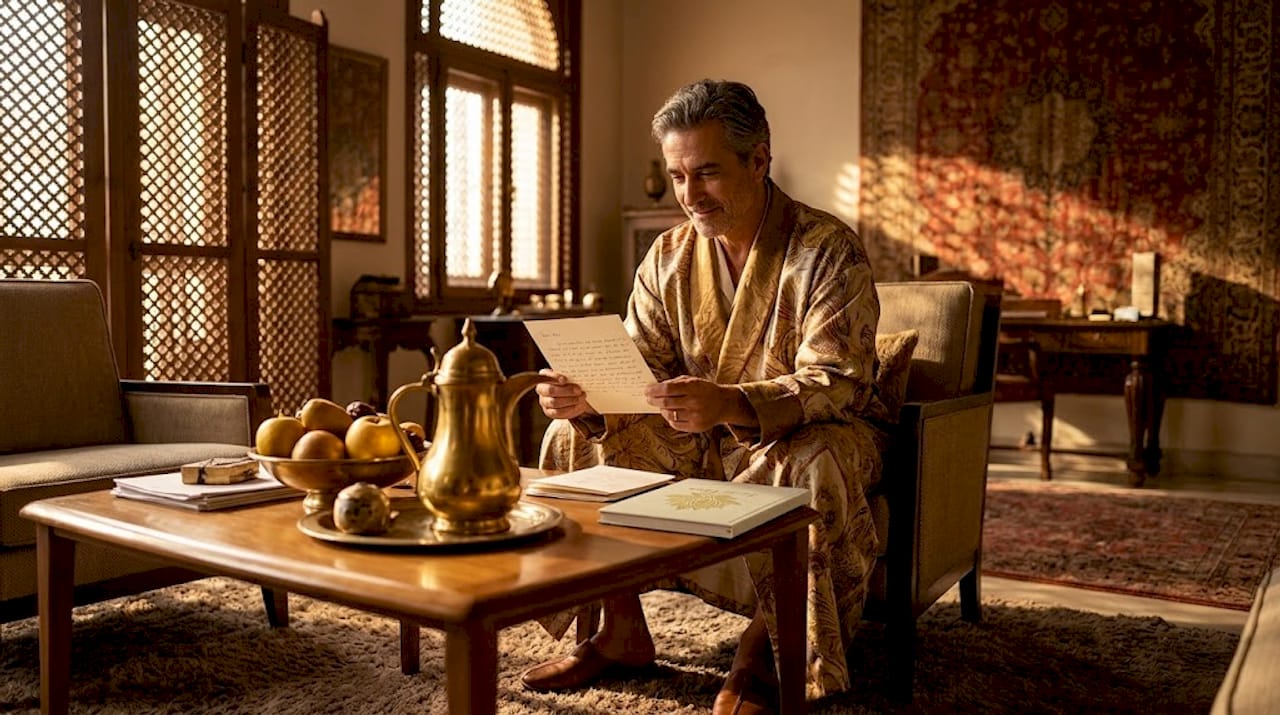
You can read more about the history of bathrobes and how these global traditions converged into the modern garment.
Key features across early luxury robe cultures:
- Material as status: Silk, brocade, and velvet defined luxury in Asia, Persia, and Europe
- Embroidery and embellishment: Hand-sewn decorations indicated rank and wealth
- Robe length and fit: Floor-length robes signaled ceremony; shorter styles marked domestic use
- Regional naming conventions: Terms varied widely, creating historical confusion
That last point is worth pausing on. Terminology around early robes is genuinely messy.
“Banyan” terminology is sometimes conflated across contexts, such as dressing-gown versus nightgown or loose gown uses, so comparative history benefits from checking whether sources mean garment type or local naming conventions.
The “banyan” was an informal robe popular in 18th-century Europe and Colonial America, typically worn at home for reading, writing, or receiving close acquaintances. Some historians use the term to describe a specific cut; others use it loosely for any home robe of the period. This kind of inconsistency shows up constantly in the history of luxury robes, which is why it matters to understand the cultural context behind any given garment rather than relying only on its name.
Evolution and changing meaning of luxury robes
Luxury robes did not stay ceremonial for long. Over centuries, their meaning shifted from external display to internal comfort, from palace to parlor to personal bathroom.
Here is a broad view of how that transformation happened:
| Period | Key features | Notable shift |
|---|---|---|
| Ancient to medieval | Silk, brocade, imperial use | Status and ceremony |
| 16th to 18th century | Banyan and kaftan styles, European adoption | Domestic leisure |
| 19th century | Cotton and wool for the emerging middle class | Broader accessibility |
| Early 20th century | Hotel spa robes, terry cloth introduced | Functional comfort |
| Late 20th century to now | Performance blends, personalization | Everyday luxury |
The three main stages of robe evolution followed a clear pattern:
- Ceremonial and elite: Robes were worn to communicate power, wealth, and religious or political authority. Materials and embellishments were the primary language.
- Household and relaxation: By the 17th and 18th centuries in Europe, the robe had migrated indoors. Wealthy gentlemen received visitors in their banyans. The robe became a private comfort object.
- Modern high-performance: Today’s luxury robes are engineered to perform. The focus is on feel against skin, warmth retention, moisture absorption, and durability over dozens of wash cycles.
The shift in what counts as a luxury robe material is one of the most interesting chapters in this story. Historically, silk was the gold standard. It looked incredible and carried enormous prestige. But silk is notoriously high-maintenance. It can’t handle a washing machine, it loses luster quickly, and it doesn’t absorb moisture well. For a post-shower robe, silk is actually a poor choice.
This is where modern luxury robe materials changed the game. Egyptian cotton, Turkish cotton, bamboo-viscose blends, and microfiber terry have all redefined what “luxurious” feels like in real use. The weight of a quality terry cotton robe after a bath, the way a well-made waffle weave breathes in summer, these sensory experiences replaced silk as the gold standard of luxury for most buyers.
You can trace this evolution in more detail through bathrobe history and evolution across different eras and cultures.
Pro Tip: Many historical luxury materials fall short in practical daily use. When shopping today, look for robes that list specific fabric weights (measured in GSM, or grams per square meter). A plush robe typically runs 400 to 600 GSM. That number tells you more about true luxury than brand heritage alone.
Modern luxury robes: What really matters today
History gives context, but it does not tell you what to buy. Let’s focus on what actually separates a truly luxurious robe from an expensive disappointment.
The data here is telling. Performance criteria now drive most robe purchasing decisions, with softness, secure fit, and wash-and-dry durability ranking as the top evaluation factors. In fact, 68% of buyers say they prioritize softness in material choice above all other features. That is a dramatic shift from even a few decades ago, when brand name or country of origin dominated the conversation.
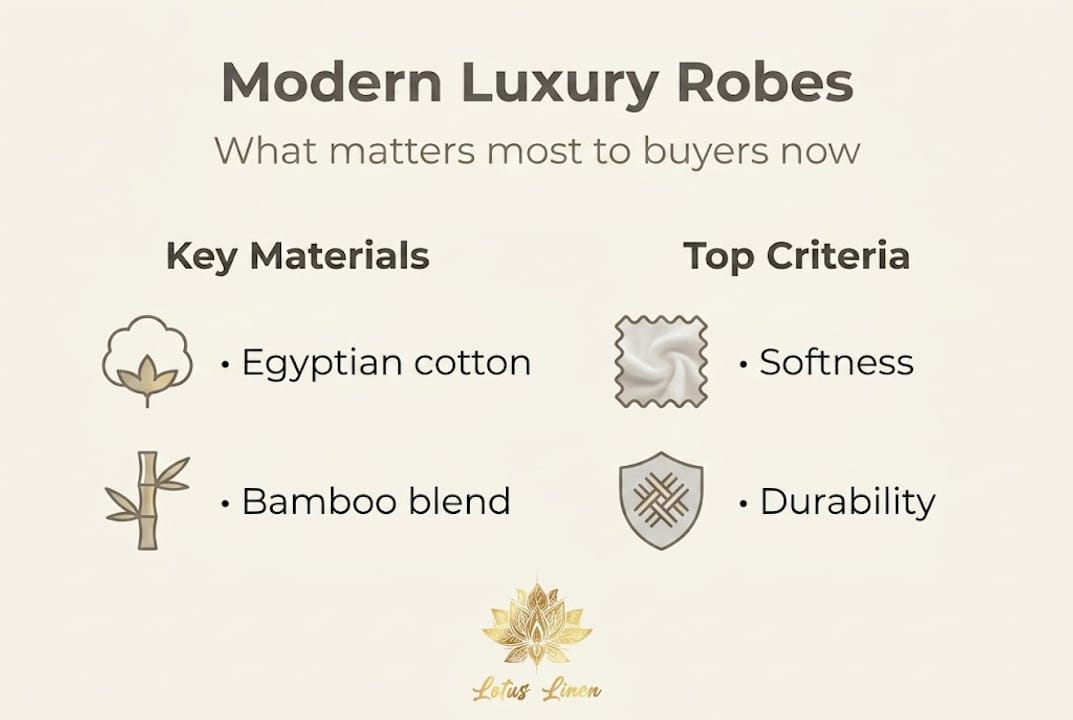
Here is how historical luxury criteria compare to what buyers want now:
| Criteria | Historical luxury | Modern luxury |
|---|---|---|
| Material | Silk, brocade, velvet | Terry cotton, bamboo, microfiber |
| Purpose | Status signaling | Daily comfort and wellbeing |
| Maintenance | High care, hand wash only | Machine washable, durable |
| Fit | Ceremonial, one-size | Tailored, secure, size-inclusive |
| Value indicator | Price and origin | Performance after repeated use |
The way people actually test a robe for luxury today looks nothing like selecting an antique court garment. Real-world scenarios have replaced prestige signals:
- Post-shower warmth: Does the robe absorb moisture quickly and feel soft immediately against damp skin?
- Lounging comfort: Can you wear it for two hours of reading without feeling restricted or overheated?
- Morning routine: Is the belt secure, the pockets functional, the length appropriate for moving around your home?
- After ten washes: Does the robe still feel plush, or does it pill, shrink, or lose shape?
The last scenario is the most important and the most overlooked. A robe that feels incredible on day one but falls apart after a season is not a luxury item. It is an expensive disappointment. For a full breakdown of what makes a spa-quality robe work in real life, the luxury spa robe breakdown covers the key features in depth.
Another factor shaping modern expectations is the rise of home spa culture. People are investing in their bathrooms, their skincare routines, and their relaxation rituals. The robe is a central part of that experience. Understanding the range of options available, from plush terry to lightweight waffle, is helpful context, and types of spa robes explains how each serves different needs and preferences.
How to identify and care for a true luxury robe
Knowing the history and the modern standards is one thing. Being able to recognize and maintain a quality robe in practice is another.
Here are the steps to evaluate any robe before you commit:
- Feel the fabric immediately. Run it against the inside of your wrist or your neck. If it scratches or feels stiff, that will not improve after washing. True quality feels smooth without being slippery.
- Examine the seams. Turn the robe inside out and check the stitching at the collar, cuffs, and belt loops. Tight, even stitching without loose threads indicates a garment built to last.
- Check weight and thickness. Lift the robe and estimate its weight. A quality terry or plush robe should feel substantial. Very lightweight robes can lack warmth and durability.
- Test the fit. A luxury robe fits your body comfortably without bunching at the shoulders or dragging on the floor. The belt should tie securely and stay tied during normal movement.
- Review the care tag. A well-made robe will have clear care instructions. Robes that require dry cleaning only are not practical for regular use. Machine-washable options that hold up to repeated cycles are the true measure of robe durability.
Caring for your robe properly is just as important as choosing the right one. Most buyers underestimate how much care affects the long-term experience.
Basic care principles that protect your investment:
- Wash on a gentle cycle in cool or warm water, not hot
- Use a mild detergent without bleach or harsh brighteners
- Tumble dry on low heat, or air dry when possible
- Shake the robe out after drying to restore loft in terry fibers
- Avoid fabric softeners over time, as they coat fibers and reduce absorbency
If you own robes and use them frequently, checking guidance on bathrobes for frequent use can help you set realistic expectations for longevity. For a deeper look at how different fabrics behave over time, the bathrobe fabric guide is a practical reference.
Pro Tip: Never judge a robe solely by its brand or price tag. Wash it five times, wear it on a cold morning, and use it after a long workout. True luxury shows in the wear. An expensive robe that pills after three washes is not luxury. A moderately priced robe that stays plush for years absolutely is.
Why the real luxury is comfort: Our take
After tracing luxury robes from imperial Chinese silk all the way to today’s high-performance terry blends, we have a strong opinion worth sharing: the prestige-obsessed definition of luxury has always been the least interesting version of it.
For centuries, luxury robes existed to tell other people something. What you wore communicated rank, wealth, taste, and access. That is an externally defined system of value, and it is fundamentally fragile. Trends change. Status symbols date quickly. The brocade robe that signaled sophistication in one era looks theatrical in another.
Comfort is the opposite. It does not care what year it is or who is watching. The feeling of wrapping yourself in a well-made robe on a cold morning, or slipping into something soft after a long day, that experience does not depreciate. It actually compounds. Good robes become better with use, more familiar, more associated with personal rituals and quiet moments that genuinely restore you.
We think about this when we design and curate robes. The question is never “does this look expensive?” The question is “will you reach for this every single day?” The role of robes for home spa comfort captures this philosophy well: the best robe is the one that makes your ordinary routines feel genuinely good.
Redefining luxury as personal satisfaction rather than external exclusivity is not a compromise. It is an upgrade. The buyers who understand this end up with robes they love deeply rather than robes they simply paid a lot for. That distinction matters more than any heritage label ever could.
Elevate your comfort: Explore modern luxury robes
History has shown us that the finest robes have always been about how they make you feel, not just how they look. At Lotus Linen, we take that seriously.
Our collection brings together the best of material innovation and thoughtful design, from our signature plush robes to the breathable waffle weave options perfect for home spa routines. Every robe is built to meet the performance standards modern buyers actually care about: softness that lasts, secure fit, and durability through real daily use. Whether you are treating yourself or finding a meaningful personalized gift, our robes are designed to be reached for every single day. Browse our full selection at shoplotuslinen.com and find the robe that redefines your morning.
Frequently asked questions
What makes a robe ‘luxury’ in today’s market?
Modern luxury robes are defined by softness, secure fit, and durability after repeated washes, not just brand name or price.
How old are luxury robes as a garment?
Luxury robe traditions stretch back thousands of years, with ceremonial roots in China, Japan, Persia, and Europe, though naming conventions varied widely across cultures and periods.
Are materials or fit more important for luxury robes?
Both matter, but today’s buyers tend to prioritize softness and secure fit based on real-world performance rather than historical prestige criteria.
How should I care for a luxury robe?
Follow the care label, use a gentle wash cycle, and avoid high heat drying to keep your robe plush and preserve fabric durability over time.

