
TL;DR:
- Effective linen management directly impacts guest satisfaction, operational costs, and brand reputation.
- Proper assessment, quality selection, disciplined laundering, and regular monitoring ensure linen longevity and consistency.
- Investing in staff training and high-quality linen products enhances the guest experience more than solely focusing on cost.
One misplaced delivery or an empty linen cart at peak hours can unravel an otherwise flawless guest experience. For spa owners and luxury hospitality managers, linen supply management is not a back-of-house afterthought. It is a direct lever on guest satisfaction, operational margins, and brand reputation. A single shortage can disrupt the flow of an entire service day, eroding the trust you have spent years building. This guide walks you through every stage: assessing true linen needs, selecting the right materials, executing best-in-class laundering, and building feedback systems that keep your operation consistently excellent.
Table of Contents
- Assessing your linen needs: Foundation for consistency
- Selecting the right linens: Quality, durability, and cost factors
- Implementing best practices in laundering and handling
- Monitoring, troubleshooting, and continuous improvement
- A fresh perspective on linen supply management: It’s a hospitality mindset
- Elevate your guest experience with Lotus Linen solutions
- Frequently asked questions
Key Takeaways
| Point | Details |
|---|---|
| Accurate needs assessment | Calculating linen requirements precisely prevents costly shortages and waste. |
| Quality pays off | Investing in premium linens extends lifespan and enhances guest comfort, offsetting higher initial costs. |
| Process discipline | Following evidence-based laundering and handling routines preserves quality and safety. |
| Continuous improvement | Regular monitoring and smart feedback loops safeguard supply health and operational excellence. |
Assessing your linen needs: Foundation for consistency
Every efficient linen program starts with one question: how much do you actually need? Most facilities undercount because they only think about linens in use. A reliable supply system accounts for what is on the guest, what is in the laundry, what is in reserve, and what is waiting to rest between cycles.
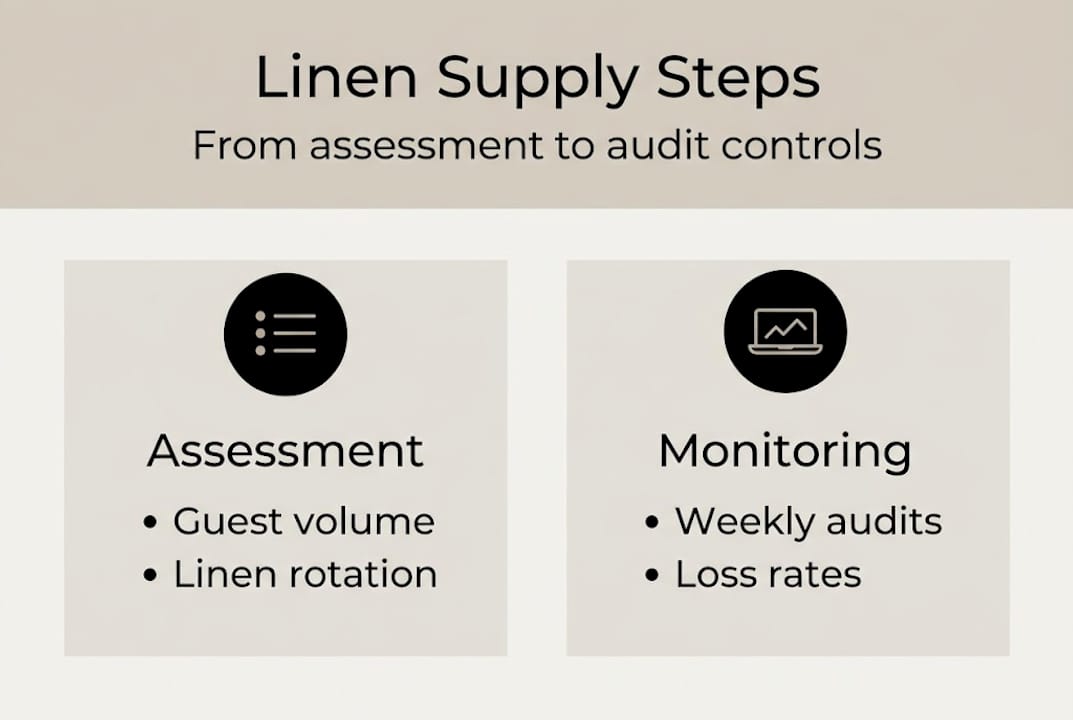
TRSA recommends calculating supply based on guest volume, linen type, and rotation cycles. That means your par stock, the minimum quantity needed to keep operations running without interruption, should be calculated at three levels.
| Par level | Definition | Recommended quantity |
|---|---|---|
| Minimum | Active use on the floor | 1x daily guest volume |
| Optimal | Minimum plus laundry cycle stock | 2x daily guest volume |
| Buffer | Emergency reserve stock | 0.5x daily guest volume |
For a spa running 80 guest treatments per day, this framework puts optimal stock at 160 towel sets with a 40-set buffer. Do not skip the buffer. It is what keeps you running when a supplier is late or a washing machine breaks down.
Several factors shape your forecast beyond simple headcount:
- Occupancy rates and seasonal variation directly shift demand week to week
- Amenity type matters: massage tables need different draping linens than pool lounges
- Treatment mix influences soil load and therefore turnover frequency
- Specialty linens like heated wraps or custom-branded robes often get overlooked in initial counts
Pro Tip: Summer demand in resort spas can surge by 30% or more. Review your spa linen replacement policies before peak season and pre-order buffer stock in spring rather than scrambling mid-July.
One of the most common mistakes is ignoring replacement rates. Linens exit service continuously through shrinkage, damage, and loss. Factor in a monthly attrition rate of 2 to 5% when building your order plan, and align that with your linen maintenance standards to make sure worn stock gets retired before guests encounter it.
Selecting the right linens: Quality, durability, and cost factors
Once your volume requirements are set, the next decision is what you actually buy. This choice shapes your cost per use for the next several years, not just the next season.
Material grade is your first filter. For luxury spa environments, 100% combed or ring-spun cotton delivers the softness and absorbency guests expect. Blended fabrics (typically 60% cotton and 40% polyester) are more durable and wrinkle-resistant, which makes them appealing for high-volume hotel settings. However, blends can feel less plush, and in a premium spa, that tactile difference registers with guests immediately.
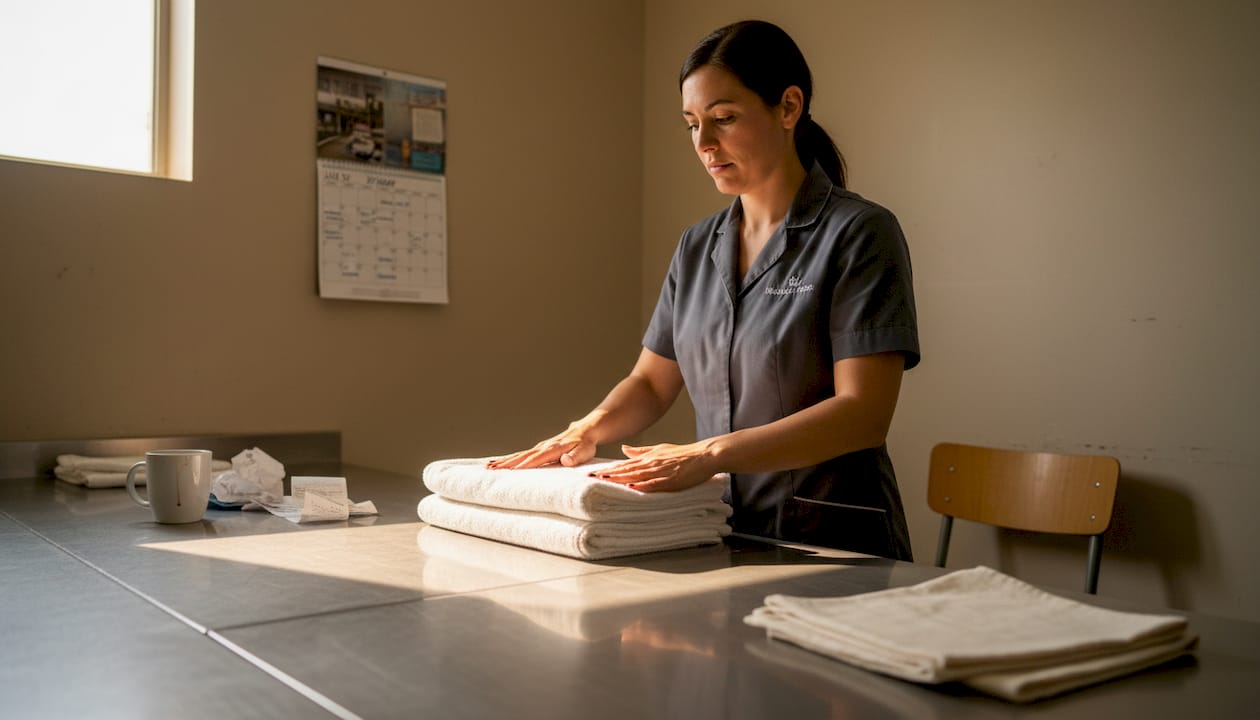
The ROI perspective changes when you extend the time horizon. Premium linens last up to 2.5 times longer than standard grade products, meaning a higher upfront spend often yields a lower cost per use over the product’s full life.
| Factor | Linen rental | Linen ownership |
|---|---|---|
| Upfront cost | Low | High |
| Monthly spend | Predictable | Variable |
| Quality control | Limited | Full control |
| Branding options | Minimal | Fully customizable |
| Profit margin impact | 10-12% average (rental operators) | Higher over time with proper care |
Rental services average 10-12% margins, which tells you something important: rental companies make modest returns, meaning the pricing already reflects their operating costs. For spas with strong laundering infrastructure, ownership almost always delivers better long-term economics.
Before you decide, run through this checklist:
- What is your in-house laundry capacity?
- Can you meet sanitation standards independently?
- Do you want branded or monogrammed linens? (Rental programs rarely accommodate this.)
- What is your projected linen lifespan based on treatment volume?
Explore the differences in detail through our breakdown of rental versus purchasing linens before locking into a long-term contract. Once you choose ownership, pair that decision with disciplined linen care for softness to protect your investment from the first wash.
Implementing best practices in laundering and handling
With your supplies chosen, daily process discipline is what protects both fabric quality and your guests’ health. Laundering is not just a hygiene step. It is a longevity strategy.
Follow this step-by-step cycle to keep your linens performing at their best:
- Sort by color and soil level before loading. Mixing heavily soiled treatment linens with lightly used robes transfers stains and bacteria.
- Pre-treat stains with an enzyme-based product appropriate to the fabric before the main wash cycle begins.
- Wash whites at 60 to 71°C using pH-neutral detergents. TRSA hot water standards confirm this range effectively eliminates bacteria without destroying fibers.
- Dry at appropriate heat settings for the fabric. Over-drying is one of the leading causes of premature fabric breakdown.
- Allow a 24-48 hour rest period between uses. TRSA advocates this practice to restore fiber elasticity and extend towel life significantly.
- Inspect before folding. Catch worn or damaged linens before they reach a guest.
Safety note: All chemical handling, including detergents, stain removers, and bleach alternatives, should follow manufacturer safety data sheet protocols. Staff should wear appropriate gloves and work in ventilated areas. Mislabeled or improperly diluted chemicals are a leading cause of fabric damage and workplace incidents.
Pro Tip: Use dedicated color-coded carts for clean and soiled linens. Cross-contamination from shared carts is an avoidable source of recontamination that undermines your entire sanitation process.
Pair your laundry cycle discipline with smart laundering frequency strategies to find the right balance between hygiene and fabric wear. And make sure your team is trained on formal linen safety procedures so standards do not drift when management is not watching.
Monitoring, troubleshooting, and continuous improvement
Even the best processes need regular checks. Building in systematic controls turns your linen program from reactive to predictive.
Start with inventory controls. Assign a specific team member to weekly linen audits. Count stock by category, compare against your par levels, and flag any department showing consistent shortfalls. Routine supply health audits are a best practice endorsed by TRSA for identifying shrinkage and overstock before they become costly problems.
| Metric | Benchmark | Warning sign |
|---|---|---|
| Linen loss rate | Less than 5% monthly | Over 8% signals theft or mishandling |
| Wash cycle cost | Stable month over month | Sudden spikes suggest overloading or equipment issues |
| Guest complaint rate | Less than 1% of stays | Any trend upward requires immediate investigation |
| Par stock adequacy | Buffer always available | Hitting minimum more than twice per quarter is a red flag |
Troubleshooting common problems requires a root cause mindset. Loss and shrinkage usually trace back to inadequate tracking at handoff points. Overstock ties up cash and storage space. Both are solved by tighter audit cycles and better data.
Improvement does not stop at the laundry room. Implement feedback loops from both guests and housekeeping staff. They notice texture degradation, inconsistent folding standards, and inadequate supply before managers do.
Three practices that make the biggest ongoing difference:
- Quarterly forecast reviews that incorporate occupancy data and seasonal patterns
- Staff feedback forms reviewed monthly by operations leadership
- Annual linen condition assessments that retire worn stock proactively
Connect your monitoring routine with guidance on bath linen hygiene and apply the proven tactics in our resource on robe longevity tips to squeeze maximum life from every piece in your inventory.
A fresh perspective on linen supply management: It’s a hospitality mindset
Here is something most operational guides will not tell you: the spas and hotels that consistently earn top-tier guest reviews are not necessarily the ones with the most expensive linens. They are the ones with the most disciplined people behind those linens.
Fixating on the lowest cost per unit is a trap. When you optimize purely for price, you commoditize a touchpoint that guests associate directly with luxury and care. The feel of a perfectly laundered robe or a crisp, warm towel is not just comfort. It is a signal about how much your brand values the guest.
A contrarian truth worth sitting with: investing in staff training on linen handling and running structured guest feedback loops delivers more measurable improvement than swapping to a slightly softer cotton grade. Operational consistency, the kind built through disciplined auditing, rest cycles, and team accountability, is what separates good from exceptional.
Your linen care mindset sets the ceiling for your brand. Products matter, but people and process matter more.
Elevate your guest experience with Lotus Linen solutions
Applying these management principles is far more effective when the products themselves are built for luxury performance. Lotus Linen designs robes, towels, and spa accessories specifically for hospitality environments that cannot afford inconsistency.

Our men’s robes collection and women’s robes collection are crafted from premium materials built to withstand rigorous commercial laundering while staying plush for guests. For towels that hold their shape and softness across hundreds of wash cycles, explore our scallop bath towels, a favorite among spa directors who want aesthetic elegance without sacrificing durability. We also offer customization options for branded programs. Reach out to discuss a tailored linen solution for your property.
Frequently asked questions
How often should I replace spa linens to maintain luxury standards?
Aim to replace high-use spa linens every 12 to 18 months or at the first visible signs of wear. Premium linens last longer up to 2.5 times the standard grade, so your interval may extend with quality investment.
What temperature should I use to launder white linens for optimal hygiene?
Wash white linens at 60 to 71°C using pH-neutral chemicals for full sanitation. TRSA’s laundering standards confirm this temperature range as effective for eliminating pathogens without degrading fabric.
Is linen rental or ownership more cost-effective for a small hotel?
Rental requires less upfront investment but limits branding and quality control. Ownership yields better long-term ROI when linen is well maintained. Rental operators average 10-12% profit margins, meaning pricing is tight and savings for buyers compound over time.
How do I prevent supply shortages during peak seasons?
Increase par stock before expected surges and schedule deliveries proactively. TRSA recommends seasonal adjustments based on anticipated guest volume, so revisit your forecasts at least once per quarter.

