
TL;DR:
- Bath time can become a joyful and bonding experience with proper preparation, engaging activities, and safety measures.
- Using suitable toys, gentle products, and creating themed routines helps make every bath memorable for your child.
Bath time is one of those daily rituals that can either end in tears or become the highlight of your child’s evening. For many parents, it’s a frantic race against a shrieking toddler or a reluctant preschooler. But here’s the truth: with a little preparation and the right mindset, bath time can become a moment your child genuinely looks forward to. This guide walks you through everything, from setting up the perfect environment to choosing safe products, handling common challenges, and turning a routine rinse into a warm, memorable experience for both of you.
Table of Contents
- What you need for a special bath time
- Step-by-step: Creating a fun and engaging bath time
- Safety first: Keeping bath time worry-free
- Troubleshooting: Solving common bath time challenges
- How to make bath time a lasting bonding experience
- What most bath time guides miss: The small details that make a difference
- Make every bath special with cozy essentials
- Frequently asked questions
Key Takeaways
| Point | Details |
|---|---|
| Prep makes magic | Gather age-appropriate toys, gentle products, and safety tools before bath time for maximum fun and comfort. |
| Play and choice matter | Let your child lead with creative toys and activities for increased independence and enjoyment. |
| Safety is non-negotiable | Supervise every bath, check water temperature, and use non-slip mats to ensure a worry-free experience. |
| Address common challenges | Tweak the bath routine using play, routines, and rewards to overcome stress or resistance. |
| Make it memorable | Build rituals, share stories, and add plush towels for bonding and a touch of everyday luxury. |
What you need for a special bath time
Before diving in, set yourself up for success with the right supplies and a safe setup. The good news is you don’t need a luxury bathroom or expensive gadgets. A few thoughtful additions can completely transform the experience.
The core essentials for an enjoyable, safe bath include:
- Bath toys: Boats, cups, squirt toys, stacking rings, and floating animals. Toddler bath toys like boats, cups, squirters, and balls make bath time engaging and support play-based learning and development.
- Sensory items: Foam letters, bath crayons, or waterproof books for kids who love discovery.
- Safety gear: A non-slip mat inside and outside the tub, a faucet cover, and a kneeling pad for caregivers.
- Gentle products: Always look for sensitive skin bath products that are tear-free and hypoallergenic.
- Soft towels and robes: Post-bath warmth and comfort matters just as much as what happens in the water.
Here’s a quick comparison table to help you choose the right tools by age and purpose:
| Item | Best age | Purpose | Safety rating |
|---|---|---|---|
| Stacking cups | 6 months+ | Pouring, scooping, sensory | High |
| Squirt toys | 12 months+ | Motor skills, imaginative play | High |
| Bath crayons | 2 years+ | Creativity, letter recognition | Medium (check labels) |
| Foam bath letters | 18 months+ | Language development | High |
| Glow sticks (sealed) | 3 years+ | Novelty, sensory excitement | Medium (adult supervision) |
| Non-slip mat | All ages | Fall prevention | Essential |
When selecting soaps and cleansers, keep it simple. Safe, gentle products are hypoallergenic, tear-free, and fragrance-free or made with mild essential oils like lavender or chamomile. They should be free of sulfates and parabens, and ideally pediatrician-tested for sensitive skin.

Pro Tip: Always check bath product labels for “hypoallergenic” and pediatrician approval before purchasing. When in doubt, patch test a new product on your child’s inner arm 24 hours before full use.
It’s also worth reviewing child-friendly bath materials before you shop, especially if your little one has eczema, rosacea, or known skin sensitivities. Small choices here make a big difference later.
Step-by-step: Creating a fun and engaging bath time
With everything ready, here’s how to transform ordinary routines into special, memorable rituals. The goal isn’t perfection. It’s presence.
Step 1: Prepare the environment before your child arrives. Run the water, set out the toys, and create an inviting space before your child even enters the room. Warm lighting, a fluffy towel on standby, and a favorite toy waiting at the tub edge all signal: this is going to be fun.
Step 2: Let your child lead the way. Give children control by letting them choose their bubbles, squeeze the shampoo, or wash their own arms. This builds confidence and independence. It also removes the power struggle that leads to bath resistance.
Step 3: Introduce sensory and creative play. Bath time doesn’t have to be just scrubbing. Incorporate bath paints, crayons, or glow sticks to enhance fun and sensory engagement. Slime, playdough, and water-activated color tablets are other playful options that spark creativity while kids are already in the tub.
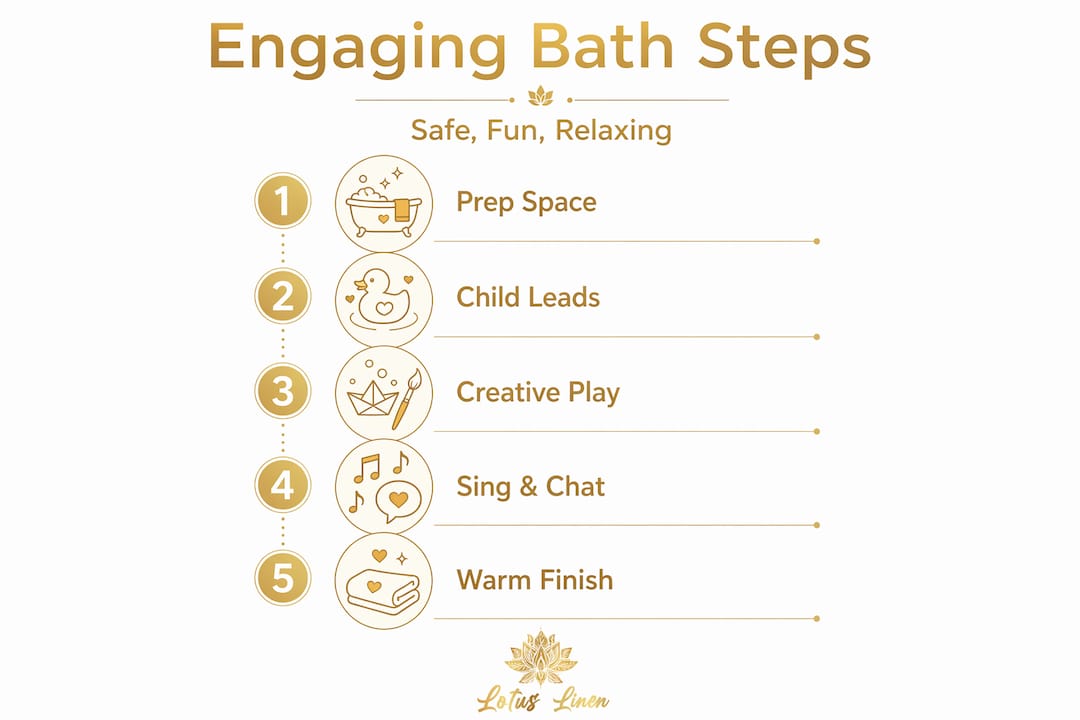
Step 4: Talk, sing, and narrate. Name body parts as you wash them. Sing a favorite song. Make up a silly story about a rubber duck’s adventure. These small acts build language skills, strengthen your bond, and make the routine feel safe and predictable.
Step 5: Create themes. A plain bath becomes a pirate expedition with two plastic boats and some imagination. A “spa night” with lavender-scented soap and a fluffy robe waiting at the end creates an experience children ask to repeat. Check out these creative bath time comfort tips for more theme ideas you can execute in minutes.
Step 6: Wind it down intentionally. Use a two-minute warning before the bath ends. Keep the transition warm and gentle. A cozy robe or warm towel ready at the edge of the tub turns the dreaded “time to get out” into something your child can actually look forward to.
Pro Tip: Try a “spa night” once a week with dim lights, soft music, and a scented towel warmed in the dryer for a few minutes. These fun bath time rituals become anchors in your child’s memory. Also, a bath time for babies approach—slow, gentle, and sensory-rich—works beautifully for toddlers who need a little extra reassurance.
You can also add cozy kid-friendly window tips to your bathroom setup to control light levels and create a calm atmosphere without full blackout darkness.
Safety first: Keeping bath time worry-free
Now that fun is covered, safety essentials ensure peace of mind for you and your child. Bath safety isn’t about fear. It’s about setting up the environment so you can relax and enjoy the moment too.
Here’s a quick reference table on core safety practices:
| Safety practice | Why it matters | When to apply |
|---|---|---|
| Active supervision | Drowning can happen in seconds | Every single bath |
| Non-slip mat | Prevents slips and head injuries | Always in and out of tub |
| Water temperature check | Prevents scalding | Before every bath |
| Short baths (10 min) | Prevents skin dryness and overheating | Especially for babies |
| Product label review | Avoids allergens and irritants | Before any new product |
| Faucet cover | Prevents bumps and burns | For toddlers especially |
Safety warning: A bath should always be supervised. Never leave your child unattended in the tub, even for a moment. Drowning can happen silently and quickly in just a few inches of water.
According to pediatric safety guidelines, you should always supervise closely, use non-slip mats, test water temperature with your wrist or elbow (warm, not hot), and keep baths short, ideally 10 minutes or less.
For an added layer of calm, pediatricians recommend creating a calming environment with dim lights, soft music, warm water between 98 and 100 degrees Fahrenheit, and safe scents like lavender for relaxation.
Quick-fire safety checklist for every bath:
- Always stay within arm’s reach of young children
- Empty the tub immediately after use
- Keep all electrical items away from the water
- Store all products out of reach
- Use a kneeling pad to protect your knees and stay close
- Review bath safety for toddlers for age-specific guidance
- Grab our kids towel safety guide to ensure post-bath routines are just as safe
A note on home environment safety: child safety at home extends beyond the tub. Cord-free window treatments in bathrooms remove a common but overlooked hazard.
Troubleshooting: Solving common bath time challenges
Even with the best setup, bath time can occasionally bring unique hurdles. Here’s how to breeze through them without turning the bathroom into a battleground.
Common bath time problems and practical fixes:
- Bath fear or resistance: Use pretend play to explore what’s scary. A timer for transitions, a spa or beach theme, or a small post-bath reward can help. For reluctant children, identifying specific fears (like getting water on the face or being cold after) and addressing them directly is far more effective than forcing compliance.
- Extreme boredom: Rotate toys every few weeks. Novelty matters. New bath crayons or a glow stick can revive interest almost instantly.
- Hair washing meltdowns: Use a visor or a cup technique, play a “magic rain” game, and always warn your child before water goes over their head.
- Dry or irritated skin: Switch to fragrance-free, sulfate-free washes. Limit bath time to 10 minutes and pat skin dry rather than rubbing. Explore more targeted advice in our bath time for sensitive skin guide.
- Getting cold quickly: Warm the room before bath time, have a towel or robe ready immediately after, and check whether the water temperature is warm enough at the start.
Statistic callout: Pediatric health experts recommend limiting bubble baths for girls under 3 years old due to a documented link with increased urinary tract infection (UTI) risk. Opt for gentle cleansers and avoid long soak times with soapy water for very young children.
Pro Tip: Moisturize your child’s skin within two minutes of stepping out of the tub while the skin is still slightly damp. This locks in moisture significantly better than applying lotion to dry skin, which is especially important for eczema-prone kids. Check out our bath bonding ideas for ways to make the post-bath moisturizing routine feel like a gentle, connecting ritual rather than another chore.
How to make bath time a lasting bonding experience
With problems solved, you can now focus on elevating bath time into a fun, meaningful part of your daily connection with your child. Bath time doesn’t end when the water drains.
Research shows that bath time fosters bonding, supports motor skills, builds language through naming body parts, and reduces water fear through consistent positive play. The long-term payoff of a peaceful, enjoyable bath routine is enormous.
Here are some bonding activities to weave into your nightly or twice-weekly routine:
- Storytelling: Narrate a simple adventure where your child is the hero. Bath toys become characters. The soap becomes a magic potion.
- Naming games: Touch an elbow, name it, and ask your child to find theirs. This playful back-and-forth builds vocabulary and body awareness naturally.
- Spa night: Once a week, make bath time extra intentional. Softer lights, a calming scent, and a warm robe at the end. Let your child feel treated and cared for.
- Singing routines: A specific song that only plays at bath time becomes a ritual. Kids thrive on predictability, and the song becomes a cue their nervous system recognizes as safe.
- Gentle transitions: Moving from tub to towel to pajamas with warmth and calm teaches children that the end of play doesn’t have to mean distress.
The secret is consistency. Over time, a calm, joyful bath routine builds genuine trust. Your child learns that hygiene routines are safe, that you’re present, and that their comfort matters. Explore more at our connect during bath time resource and our bath time relaxation tips for ideas that support a gentle wind-down for the whole family.
What most bath time guides miss: The small details that make a difference
Every guide covers the basics: warm water, safe products, supervision. And yes, those things matter enormously. But here’s what we’ve learned from talking with parents and designing products that live in the post-bath moment: the details your child actually remembers are never the expensive toys or the perfectly curated bath caddy.
They remember the warm towel. The way you wrapped them up tight and called them a “little burrito.” The smell of lavender lingering as you helped them into pajamas. These sensory imprints are what build a child’s emotional association with the whole experience.
Parents often stress about getting the products exactly right, doing the routine in a specific order, or hitting every milestone. But a child who feels rushed out of the tub, handed a cold towel, and shuffled into the next task learns that bath time is just another item on the checklist. A child who gets wrapped in something soft and held for an extra minute? That child asks for bath time.
This is where texture, warmth, and intentionality actually outperform any gadget. A plush robe waiting on a hook at eye level for your child isn’t a luxury. It’s a cue. It says: the bath is over, but the comfort continues. The mood lighting, the choice of a special toy, the post-bath lotion ritual, these details are the architecture of a positive memory. You don’t need perfection. You need presence, a little warmth, and the willingness to slow down for five extra minutes. That’s where the magic lives.
Explore our additional relaxation ideas for practical ways to build these small, meaningful rituals into any schedule.
Make every bath special with cozy essentials
The bath might end at the tub’s edge, but the comfort doesn’t have to stop there.

At Lotus Linen, we design products that extend the warmth of bath time into the moments after it. A soft, absorbent towel that wraps your child in warmth the second they step out changes the entire end-of-bath experience. Our scallop bath towels are made for exactly this: gentle on sensitive skin, beautifully crafted, and built to last through hundreds of washes. And for the grown-ups who need their own cozy moment after the bath time chaos, our plush men’s robes and luxury women’s robes make the whole family feel like the spa came home. Because everyone deserves to feel wrapped in comfort.
Frequently asked questions
How often should I bathe my baby or toddler?
Newborns and infants need a bath 2-3 times per week to prevent dry skin; toddlers can bathe daily if they’re active or get dirty throughout the day.
What are the safest bath products for sensitive skin?
Look for products that are hypoallergenic, tear-free, and fragrance-free or formulated with mild essential oils; avoid anything containing sulfates or parabens.
Are bubble baths safe for little kids?
Bubble baths can increase UTI risk in girls under 3, so pediatric experts recommend limiting soapy baths for very young children and choosing gentle, rinse-off cleansers instead.
How can I make bath time less stressful for a child who hates it?
Try pretend play, a transition timer, fun themes like a spa or beach adventure, or a small post-bath reward to shift the association from dreaded to anticipated.
What’s the best way to keep my child safe during bath time?
Always supervise closely, use a non-slip mat, test water temperature with your wrist before the child gets in, and keep every bath to 10 minutes or less.

