
TL;DR:
- The best kids bath towels are soft, gently finished cotton that is kind to sensitive skin.
- Choose a size that fits your child, a soft but manageable weight, and secure, snag-free edges.
- Regular washing, timely replacement, and full drying between uses keep towels fresh and absorbent.
Bath time should be a warm, cozy ritual, not a wrestling match with a scratchy, oversized towel that leaves your child's skin red and irritated. Many parents grab whatever towel is on sale without realizing that the wrong choice can cause real discomfort for sensitive skin, especially in younger children. The right kids bath towel does more than dry your child off. It is gentle on delicate skin, wraps little ones in warmth, and can even make them excited about getting out of the tub. This guide walks you through what to look for, how to shop smart, and how to keep towels soft and fresh.
Table of Contents
- Understanding what makes a great kids towel
- What you need before buying: Parent's checklist
- Choosing and using the perfect towel
- Caring for towels: Keeping soft, safe, and long-lasting
- Ready to upgrade your child's bath towels?
- Frequently asked questions
Key Takeaways
| Point | Details |
|---|---|
| Choose gentle materials | Soft, breathable cotton is kind to kids' sensitive skin. |
| Look for a fabric-safety label | An OEKO-TEX Standard 100 label signals the fabric was tested for harmful substances. |
| Pick age-appropriate sizes | Hooded towels suit babies and toddlers; regular towels work well as kids grow. |
| Follow simple hygiene habits | Wash regularly and replace towels when absorbency fades to keep them fresh and soft. |
| Keep a spare per child | Having a second towel on hand means never reaching for a damp one. |
Understanding what makes a great kids towel
Not all towels are created equal, and the differences between a mediocre pick and a great one go well beyond price. For kids, three things matter most: a gentle material, the right size, and a soft-but-practical weight.
Material and skin safety
The fabric touching your child's skin directly affects comfort. Soft, breathable cotton is a dependable choice because it is naturally gentle and stays comfortable wash after wash. For children with eczema or reactive skin, favor a gently finished, low-irritation cotton and wash new towels before first use to remove any manufacturing residue.
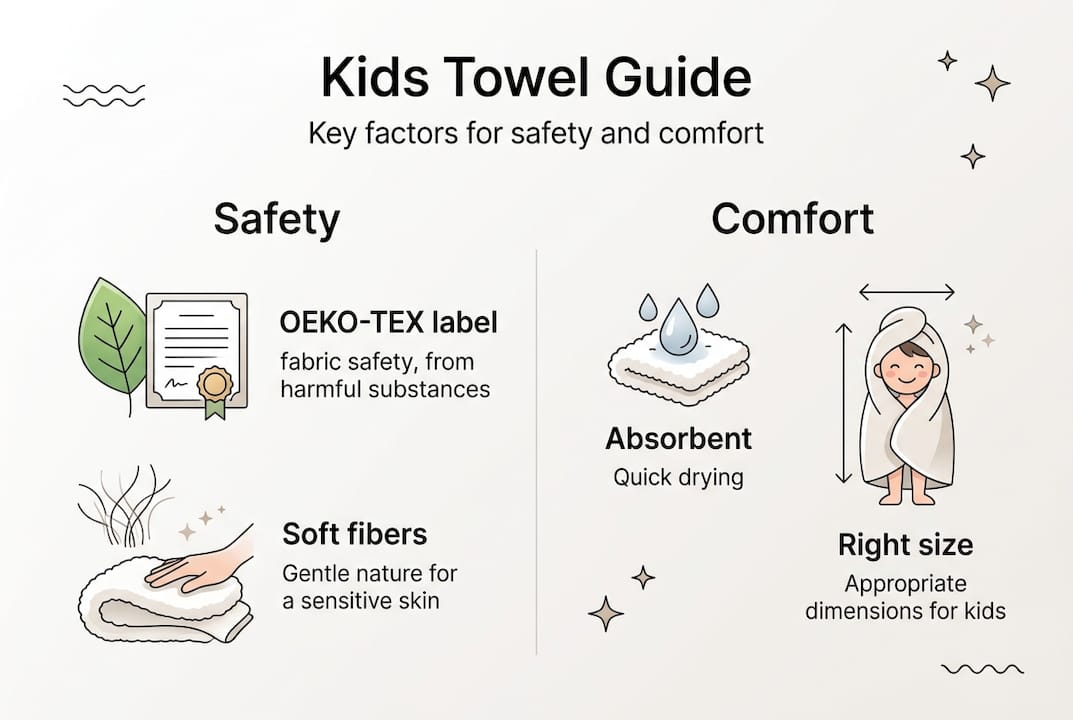
If fabric safety is a priority, look for an OEKO-TEX Standard 100 label. This is an independent textile certification indicating the fabric has been tested for a long list of potentially harmful substances. It is a useful general signal to look for when shopping for any item that sits against young skin.
Weight and softness
Towel weight is measured in GSM (grams per square meter): higher numbers mean a denser, plusher towel. For kids, you want a towel that is soft and absorbent but still dries fully between uses, since a towel that stays damp can develop a musty smell. A mid-to-plush weight hits that balance well. For reference, our own zero-twist cotton towels are woven at a plush 620 GSM and stay soft through repeated washing.
Size by age group
Kid-sized towels are easier to handle than adult ones, which are simply too large to dry a small child efficiently. As a general guide, hooded towels suit babies and toddlers, while older children do well with a regular bath towel they can wrap themselves. For contrast, a standard adult bath towel like ours measures 27×54", sized for grown-ups rather than little ones.
- Babies and toddlers: a hooded towel that keeps little heads warm
- Younger children: a small, easy-to-handle bath towel
- Older kids (roughly 6 and up): a regular bath towel they can wrap independently
What you need before buying: Parent's checklist
Every household is different, and a few quick questions can save you from a bad purchase.
Know your child's skin first
If your child has eczema, rosacea, or any history of skin reactions, shop from a narrower list: soft, gently finished cotton with minimal harsh treatments. For kids with no known sensitivities you have more flexibility, but a soft, well-made cotton towel is still the better long-term choice.
Match the towel to your lifestyle
Think about how your child uses towels. A frequent swimmer benefits from a towel that washes and dries easily without losing shape. In a humid climate, a towel that dries fully between uses helps avoid that damp, musty smell.
Durability and value
A well-made towel that lasts a few years costs far less per use than a cheap one you replace often. When you shop, check for:
- Reinforced, double-stitched hems
- No loose loops or long fringe that can snag or unravel
- Colorfast dyes that won't fade after a few washes
Pro Tip: Keep at least two towels per child, one in use and one in the wash. Running out of clean towels leads to reusing damp ones, which is a hygiene problem.
Choosing and using the perfect towel
Step 1: Match towel type to age. Hooded towels are ideal for babies and toddlers, wrapping little ones snugly and keeping their heads warm. As kids grow, they usually prefer a regular towel they can manage themselves, which is a nice confidence builder.
Step 2: Let your child pick the design. This sounds small, but it works. A towel a child actually likes makes the end of bath time something to look forward to rather than resist.
Step 3: Wash before first use. New towels can carry finishing residue from manufacturing. Wash a new towel once before your child uses it, using a gentle, fragrance-free detergent and skipping fabric softener.
Safety note: Fabric softeners coat towel fibers with a waxy residue that reduces absorbency over time and can irritate sensitive skin. Dryer sheets have the same effect. Stick to gentle detergent and air dry or tumble dry on low.
Step 4: Teach gentle drying. Pat, don't rub. Rubbing can irritate young skin, especially after a warm bath. It is an easy habit to build early and makes a real difference for kids with sensitive skin.
Caring for towels: Keeping soft, safe, and long-lasting
A poorly cared-for towel can hold onto odor and bacteria even if it started out great. A simple routine keeps kids' towels fresh and soft.
Washing and drying best practices
Wash kids' towels regularly, skip the fabric softener, and replace them when absorbency starts to fade. Full drying between uses is the single most effective step for keeping towels fresh, so hang them spread out rather than bunched on a hook.
Signs it's time to replace
- The towel no longer absorbs water quickly
- A persistent musty smell that doesn't wash out
- Thinning fabric, holes, or fraying edges
- A stiff or rough texture that won't soften
Daily care habits that extend towel life
- Shake the towel out after each use to loosen the loops and speed drying
- Hang it fully spread out, not bunched on a hook
- Never leave a wet towel on the floor or in a laundry basket for long
- Rotate between a few towels per child to reduce wear
Ready to upgrade your child's bath towels?
Safety, comfort, and style are not trade-offs. At Lotus Linen, we design bath products with soft, gentle cotton and real-life family needs in mind.

Our scallop piping bath towels are woven from soft, zero-twist cotton that stays gentle wash after wash, and you can add an in-house monogram to make a towel your child's own. Browse the full Lotus Linen collection to find the right fit for your family's bath routine.
Frequently asked questions
What material is best for kids with sensitive skin?
Soft, gently finished cotton is a comfortable, dependable choice for sensitive or eczema-prone skin. Wash new towels before first use and skip fabric softener to keep them kind to the skin.
How often should I replace my child's bath towel?
Replace kids' bath towels when absorbency fades noticeably or the fabric thins and frays. Don't wait for heavy wear before making the swap.
Are hooded towels necessary for toddlers?
Hooded towels are ideal for babies and toddlers because they keep little heads warm and make wrapping easier. Older kids can transition to a regular bath towel comfortably.
How can I prevent towels from getting musty or mildewy?
Always hang towels fully spread out to dry after each use, and wash regularly without fabric softener. Full drying between uses is the single most effective prevention step.
Recommended
- Essential Kids Bathrobe Buying Tips for Cozy Comfort – Lotus Linen
- Kids' Bathrobes Buying Guide 2025 – Lotus Linen
- Understanding Toddlers and Bathrobes: Comfort for Kids – Lotus Linen
- Why Kid-Sized Robes Matter: Safety and Comfort for Kids – Lotus Linen
Safety notes for children's towels
A few child-specific checks are worth making: choose a tightly finished edge with no loose threads or long fringe a small child could pull or put in their mouth; pick a towel that hangs securely on a hook or bar rather than pooling on the floor where a toddler could slip; and for sensitive skin, favor gently dyed, OEKO-TEX-tested cotton to reduce the chance of irritation.

