
TL;DR:
- Loungewear acts as a powerful self-care tool by sending psychological signals that promote relaxation and emotional well-being. Enclothed cognition research demonstrates how clothing influences mood, attention, and confidence through sensory and symbolic effects. Using loungewear intentionally in daily routines enhances stress relief and reinforces a self-care mindset.
Most people think of loungewear as a simple comfort choice, something to slip into after a long day without much thought. But what if the robe you reach for, or the soft set you change into every evening, is quietly doing something much more powerful? Enclothed cognition research shows that the clothes we wear send real signals to our brains, shaping our mood, attention, and emotional state. Your loungewear is not just fabric. It is a daily self-care tool you may not be using to its full potential.
Table of Contents
- The science behind loungewear and self-care
- How loungewear transforms everyday self-care routines
- Choosing the right loungewear for your needs
- What most people miss: When loungewear isn’t always self-care
- Our take: The future of self-care is in everyday rituals
- Discover luxury loungewear for your self-care journey
- Frequently asked questions
Key Takeaways
| Point | Details |
|---|---|
| Clothes shape mindset | Loungewear can trigger relaxation and calm through psychological effects. |
| Daily rituals matter | Consistent comfort routines are powerful for long-term self-care. |
| Personalization enhances results | Choosing loungewear that fits your preferences maximizes emotional benefits. |
| Context is critical | Use loungewear as a tool when your goal is rest or decompression, but adapt outfits for social or energetic needs. |
The science behind loungewear and self-care
Before we talk about bathrobes and soft sets, it helps to understand a concept called enclothed cognition. Simply put, this idea describes how the clothes you wear influence your mental and emotional state. The effect works through two channels: the physical sensation of wearing something, and the symbolic meaning your brain associates with it.
Think about what happens when you change into a plush robe after work. Your body registers the warmth and softness. Your brain recognizes the signal: this is rest time. That combination of sensory input and symbolic meaning is what drives the effect. Enclothed cognition research shows that clothing descriptions and types can genuinely influence psychological processing, for example, wearing formal attire was linked to increased self-confidence and related behaviors in study participants.
“The clothes we wear communicate to our own minds as much as they communicate to others. Choosing loungewear with intention is choosing to send yourself a message of rest, permission, and care.”
Comfort clothing can also produce measurable emotional and physiological changes. A preliminary research project using biosensor-based methods tracked responses like electrodermal activity, facial expressions, and voice patterns in participants wearing different clothing types. The results showed higher valence and arousal signals in affect-related clothing conditions, meaning that the emotional impact of what we wear can be observed in the body, not just reported after the fact.
Here is a quick look at how different clothing types compare in terms of their self-care signals:
| Clothing type | Psychological signal | Best self-care use |
|---|---|---|
| Structured workwear | Focus, performance | Work tasks, meetings |
| Casual daywear | Neutral, social ready | Errands, light activity |
| Quality loungewear | Rest, safety, comfort | Wind-down rituals, morning calm |
| Plush robe | Deep relaxation, luxury | Post-bath, meditation, reading |
What makes this information genuinely useful is that it gives you a framework for dressing with purpose, not just aesthetic preference. When you understand that fabric, fit, and even color can affect your nervous system, choosing the right robe or loungewear set becomes a meaningful act of self-kindness.
Some practical ways loungewear sets the tone for relaxation include:
- Changing into soft loungewear right after work to mentally close the professional chapter of your day
- Using a specific robe as part of your post-bath or shower routine to deepen the transition into evening rest
- Wearing a familiar, cozy set during meditation or journaling to lower mental resistance to stillness
- Pairing lightweight loungewear with morning rituals to build a calm, unhurried start
Reading more about loungewear and working from home can help you understand how these cues play out across a full day, especially when your home doubles as your workspace. The boundaries between work and rest matter, and what you wear draws those lines more clearly than you might expect. For a deeper look at this principle in action, the cozy wellness at home guide covers how small daily rituals, anchored by the right loungewear, build lasting well-being.
How loungewear transforms everyday self-care routines
With the science in your corner, the next step is making it practical. Loungewear does not automatically create a self-care routine. You have to use it with intention. The good news is that building these habits is straightforward, and the results accumulate quickly.
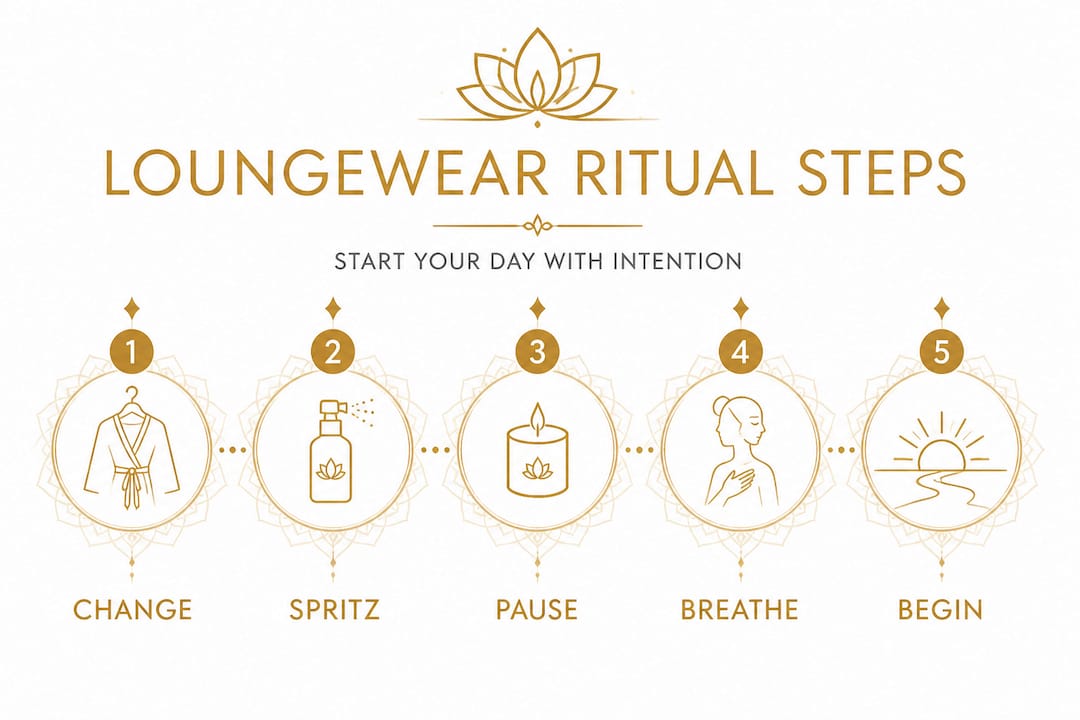
Here is a simple framework for weaving loungewear into your daily self-care:
- Define your transition moment. Choose a specific time each day, such as right after work, after your evening shower, or right when you wake up, to change into your designated loungewear.
- Pair it with a grounding activity. Combine your loungewear change with something that supports relaxation: a warm drink, a few minutes of quiet reading, or five minutes of gentle stretching.
- Use a consistent piece. The more you use the same robe or set for the same ritual, the stronger the mental association becomes. Your brain begins to recognize it as a cue.
- Remove friction. Keep your loungewear somewhere easy to access so you do not skip the ritual when you are tired or rushed.
- Acknowledge the change. When you put on your robe or soft set, take one conscious breath. This small act amplifies the psychological signal.
Research confirms that clothing effects on confidence and self-perception depend heavily on context. Situational factors shape whether the effect lands as intended. This means the environment you create around your loungewear ritual matters just as much as the garment itself.
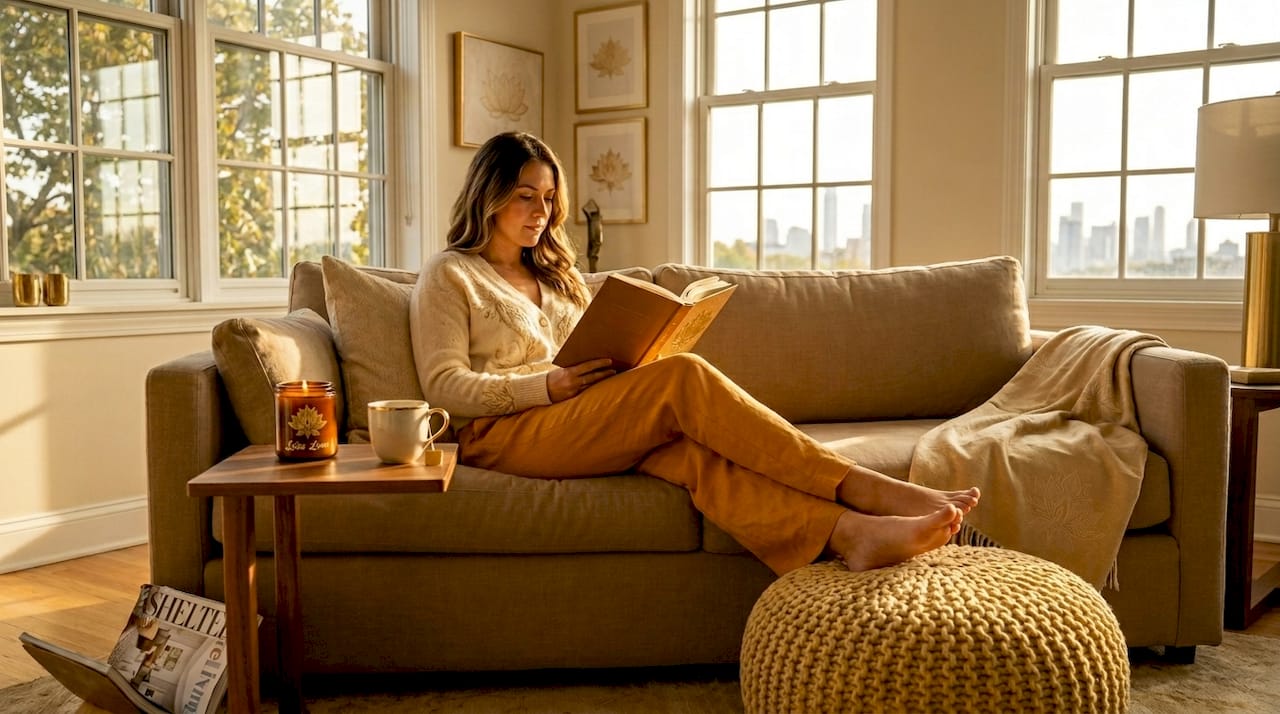
Pro Tip: Do not underestimate the power of scent paired with your ritual. A light linen spray on your robe or a candle lit when you change can amplify the relaxation signal dramatically.
Here is a practical reference for matching loungewear moments to your self-care goals:
| Time of day | Loungewear type | Self-care goal |
|---|---|---|
| Morning | Lightweight cotton robe or set | Calm, mindful start |
| Post-workout | Soft waffle robe | Muscle recovery, transition |
| Afternoon break | Breathable loungewear set | Mental reset, reduce fatigue |
| Evening wind-down | Plush robe or heavy knit set | Deep relaxation, sleep prep |
Exploring morning loungewear routines can give you specific ideas for how to structure the first part of your day with intention. And if you want to build a more complete system, the guide on self-care habits with robes walks through how different robe styles and rituals work together for maximum effect.
Choosing the right loungewear for your needs
Not all loungewear creates the same experience. The fabric, weight, fit, and even the visual design of what you wear all contribute to the emotional response you get from putting it on. Making a thoughtful choice upfront means your loungewear will actually deliver on its self-care promise.
Here are the key factors to consider when selecting loungewear for your self-care practice:
- Fabric softness. Terry cloth and plush fabrics offer a tactile sensation that signals warmth and security. Waffle weave is lighter but still comforting, making it ideal for warmer months or climates.
- Weight and drape. Heavier robes tend to feel more enveloping, which can support deep relaxation. Lighter sets are better for morning routines when you want to feel calm but not sleepy.
- Fit and coverage. Garments that fit without restricting movement allow your body to fully relax. Overly tight or loose loungewear creates low-level physical discomfort that works against the intended effect.
- Color and aesthetics. Soft, muted tones like sage, blush, and ivory are widely associated with calm. Choosing colors that you find personally soothing reinforces the psychological signal.
- Quality and durability. Loungewear that holds its softness over time continues to deliver the same emotional response. Poor quality fabrics that pill or stiffen send a subtle signal of neglect rather than care.
Biosensor research confirms that emotional responses to clothing are measurable and real. Higher positive emotional signals were observed when participants wore items specifically associated with comfort and affect. This means that investing in quality loungewear is not indulgent. It is a practical decision backed by evidence.
Pro Tip: Try building a small capsule of two or three loungewear pieces that you rotate based on your self-care goal for that day. A heavier robe for deep rest nights, a lighter set for energized mornings, and a mid-weight option for flexible afternoons.
If you want guidance on matching specific styles to your personality and needs, the guide on personalized loungewear is an excellent resource. For a closer look at how robes specifically function as comfort anchors, the role of robes in comfort piece covers the history, design principles, and practical uses that make them such effective self-care tools.
What most people miss: When loungewear isn’t always self-care
Here is the nuance that most articles skip over. Loungewear is a powerful self-care tool, but it is not a universal fix. There are contexts where it actively works against what you are trying to achieve, and recognizing those moments is just as important as knowing when to lean into it.
“A tool is only as effective as the intention behind it. Loungewear signals rest. If rest is not what you need in that moment, that signal works against you.”
Research makes this clear. Clothing effects on confidence and mood are not universally positive and depend heavily on context. Formality boosted confidence and engagement in upscale settings but did not produce the same result in other contexts. The same logic applies to comfort clothing. Wearing a robe when you need to focus, perform, or feel motivated may actually deepen sluggishness rather than support well-being.
Signs your loungewear routine may need adjustment:
- You wear the same soft set all day without transitioning back into daywear, and you notice your motivation and productivity declining
- Your loungewear has become associated with avoidance rather than intentional rest
- You feel a low-grade sense of guilt or restlessness while wearing it instead of the ease it is meant to provide
- The fabric or fit no longer feels special because it has become your default, not your chosen ritual
The factors that impact bathrobe comfort go beyond the fabric itself. How you use your loungewear, when you wear it, and what mental state you bring to the ritual all determine whether it helps or hinders your self-care.
Here is a practical checklist to keep your loungewear practice intentional:
- Reserve specific pieces for specific rituals so they retain their psychological signal
- Change out of loungewear when you need to shift into a productive or social mindset
- Refresh your pieces regularly so they continue to feel special and cared for
- Treat the act of putting on your robe as a choice, not a default
Our take: The future of self-care is in everyday rituals
We see it constantly. People spend months planning a spa weekend or saving for a single luxury experience, and those moments are genuinely wonderful. But they return home to the same daily routines, and the glow fades within days. The real engine of lasting well-being is not the grand gesture. It is the consistent micro-ritual.
Choosing a quality robe every evening, changing into soft loungewear before dinner, or building a morning ritual around a comfortable set: these acts seem small. But they accumulate. Each one sends a message to your nervous system that you are worth caring for. Over weeks and months, that message rewires how you approach rest, stress, and your own sense of worthiness.
This is why we believe personalizing your loungewear matters more than most people realize. When you choose colors, fabrics, and even monograms that reflect who you are, you turn a functional garment into a genuine act of self-expression. The ritual becomes more personal, and the psychological signal becomes stronger.
The most sustainable form of luxury is not a purchase you make once. It is the small, deliberate choices you make every day. A well-chosen robe that you reach for every evening is doing more for your well-being than a spa day once a year. Start small. Start tonight.
Discover luxury loungewear for your self-care journey
If reading this has inspired you to approach your daily comfort with more intention, the next step is finding pieces that truly support that vision.
At Lotus Linen, we design robes and loungewear with exactly this purpose in mind: comfort that feels like a ritual, quality that lasts, and personalization that makes it yours. Whether you are building an evening wind-down routine or upgrading your morning calm, our personalized robe collection offers options for every preference and style. Pair your robe with our luxury bath towels to create a complete sensory experience that turns your bathroom into a true sanctuary. Small upgrades to your everyday rituals add up to something extraordinary.
Frequently asked questions
Does loungewear really affect mood and self-care?
Yes, research on enclothed cognition confirms that clothing can shift your psychological state through both its physical sensation and the symbolic meaning your brain associates with it.
Which types of loungewear are best for self-care?
The best choice is whatever is genuinely comfortable, fits your self-care context, and uses fabrics you find soothing; biosensor studies show that affect-related clothing conditions produce measurably higher positive emotional responses.
Can wearing loungewear boost confidence as well as relaxation?
Loungewear is most effective for rest and relaxation rather than confidence, because clothing effects on self-confidence vary with context, and comfort-coded garments signal rest rather than performance.
How can I build a self-care routine with loungewear?
Choose a consistent piece of loungewear and connect changing into it with a specific daily transition moment, such as post-work or post-shower, to build a reliable psychological signal for rest.
Is there any downside or limitation to using loungewear for self-care?
The main limitation is context: clothing effects on mood are not universally positive, so wearing loungewear when you need energy or focus may reinforce sluggishness rather than well-being.
Recommended
- Morning Loungewear Routines for Urban Women – Lotus Linen
- Luxury loungewear: Comfort, style, and personalization – Lotus Linen
- Good Sleepwear: Why It Matters for Women’s Wellness – Lotus Linen
- Complete Guide to Loungewear Work From Home – Lotus Linen
- Hjemme-wellness med alt godt til håret | CurlsForYou

