
A bathrobe hanging in a hotel room is rarely the first thing guests mention when they check in. But it is often the last thing they forget. The global bathrobe market was valued at USD 4 billion in 2024 and is projected to reach USD 6.3 billion by 2033. That kind of growth does not happen around a throwaway amenity. For boutique hotels, Airbnbs, and wellness resorts, bathrobes have quietly become one of the most powerful tools for shaping how guests feel, what they write in reviews, and whether they come back.
Table of Contents
- The strategic role of bathrobes in modern hospitality
- How bathrobe quality influences guest satisfaction and loyalty
- Material matters: Durability, comfort, and cost in bathrobe selection
- Personalization and sustainability: Trends redefining guest expectations
- Best practices: Care, operations, and maximizing ROI with bathrobes
- Enhance your property’s guest experience with premium bathrobes
- Frequently asked questions
Key Takeaways
| Point | Details |
|---|---|
| Guest satisfaction driver | Premium bathrobes signal luxury and care, raising guest ratings and loyalty. |
| Strategic investment | Thoughtful bathrobe selection and care positively affect a property’s reputation and ROI. |
| Material and durability | Choose durable, comfortable fabrics like terry or organic cotton for longevity and guest comfort. |
| Personalization and sustainability | Customization and eco-friendly options align with evolving guest values and boost social sharing. |
| Operational best practices | Consistent robe care and staff training maximize guest delight and robe longevity. |
The strategic role of bathrobes in modern hospitality
Bathrobes are no longer just a comfort item tucked into a closet. They are a signal. When a guest wraps themselves in a plush, well-presented robe, they are receiving a message about how much your property values their comfort. That message travels far.
The hotel bathrobe market data shows consistent growth driven by rising guest expectations, increased competition among boutique properties, and the explosion of social media sharing. A beautifully branded robe photographed in a spa suite can reach thousands of potential guests before checkout. That is organic marketing you cannot buy.
According to industry research, 78% of luxury hotels consider branded bathrobes critical to the guest experience. And the global market projection to USD 6.3 billion by 2033 reflects how seriously the sector takes this investment. Understanding the impact of fluffy bathrobes on guest perception is the first step toward using them strategically.
| Metric | Data point |
|---|---|
| Global bathrobe market (2024) | USD 4 billion |
| Projected market size (2033) | USD 6.3 billion |
| Luxury hotels prioritizing branded robes | 78% |
| Hotels reporting satisfaction gains | 63% |
Key factors driving bathrobe importance in hospitality today:
- Rising guest expectations from exposure to luxury travel content online
- Intense competition among boutique hotels and short-term rentals
- Social media sharing turning in-room amenities into marketing assets
- Review culture where tactile comfort directly influences star ratings
- Wellness travel growth increasing demand for spa-quality experiences at every property type
How bathrobe quality influences guest satisfaction and loyalty
Guests do not consciously think, “This robe is 600 GSM terry cloth and therefore I am satisfied.” But they feel it. Tactile comfort works on a psychological level, and that feeling shapes how guests rate their stay, what they tell friends, and whether they book again.
Research confirms that tactile experiences like bathrobes contribute directly to psychological comfort and long-term loyalty. When guests feel physically cared for, they associate that feeling with your brand. It is a simple but powerful connection.
“Sensory and tactile comfort in hospitality settings measurably increases perceived quality ratings and the likelihood of return visits.” — Cornell Hospitality Research (paraphrased)
The numbers back this up. 63% of upscale hotels report increased guest satisfaction directly linked to offering luxurious bathrobes. That is not a marginal gain. That is a meaningful shift in how guests experience your property.
What makes a robe feel luxurious to a guest? It comes down to a few key elements:
- Plushness and weight that feel indulgent without being heavy
- Design and finish that look intentional and premium
- Fit and size variety so every guest feels considered
- Presentation including how the robe is folded, displayed, or hung
For a deeper look at what separates a good robe from a great one, the guide on bathrobes for luxury hotels covers the full picture. You can also review key bathrobe features that matter most to hospitality buyers.
Pro Tip: Rotate your robe sets on a regular schedule. Keeping a reserve inventory means guests always receive a robe that looks and feels fresh, even during peak occupancy periods.
Material matters: Durability, comfort, and cost in bathrobe selection
Not all robes are built for the demands of hospitality. A robe that feels great on day one but pills after twenty washes is a liability, not an asset. Choosing the right material is one of the most important operational decisions you will make.
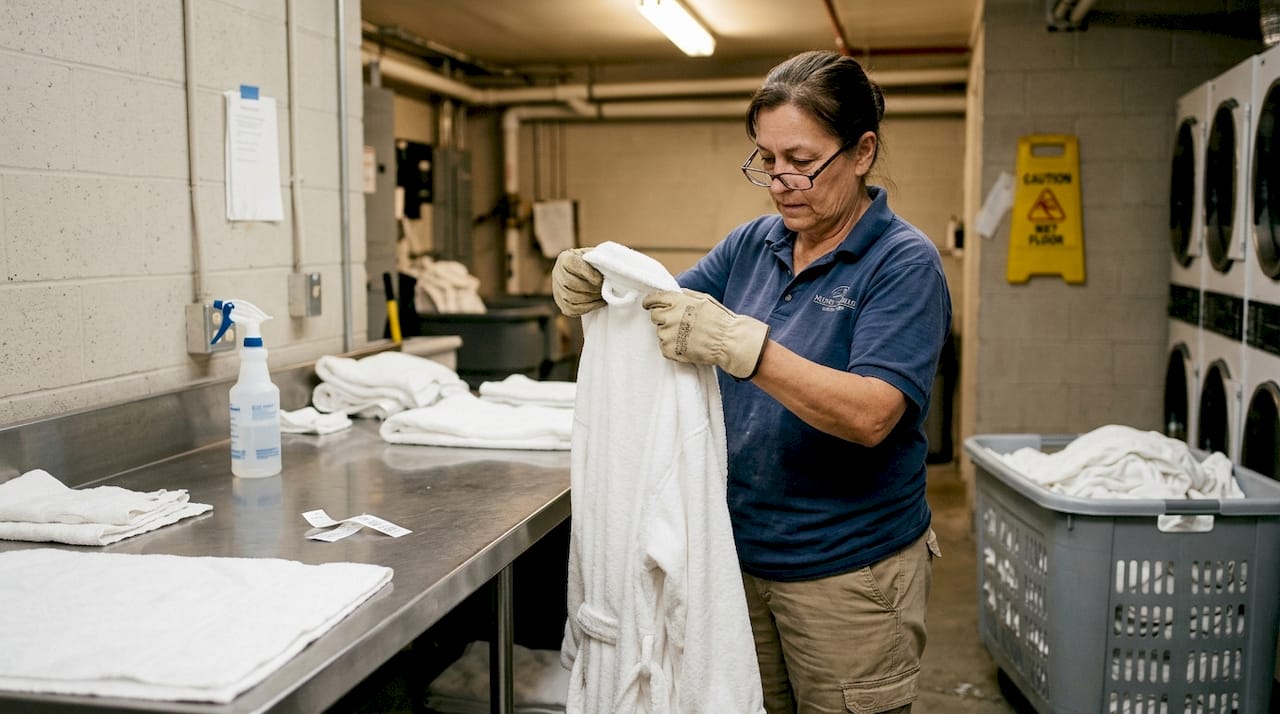
High-quality robes last 300 to 500 wash cycles with proper care, and terry cloth in particular stands out for its durability in high-volume settings. But durability is only one dimension. You also need to weigh comfort, drying time, and cost per unit.
| Material | Durability | Comfort | Drying time | Cost | Guest impression |
|---|---|---|---|---|---|
| Terry cloth | Very high | High | Moderate | Low to mid | Classic luxury |
| Waffle weave | High | Medium-high | Fast | Mid | Modern, spa-like |
| Microfiber | Moderate | High | Very fast | Low | Soft, lightweight |
| Organic cotton | High | Very high | Moderate | Mid to high | Eco-conscious premium |
| Bamboo | Moderate | Very high | Moderate | High | Sustainable luxury |
For a full breakdown of how each fabric performs in real hospitality settings, the guide on best bathrobe fabrics is a practical starting point. If budget is a factor, affordable hotel robe options that do not sacrifice quality are worth exploring. Properties with high turnover should also review guidance on bathrobes for frequent use.
Steps to assess your property’s bathrobe needs:
- Estimate weekly wash volume based on occupancy rates and robe-per-room ratio
- Define your guest profile (wellness travelers, business guests, families) to match material to expectations
- Set a per-unit budget that accounts for replacement cycles, not just upfront cost
- Request fabric samples and test them through at least ten wash cycles before ordering in bulk
- Evaluate laundering compatibility with your existing linen service or in-house equipment
Pro Tip: Choose materials that balance guest comfort with laundering efficiency. A robe that takes twice as long to dry adds real operational cost over time, especially at scale.
Personalization and sustainability: Trends redefining guest expectations
Material is the foundation, but personalization and sustainability are what make a robe memorable. Modern guests, especially those booking boutique properties and wellness retreats, are looking for experiences that feel intentional. A robe with your property’s logo, a monogram, or a color that matches your brand palette tells guests that every detail was considered.
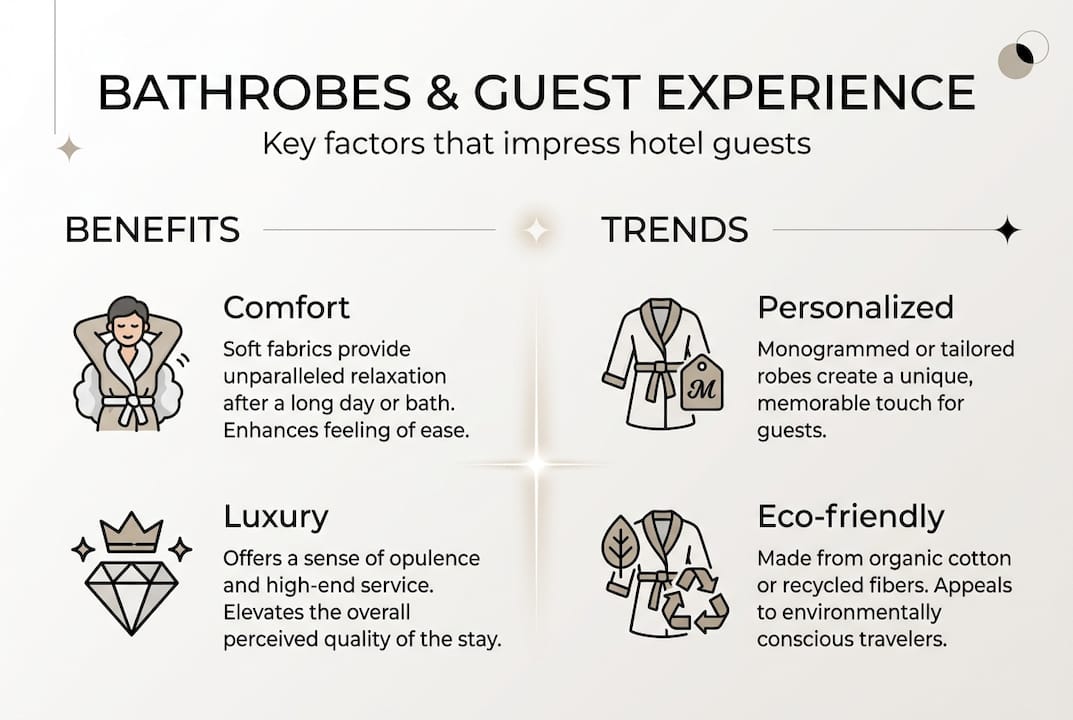
Customization and sustainable materials are among the fastest-growing trends in hospitality linen. Guests share personalized touches on social media, turning your robe into a marketing moment. Eco-friendly choices signal values that resonate with a growing segment of travelers.
Personalization options worth considering:
- Embroidery with your property name, logo, or guest initials
- Monogramming for a boutique or luxury feel
- Brand-aligned color palettes that reinforce your visual identity
- Size variety including options for kids and plus sizes so every guest feels included
| Sustainable material | Market adoption | Guest preference |
|---|---|---|
| Organic cotton | Growing rapidly | High among eco-conscious travelers |
| Bamboo fiber | Emerging | Strong in wellness and resort segments |
| Recycled polyester blends | Early adoption | Moderate, improving with quality |
For properties committed to responsible sourcing, the resources on eco-friendly bathrobe options and the benefits of eco-friendly robes offer clear guidance on making the switch without compromising quality.
Best practices: Care, operations, and maximizing ROI with bathrobes
Buying the right robe is only half the equation. How you care for and manage your robe inventory determines whether that investment pays off over months and years.
Proper care extends robe life to 300 to 500 wash cycles, which means your per-use cost drops significantly when you follow the right protocols. Skipping those protocols means replacing inventory far sooner than necessary.
Bathrobe care and laundering best practices:
- Wash at the correct temperature as specified by the manufacturer to preserve fiber integrity
- Avoid harsh detergents that strip softness and break down fabric over time
- Tumble dry on low heat to prevent shrinkage and maintain plushness
- Inspect robes after each wash for pilling, staining, or wear at seams and cuffs
- Retire robes proactively before they visibly degrade rather than waiting for guest complaints
Common mistakes properties make with robe management:
- Washing all robes together regardless of color or fabric type, causing premature wear
- Skipping rotation so the same robes are used repeatedly while reserves sit unused
- No replacement schedule leading to inconsistent quality across rooms
- Poor presentation such as leaving robes folded on a shelf instead of hanging them properly
Tracking ROI from your robe program does not require complex systems. Monitor guest review mentions of comfort and amenities, track repeat booking rates, and survey guests directly. The data will tell you whether your robe investment is working. For a broader view of how to make smart purchasing decisions, the guide on choosing the right hotel bathrobes and the bathrobe fabric guide are both worth bookmarking.
Enhance your property’s guest experience with premium bathrobes
Every insight in this guide points to the same conclusion: the right bathrobe, chosen carefully and managed well, is one of the highest-return investments a hospitality property can make. Guests notice. Reviews reflect it. Repeat bookings follow.

At Lotus Linen, we design robes specifically for the demands of hospitality. From waffle robes for men that deliver a modern spa aesthetic to personalized robes for men that carry your brand into every guest interaction, our catalog covers every property type and guest profile. We offer plush, waffle, and customizable options in a full range of sizes, with bulk ordering and personalization services built for boutique hotels, Airbnbs, and wellness resorts. If you are ready to upgrade your guest experience, we make it straightforward to find the right robe for your property.
Frequently asked questions
How do bathrobes impact hotel guest satisfaction?
Bathrobes contribute to psychological comfort and a sense of being cared for, which directly drives positive reviews and repeat bookings. Guests associate tactile luxury with overall property quality.
What materials are best for hotel bathrobes?
Terry cloth, organic cotton, and bamboo are top choices because they balance durability, softness, and guest appeal. Terry cloth in particular holds up well through high-volume laundering cycles.
How long do premium bathrobes last in hospitality?
With proper care, high-quality robes last between 300 and 500 wash cycles, making them a cost-effective investment when managed correctly.
Are personalized or eco-friendly bathrobes worth the investment?
Yes. Guests notice and appreciate both personalization and sustainability, and customization trends show these features drive satisfaction, social sharing, and loyalty.
What are best practices for robe care in hotels?
Rotate sets regularly, follow manufacturer washing guidelines, and inspect robes after each cycle. Proper laundering protocols are what separate a robe that lasts two years from one that needs replacing in six months.

