
TL;DR:
- A hospitality robe set includes a bathrobe, slippers, and a storage bag to ensure guest comfort and streamline housekeeping. High-quality, 100% cotton robes with double-stitched seams and appropriate fabric weight enhance durability and guest satisfaction, while customization boosts brand perception and organic marketing. Proper procurement and maintenance practices extend robe life, reduce costs, and reinforce a property’s luxury image.
A hospitality robe set is defined as a curated bundle containing a spa-worthy bathrobe, a matching pair of slippers, and a hygienic storage bag, packaged together to deliver consistent guest comfort and simplify housekeeping operations. Hotel managers across the country rely on these sets to create a polished, spa-worthy first impression the moment a guest opens the closet door. The right robe set does more than wrap a guest in warmth. It communicates your property’s attention to detail and reinforces brand identity at a sensory level. Shoplotuslinen works with hospitality professionals to supply plush robes, waffle robes, and custom-embroidered options that meet the operational and aesthetic demands of modern hotels.
What is a hospitality robe set and what does it include?
A hospitality robe set typically includes one bathrobe, one pair of slippers, and one hygienic storage bag. Each component serves a distinct purpose beyond simple comfort.
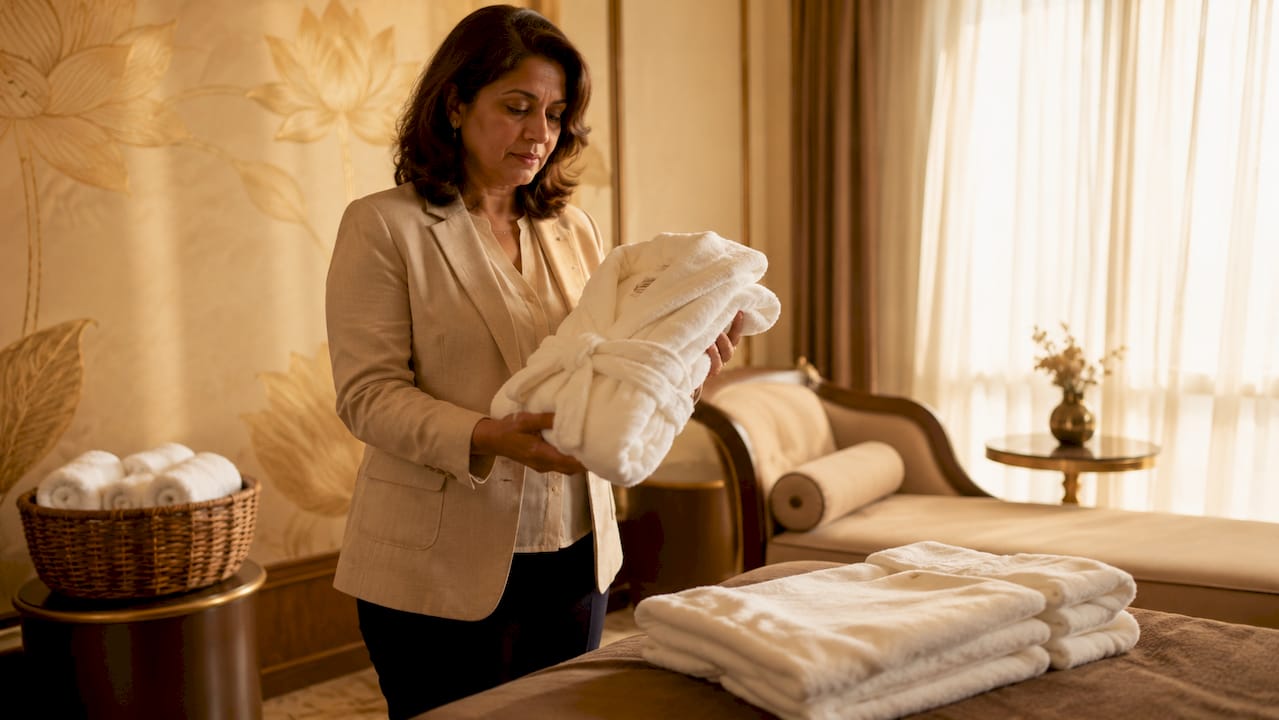
The bathrobe is the centerpiece. Its fabric weight, weave, and construction determine how guests feel the moment they slip it on. The slippers address hygiene and comfort simultaneously, protecting guests from bare floors while extending the spa-worthy atmosphere beyond the shower. The storage bag keeps the set clean between guest stays, speeds up room preparation, and signals a standard of care that guests notice even when they cannot articulate why.
Together, these three components create a ready-to-deploy amenity package. Housekeeping teams can place a sealed set in the closet without handling individual items, which cuts room turnover time and reduces contamination risk.
The key components of a hospitality robe set:
- Bathrobe: The primary comfort item, available in terry cloth, waffle weave, or velour depending on property style and climate
- Slippers: Closed-toe or open-toe options in non-slip soles for safety and hygiene on bathroom floors
- Storage bag: A breathable, branded, or plain bag that protects the set during storage and signals cleanliness to guests
Pro Tip: Order sets with pre-embroidered robes and matching branded bags. Guests who see your logo on both items register a level of polish that plain white sets simply cannot replicate.
Robe programs are judged by guest comfort and service consistency, not just retail style. That distinction matters when you are building a procurement spec.
What are the fabric and construction standards for hospitality robes?
100% cotton is the accepted standard in 4 and 5 star hotels because of its breathability and tactile comfort. Polyester blends fall short of the sensory expectations guests bring to upscale properties. Cotton absorbs moisture, breathes against the skin, and softens with each wash rather than pilling or stiffening.
Fabric density, measured in grams per square meter (GSM), determines weight, absorbency, and drying time. Fabric densities range from 280 to 500 GSM depending on weave type. That range is wide by design. A 280 GSM waffle robe dries in minutes and suits a warm-climate spa. A 500 GSM terry robe wraps guests in substantial weight and suits a cold-weather mountain resort.
Construction quality separates a robe that lasts two seasons from one that lasts two years. Double-stitched seams and bar-tacking at stress points allow robes to endure hundreds of industrial wash cycles without fraying at the cuffs, pockets, or belt loops. This is the single most overlooked spec in bulk procurement decisions.
| Fabric type | GSM range | Best use case | Key benefit |
|---|---|---|---|
| Cotton terry | 380–500 GSM | Bathrooms, cold climates | High absorbency, plush feel |
| Waffle weave | 280–350 GSM | Spas, warm climates | Lightweight, fast drying |
| Velour | 400–500 GSM | Luxury suites, resorts | Soft surface, rich appearance |
White robes are the industry standard for hygiene because they can be bleached to high sanitation levels without color degradation. White also photographs well, which matters for marketing imagery and online reviews. A gray or navy robe may look distinctive on a product page but creates laundry complications at scale.
Pro Tip: Request a GSM certification from your supplier before committing to a bulk order. A robe labeled “400 GSM” that actually weighs in at 320 GSM will pill faster and feel thinner after the first ten washes.
You can review a detailed breakdown of bathrobe fabric types to match material performance with your property’s laundry capacity and guest profile.
What types of hospitality robes work best for different properties?
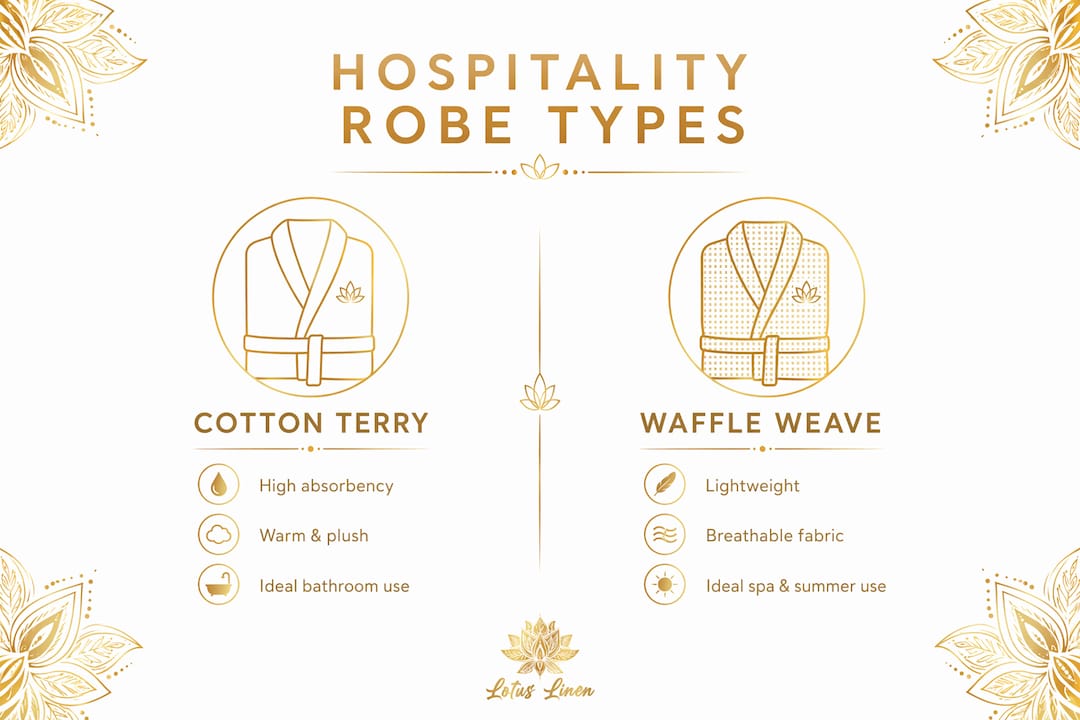
Cotton terry fabric is highly absorbent and ideal for bathroom use, while waffle weave is lightweight and breathable, suited for spas and warm climates. Velour sits at the luxury end of the spectrum, with a smooth outer surface that reads as indulgent rather than functional. Choosing the wrong type for your property creates a mismatch between guest expectation and actual experience.
Collar style is a decision most managers underestimate. Shawl collars fold softly around the neck and project a classic spa aesthetic. Kimono collars lie flat and suit properties with a modern or Asian-inspired design identity. Neither is objectively better. The right choice depends on the visual language your property already uses.
Sizing is a practical concern that affects guest satisfaction directly. Dual belt loops allow for a one-size-fits-all fit across varied guest heights, preventing belts from dragging or slipping. A robe that fits poorly signals poor planning, regardless of fabric quality.
| Robe style | Collar type | Fabric | Ideal property type |
|---|---|---|---|
| Classic plush | Shawl | Terry cloth | Full-service hotel, resort |
| Spa waffle | Kimono | Waffle weave | Day spa, boutique hotel |
| Luxury velour | Shawl | Velour | Luxury suite, high-end resort |
| Lightweight wrap | Kimono | Waffle weave | Warm-climate property, wellness retreat |
Operational fit matters as much as aesthetic fit. Choosing heavyweight robes without adequate drying capacity increases energy and labor costs unnecessarily. A 500 GSM terry robe requires longer dryer cycles than a 300 GSM waffle robe. At scale, that difference adds up across thousands of wash cycles per year.
Professional robe procurement matches fabric structure with laundry capacity to control operating costs and extend product life. This is the operational lens that separates experienced hospitality buyers from first-time purchasers.
For a side-by-side look at how construction differs between hospitality and home use, the hotel vs. home bathrobe comparison at Shoplotuslinen covers the key distinctions.
How do robe sets affect guest satisfaction and hotel operations?
Sensory memory from robe quality subliminally influences guests’ brand perception and satisfaction scores. A guest who wraps themselves in a well-constructed, spa-worthy robe after a shower forms a positive physical memory of your property. That memory surfaces when they write an online review or decide whether to rebook.
The operational benefits are equally concrete:
- Faster room turnover: Pre-packaged sets reduce the steps housekeeping takes to prepare a room, cutting per-room labor time
- Consistent presentation: Every room receives an identical, sealed set, eliminating variation in how robes are folded or displayed
- Reduced replacement frequency: Careful selection of robe fabric and construction directly reduces how often you need to replace inventory
- Branding at the point of comfort: A robe with embroidered branding turns a functional amenity into a brand touchpoint guests interact with for minutes at a time
- Laundry cost control: Matching robe weight to your laundry equipment prevents energy overruns and extends machine life
Robes influence guest brand perception through sensory memory, which means the investment in a quality robe set pays back through loyalty and word-of-mouth, not just immediate satisfaction scores. Properties that treat robes as a commodity line item consistently underperform on amenity-related review categories.
Embroidery with bleach-resistant and heat-resistant threads allows consistent branding without compromising laundering standards. This detail matters because a logo that fades after twenty washes does more damage to brand perception than no logo at all. Shoplotuslinen’s in-house embroidery uses threads rated for industrial laundering, so the branding holds through the full lifecycle of the robe.
For a deeper look at how robes function as brand tools, the guide on bathrobes and guest experience at Shoplotuslinen covers the sensory and operational angles in detail.
Key Takeaways
A hospitality robe set is a three-piece amenity bundle that drives guest satisfaction, supports consistent housekeeping, and communicates brand quality through fabric, construction, and presentation.
| Point | Details |
|---|---|
| Set components | Every set includes a bathrobe, slippers, and a hygienic storage bag for consistent room preparation. |
| Fabric standard | 100% cotton in 280–500 GSM is the accepted range for hospitality robes across weave types. |
| Construction quality | Double-stitched seams and bar-tacking at stress points extend robe life through industrial wash cycles. |
| Style selection | Match robe weight and weave to your property’s climate, laundry capacity, and guest profile. |
| Brand impact | Embroidered robes with bleach-resistant threads reinforce brand identity without compromising laundering standards. |
What I have learned from years of outfitting hotels with spa-worthy robes
The most common mistake I see hotel managers make is treating robe procurement as a one-time purchasing decision. They buy a bulk order, absorb the cost, and revisit the question only when robes start falling apart. By that point, they have already served guests with fraying cuffs and faded logos for months.
The properties that get this right think about robes the way they think about mattresses. They set a replacement cycle, track wear across inventory, and build the cost into their annual amenity budget. That discipline pays off in review scores and repeat bookings.
The second mistake is choosing style over operational fit. A velour robe looks extraordinary in a product photo. But if your laundry room cannot dry a 500 GSM robe in the time between checkout and the next check-in, you will run out of clean robes during peak occupancy. I always ask managers to share their laundry specs before recommending a fabric weight.
Customization is where I see the biggest untapped opportunity. Most managers assume embroidery is a luxury add-on for five-star properties. The reality is that a simple embroidered logo on a well-constructed waffle robe elevates a three-star property’s perceived quality more than almost any other single amenity decision. Guests photograph robes. They post them. That organic visibility is worth far more than the incremental cost of embroidery. If you want to explore how customized robes build hotel identity, the approach is more accessible than most managers expect.
— Oguzhan
Shoplotuslinen’s spa-worthy robe sets for hospitality professionals
Shoplotuslinen supplies hospitality professionals with spa-worthy robes built for the demands of commercial laundering, consistent guest presentation, and brand-forward customization.
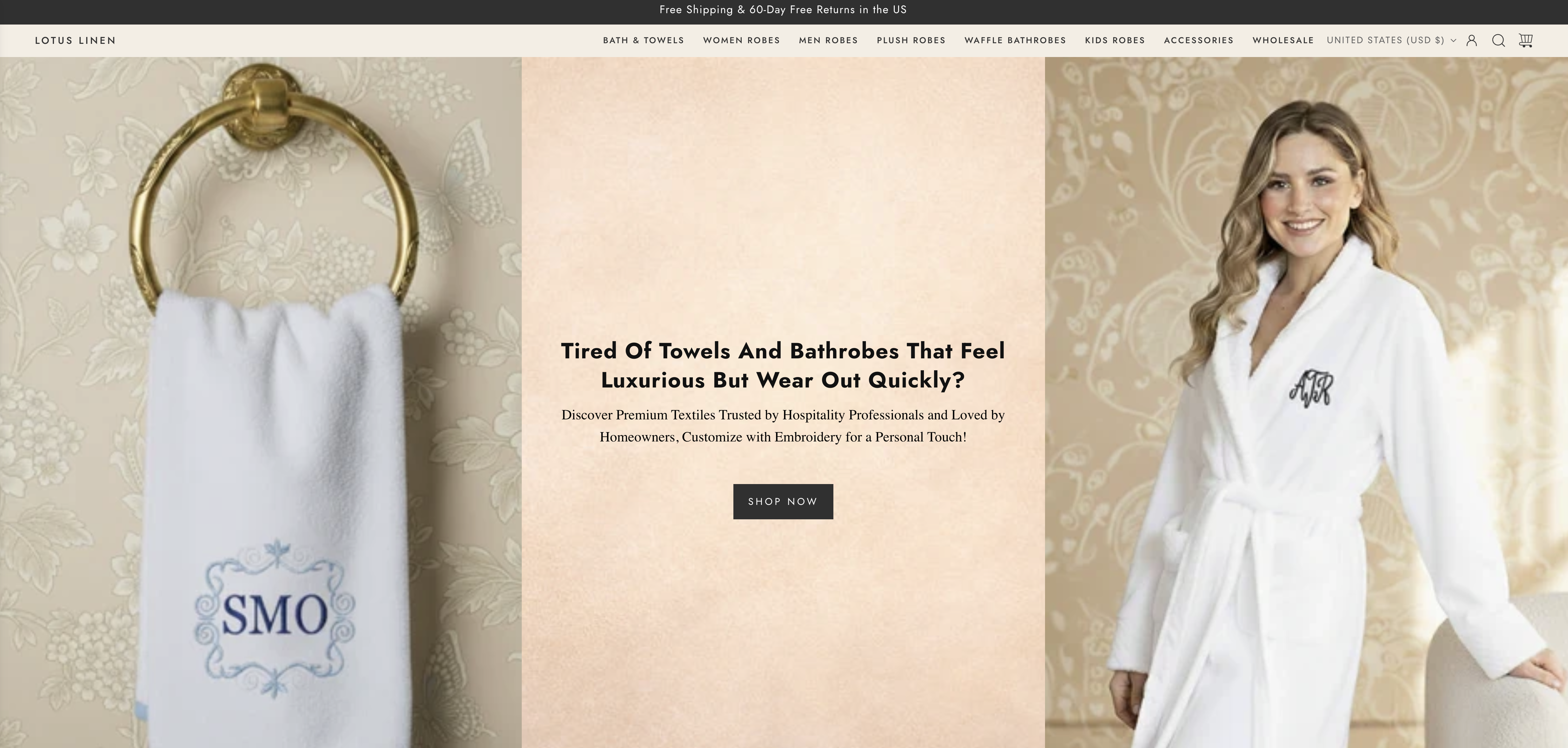
The women’s ultra soft plush bathrobe and the men’s waffle spa bathrobe represent the two ends of the hospitality robe spectrum: plush terry for full-service hotels and lightweight waffle for spa and warm-climate properties. Both are available with in-house embroidery using bleach-resistant threads rated for industrial wash cycles. Wholesale pricing and bulk ordering are available through the Shoplotuslinen wholesale page, where the team works directly with property managers to match fabric, weight, and branding to operational requirements.
FAQ
What does a hospitality robe set typically include?
A hospitality robe set includes one bathrobe, one pair of slippers, and one hygienic storage bag. These three components work together to deliver consistent guest comfort and simplify room preparation for housekeeping teams.
What fabric is standard for hotel bathrobes?
100% cotton is the accepted fabric standard in 4 and 5 star hotels because of its breathability, softness, and ability to withstand bleaching during industrial laundering. Polyester blends do not meet the tactile expectations of upscale guests.
Why are hotel robes almost always white?
White robes are the hospitality industry standard because they can be bleached to high sanitation levels without color damage. White also photographs well for marketing and signals cleanliness to guests at a glance.
How do I choose between terry cloth and waffle robes for my property?
Terry cloth is the right choice for properties focused on absorbency and warmth, such as full-service hotels and cold-climate resorts. Waffle weave suits spas, boutique hotels, and warm-climate properties where lightweight, fast-drying fabric is a practical priority.
How does robe quality affect guest reviews and loyalty?
Sensory memory from robe quality influences guests’ brand perception and satisfaction scores. Guests who experience a well-constructed, spa-worthy robe are more likely to leave positive reviews and return to the property.

