
TL;DR:
- Personalized service and attention to detail are more important than material amenities in creating memorable guest experiences.
- In-room comfort features like high-quality linens, bespoke toiletries, and ambient controls significantly impact guest satisfaction.
- Wellness offerings and exclusive social spaces are now essential components of modern luxury hospitality.
Essential luxury hotel amenities for unforgettable guest stays
Surface-level luxury is easy to spot: marble lobbies, gilded fixtures, and towering flower arrangements. But seasoned travelers and hospitality professionals know those details rarely separate a truly memorable stay from a forgettable one. The real differentiator lives in the details guests interact with every day, from the weight of a robe to the precision of a personalized wake-up call. This guide breaks down the amenity criteria that matter most, examines what today’s elite hotels are doing right, and gives you a practical framework for evaluating or delivering the kind of experience guests tell stories about long after checkout.
Table of Contents
- How to evaluate luxury hotel amenities
- Signature in-room amenities: comfort and customization
- Wellness and spa offerings: the modern must-haves
- Exclusive guest spaces: lounges, dining, and social touchpoints
- Why the future of luxury hospitality is seamless personalization
- Experience comfort with luxury linens and robes
- Frequently asked questions
Key Takeaways
| Point | Details |
|---|---|
| Service leads luxury | Personalized and anticipatory service matters more to guests than sheer opulence or brand names. |
| Wellness is essential | Modern luxury stays must feature robust wellness amenities including spas and holistic programs. |
| Comfort is personal | Signature linens, custom setups, and room features are what guests remember and seek to bring home. |
| Public spaces matter | Elite lounges, exclusive dining, and well-curated social spaces set five-star hotels apart. |
| Replicate the experience | Hotel-level comfort can be integrated at home with quality linens and attentive care. |
How to evaluate luxury hotel amenities
Let’s set the foundation for what truly distinguishes exceptional hotels before diving into individual features.
When assessing any luxury property, the first question shouldn’t be “What amenities do they offer?” It should be “How do they make guests feel when using them?” That shift in perspective separates service-first thinking from amenities-first thinking, and it’s the difference between a five-star rating and a five-star experience.
Service-first evaluation means judging an amenity not just by its existence but by how it’s delivered. A whirlpool tub is standard at many upscale properties. But a butler who draws the bath at the exact temperature noted from a previous stay, complete with the guest’s preferred essential oils waiting on the ledge, is something else entirely. Luxury hotels prioritize personalized service like butler and concierge support over material amenities for superior guest experience.
The numbers back this up. Forbes Travel Guide rates luxury hotels on over 900 criteria, with 70 to 75% of the weight placed on service quality. That means the softest pillow in the world won’t earn a five-star designation if it arrives late, wrinkled, or without a warm word. Amenities must be impeccable, yes, but they only land when service surrounds them.
Here are the core evaluation criteria professionals use:
- Personalization: Does the property remember guest preferences across visits?
- Sense of place: Do amenities reflect local culture, materials, and craftsmanship?
- Consistency: Are standards held at 11 PM as firmly as at 11 AM?
- Anticipation: Does staff act on guest needs before those needs are voiced?
- Invisibility: Do logistics feel effortless, or does the guest have to work for comfort?
“The best luxury amenity is one the guest never had to ask for.” This is the operating philosophy behind every top-rated property, and it’s what separates a pleasant stay from an unforgettable one.
Personalization and a strong sense of place are increasingly powerful differentiators. Guests who stay in a generic, could-be-anywhere luxury room rarely return. But a property that integrates local art, regional ingredients, and community-sourced materials into every touchpoint builds emotional loyalty. Exploring luxury home essentials through a similar lens, thinking about what is beautiful, functional, and personal, is a useful reference point for any professional designing guest spaces.
What makes an amenity “memorable” rather than generic often comes down to specificity. A curated book about the hotel’s city left on the nightstand. A locally sourced fruit basket instead of the standard imported arrangement. These choices signal investment in the guest as an individual, not a booking number.
Signature in-room amenities: comfort and customization
With the evaluation framework set, let’s explore the in-room amenities that consistently wow guests.
The guestroom remains the heart of the luxury hotel experience. Every element in that space is a vote for or against the guest’s comfort. And while technology increasingly plays a role, the most consistently praised in-room amenities are still tactile: things guests can touch, feel, and wear.
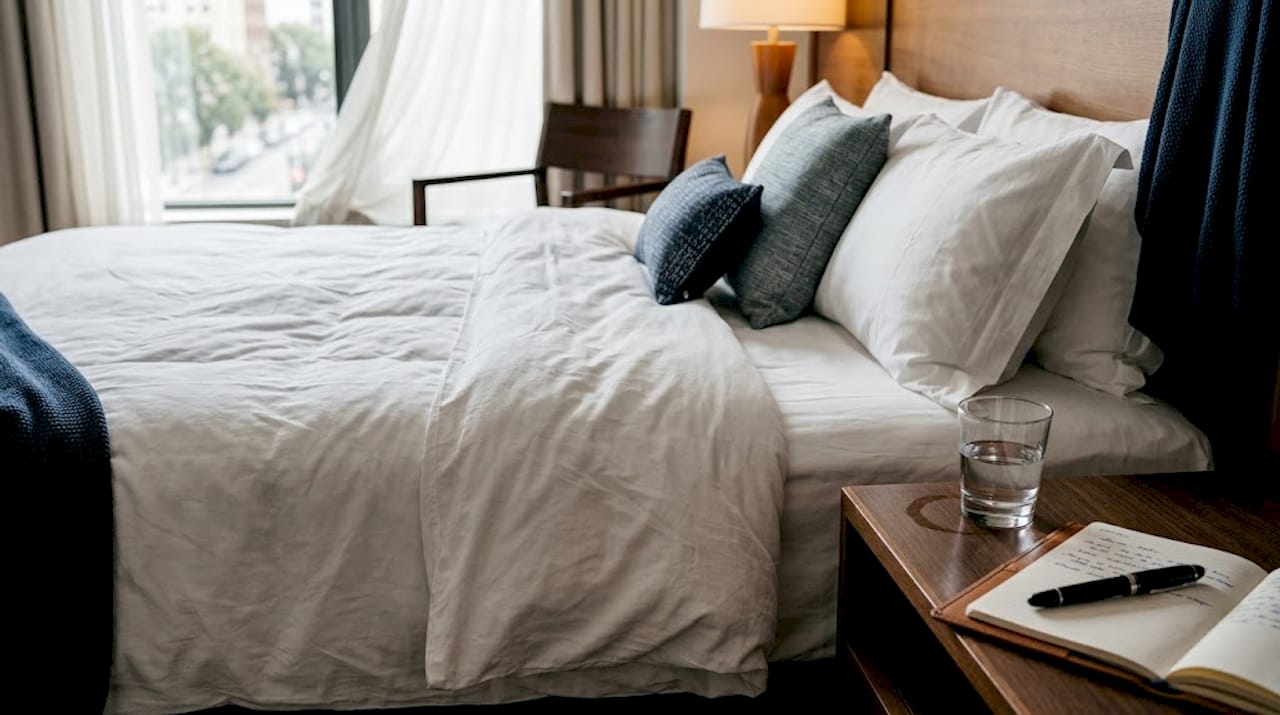
Bedding and linens top nearly every guest satisfaction survey. Thread count matters, but so does fiber quality, weave structure, and how linens are laundered and pressed. Brands like Four Seasons offer signature robes, high-thread-count bedding, and personalized room setups as core amenities, recognizing that what guests sleep in and wrap themselves with becomes part of the property’s identity.
The importance of luxury bath linens extends beyond softness. Weight, absorbency, and how a towel or robe feels after repeated laundering all speak to quality. Guests notice when a robe pills after one wash or when a towel loses its plush texture after a few uses. These details shape perception more powerfully than many hotels realize.
Here are the in-room amenities that high-end travelers consistently prioritize:
- Signature bathrobes: Plush terry or waffle-weave robes branded to the property, available in multiple sizes
- Premium bedding: High-thread-count Egyptian cotton sheets, hypoallergenic pillow options, and custom mattress toppers
- Personalized pillow menu: Guests select firmness, fill, and size from a curated list
- Bespoke toiletries: Locally sourced or brand-name products, never generic miniatures
- Ambient control: Smart thermostats, automated lighting scenes, and blackout curtains that actually work
- Air purification: HEPA filtration systems, increasingly standard at top-tier properties
- In-room fragrance: Signature scent diffusers that reinforce the property’s brand identity
“Scent is the most underrated amenity in luxury hospitality. Guests can’t always name why a room feels right, but a signature fragrance registers deeply and triggers memory recall long after checkout.”
Pro Tip: If you manage a property or consult in hospitality, audit your guestroom for overlooked sensory details. Custom slippers are one of the most frequently cited examples of a low-cost, high-impact amenity. Paired with an aromatherapy diffuser set to a calming blend, they signal care and intention without significant capital investment.
Technology integration is growing fast. Guests at top hotels now expect tablet-controlled room settings, in-mirror televisions, and app-based service requests. But luxury hotels prioritize personalized service at every touchpoint, meaning tech should enable personalization, not replace the human element. The best luxury robes for hotels paired with a simple handwritten welcome note still outperform the most sophisticated smart room system in guest satisfaction scores.
Wellness and spa offerings: the modern must-haves
Beyond the guestroom, wellness amenities are increasingly central to the luxury experience.
Wellness is no longer a bonus category in luxury hospitality. It’s a baseline expectation. More than 90% of high-end travelers seek wellness amenities like spas, fitness options, sleep optimization programs, and holistic wellness offerings. Properties that treat the spa as an afterthought are losing ground rapidly to those that make wellness a design principle.
Today’s leading hotels have moved well beyond the standard Swedish massage and steam room. The evolution looks like this:
| Feature | Traditional spa | Next-gen integrated wellness |
|---|---|---|
| Treatments | Massage, facial, body wrap | Personalized longevity protocols, biometric-guided therapies |
| Facilities | Steam room, sauna | Thermal circuits, contrast therapy, floatation tanks |
| Fitness | Generic gym equipment | Performance labs, personal trainers, sport-specific programming |
| Sleep support | Turndown service | Sleep coaching, circadian lighting, sound therapy |
| Nutrition | Room service menu | Functional nutrition consultations, gut health programs |
| Mindfulness | Yoga class schedule | Daily guided meditation, breathwork, digital detox programs |
This table illustrates how significant the shift has been. A property offering basic spa services in 2026 is competing against brands that treat guest wellness as a medical-grade, data-informed experience.
The fitness component deserves special attention. High-end gyms with Technogym or Peloton equipment are table stakes now. Discerning guests expect on-call personal trainers, sport-specific recovery suites, and classes that match their schedule rather than a fixed timetable. Some properties have added cryotherapy chambers and IV wellness bars to meet demand from performance-focused travelers.
Holistic programming takes wellness further still. Sleep programs that adjust room temperature, lighting, and sound to optimize circadian rhythms are gaining traction. Nutritionists who design in-room dining menus around individual health goals are appearing at flagship properties. Exploring spa amenity trends shows how rapidly the category is innovating. For hospitality professionals, investing in wellness depth rather than breadth, meaning fewer but truly exceptional offerings, consistently outperforms adding more mediocre options.
Exclusive guest spaces: lounges, dining, and social touchpoints
No luxury stay is complete without exceptional public and culinary spaces.
The guestroom and spa matter enormously, but the spaces guests move through across their stay shape overall impression just as powerfully. Club lounges, signature restaurants, and thoughtfully designed social areas are where loyalty is cemented or lost.
Here’s how top properties structure their exclusive guest spaces:
- Club lounges: These private floors or dedicated spaces offer a genuine sanctuary. Ritz-Carlton properties feature Club Lounges with daily culinary presentations, spas, pools, and 24-hour room service. The value isn’t just about food. It’s about status, privacy, and consistency of service for guests who need a reliable home base.
- VIP dining rooms: Private dining is increasingly reserved not just for events but for regular in-house guests who want a quieter, more tailored culinary experience than the main restaurant floor provides.
- Poolside service: Attentive poolside teams who remember drink preferences and proactively offer sunscreen or chilled towels represent the kind of effortless service that drives repeat bookings.
- Chef-led dining experiences: Guests at 92% of luxury properties are prioritizing high-end amenities including spas, fitness centers, and Michelin-starred dining. Properties that collaborate with celebrated chefs or run their own culinary programs create guest memories that no room amenity can replicate.
- Curated social spaces: Rooftop bars, library lounges, and art-forward common areas give guests reasons to leave their rooms and engage with the property itself.
| Guest space feature | % of top luxury brands offering it |
|---|---|
| Club lounge with culinary presentations | 78% |
| Michelin-starred or celebrity chef restaurant | 61% |
| Private dining room | 74% |
| Rooftop bar or terrace | 82% |
| Poolside attendant service | 89% |
| 24-hour in-room dining | 95% |
These numbers highlight where top-tier brands are aligned and where differentiation is still possible. Poolside service and round-the-clock dining are nearly universal. A genuinely exceptional club lounge or a residency chef program, paired with custom accoutrements that reflect the property’s identity, can set a property apart in a crowded market.
Dining presentation matters as much as cuisine quality. Guests who receive a beautifully plated breakfast in their suite remember the experience differently than those who collect the same food from a buffet line. The physical environment, tableware, and even the robe they’re wearing while they eat all contribute to the total impression.
Why the future of luxury hospitality is seamless personalization
Having surveyed what’s on offer, let’s consider what will define hotel reputation and guest loyalty in the years ahead.
Here’s a perspective that runs counter to where most hotel investment is flowing right now: more amenities, by themselves, rarely produce more loyalty. Guests don’t return because a property added a new thermal suite or upgraded the minibar. They return because someone remembered their name, their coffee order, and that they prefer a high floor away from the elevator. That is the real competitive advantage, and it cannot be purchased as a single capital expenditure.
The Forbes five-star service weighting of 70% is not arbitrary. It reflects decades of guest feedback showing that personalized, anticipatory service outranks facility quality in determining both satisfaction and loyalty. Amenities that feel generic, even beautiful, expensive ones, fail to build emotional connection. A butler who anticipates needs builds it in a single interaction.
Technology, sustainability, and local authenticity are the three forces reshaping what “seamless personalization” means in practice. Guest data, handled responsibly, enables staff to anticipate needs without asking invasive questions. Sustainable sourcing of amenities, from organic bath products to locally woven linens, signals values alignment with an increasingly conscience-driven guest base. And authenticity, rooting the property’s identity in its location, history, and community, creates a sense of place that no chain hotel formula can replicate.
For smaller properties or hospitality professionals who want to apply five-star thinking without a five-star budget: start with the linens and the memory. Upgrade what guests touch first and last in a day. Invest in caring for luxury linens so they stay impeccable across hundreds of wash cycles. Then train your team to remember one personal detail per guest. That combination outperforms any new gadget on the market.
Experience comfort with luxury linens and robes
Ready to bring these refined touches into daily life or your own property?
Lotus Linen designs premium robes, towels, and bath accessories built to the standard guests expect from five-star hotels. Whether you’re outfitting a boutique property or elevating your personal morning routine, the quality difference is immediate and lasting.

Our luxury waffle robes offer the lightweight breathability that high-end spa guests love, while our scallop bath towels deliver the weight and absorbency that signals genuine quality the moment a guest reaches for one. For properties looking to add a branded touch, our personalize your linens options make customization straightforward. Five-star comfort doesn’t have to stay behind a hotel door.
Frequently asked questions
What are the most requested luxury hotel amenities by travelers?
92% of luxury travelers prioritize high-end amenities including spas, fitness centers, and Michelin-starred dining, alongside personalized service and premium bedding as their top requests.
How do luxury hotels stand out beyond basic amenities?
Top properties excel by creating a unique sense of place and delivering anticipatory service, because personalized butler and concierge experiences consistently outperform material amenities in guest satisfaction.
Are wellness amenities now essential for luxury guests?
Yes. More than 90% of high-end travelers expect robust wellness programs, including spa facilities, fitness centers, and holistic offerings like sleep optimization and nutrition guidance.
What role do linens and bedding play in hotel ratings?
Impeccable linens are a non-negotiable requirement for top-tier ratings. Forbes Travel Guide’s 900-plus criteria explicitly require high-quality linens and premium toiletries as part of the amenity standard.
Can guests enjoy luxury amenities at home?
Absolutely. Many premium brands now offer hotel-quality robes, towels, and bath accessories for personal use, making five-star comfort accessible well outside a hotel room. Lotus Linen supplies embroidered robes and towels to hotels, spas, and boutique properties from our Santa Ana studio — see our hospitality and wholesale program for volume orders and logo embroidery.

