
Air-drying towels indoors sounds simple until they come out stiff, damp in the seams, or carrying that faint musty smell. The culprit is almost always the same: not enough airflow. With the right spacing, a little ventilation, and a quick freshness check, you can dry towels indoors and have them come out soft, clean, and odor-free every time. If you have outdoor space or a dryer and just want speed, see our general guide to drying towels fast this one focuses specifically on drying indoors, where humidity and tight spaces work against you.
Table of Contents
- Step 1: Prepare Your Drying Space Efficiently
- Step 2: Hang Towels For Optimal Air Flow
- Step 3: Improve Circulation With Fans Or Dehumidifiers
- Step 4: Check Towels For Dryness And Freshness
Quick Summary
| Key Point | Explanation |
|---|---|
| 1. Set up the space | Choose a spot with good air circulation and ventilation to help towels dry evenly. |
| 2. Hang for airflow | Spread towels fully apart with space between them so air can reach every surface. |
| 3. Add fans or a dehumidifier | Keep air moving and humidity down to speed drying and prevent mustiness. |
| 4. Check dryness and freshness | Feel and smell each towel before storing to be sure it is fully dry. |
Step 1: Prepare your drying space efficiently
A well-prepared indoor drying area is the foundation for clean, fresh towels. The goal is fast, thorough drying that keeps moisture from lingering, since damp fabric sitting in still air is what leads to that musty smell.
Start by picking a location with good air movement. A bathroom, laundry room, or a spare corner near a window works well as long as air can circulate ideally near an open window or within reach of a fan. Your setup should include:
- A sturdy drying rack with multiple levels
- Space between towels so every surface is exposed to air
- A fan or dehumidifier to move moisture out of the room
- A clean, dry surface for the rack
Avoid the common mistakes hanging towels in a cramped, humid space or overlapping them. Each towel needs breathing room to dry quickly and stay fresh.
Here is a quick comparison of tools that improve indoor drying:
| Tool | Primary Benefit | Best Use Case |
|---|---|---|
| Drying rack | Maximizes air exposure | Everyday towel drying |
| Fan | Speeds up evaporation | Humid or still rooms |
| Dehumidifier | Lowers moisture quickly | Spaces with poor airflow |
| Window | Natural ventilation | Mild, dry-weather days |
Pro tip: Place a small towel or tray beneath the rack to catch drips and protect your floor.
Step 2: Hang towels for optimal air flow
How you hang towels matters as much as where. The aim is to expose as much surface area as possible so moisture evaporates evenly:
- Spread each towel fully open on the rack
- Leave at least 2 to 3 inches between towels
- Hang towels with maximum surface area exposed, not bunched or folded
- Rotate towels partway through for even drying
- Unfold any doubled-over sections
Hanging towels open, rather than draped in a thick fold, lets air circulate on both sides and prevents the damp spots that cause odor. Spread heavier terry towels across multiple rack levels so nothing gets overcrowded.
Proper spacing is the whole game indoors: every towel needs room to breathe.
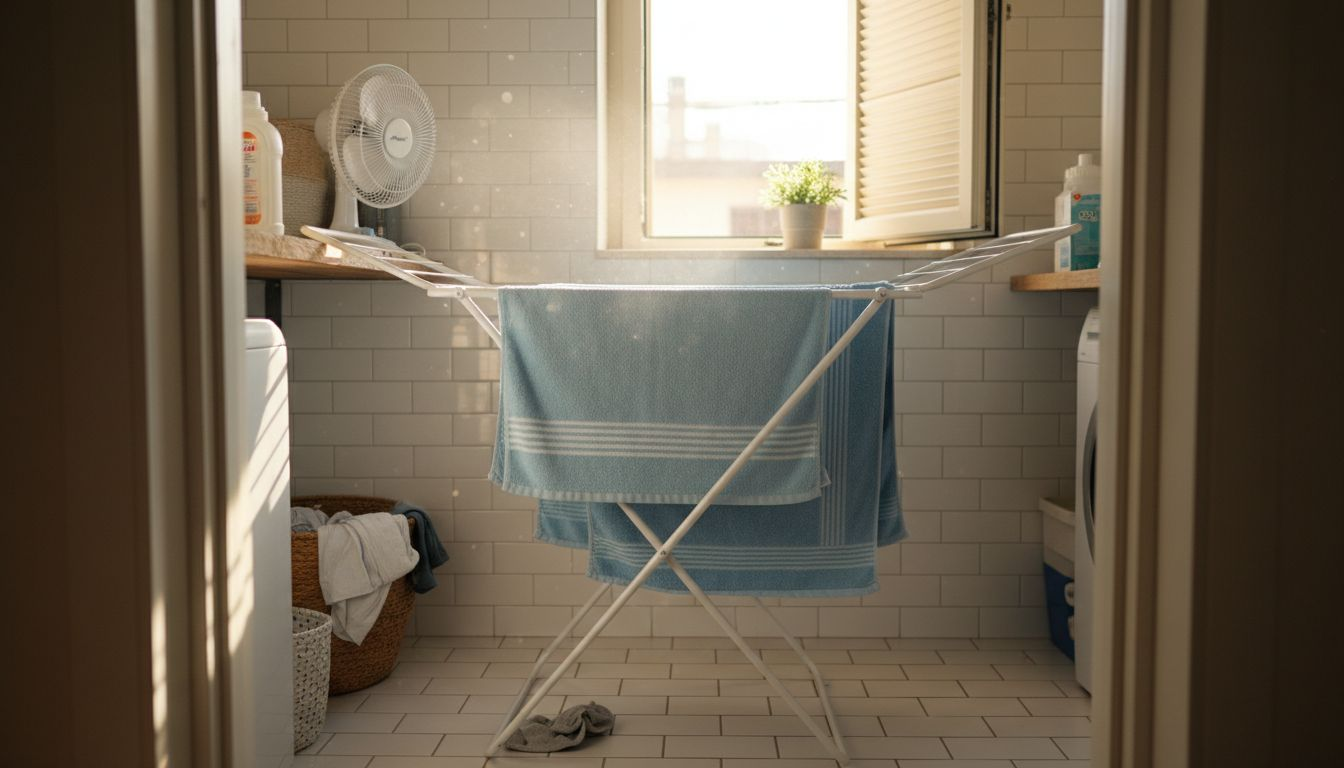
Pro tip: A small fan aimed across the rack dramatically speeds up evaporation and keeps towels smelling fresh.
Step 3: Improve circulation with fans or dehumidifiers
Moving air and lower humidity are what make indoor drying work. Fans and dehumidifiers do complementary jobs one keeps air circulating, the other pulls moisture out of the room:
- Position a fan to blow across the drying rack
- Use an oscillating fan for broader coverage
- Choose a dehumidifier with adjustable settings
- Place the dehumidifier near, but not touching, the drying setup
- Aim to keep room humidity in a comfortable range, roughly 30 to 60 percent
Placement matters. Point fans to create steady airflow around the towels without a harsh direct blast, and position a dehumidifier centrally so it draws moisture from the whole room. Match the equipment to the space compact fans for small rooms, more capacity for larger ones.
Consistent air movement is your best defense against dampness and mustiness.
Pro tip: An inexpensive hygrometer lets you track room humidity and dial in your fan and dehumidifier settings.
Step 4: Check towels for dryness and freshness
The last step is a quick quality check so nothing goes into the closet still damp, which is exactly how odors start.
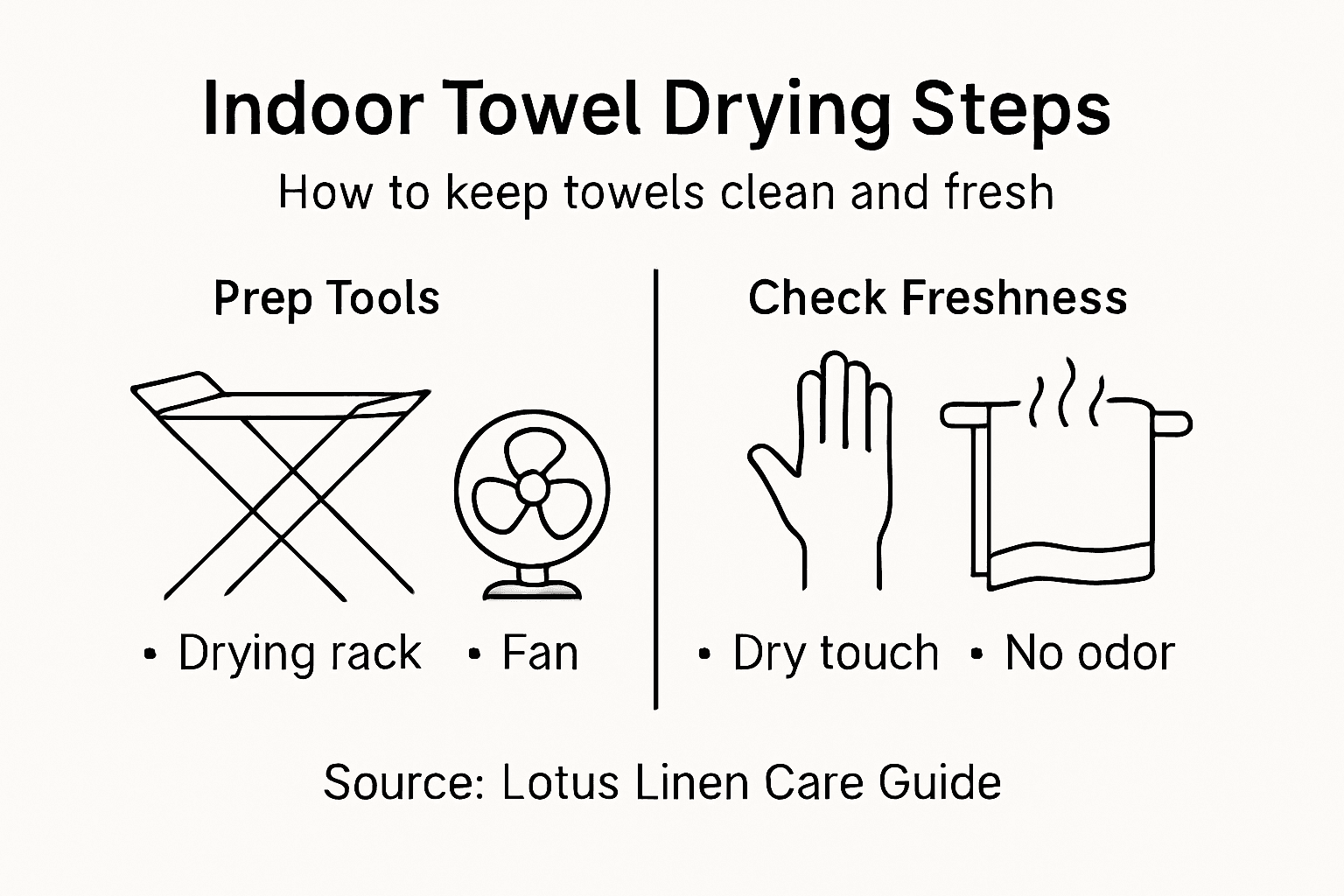
Give each towel a simple once-over before storing:
- Press it with clean, dry hands to feel for residual moisture
- Smell it for any musty or damp odor
- Look for darker patches that signal wet spots
- Check weight a dry towel feels noticeably lighter
- Pay attention to thicker areas like hems, where moisture lingers
A fully dry towel feels light and uniform, with no cool or damp sections. Use this quick reference:
| Check Method | What to Look For | Indicates Complete Dryness? |
|---|---|---|
| Hand Press Test | No coolness or dampness | Yes, if dry to the touch throughout |
| Visual Inspection | No dark patches | Yes, color and texture are even |
| Smell Test | No musty odor | Yes, fresh-linen scent only |
| Weight Check | Light, not heavy | Yes, noticeably lighter towel |
A quick freshness check is your defense against mildew and musty odors.
If a towel still feels the least bit damp, keep the air moving a little longer or finish it on a low-heat dryer setting. Denser, well-made towels help here too: our 100% zero-twist cotton, 620 GSM towels are absorbent yet dry evenly when given proper airflow and spacing.
Pro tip: Thicker hems and folded edges are the last to dry check them specifically before calling a towel done.
Enjoy Hygienic Comfort with Premium Towels from Lotus Linen
Good drying habits go further with towels built to stay fresh. Lotus Linen towels are woven from 100% zero-twist cotton at 620 GSM soft, absorbent, and finished with our signature scallop piping so they feel as good as they look. Give them proper airflow indoors and they reward you with lasting softness.

Explore our scallop piping bath towels and towel sets at Lotus Linen, and turn your everyday towel care into an easy, satisfying routine.
Frequently Asked Questions
What is the best way to prepare my indoor drying space for towels?
Choose a well-ventilated area such as a laundry room or bathroom, use a sturdy drying rack, position it near a fan or open window, and leave space between towels for air to circulate.
How can I hang towels indoors so they dry quickly and stay fresh?
Spread each towel fully open on the rack with 2 to 3 inches of space between towels. Avoid bunching or folding, which traps moisture and slows drying.
What tools help air circulation when drying towels indoors?
Fans and dehumidifiers. Aim a fan across the rack to keep air moving and place a dehumidifier nearby to lower humidity, creating conditions that dry towels evenly.
How can I check if my towels are completely dry?
Press them with clean hands to feel for coolness or dampness, look for darker patches, and smell for any musty odor. A fully dry towel feels light with an even texture.
What should I do if my towels smell musty after drying indoors?
A musty smell usually means the towel was not fully dry or absorbed room humidity. Increase airflow with a fan, check thicker hems for damp spots, and give more space between towels next time.

