TL;DR:
- Choosing the right bath mat involves prioritizing safety, comfort, and appearance to prevent hazards and mold growth. Material selection, backing quality, proper sizing, and maintenance routines are essential factors for long-term safety and hygiene. Regular inspection, correct cleaning, and avoiding shortcuts ensure a safe, hygienic bathroom environment.
A poorly chosen bath mat does more damage than most people realize. It can curl at the edges and become a tripping hazard, trap moisture and breed mildew within days, or simply slide across a wet tile floor when you step out of the shower. Choosing the right bath mat means getting three things right at once: safety, comfort, and appearance. This guide walks you through every factor worth considering, from materials and sizing to cleaning routines, so you can make a confident decision that works for your bathroom and your household.
Table of Contents
- Key takeaways
- Choosing the right bath mat: what to evaluate before you buy
- How to select a bath mat step by step
- Common mistakes that reduce safety and lifespan
- Cleaning and maintaining your bath mat
- My honest take on bath mat choices
- Complete your bathroom with Shoplotuslinen
- FAQ
Key takeaways
| Point | Details |
|---|---|
| Material determines drying speed | Stone mats dry in under a minute; memory foam can take 12 to 24 hours, raising mold risk. |
| Non-slip labels are not guarantees | Real-world performance depends on your specific floor surface, not manufacturer claims. |
| Weekly washing is the baseline | Most bath mats need washing at least once a week to prevent bacteria and mildew buildup. |
| Size and placement matter for safety | A mat that is too large curls at the edges; one that is too small leaves wet floor exposed. |
| Aesthetics work best when coordinated | Matching mat colors and textures with towels and decor creates a unified, calming bathroom. |
Choosing the right bath mat: what to evaluate before you buy
Most people pick a bath mat based on color or price. Those are valid factors, but they sit near the bottom of the priority list. Start with safety and work your way outward.
Safety features that actually work
The backing of a bath mat is its most critical functional element. Look for suction cups, textured rubber, or PVC backing with drain holes. Strong suction cup density creates better grip, and drain holes prevent water from pooling underneath the mat where mold loves to grow. That said, there is a catch most buyers do not know about. No official regulated standard exists for non-slip bath mats. A “non-slip” label means the manufacturer tested the mat on some surface under some conditions. Testing it on your own floor before committing is more reliable than any marketing claim.
Bath mat material types at a glance
| Material | Drying Time | Best For | Maintenance Level |
|---|---|---|---|
| Stone (diatomite) | Under 1 minute | Fast-drying, modern bathrooms | Low |
| Microfiber | 4 to 8 hours | Softness, budget buyers | Medium |
| Memory foam | 12 to 24 hours | Comfort, cushioning underfoot | High |
| Cotton | 2 to 6 hours | Classic feel, machine washable | Medium |
| Rubber / silicone | 1 to 3 hours | Wet shower floors, in-tub use | Low |
Drying times vary significantly depending on material. Memory foam, while incredibly soft underfoot, takes 12 to 24 hours to dry completely. Mold spores can begin growing after just 24 to 48 hours of moisture exposure, which means a memory foam mat in a poorly ventilated bathroom is a hygiene problem waiting to happen.

Size, shape, and placement
A standard bath mat measures around 17 by 24 inches, which suits most single-user bathrooms. Larger bathrooms, or households with multiple users stepping out of the tub at different angles, benefit from 20 by 34 inch mats. The rule is simple: the mat should cover the floor space where wet feet land, and nothing more. Mats that extend under vanity legs or near doorways tend to curl and become trip hazards within weeks.

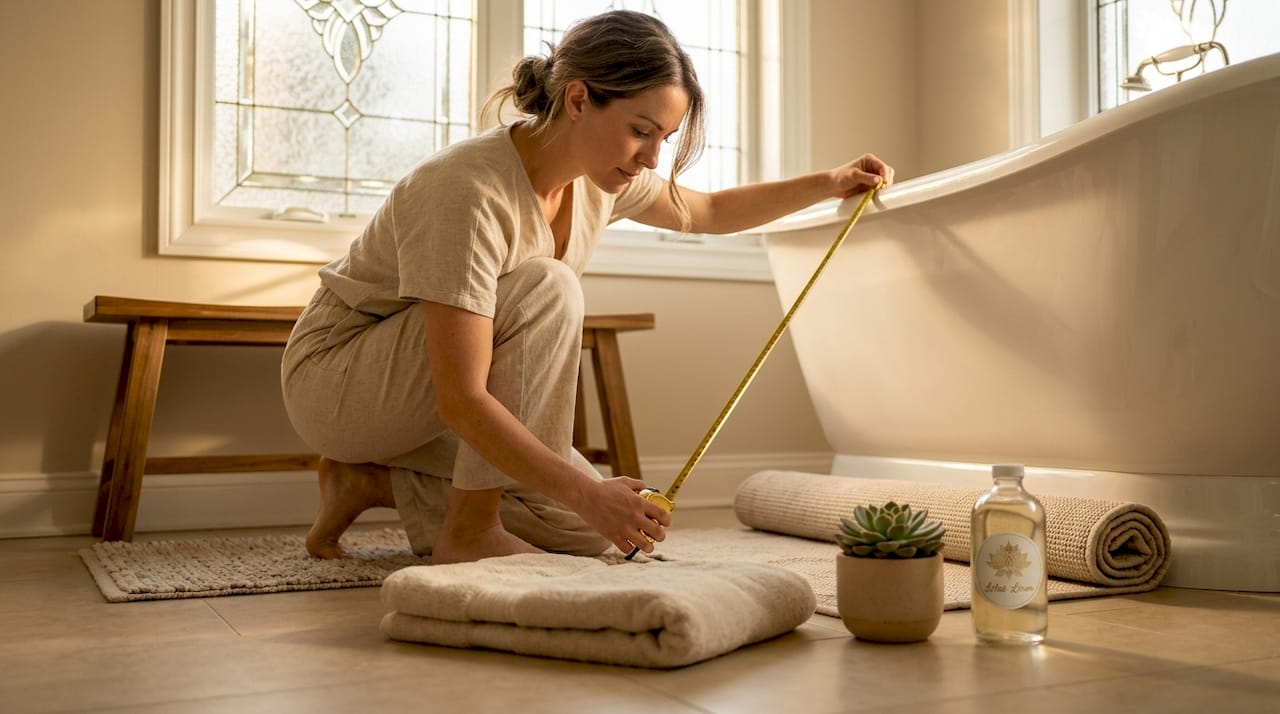
Pro Tip: Measure your bathroom floor from the tub edge to where you naturally stand when drying off. That measurement is your minimum mat length. Add two inches on each side for coverage that actually protects.
When it comes to colors for bath mats, neutral tones like stone, white, and gray hide less dirt over time than you might expect, but they do photograph beautifully. Matching your mat color with your towels and bathroom fixtures creates a more relaxing, intentional space. Bold accent colors work well in minimalist bathrooms where the mat becomes a design statement rather than a background element.
How to select a bath mat step by step
Following a structured process cuts through the confusion and keeps you focused on what actually matters for your specific situation.
-
Assess your floor type. Smooth porcelain and ceramic tile are the slipperiest surfaces. They require mats with dense suction cups or heavy textured backing. If you have textured tile or stone flooring, the backing requirements are slightly more forgiving, but suction cups still add meaningful protection.
-
Identify who uses the bathroom most. A bathroom shared by young children or elderly family members requires a higher standard of grip and cushioning. Layered safety solutions that combine mats with grab bars, seating, and proper lighting are more effective than any single product alone. If this is a concern in your home, the Shoplotuslinen guide on bath safety for toddlers covers this in detail.
-
Measure your space before ordering. Write down the length, width, and note any obstacles like toilet bases or vanity legs. Order a mat that fits cleanly within the open floor zone. Edges that fold under furniture cause curling within weeks.
-
Choose material based on your bathroom’s ventilation. A well-ventilated bathroom with a window or strong exhaust fan can handle microfiber or cotton without much risk. A windowless, poorly ventilated bathroom calls for diatomite or rubber, both of which dry fast and resist mold growth.
-
Check the backing before purchase. If buying online, read reviews specifically mentioning the mat on your floor type. A mat that performs flawlessly on textured rubber flooring may slide freely on polished porcelain. Brick and mortar stores let you press the mat against a glass surface to test suction cup firmness before buying.
-
Plan for your maintenance routine. If you are unlikely to hand wash a mat every week, do not buy one that requires it. Choose a machine-washable cotton or microfiber mat that can go directly in the laundry on a schedule that actually fits your life.
Pro Tip: Before placing a mat in regular use, press it firmly onto your wet bathroom floor and tug it lightly from one corner. If it lifts easily, the suction pattern is not dense enough for your surface. Return it before the habit of relying on it forms.
Common mistakes that reduce safety and lifespan
Most bath mat problems are self-inflicted. Here is where buyers go wrong, and how to avoid each mistake.
-
Using fabric softener. Fabric softener coats fibers, reducing absorbency and trapping moisture inside the mat. This accelerates mildew growth and creates odors that no amount of re-washing fully eliminates. Never use it on any bath mat material.
-
Ignoring degraded suction cups. Suction cups flatten and degrade over time. A mat that once gripped firmly will eventually just sit on the floor with no real traction. Inspect the underside of your mat monthly. Flat or cracked cups are a clear sign the mat needs replacing.
-
Letting mats stay wet for days. Leaving bath mats wet or bunched encourages mildew growth, fiber breakdown, and persistent odors. Hang the mat to air dry completely after every use, especially in bathrooms without strong ventilation.
-
Buying the cheapest available option. Low-cost mats use thin backing materials that degrade in two to three months. The suction cups detach, the fabric pills, and the edges curl. You end up buying a replacement faster than you would have with a quality mat, and you use a degraded, potentially hazardous product in the meantime.
-
Choosing the wrong size. A mat too large for the space folds against walls or vanity legs. A mat too small leaves the wet floor zone uncovered. Both scenarios create fall risk.
A bath mat that has been washed with fabric softener, left wet on the floor, and used for 18 months of heavy traffic is not providing safety. It is providing the feeling of safety. Those two things are very different.
Cleaning and maintaining your bath mat
Good maintenance keeps your mat hygienic, extends its life, and preserves the grip that makes it safe. The schedule and method depend entirely on the material.
| Material | Washing Method | Frequency | Drying Method |
|---|---|---|---|
| Cotton | Machine wash, warm | Weekly | Tumble dry low or air dry |
| Microfiber | Machine wash, cold | Weekly | Air dry fully |
| Memory foam | Hand wash only | Every 2 weeks | Air dry flat, no wringing |
| Rubber-backed | Hand wash only | Weekly | Air dry only, never machine dry |
| Diatomite (stone) | Wipe or rinse | As needed | Air dry, 1 minute |
Experts recommend washing bath mats at least once a week under normal household use. If multiple people use the same bathroom or ventilation is limited, every three to four days is a more appropriate schedule. A musty smell or a slimy texture underfoot means the mat needs immediate washing, or replacement if washing does not resolve the odor.
Memory foam mats require hand washing and gentle drying. Never wring them out, as that breaks down the foam structure permanently. Rubber-backed mats should never go in a machine dryer. The heat causes cracking and destroys the grip backing, turning a functional safety product into a decoration.
For more on keeping bathroom linens genuinely clean rather than just surface-fresh, Shoplotuslinen covers hygienic towel practices that apply directly to mat care as well.
Most non-slip bath mats should be replaced every six to twelve months with heavy daily use, or every one to two years under lighter use. When the backing shows visible wear, suction cups are flat, or edges curl despite washing, it is time for a new mat.
Pro Tip: Buy two identical mats and rotate them on a weekly schedule. One goes in the wash while the other is in use. Both dry fully between uses, both wear evenly, and you never leave your bathroom floor unprotected during wash day.
My honest take on bath mat choices
I’ve spent years paying attention to how people actually use bathroom products versus how they think they use them. And the single biggest gap I see is with non-slip mats.
People buy a mat labeled “non-slip,” place it on their bathroom floor, and genuinely believe they have addressed the safety problem. But performance depends on your surface, not the label. I’ve seen expensive mats with dense suction cups slide freely on certain polished tile and budget mats with simple textured rubber hold firm. Marketing language about grip and safety is largely unregulated. Test first. Trust the test, not the packaging.
What I’ve learned is that no bath mat is a complete solution on its own. For families with elderly members or young children, a mat is one layer in a system that should also include grab bars at tub height, adequate lighting over the floor, and non-slip strips inside the tub itself. Bath mats alone are insufficient for high-risk users. That is not a caveat; it is just how bathroom safety actually works.
I also think people underestimate how fast mats become hazardous through neglect. A mat washed every three weeks, dried by leaving it bunched on the floor, and never inspected for suction cup degradation is not safer than no mat. It is heavier, wetter, and more likely to slip. The discipline of weekly washing and proper air drying matters more than the price point of what you bought.
— Oguzhan
Complete your bathroom with Shoplotuslinen
If you are thinking carefully about your bath mat, you are already thinking about your bathroom as a whole environment, not just individual products. That is exactly the perspective Shoplotuslinen is built around.

At Shoplotuslinen, every product in the bath collection is chosen with the same criteria covered in this guide: comfort underfoot, durability through repeated washing, and aesthetic quality that holds up over time. Pair your new mat with premium bath towels that coordinate by color and texture, and step into a bathroom that feels intentional from floor to wall. Explore the full collection for women’s and men’s robe options that complete the experience after every bath or shower.
FAQ
How often should I replace my bath mat?
Replace non-slip bath mats every six to twelve months with daily heavy use, or every one to two years with lighter use. Flat suction cups, curling edges, or persistent odor after washing are the clearest signs it is time for a new one.
What is the best bath mat material for a humid bathroom?
Diatomite (stone) and rubber are the best choices for poorly ventilated bathrooms because both dry in under three hours. Memory foam is the worst choice in high-humidity conditions, as it can take 12 to 24 hours to dry fully and mold spores begin growing within 24 to 48 hours of moisture exposure.
Can I use fabric softener when washing my bath mat?
No. Fabric softener reduces absorbency by coating fibers and trapping moisture, which accelerates mildew growth. Use a gentle detergent only and skip the softener entirely.
How do I know if my non-slip mat is actually safe?
Press the mat firmly onto your wet bathroom floor and try to slide it with light foot pressure. If it moves at all, the backing is not compatible with your surface. No regulated safety standard exists for non-slip mats, so real-world testing on your specific floor is the only reliable measure.
What size bath mat should I buy?
Measure the floor space between the tub edge and where you naturally stand when toweling off. A standard 17 by 24 inch mat fits most single-user bathrooms, while a 20 by 34 inch mat works better for larger bathrooms or families. The mat should cover the wet zone completely without folding against walls or furniture legs.