
TL;DR:
- Bathrobe sizing varies by style, fabric, and international standards, requiring detailed measurement and guides.
- Always measure chest, length, and sleeve accurately, then select size based on purpose and fabric behavior.
- For best fit, consider personal preferences, layered clothing, and whether the robe is relaxed or tailored.
You pull on a brand-new bathrobe and something’s off. The sleeves stop at your forearms, the hem barely clears your knees, or the chest wraps so loosely it feels like a blanket with a belt. Sound familiar? Getting bathrobe sizing wrong is far more common than people realize, and it’s almost never the shopper’s fault. Robe sizing doesn’t follow the same logic as everyday clothing, and without a clear guide, you’re essentially guessing. Whether you’re shopping for yourself, your kids, or a household of different body types, this guide gives you the tools to get it right every time.
Table of Contents
- What a bathrobe sizing guide includes
- Key factors that influence bathrobe sizing
- Sizing charts and fit comparisons: What to look for
- Practical tips for buying bathrobes for families
- The truth most bathrobe shoppers miss about sizing
- Find your perfect fit with Lotus Linen
- Frequently asked questions
Key Takeaways
| Point | Details |
|---|---|
| Know your measurements | Measuring your chest, waist, and height ensures you find the most comfortable and safe bathrobe fit. |
| Fabric matters | Terry, waffle, and other fabrics can change how a bathrobe feels and fits—even with the same size label. |
| Check sizing charts | Always use the brand’s sizing chart, especially when choosing between international sizes or unisex robes. |
| Size up for comfort | When between sizes or buying for kids, choosing a larger size adds coziness and flexibility for growth or layering. |
What a bathrobe sizing guide includes
Most people assume a bathrobe size works like a t-shirt size. If you wear a large shirt, you grab a large robe. Simple, right? Not quite. A bathrobe sizing guide accounts for unique features and fit factors that standard clothing charts completely ignore, like robe length, sleeve drop, and how much room you need to move comfortably after a shower.
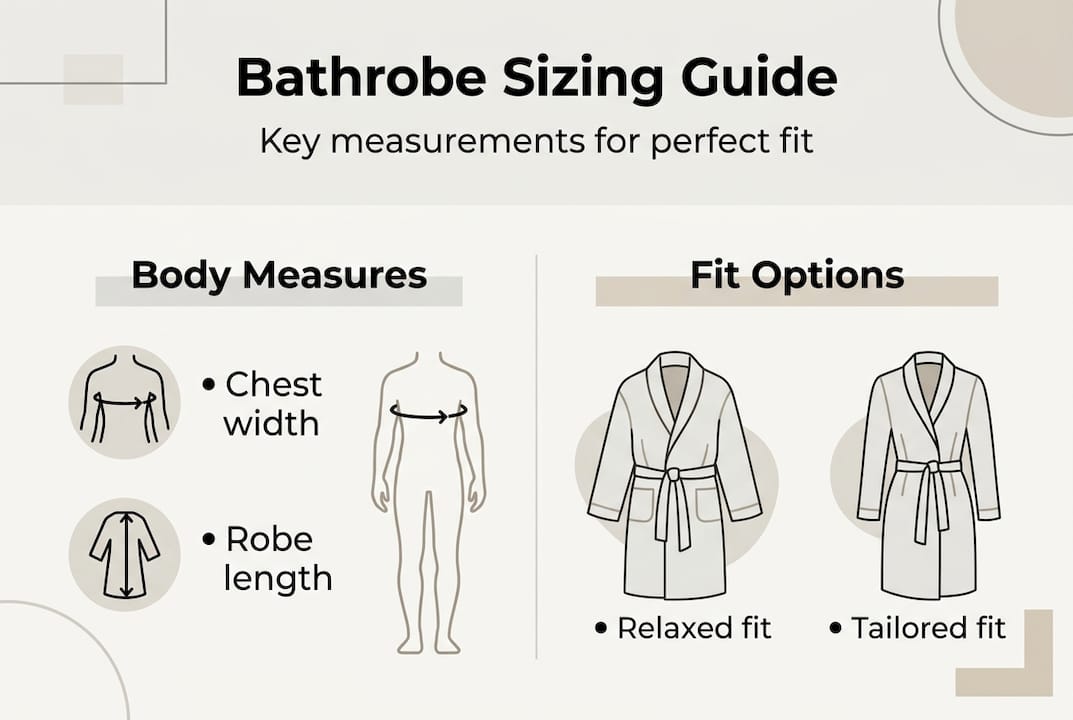
A proper bathrobe sizing guide covers several key dimensions:
- Size ranges: Small through XXL (and sometimes XXXL), plus numeric sizes used in some international markets
- Measurement zones: Chest circumference, total robe length (shoulder to hem), and sleeve length
- Age groups: Separate charts for adults, teens, and children, since kids’ sizing has its own logic
- Style-specific notes: Kimono-style robes, for example, are cut differently than wrap robes, so the same measurements can yield a different feel
- Unisex vs. gender-specific cuts: Unisex robes often run wider in the shoulders and longer overall
For parents, a kids’ sizing chart is especially important. Children’s robes need to be long enough for warmth but short enough to avoid tripping hazards. A robe that drags on the floor is a safety issue, not just a fit issue.
For adults buying gifts, sizing guides become even more critical. You can’t always ask someone their measurements without spoiling the surprise, but knowing how to read a guide helps you make a smart estimate based on general build.
When choosing the right fit, pay attention to whether the brand labels its robes as “relaxed fit” or “tailored fit.” Relaxed robes are intentionally oversized, which means you might actually want to go down a size if you prefer a cleaner silhouette. Tailored cuts run closer to the body, so sizing up is often the smarter move.
To find your perfect fit, always start with your actual body measurements rather than your usual clothing size. The two don’t always match in the robe world.
Pro Tip: If a robe is labeled “unisex” or “one-size,” check the brand’s specific measurements rather than trusting the label alone. Unisex sizing tends to favor broader shoulders and longer torsos, which may not work for every body type.
Key factors that influence bathrobe sizing
Knowing what a sizing guide covers is useful, but understanding why certain factors affect fit gives you a real edge when shopping.
Here are the core steps to measure yourself accurately before consulting any chart:
- Chest: Wrap a tape measure around the fullest part of your chest, keeping it level under your arms
- Waist: Measure around your natural waist, roughly an inch above your navel
- Length: Stand straight and measure from your shoulder down to where you want the robe to end (knee, mid-calf, or ankle)
- Sleeve: Measure from your shoulder point down to your wrist with your arm slightly bent
Once you have those numbers, fabric becomes the next big variable. Bathrobe material choices affect more than just warmth. Terry cloth, for instance, is a thick, structured fabric that adds bulk. A terry robe in a medium will feel snugger than a waffle-weave medium because waffle fabric is lighter and drapes loosely against the body. If you’re between sizes and eyeing a terry robe, size up. If it’s waffle weave, your true size usually works fine.
The best bathrobe fabrics also behave differently after washing. Terry shrinks slightly with heat, while waffle weave holds its shape better over time. Factor that in when buying for kids who are still growing.
“Fabric structure and international size variations can affect fit and feel in ways that a single size label never captures.”
International sizing adds another layer of complexity. A US Medium is not the same as a European Medium or a Brazilian size 40. US robes tend to be cut wider and longer. EU sizing runs slimmer and shorter. Brazilian sizing uses numeric codes that don’t translate directly to letter sizes at all. Always look for a fabric type variations chart that includes international conversions if you’re ordering from a global brand.
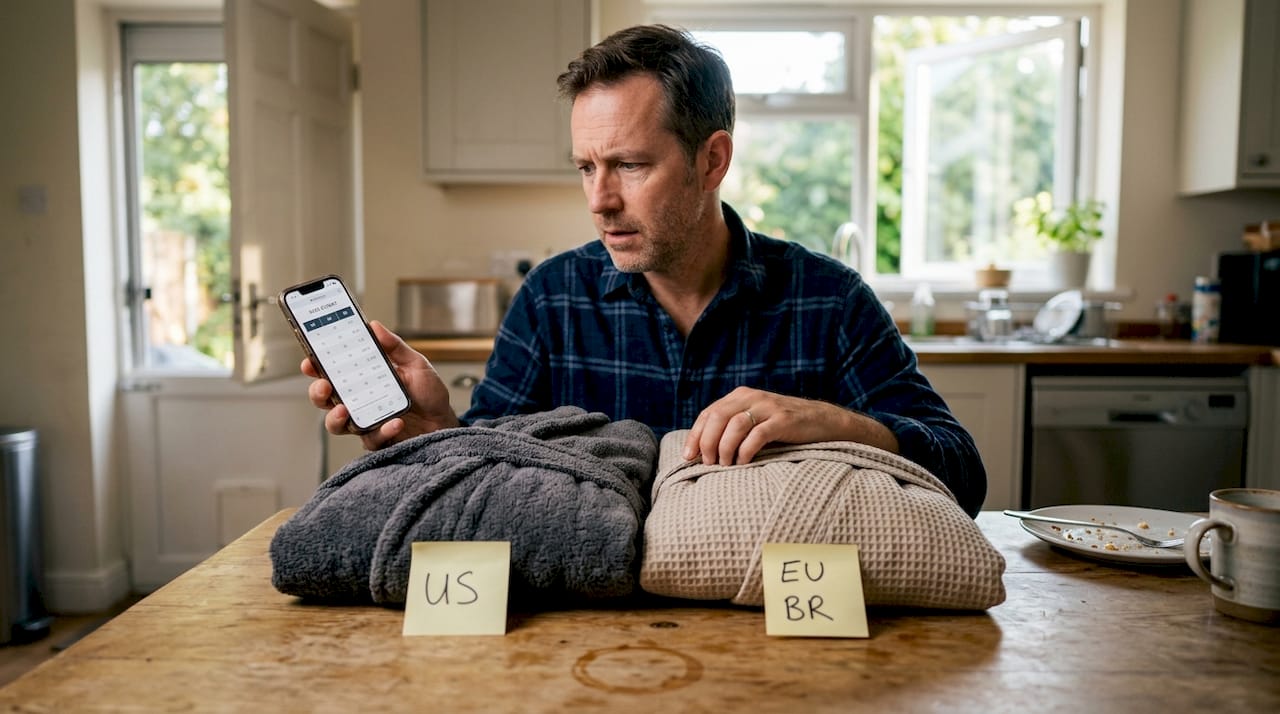
For growing kids, sizing up by one is almost always the right call. A robe that fits perfectly today may be too small in three months. A slightly larger robe is still safe and comfortable as long as the hem doesn’t drag.
Sizing charts and fit comparisons: What to look for
Once you have your measurements and understand how fabric and origin affect sizing, it’s time to put those numbers to work. Reading a sizing chart correctly is a skill most shoppers skip, and it’s where a lot of poor purchases happen.
Here’s a sample bathrobe sizing chart to illustrate what good data looks like:
| Size | Chest (in) | Robe length (in) | Sleeve (in) | Best for |
|---|---|---|---|---|
| S | 34-36 | 48 | 24 | Women, petite adults |
| M | 38-40 | 50 | 25 | Average adults |
| L | 42-44 | 52 | 26 | Tall or broader adults |
| XL | 46-48 | 54 | 27 | Plus sizes, layering |
| Kids S | 22-24 | 28 | 14 | Ages 4-6 |
| Kids M | 26-28 | 32 | 16 | Ages 7-10 |
Now compare how sizing codes differ across markets:
| US size | EU size | Brazilian size | Fit description |
|---|---|---|---|
| S | 44-46 | 36-38 | Slim, close fit |
| M | 48-50 | 40-42 | Standard fit |
| L | 52-54 | 44-46 | Relaxed fit |
| XL | 56-58 | 48-50 | Generous fit |
As you can see, international and unisex sizing conventions can differ widely, so never assume a size code means the same thing across brands or countries.
Watch for these red flags when reading a sizing chart:
- “One size fits all” with no measurements listed: This is almost always a compromise, not a solution
- Missing sleeve data: Sleeve length matters, especially for taller people
- No separate kids’ chart: Children’s sizing requires its own reference, not a scaled-down adult chart
- Vague length descriptions: “Mid-length” means different things to a 5’2" person versus a 6’1" person
For a side-by-side comfort vs. style comparison of robe styles, look at how the cut affects where measurements land on your body. A kimono robe with wide sleeves will measure differently than a shawl-collar robe even in the same labeled size. And if you’re buying for multiple people, check out family robe buying tips to simplify the process.
Practical tips for buying bathrobes for families
Buying one robe is straightforward once you know your measurements. Buying robes for an entire household is a different challenge. Here’s how to approach it without overcomplicating things.
For guest robes, choose a size that works for the widest range of visitors. An XL unisex robe in a lightweight waffle weave covers most adult body types without feeling sloppy on smaller frames. It’s the most versatile option for a shared or hospitality setting.
For kids, safety comes first. The hem should fall no lower than mid-calf to prevent tripping. Belt loops should be positioned so the tie sits at the waist, not the chest or hips, which can create uneven weight distribution. Avoid robes with long, dangling belt ends for very young children.
When you’re stuck between sizes, size up for comfort and a fit that allows layering underneath. A slightly larger robe that you can wear over pajamas is far more practical than one that barely closes over a t-shirt.
For gift buying, use the recipient’s shirt size as a starting point, then go one size up. Most people prefer a robe with room to breathe. If you’re unsure, check the brand’s family robe shopping guide for specific guidance on gifting.
Here are a few practical rules for household robe shopping:
- Measure everyone once a year, especially kids, since bodies change faster than you think
- Keep a note of each person’s chest and length measurements in your phone for quick reference
- For bathrobe safety tips specific to children, check hem length and belt placement before every purchase
- Consider keeping a healthy home environment in mind when choosing robe materials, especially for kids with sensitive skin
Pro Tip: A single unisex robe in a medium-large can often work for two or three adults in the same household if you choose a relaxed-fit style. It simplifies laundry, reduces cost, and still feels intentional rather than sloppy.
The truth most bathrobe shoppers miss about sizing
Here’s something worth saying plainly: sizing charts are a starting point, not a verdict. We’ve seen plenty of shoppers who measured perfectly, matched every column in the chart, and still ended up with a robe that didn’t feel right. Why? Because fit is personal, and personal preferences don’t show up in a table.
Experienced robe shoppers think about use case before they think about size. A robe you wear straight out of the shower needs to absorb moisture quickly, so a snugger terry fit makes sense. A robe you wear while working from home needs to move with you, so a looser waffle weave wins. The same person might need two different sizes depending on the purpose.
Layering is another factor most guides skip. If you plan to wear your robe over thick pajamas in winter, your “correct” size might actually be a full size larger than your measurements suggest. If you wear it over nothing in summer, your true size is fine.
Understanding bathrobe styles and how they’re designed to drape on the body helps you trust your instincts when a label says one thing and your try-on experience says another. Trust the experience.
Find your perfect fit with Lotus Linen
Now that you know how to read sizing charts, measure accurately, and shop smart for the whole family, the next step is finding robes that actually deliver on comfort and quality.

At Lotus Linen, we offer robes in a full spectrum of sizes for men, women, kids, and families, with detailed sizing charts for every style. Browse our waffle robes for men for a lightweight, breathable option, or explore our personalized robes for men if you want something that feels truly custom. From plush terry to elegant waffle weave, every robe at Lotus Linen comes with the sizing support you need to shop with confidence. Pair your robe with matching towels and spa accessories for a complete at-home experience.
Frequently asked questions
How do I measure myself for a bathrobe?
Use a tailor’s tape to measure your chest at its fullest point, your waist above the navel, and your shoulder-to-hem length for robe length. Core measurements for bathrobe fit also include sleeve length, measured from shoulder to wrist with your arm slightly bent.
What should I do if I’m between two bathrobe sizes?
Always go with the larger size. It’s safest to size up if you’re between bathrobe sizes, since a roomier fit allows layering and stays comfortable throughout the day.
Are bathrobe sizes the same everywhere?
No. International robe sizing uses different codes and measurements across the US, EU, and Brazil, so always check the brand’s conversion chart before ordering.
Do fabrics like terry and waffle weave affect bathrobe size?
Yes. Different robe fabrics impact size and feel significantly. Terry cloth runs snugger due to its bulk, while waffle weave drapes loosely, often making your true size the better choice.
Recommended
- Bathrobe sizing guide: find your perfect fit in 2026 – Lotus Linen
- Bathrobe Sizing Guide – Lotus Linen
- The Ultimate Robe Size Guide 2025: Choosing the Perfect Fit – Lotus Linen
- How to Pick Robe Sizes for Perfect Loungewear Fit – Lotus Linen
- Essential Oversized Boxy Fit Fleece Hoodie - Ivory Coast oversized fleece hoodie | Heritage design, comfortable fit, drop shoulder. – TRIBEMoDE+

