
Bath time can feel like just another task on your parenting checklist, but it holds incredible potential for meaningful connection with your children. Many parents struggle to transform this daily routine into an engaging, relaxing experience that strengthens family bonds. The good news is that with a few creative approaches, you can turn bath time into a cherished opportunity for laughter, learning, and closeness. This article shares practical bath time bonding ideas that help you create memorable moments while promoting your child’s enjoyment and emotional development.
Table of Contents
- How To Choose The Right Bath Time Bonding Activities
- Top 5 Creative Bath Time Bonding Ideas
- Comparing Bath Time Bonding Ideas: Benefits And Considerations
- Choosing The Best Bath Time Bonding Ideas For Your Family
- Discover Cozy Bath Essentials To Enhance Family Bonding
- Frequently Asked Questions
Key takeaways
| Point | Details |
|---|---|
| Sensory play enhances engagement | Water toys, bubbles, and textured sponges stimulate curiosity while promoting relaxation and fun. |
| Storytelling sparks imagination | Puppet shows and narratives during bath time create memorable bonding experiences for families. |
| Spa treatments promote calmness | Kid-friendly bath salts and gentle oils turn ordinary baths into soothing wellness rituals. |
| Music creates connection | Singing together or playing calming tunes fosters emotional bonding and reduces bath time stress. |
| Personalized routines build comfort | Special towels and robes make children feel valued and establish consistent, comforting family traditions. |
How to choose the right bath time bonding activities
Selecting bonding activities tailored to your child’s interests and age enhances engagement and safety during bath time. Start by observing what naturally captures your child’s attention. Does your toddler love splashing and exploring textures, or does your preschooler prefer imaginative play? Understanding these preferences helps you pick activities that feel natural rather than forced.
Safety should guide every decision you make. Choose age-appropriate toys without small parts for younger children, and ensure water temperature stays comfortably warm. For older kids, you can introduce more complex activities like DIY bath experiments with color tablets or simple science demonstrations that make learning fun.
Consider your family’s schedule and bathroom setup when planning activities. Some bonding ideas require minimal preparation, like singing songs or playing simple water games. Others, such as creating homemade bath products, need advance planning. Match the complexity of activities to the time and energy you realistically have available on busy weeknights versus relaxed weekends.
Sensory elements transform ordinary baths into calming experiences. Incorporate different textures through sponges, soft washcloths, and gentle bath brushes. Add visual interest with bath crayons or color-changing tablets. These elements engage multiple senses while keeping your child relaxed and focused.
Pro Tip: Keep a rotating selection of three to four activities ready so bath time never feels repetitive, but avoid overwhelming your child with too many choices at once.
Key factors to evaluate when choosing activities:
- Your child’s current developmental stage and abilities
- Available bathroom space and storage for supplies
- Budget for materials and special products
- Time available for setup and cleanup
- Your child’s temperament and energy levels at bath time
Top 5 creative bath time bonding ideas
Sensory play forms the foundation of engaging bath experiences. Fill the tub with different bubble formulas, from thick foam to gentle, fragrance-free options. Provide cups, funnels, and squeeze toys that let children experiment with water flow and volume. Textured sponges in various shapes add tactile variety while making washing feel like play rather than a chore.
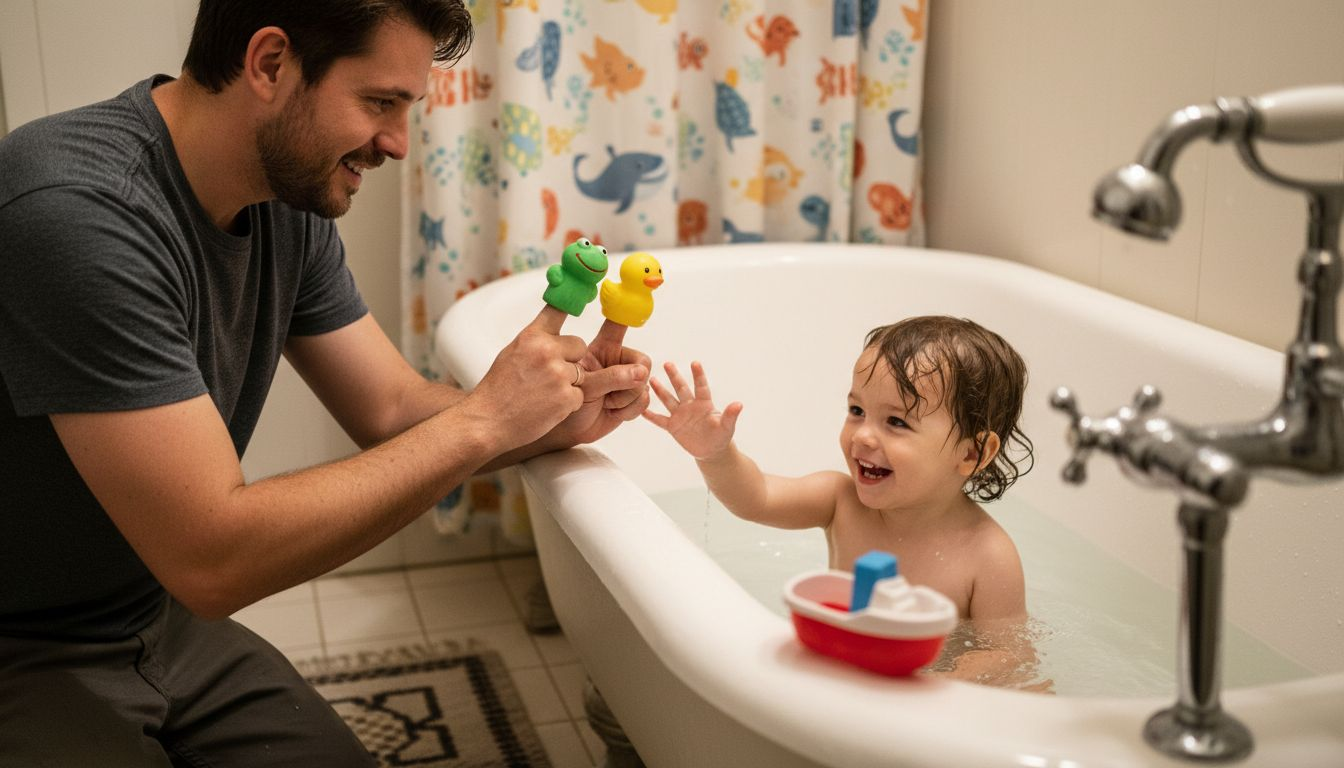
Storytelling and puppet shows transport bath time into an imaginative adventure. Use waterproof finger puppets or create characters from washcloths. Develop ongoing story arcs where bath time characters face new challenges each evening. This approach turns a routine task into an anticipated event your child looks forward to experiencing.
DIY spa treatments introduce wellness concepts early while promoting relaxation. Mix child-safe bath salts using Epsom salt and a drop of lavender oil, or create oatmeal sachets for sensitive skin. Let your child help measure and mix ingredients, teaching them about self-care while spending quality time together. These gentle treatments soothe tired muscles after active play and prepare little bodies for restful sleep.
Music and singing create emotional connection through shared rhythm and melody. Play soft instrumental tracks during calm baths, or choose upbeat songs for energetic splash sessions. Singing familiar nursery rhymes together builds language skills while strengthening your bond. Your child will associate these melodies with the comfort and security of your presence.
Personalized routines with special linens make children feel valued and important. Designate specific towels or robes as their special bath time items. Monogrammed pieces or favorite colors create ownership and pride in the routine. This simple touch transforms an ordinary activity into a cherished family tradition that creates lasting positive memories.
Pro Tip: Rotate activities weekly to maintain novelty, but keep one consistent element like a favorite song or special towel to provide comforting predictability.
| Activity Type | Primary Benefit | Setup Time | Materials Needed |
|---|---|---|---|
| Sensory play | Stimulates curiosity | 5 minutes | Bubbles, toys, sponges |
| Storytelling | Builds imagination | 2 minutes | Puppets, creativity |
| Spa treatments | Promotes relaxation | 10 minutes | Bath salts, oils |
| Music sessions | Enhances bonding | 1 minute | Speaker or voice |
| Personalized routines | Creates tradition | One-time setup | Special linens |
Comparing bath time bonding ideas: benefits and considerations
Understanding each activity’s pros and cons helps parents pick the most effective and enjoyable bath bonding ideas. Different activities serve different purposes, from energizing play to calming wind-down routines. Matching the right activity to your family’s current needs maximizes both enjoyment and developmental benefits.
Sensory play excels at engaging active children who need physical stimulation. It requires minimal financial investment since many household items work perfectly as bath toys. However, it can create more cleanup and may overstimulate some sensitive children close to bedtime. Reserve high-energy sensory activities for earlier evening baths when you have time for extended play.
Storytelling and puppet shows work beautifully for children aged three and up who enjoy imaginative play. This option costs almost nothing and adapts easily to any bath length. The main consideration is that it requires your active participation and creativity, which can feel challenging after long days. Start with simple, repetitive stories until you build confidence.
DIY spa treatments shine for children who respond well to calming sensory input. They teach self-care habits while promoting relaxation before bed. The downside is the prep time needed to gather and mix ingredients safely. Budget-conscious families can create effective treatments from pantry staples like oatmeal and baking soda.
Music sessions offer the easiest implementation with immediate impact on mood and connection. They cost nothing if you sing, or minimal investment for a waterproof speaker. Every age group benefits, from infants to school-age children. The only limitation is finding songs that appeal to both you and your child.
Personalized routines require upfront investment in quality linens but pay dividends in long-term comfort and tradition building. Children as young as 18 months recognize and appreciate their special items. This approach works for any family regardless of time constraints since the routine itself provides the bonding benefit.
| Activity | Best For | Age Range | Budget | Time Commitment |
|---|---|---|---|---|
| Sensory play | Active, curious kids | 1-8 years | Low | 20-30 minutes |
| Storytelling | Imaginative children | 3-10 years | Free | 15-25 minutes |
| Spa treatments | Sensitive, calm kids | 2-12 years | Low-Medium | 25-35 minutes |
| Music sessions | All temperaments | 0-12 years | Free-Low | 10-20 minutes |
| Personalized routines | Tradition-oriented families | 18 months-adult | Medium | Ongoing |
Choosing the best bath time bonding ideas for your family
Start with one manageable bonding activity rather than trying to implement everything at once. Choose the option that feels most natural given your child’s current interests and your available energy. If your toddler loves music, begin there. If your preschooler enjoys helping in the kitchen, try making simple bath salts together. Success with one activity builds momentum for adding others later.
Observe and note your child’s reactions during and after each bath time bonding experience. Does your child seem more relaxed? Do they ask for the activity again? Are they resistant or enthusiastic? These signals tell you which ideas resonate most strongly. Keep what works and modify or abandon what doesn’t, regardless of how appealing it seemed in theory.
Introducing new routines gradually and observing your child’s preferences maximizes the bonding potential of bath time activities. Sudden changes can feel disruptive to children who thrive on predictability. Announce new activities in advance, explain what will happen, and give your child some control over implementation details like which song to sing or which puppet character to use.
Adapt activities as your child grows and their interests evolve. The sensory play that captivated your two-year-old may bore your five-year-old, who now prefers elaborate storytelling adventures. Stay flexible and view bath time bonding as an evolving practice rather than a fixed routine. This mindset keeps the experience fresh for everyone involved.
Involve other family members gradually to strengthen connections across your entire household. Siblings can participate in puppet shows or help create spa treatments. Partners can take turns leading different activities, each bringing their unique style to bath time. This variety exposes children to different interaction styles while giving primary caregivers occasional breaks.
Pro Tip: Document favorite moments with photos or a simple journal noting which activities your child loved most at different ages, creating a meaningful record of your family’s bath time journey.
Steps to implement bonding activities successfully:
- Select one activity aligned with your child’s current interests and developmental stage
- Gather necessary materials in advance to avoid mid-bath scrambling
- Introduce the activity with enthusiasm but without pressure for immediate acceptance
- Pay attention to your child’s verbal and nonverbal feedback throughout
- Adjust timing, intensity, or approach based on observed reactions
- Maintain consistency with successful activities to build comforting familiarity
- Gradually add new elements once the initial activity becomes routine
Discover cozy bath essentials to enhance family bonding
Transforming bath time into a bonding ritual becomes even more special when you wrap your children in luxurious comfort afterward. Premium bath linens elevate the entire experience from routine to ritual.

Soft, absorbent towels and robes help children transition smoothly from bath to bedtime while extending those precious moments of connection. Explore our collection of waffle robes for men that coordinate beautifully with children’s bath linens, creating a cohesive family aesthetic. Our scallop bath towels combine elegant design with practical functionality, making post-bath cuddles even cozier. For a truly personalized touch that makes each family member feel special, consider personalized robes for men that complement customized options for the whole family. Quality bath essentials signal to children that this time together matters, turning everyday moments into cherished family traditions.
Frequently asked questions
What are some easy bath time bonding activities?
Singing familiar songs together requires zero preparation and instantly creates connection through shared melody and rhythm. Simple water play with cups and containers lets children explore while you narrate their discoveries, building language skills naturally. Gentle storytelling using bath toys as characters turns washing into an adventure without any special materials. These no-prep activities fit perfectly into busy schedules while delivering genuine bonding benefits. Check the earlier sections for more fun bath time rituals that enhance family connections.
How can I make bath time more relaxing for my child?
Warm water at a comfortable temperature immediately signals to your child’s body that it’s time to unwind and prepare for rest. Soft lighting from dimmed overhead lights or battery-operated candles creates a calming atmosphere without harsh brightness. Gentle instrumental music or nature sounds mask household noise and promote tranquility. Incorporating calming scents through child-safe essential oils or naturally fragrant products enhances the sensory relaxation experience. Consistent timing helps regulate your child’s internal clock, making the transition to sleep smoother. Visit our bath time relaxation guide for comprehensive wellness strategies.
What are the benefits of bath time bonding?
Bath time bonding improves child development, emotional security, and family connection through consistent, positive interaction. These shared experiences build trust as children learn they can rely on your presence and attention during vulnerable moments. Sensory engagement through water play, textures, and temperatures supports neurological development while teaching body awareness. Regular bonding routines establish predictable patterns that help children feel safe and understood. The undivided attention you provide during bath time communicates your child’s importance and strengthens attachment bonds that support healthy emotional growth.
How often should I try new bath time bonding activities?
Introduce new activities every one to two weeks to maintain interest without overwhelming your child with constant change. Children benefit from repetition that allows them to master skills and anticipate familiar routines. Once an activity becomes well-established and your child shows signs of losing interest, that’s the ideal time to add something fresh. Balance novelty with consistency by keeping one or two favorite elements constant while rotating others. Pay attention to your child’s enthusiasm levels as the best indicator of when change would be welcome versus disruptive.
Can bath time bonding work for multiple children at once?
Bath time bonding absolutely works with siblings when you adjust activities to accommodate different ages and needs. Older children can help demonstrate activities for younger siblings, building their confidence and leadership skills. Choose inclusive activities like group singing or collaborative storytelling where everyone contributes at their own level. Sensory play naturally adapts since each child can explore materials in age-appropriate ways simultaneously. The key is ensuring each child receives some individual attention and acknowledgment during the shared experience, even if brief. Sibling bath time often creates unique bonding between brothers and sisters alongside parent-child connection.
Recommended
- Making bath time fun: creative comfort tips for parents – Lotus Linen
- 7 Fun Bath Time Rituals for Kids and Parents to Enjoy – Lotus Linen
- Bath Time For Babies: Enhancing Safety, Comfort & Bonding – Lotus Linen
- Benefits of Bath Time: Elevate Your Wellness Ritual – Lotus Linen
- Transform Your Bathroom into a Luxurious Spa Oasis

