
Most American parents are surprised to learn that toddlers can drown in as little as two inches of water. Bath time is meant to be fun and soothing, yet hidden risks in busy urban homes make safety a top concern for families everywhere. Choosing the right bath accessories is about more than style. This guide helps parents spot misconceptions, understand essential bath hazards, and discover practical ways to keep young children safe while enjoying every splash.
Table of Contents
- Bath Safety For Toddlers Defined And Debunked
- Essential Bath Hazards And How They Occur
- Types Of Safety Accessories And Their Limits
- Supervision: Best Practices For Parents
- Common Bath Safety Mistakes To Avoid
Key Takeaways
| Point | Details |
|---|---|
| Constant Supervision is Crucial | Parents must maintain continuous oversight during baths, as drowning can occur in mere seconds, even in shallow water. |
| Water Temperature Matters | Always check water temperature to prevent scalding; it should not exceed 120°F according to safety guidelines. |
| Safety Accessories Have Limits | While accessories like non-slip mats and bath seats provide some level of safety, they cannot replace vigilant parental supervision. |
| Avoid Common Mistakes | Do not leave children unattended or rely solely on bath accessories; these misconceptions can lead to dangerous situations. |
Bath Safety for Toddlers Defined and Debunked
Toddler bath safety is about more than just water and soap. It requires strategic planning, constant supervision, and understanding potential risks that might seem invisible to parents. Nationwide Children’s Hospital emphasizes that no amount of water is safe for an unattended child, highlighting the critical importance of adult presence during bath time.
Common misconceptions about bath safety can put children at serious risk. Many parents mistakenly believe bath seats or chairs provide adequate protection, but these accessories are not drowning prevention devices. Drowning can occur in seconds, even in shallow water. Proper supervision means keeping your eyes continuously on your child, avoiding distractions like phone calls or household chores. Water temperature is another crucial factor - the American Academy of Pediatrics recommends water no hotter than 120°F to prevent accidental scalding.
Effective bath safety involves multiple strategies:
- Install non-slip mats in the tub
- Keep water levels low (about 2-3 inches)
- Remove electrical devices from bathroom counters
- Store medications and cleaning supplies out of reach
- Use thermometers to check water temperature
- Never leave children alone, even for a moment
Pro tip: Keep a designated “bath time” towel and all necessary supplies within arm’s reach before starting the bath to minimize potential moments of child-free distraction.
Essential Bath Hazards and How They Occur
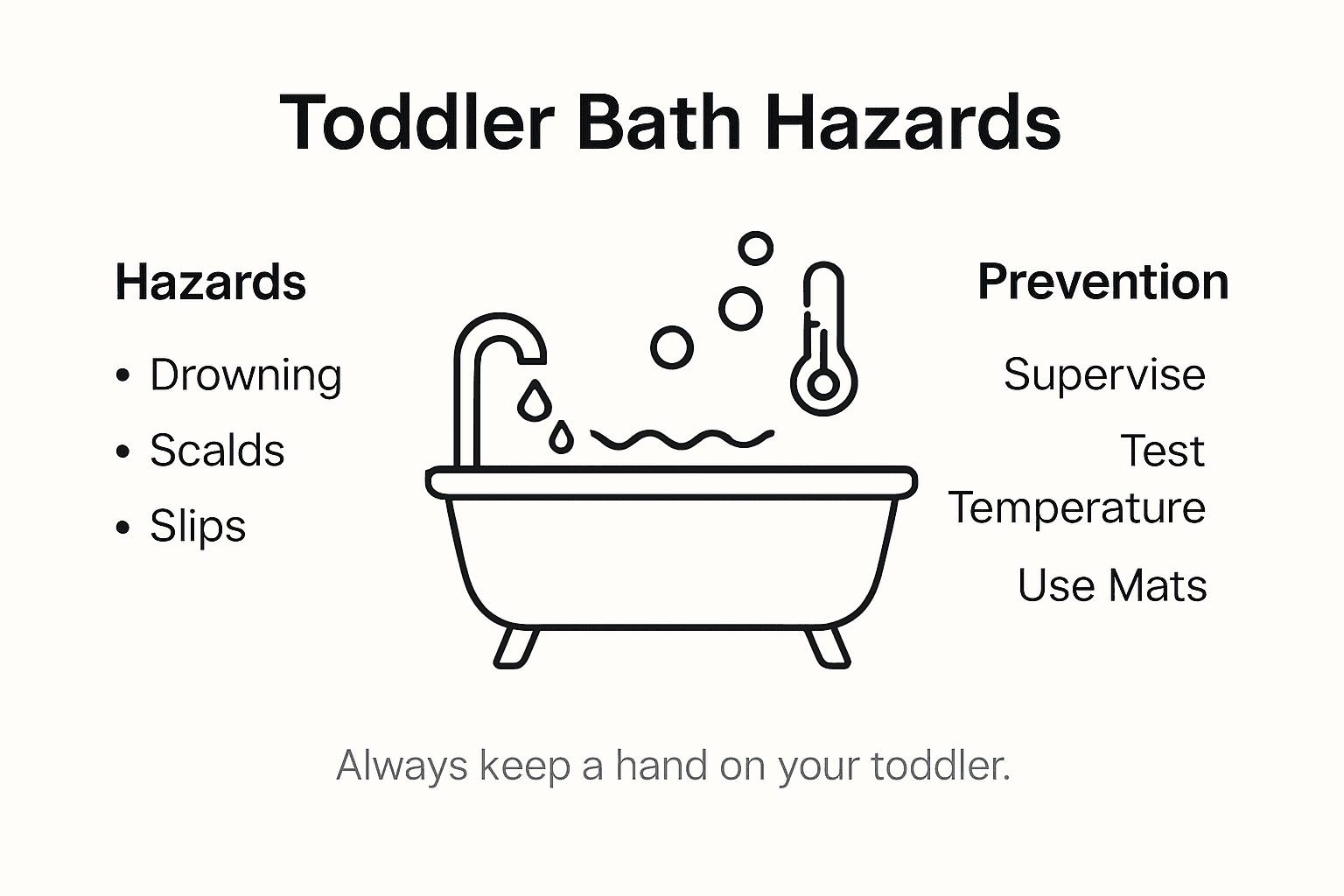
Toddler bath times can quickly transform from enjoyable moments to dangerous scenarios if parents aren’t aware of potential risks. Safe Kids Worldwide highlights that children can face life-threatening hazards in just moments of inattention, with drowning, scalding, and accidental poisoning representing the most critical threats during bathing.
Drowning represents the most immediate danger, occurring faster than most parents realize. Toddlers can drown in mere inches of water due to their top-heavy body structure and limited motor control. Even a momentary distraction can lead to tragic consequences. Water temperature is another significant risk - temperatures above 120°F can cause immediate third-degree burns, making careful temperature monitoring essential. Healthy Children’s research indicates that toddlers’ developmental curiosity dramatically increases their exposure to potential bath-related accidents.
Multiple environmental factors contribute to bath hazards:
- Slippery surfaces increasing fall risks
- Unsecured electrical devices near water
- Accessible medications and cleaning products
- Unregulated water temperature
- Lack of protective barriers
- Insufficient adult supervision
Pro tip: Create a dedicated “bath safety kit” with non-slip mats, temperature-checking thermometers, and emergency supplies to streamline your preparedness during bath time.
Here’s how the main bath hazards compare in risk and prevention focus:
| Hazard Type | Typical Cause | Immediate Risk | Key Prevention Focus |
|---|---|---|---|
| Drowning | Unsupervised child | Rapid fatality | Constant supervision |
| Scalding | Hot water exposure | Severe burns | Check water temperature |
| Poisoning | Ingested products | Toxic reaction | Store items safely |
| Falls | Slippery surfaces | Head or body injury | Use non-slip mats |
Types of Safety Accessories and Their Limits
Healthy Children’s research highlights that bath safety accessories are aids, not absolute solutions. Parents often mistakenly believe certain products can completely eliminate bath-related risks, but understanding the limitations of each accessory is crucial for maintaining child safety. From bath seats to non-slip mats, each item offers partial protection that requires active parental supervision.
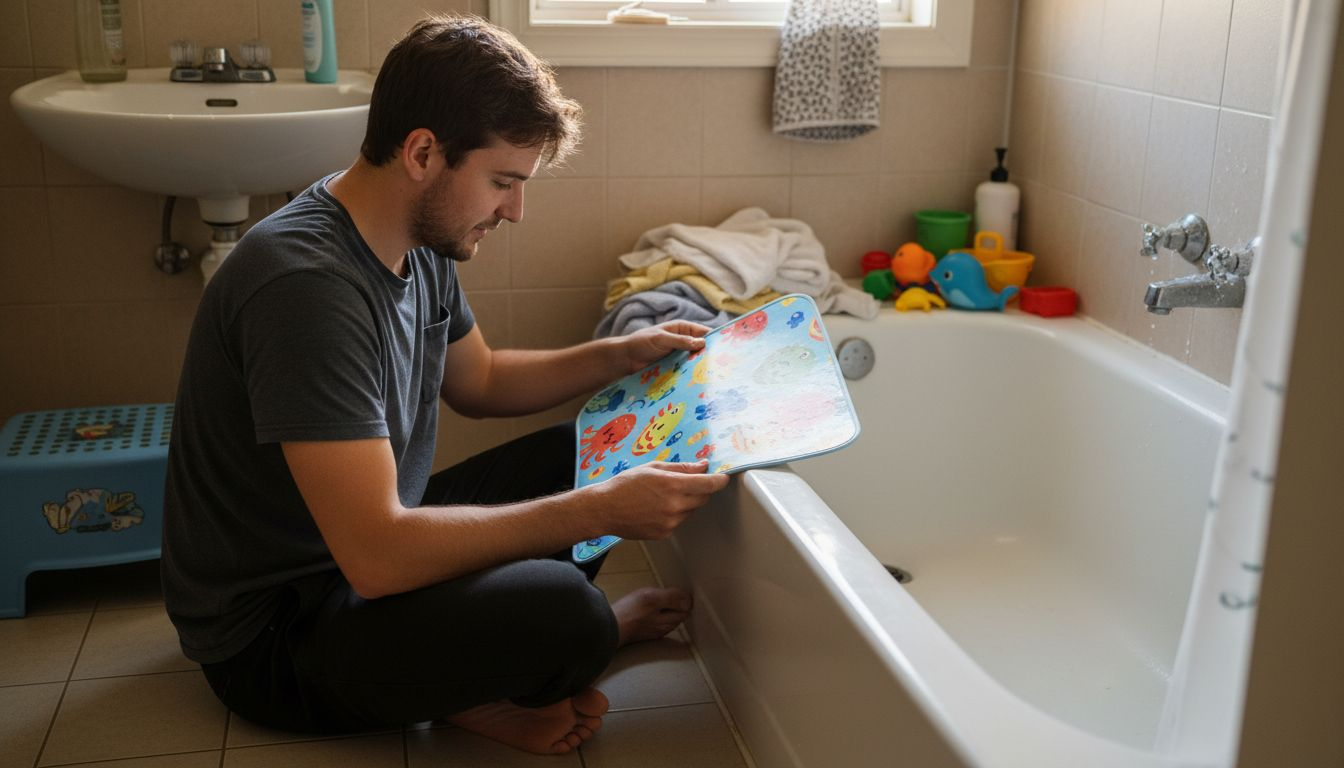
Various safety accessories address specific bath-time challenges. Non-slip bath mats help prevent falls by providing traction on slippery surfaces. Cushioned faucet covers protect against head injuries from sharp fixtures. Bath thermometers assist in maintaining safe water temperatures. However, Kids Health warns that these accessories are supplementary tools, not comprehensive safety solutions. Bath seats, for instance, provide a false sense of security and do not prevent drowning. Parents must remain vigilant and never rely solely on these accessories to protect their children.
Key bath safety accessories and their specific limitations include:
- Non-slip mats
- Reduce slip risks
- Do not prevent all potential falls
- Faucet covers
- Protect against sharp edges
- Cannot prevent all potential head injuries
- Bath thermometers
- Help monitor water temperature
- Require manual checking and adjustment
- Bath seats
- Provide temporary support
- Do not prevent drowning
- Cabinet locks
- Restrict access to dangerous items
- Can be circumvented by curious toddlers
Pro tip: Conduct a monthly safety audit of your bath accessories, checking for wear, damage, or potential new risks that might have emerged with your toddler’s growing abilities.
This table summarizes safety accessory value versus their limits:
| Accessory | Main Benefit | Safety Limit |
|---|---|---|
| Bath Thermometer | Monitors heat level | Needs adult interpretation |
| Faucet Cover | Softens impact | Does not stop all injuries |
| Cabinet Lock | Restricts access | Can be forced open |
| Bath Seat | Temporary support | Does not prevent drowning |
Supervision: Best Practices for Parents
Healthy Children’s research emphasizes that supervision is the most critical component of bath safety. Parents must recognize that toddlers can drown in seconds, even in shallow water, making constant attention non-negotiable. The traditional multitasking approach of parenting—checking phones, doing chores, or answering doors—becomes potentially life-threatening during bath time.
The touch supervision technique represents a gold standard for bath safety. This approach requires keeping at least one hand on the child at all times, ensuring immediate intervention if any risks emerge. Safe Kids Worldwide recommends that children under five should always remain within arm’s reach during water activities. This means physically being present, fully attentive, and prepared to react instantly to any potential danger. Distractions are not just discouraged—they are dangerous.
Effective bath time supervision involves multiple strategic practices:
- Gather all bathing supplies before starting
- Remove potential distractions (phones, tablets)
- Maintain physical proximity
- Use touch supervision technique
- Keep bath water shallow
- Maintain direct eye contact
- Have emergency contacts nearby
- Know infant/child CPR
Pro tip: Create a dedicated “bath safety station” with all necessary supplies within immediate reach, eliminating the temptation to leave your toddler unattended even for a moment.
Common Bath Safety Mistakes to Avoid
Healthy Children’s research reveals critical bath safety errors that parents frequently make, potentially putting their toddlers at significant risk. Many parents operate under dangerous misconceptions about bath time safety, believing that minimal attention or certain accessories can protect their children. The reality is far more complex and requires comprehensive, active supervision and strategic preparation.
Water-related risks represent the most immediate danger. Cleveland Clinic highlights that common mistakes like overfilling bathtubs or relying on bath seats can create life-threatening scenarios. Parents often underestimate how quickly drowning can occur, mistakenly thinking that shallow water or bath accessories provide adequate protection. Multitasking during bath time—checking phones, answering doors, or performing quick household chores—creates critical moments of vulnerability that can lead to tragic consequences.
Most dangerous bath safety mistakes include:
- Leaving children unattended
- Assuming bath seats prevent drowning
- Filling tubs with excessive water
- Neglecting water temperature checks
- Keeping bathroom doors unlocked
- Storing medications within child’s reach
- Using bubble baths that irritate skin
- Failing to secure electrical devices
- Inadequate supervision techniques
- Not knowing emergency CPR
Pro tip: Develop a dedicated “bath safety checklist” and post it visibly in your bathroom to ensure you never skip critical safety steps during toddler bath times.
Enhance Toddler Bath Safety with Comfort and Care
Bath time safety demands keen supervision and strategic planning to prevent risks like drowning and scalding. The article highlights the importance of minimizing distractions and having all supplies within arm’s reach. At the same time, creating a warm, comforting environment for your toddler can turn these careful moments into cherished bonding experiences. That is where premium bath textiles and accessories play a vital role.
Lotus Linen offers a luxurious selection of plush and waffle robes designed for men, women, kids, and families, prioritizing both comfort and safety. Keep your toddler cozy immediately after bath time with soft, absorbent towels and customizable robes that help maintain the child’s body temperature and reduce slips caused by damp skin. These products perfectly complement the safety practices outlined in the article while enhancing your child’s bath time routine.
Discover our premium robes and spa accessories that provide the perfect blend of safety and comfort for your family.

Transform bath time from a safety challenge into a joyful, secure experience. Act now and shop at Lotus Linen to support your toddler’s safety and comfort with every bath.
Frequently Asked Questions
What are the main safety hazards during toddler bath time?
Drowning, scalding from hot water, and accidental poisoning from accessible products are the most critical hazards during bath time for toddlers.
How can I properly supervise my toddler during bath time?
Maintain constant supervision by using the touch supervision technique—keep at least one hand on your child at all times and stay within arm’s reach, removing distractions like phones and chores.
Are bath seats effective in preventing drowning?
No, bath seats are not drowning prevention devices. They provide a false sense of security, and constant supervision is essential, even when using these accessories.
What are some essential safety tips for bath water temperature?
Always check the water temperature before placing your child in the tub. The American Academy of Pediatrics recommends keeping bath water no hotter than 120°F to prevent scalding.

