TL;DR:
- Bath linen quality assurance involves rigorous testing of textiles for durability, chemical safety, and performance standards. Certifications like OEKO-TEX and GOTS verify chemical safety and organic sourcing, but must be current and batch-specific through verified certificates. Consumers should assess GSM, absorbency, and construction physically while verifying certifications online before purchasing hotel or spa linens.
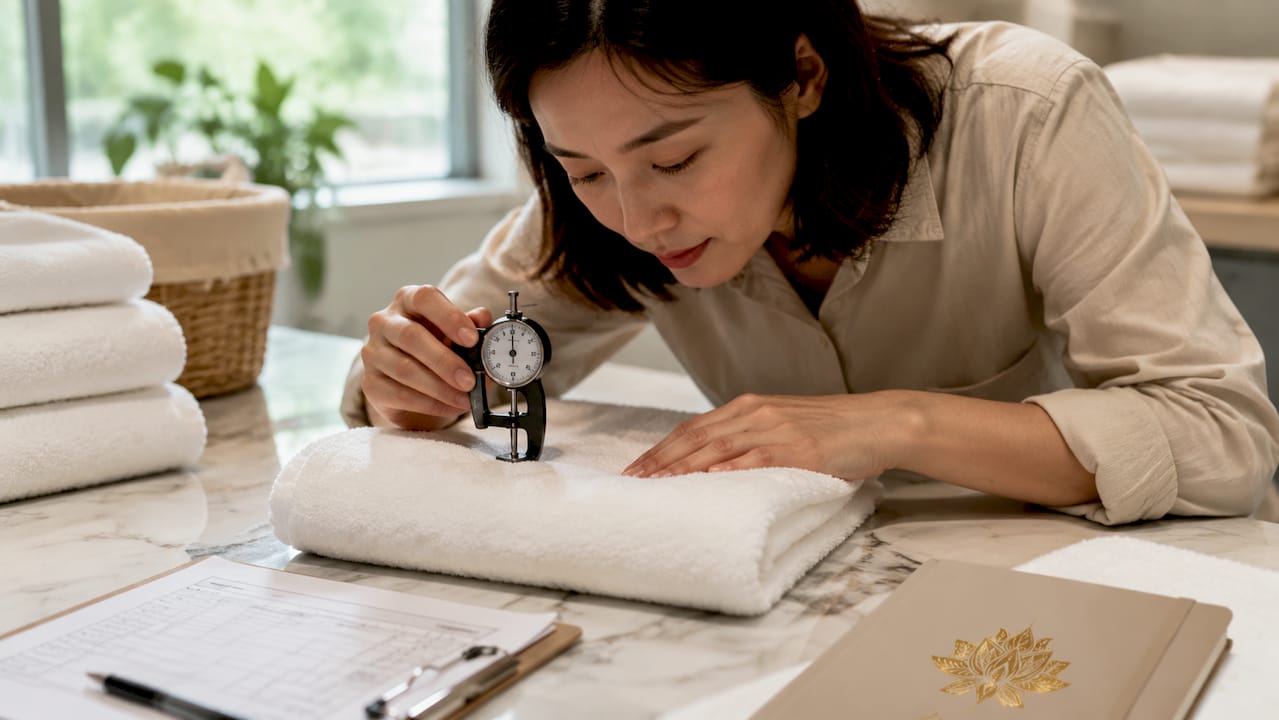
Bath linen quality assurance is the systematic process of testing and verifying towels, robes, and related textiles against measurable standards for durability, chemical safety, absorbency, and performance. It covers everything from raw fiber selection to finished product testing using protocols from organizations like AATCC, ASTM, OEKO-TEX, and GOTS. For anyone choosing spa-worthy linens, whether for a home bathroom or a professional spa setting, understanding these standards is the difference between a product that performs and one that merely looks good on a shelf. At Shoplotuslinen, every product decision starts with these criteria.
What is bath linen quality assurance and why does it matter?
Bath linen quality assurance is a structured system of physical, chemical, and mechanical testing that confirms a textile product meets defined performance benchmarks before it reaches the consumer. The process is not a single test. It is a layered protocol that evaluates how a towel or robe behaves across its entire lifespan.

Quality assurance goes beyond aesthetics to protect users from harmful chemical residues, premature wear, and misleading marketing claims. A towel that feels soft in the store but pills after three washes has failed quality assurance, even if it passed a visual inspection. This distinction matters enormously for spa professionals and families alike.
Failing to require rigorous quality assurance can lead to customer dissatisfaction, operational disruption, and brand damage in hospitality contexts. For home consumers, the cost is simpler: you replace towels far more often than you should. Understanding the framework behind bath linen quality standards gives you the tools to buy once and buy right.
What are the key physical and performance standards?
The measurable properties of bath linens fall into five categories: weight, absorbency, colorfastness, durability, and dimensional stability. Each one maps directly to how a product performs in real use.
GSM (grams per square meter) is the most cited weight metric in textile quality. Premium bath towels typically exceed 550 GSM and absorb water in under 10 seconds. Higher GSM generally means more pile density and a plushier feel, but it also means more weight when wet. Spa-worthy towels balance GSM against drying speed, which is why 550 to 650 GSM is the practical sweet spot for most applications.

Absorbency testing uses AATCC 79 (the drop absorption test) and vertical wicking methods to measure how quickly a fabric draws moisture away from skin. Spa-worthy towels show absorbency under 10 seconds and maintain colorfastness at grade 4 or above after multiple washes. These tests simulate real laundering conditions, not a single controlled rinse.
Colorfastness is evaluated through AATCC protocols that test resistance to washing, rubbing, and chlorine exposure. A towel that fades after five washes or bleeds color onto skin has failed this standard. For spa environments where linens are laundered daily with commercial detergents, colorfastness grade 4 or higher is non-negotiable.
Durability metrics include pilling resistance, snagging, and tensile strength, all tested under ASTM standards. Bulk linen can sustain 200 to 300 wash cycles before visible wear appears when manufactured to proper specifications. Seam strength and loop density are physical indicators you can assess by hand before purchase.
Dimensional stability measures shrinkage after repeated wash cycles. A towel that shrinks 10% after the first wash is a quality failure. Industry standards typically allow no more than 5% shrinkage across multiple laundering cycles.
Pro Tip: When reviewing a supplier’s spec sheet, look specifically for AATCC and ASTM test results rather than general claims. A spec sheet that lists actual test scores, not just pass/fail, tells you the product was tested with precision.
How do OEKO-TEX and GOTS certifications protect you?
OEKO-TEX Standard 100 and GOTS are the two most recognized certifications in bath linen quality assurance, and they serve different but complementary functions. Understanding both is central to evaluating any certification claim.
OEKO-TEX Standard 100 certifies finished textiles are free from harmful chemical residues, testing over 100 substances including heavy metals and formaldehyde. It is a product-level certification. A towel with OEKO-TEX Standard 100 has been tested as a finished item and confirmed safe for direct skin contact. It says nothing about how the cotton was grown or how workers were treated in the factory.
GOTS requires a minimum of 70% certified organic fibers and covers the entire supply chain, from raw fiber to finished product, including environmental and social criteria with annual audits. GOTS is a process certification. It confirms that the production chain meets organic and ethical standards, but it does not independently test the finished product for every chemical residue the way OEKO-TEX does.
| Certification | Scope | What it confirms | Renewal |
|---|---|---|---|
| OEKO-TEX Standard 100 | Finished product | Free from 100+ harmful substances | Annual |
| GOTS | Full supply chain | Organic fiber, ethical production, environmental standards | Annual |
GOTS and OEKO-TEX serve complementary roles. One guarantees organic production processes, the other confirms chemical safety of finished goods. For spa-worthy bath linens, both certifications together represent the strongest possible assurance of safety and integrity.
A common misconception is that any certification logo on a product guarantees current compliance. Certifications require annual renewal, and certificates from previous years may not guarantee current batch compliance. Always verify the certificate number directly on the OEKO-TEX or GOTS public databases before making a purchasing decision.
Pro Tip: Both the OEKO-TEX and GOTS websites have free public search tools where you can enter a certificate number and verify its current validity. Use them. A logo on a product page is not the same as a valid, active certificate.
What manufacturing controls ensure consistent quality?
Physical testing and certifications only tell part of the story. The manufacturing process itself determines whether every towel in a batch performs the same way as the sample you approved.
ISO 9001 is the globally recognized standard for quality management systems in manufacturing. ISO 9001 compliance guides manufacturing consistency with sample testing after approximately 10% of production to verify specs before batch completion. A factory operating under ISO 9001 has documented procedures for every stage of production, from fiber intake to finished goods inspection. This is not a textile-specific standard. It is a process discipline that prevents inconsistency across large production runs.
Raw fiber selection and loom settings are where quality is actually built, before any testing occurs. Yarn twist, pile height, and fiber blend ratios determine towel lifespan and plushness at the weaving stage. A factory that cuts costs on fiber grade or adjusts loom tension to increase speed will produce a product that tests adequately at the sample stage but degrades faster in real use.
Here is what a complete technical pack for spa-worthy bath linens should include:
- Fiber blend specification (cotton type, percentage, origin)
- GSM target with acceptable tolerance range
- AATCC and ASTM test results for the specific batch
- Colorfastness grades across washing, rubbing, and chlorine exposure
- Dimensional stability results after a minimum of five wash cycles
- Current OEKO-TEX or GOTS certificate number with expiration date
Transaction Certificates link organic claims from brands to certified raw materials, making them the critical document for verifying authenticity. A generic certification logo on a website is insufficient. The TC connects a specific production batch to the certified fiber source, creating a traceable chain of custody.
“Demand the transaction certificate, not just the certification logo. The logo tells you a brand has been certified at some point. The TC tells you this specific batch of towels was made from certified materials.”
How can you practically assess bath linen quality before buying?
Knowing the standards is useful. Applying them at the point of purchase is where the real value lies. Here is how consumers and professionals can evaluate bath linen quality without a laboratory.
- Check GSM on the product specification. Any reputable brand lists GSM. If it is not listed, ask. Spa-worthy towels sit between 550 and 700 GSM. Anything below 400 GSM is a lightweight towel with limited absorbency and durability.
- Verify certifications directly. Do not rely on logos. Visit the OEKO-TEX public database or the GOTS certified products search and enter the certificate number. This takes two minutes and confirms whether the certification is current and applies to the specific product.
- Read user reviews for shrinkage and color fading. These are the two most common quality failures that appear in real-world use. Reviews mentioning significant shrinkage after the first wash or color bleeding onto other laundry indicate a colorfastness or dimensional stability failure.
- Examine pile texture and loop density physically. A spa-worthy towel has tight, even loops across the entire surface. Loose or uneven loops indicate inconsistent loom tension during manufacturing. Press the towel firmly and release. It should spring back with consistent density.
- Assess seam construction. Double-stitched hems and reinforced edges are indicators of durability-focused manufacturing. Single-stitch hems on a towel intended for heavy use will unravel within months.
- Request supplier documentation. For wholesale or commercial buyers, ask for the full technical pack including batch test results. A supplier who cannot provide this documentation is not operating with verified quality assurance.
For ongoing care that preserves the quality you paid for, the bath linen care guide from Shoplotuslinen covers washing temperatures, drying methods, and storage practices that extend towel and robe lifespan significantly. Pairing good purchasing decisions with proper care is the complete approach to getting value from spa-worthy linens. You can also review the linen safety standards guide for a deeper look at how certifications translate into everyday safety for families and spa guests.
Key takeaways
Bath linen quality assurance requires verified testing across GSM, absorbency, colorfastness, and durability, combined with current OEKO-TEX or GOTS certifications and traceable manufacturing documentation.
| Point | Details |
|---|---|
| GSM and absorbency are baseline metrics | Spa-worthy towels exceed 550 GSM and absorb water in under 10 seconds. |
| OEKO-TEX and GOTS serve different purposes | OEKO-TEX confirms chemical safety of finished goods; GOTS verifies organic supply chain integrity. |
| Certifications must be verified as current | Check certificate numbers on public databases. Annual renewal means last year’s cert may not cover today’s batch. |
| Transaction Certificates prove batch authenticity | A logo is not enough. The TC links a specific production batch to certified raw materials. |
| Physical assessment complements documentation | Tight loop density, reinforced seams, and no shrinkage after washing are hands-on quality indicators. |
Why I think most buyers are asking the wrong question
Most people shopping for bath linens ask “Is this soft?” They should be asking “Has this been tested?” Softness is a first-touch impression. It tells you almost nothing about how a towel will perform after 50 washes, whether it contains chemical residues that irritate sensitive skin, or whether the certification logo on the product page reflects a current, batch-specific certificate.
I have seen this pattern repeatedly in the bath linen space. A brand invests heavily in photography and packaging, uses words like “luxurious” and “spa-quality,” and lists a certification that expired 18 months ago. The consumer has no easy way to know the difference without doing the verification steps outlined above.
The uncomfortable truth is that consumers often confuse marketing claims with actual quality assurance, which depends on documented, third-party verified testing. The industry has not done enough to make this verification easy or intuitive. That is a problem worth naming directly.
What I believe is changing is consumer expectation. People who have experienced genuinely spa-worthy linens, the kind that maintain their absorbency and softness after hundreds of washes, start asking better questions. They want GSM numbers. They want to know if the certification is current. They ask about shrinkage rates. This is the right direction, and it is why publishing detailed quality documentation is not optional for brands that want long-term trust.
At Shoplotuslinen, the bath linen buying guide exists precisely because we believe an informed buyer makes a better purchase decision, and a better purchase decision leads to a customer who stays with us for years rather than returning a product after three washes.
— Oguzhan
Spa-worthy linens with documented quality from Shoplotuslinen

Shoplotuslinen builds every product around the quality standards covered in this article. The scallop piping bath towels are tested for absorbency and colorfastness, with GSM specifications listed directly on the product page. The men’s robe collection and women’s robe collection feature plush and waffle constructions designed for lasting comfort across hundreds of wash cycles. Every robe is available with custom embroidery and personalization, making them ideal for spa gifts, bridal sets, and family use. Hospitality buyers can explore the wholesale program for bulk pricing with full quality documentation included.
FAQ
What does bath linen quality assurance actually test?
Bath linen quality assurance tests GSM, water absorbency speed, colorfastness to washing and rubbing, pilling resistance, tensile strength, and dimensional stability after repeated laundering. Testing protocols from AATCC and ASTM simulate real-world use conditions to confirm long-term performance.
What is the difference between OEKO-TEX and GOTS certifications?
OEKO-TEX Standard 100 certifies that a finished textile is free from over 100 harmful substances including heavy metals and formaldehyde. GOTS certifies that a minimum of 70% of fibers are organically grown and that the entire supply chain meets environmental and social standards. Both certifications require annual renewal.
How do I verify that a bath linen certification is current?
Enter the certificate number from the product page into the free public search tools on the official OEKO-TEX or GOTS websites. A valid, current certificate will show the certified product category and expiration date. An expired or unverifiable certificate number is a red flag.
What GSM should spa-worthy bath towels have?
Spa-worthy bath towels typically range from 550 to 700 GSM. Towels in this range offer the combination of plush density, strong absorbency, and durability needed for repeated heavy use. Towels below 400 GSM are lightweight and will wear out significantly faster.
What is a Transaction Certificate and why does it matter?
A Transaction Certificate is a document that links a specific production batch to certified organic raw materials, confirming that the certification claim applies to that exact batch and not just to the brand in general. It is the only document that provides batch-level traceability for organic claims.